









OUISTARS TRAVEL · ART AND PHOTOGRAPHY IN PARIS
Long before an image could be generated and altered in seconds, Pierre et Gilles built an entire world for it: a life-size set, costumes, props and lighting, a precise photographic sitting, then layers of hand painting over the image printed on canvas. Fifty years into their collaboration, the method feels slower than our moment and newly relevant to it. It reminds us that an image can be a place made by hand, not simply a captured instant.
The French duo marks that history in Paris with “rose pour toi, rose pour moi” at Galerie Templon Beaubourg, from 7 November to 30 December 2026. The exhibition brings together around twenty portraits made over the past two years and returns to the question at the center of their practice: how does a real person—famous or unknown—become a visual icon carrying desire, anxiety, memory and dream?
Who are Pierre et Gilles?
Photographer Pierre Commoy was born in 1950 in La Roche-sur-Yon; painter Gilles Blanchard was born in Le Havre in 1953. They met in Paris in 1976, and the encounter quickly became both an artistic and a personal partnership. Pierre creates the photograph, while Gilles rebuilds its surface through paint, glaze and light, but the finished work belongs to neither artist alone. It is made with four hands.
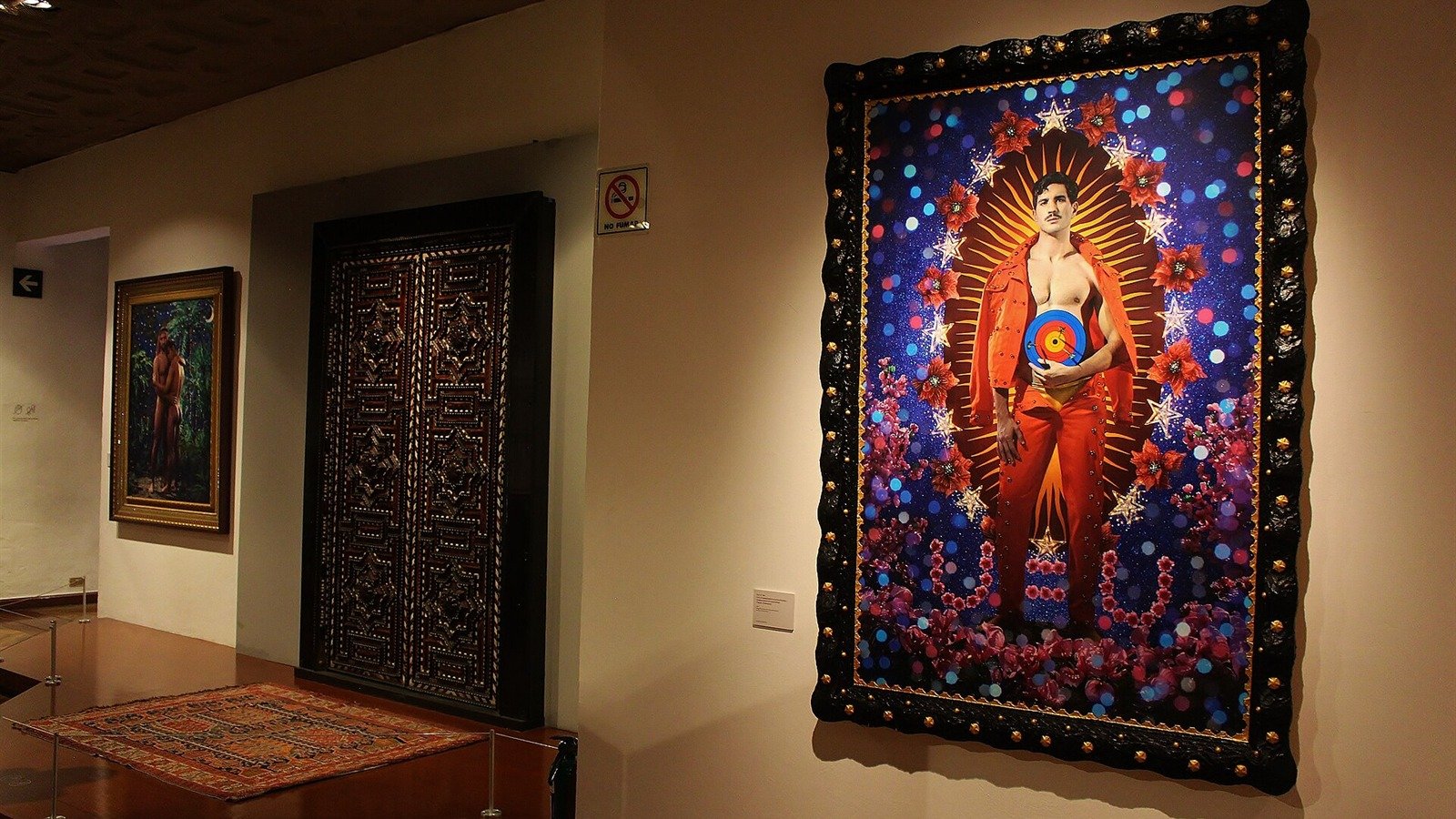
Galerie Templon explains that their sitters appear in elaborate life-size sets built in the studio, before the photograph is printed on canvas and hand painted. The Maison Européenne de la Photographie describes a process that begins with sketches and continues through costume, makeup, props and staging. Flowers, tears, halos and ornate frames are therefore not decorative afterthoughts; they are parts of the narrative.
How did Paris become their stage?
Their practice began in a city where magazines, fashion, music and nightlife formed one creative network. Pierre worked for titles including Rock & Folk and Interview, while Gilles worked as an illustrator. Out of that intersection came a language able to move the energy of the street, the nightclub and the record sleeve into contemporary art.
Yet their Paris is not postcard Paris. It is a city that permits disguise and reinvention. A sitter may become a saint, sailor, pop star or mythic figure. Religious history, baroque excess, fashion, film and celebrity imagery meet inside one frame. The studio functions like a small theatre; the final picture can resemble an altar, a movie poster or a dream polished to a brilliant surface.
Their Paris: from Saint-Germain to working-class neighborhoods
In their interview with Paris Vous Aime Magazine, they recall arriving in Paris separately in late September 1976 and meeting at a party connected with designer Kenzo. The city of that period appears in their memory as overlapping circles: Saint-Germain cafés, cinema, Montmartre, Belleville, Barbès and Pigalle, then clubs and extravagant parties where generations and styles mixed in the same room.
Crucially, their relationship with Paris is not limited to 1970s nostalgia. They speak with affection about the 18th arrondissement, the Goutte d’Or and Porte de Clignancourt, as well as markets, inexpensive accessories and the South Asian storefronts of the 10th. This helps explain their visual method: glamour does not come only from luxury addresses; it can be made by placing an everyday or inexpensive object inside an exacting frame. Gilles also singles out the Musée Gustave Moreau, where the artist’s home, studio and objects remain together—an ideal key to the duo’s belief that the entire environment around an image matters.
Travel brought back into the studio
Their visual language was not built by Paris alone. They point to India, Bollywood imagery and hand-colored star postcards, as well as Egypt, Turkey and Morocco. Japan holds a particular place in their story, including a house in Fukuoka devoted to their work from floor to ceiling. These sources are not copied as ready-made exotic decoration. They are dismantled and rearranged into a new scene, which is why the finished pictures can feel familiar and strange at once: travel memory transformed into personal mythology.
Photograph or painting?
The answer is both, and that ambiguity is essential. The process begins in front of a camera, not with an empty digital file. The set is constructed, the light arranged and the sitter performs. After the photograph is printed on canvas, Gilles adds color, transparency, highlights and detail by hand. The outcome is not an endlessly repeatable image but a physical, unique object holding photography and painting together.
That slowness matters now. We live among images that can be enhanced instantly, but Pierre et Gilles make the labor visible: sewing, carpentry, makeup, object selection, performance, printing and painting. Glitter does not cancel craft. It disguises it, then rewards anyone who looks closely enough to find it.
What is in “rose pour toi, rose pour moi”?
The show celebrates fifty years of collaboration through roughly twenty recent portraits. According to Templon, sacred figures meet pop stars, fictional characters and people close to the artists. Works named in the exhibition include Lady Macbeth with Camille Cottin, Maria Magdalena, L’Étoile noire, Saint Carlo Acutis, and Vive moi – Hommage à Renaud.
Those titles reveal the range: Shakespeare and sainthood, French song, drag and fashion. But this is not simply a collection of recognizable faces. Each image rearranges symbols around a person to construct a new identity. Beauty can soothe, but it can also conceal loneliness, mortality or fear. “Kitsch” may describe the surface, yet it cannot explain the emotional tension beneath it.
Why is it worth visiting?
Because the gallery makes the difference between a phone image and an object with scale, surface and frame immediately clear. Details that look ornamental online become more complicated in person: the brushwork, reflected light, the weight of the frame and the relationship between the body and its set.
The exhibition also offers an accessible path into contemporary art without requiring a theoretical vocabulary. A visitor can begin with color and faces, then discover layers of religious history, fashion, gender, identity and celebrity culture. It is especially rewarding for anyone interested in photography, costume, cinema or the visual language of social platforms.
Practical information
- Exhibition: Pierre et Gilles — rose pour toi, rose pour moi.
- Venue: Galerie Templon, 30 rue Beaubourg, Paris 3rd arrondissement.
- Dates: 7 November–30 December 2026.
- Admission: Free, with no reservation required, according to the official Paris tourism office.
- Nearest Métro: Rambuteau, line 11.
- Suggested time: 45–75 minutes for an unhurried visit.
- Before going: Check the gallery’s official opening days and hours, particularly around the year-end holidays.
Afterward, continue on foot through the Marais or pause at Place Stravinsky to consider how art changes public space. Avoid turning the day into a museum race. These works benefit from moving close to inspect the surface, then stepping back to understand the entire scene.
Five ways to look
- Start with the face: does the sitter remain an individual or become a symbol?
- Look for the hand: where does paint alter the photograph?
- Read the frame: it is part of the work, not merely its support.
- Find the contradiction: beauty and unease, devotion and desire, innocence and theatre.
- Compare scale with the screen: what changes when the original object occupies your field of vision?
The Paris economy of image-making
Pierre et Gilles’ story is more than a recognizable visual style. It is also a compact creative economy: photographer, painter, sitter, costume, makeup, set building, printing, framing, gallery and publishing. A single portrait gathers multiple crafts and shows how an exhibition can draw visitors into an entire neighborhood rather than an isolated room.
That is why the show works as both a cultural and a travel proposition. It gives Paris visitors a reason to enter the Marais through the making of images rather than through monuments alone. After fifty years, Pierre et Gilles still demonstrate that an excess of beauty can be a serious way of speaking about the world.
Frequently Asked Questions
Is the Pierre et Gilles exhibition in Paris free?
Yes. The official Paris tourism office lists free admission with no reservation required. Check opening hours before visiting.
When does the exhibition end?
“rose pour toi, rose pour moi” runs at Galerie Templon Beaubourg through 30 December 2026.
Are Pierre et Gilles’ works photographs or paintings?
They begin as photographs produced in physical sets, then are printed on canvas and painted by hand, combining both media in a unique object.
Is the show suitable for visitors new to contemporary art?
Yes. Color, faces and frames offer an immediate entry point, while slower viewing reveals deeper layers of history, identity and popular culture.
Sources and further reading
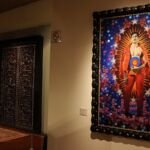
Real archival exhibition view of Pierre et Gilles at Museo Franz Mayer, Mexico City, 8 July 2025; it does not document the current Paris show. Photo: Mario Yaír TS / Wikimedia Commons / CC BY-SA 4.0. Cropped for publication. Source · CC BY-SA 4.0
Cite this article
When citing the text or analysis, include the magazine, title, original URL and publication date. Preserve the stated attribution of statistics and photographs.
OUISTARS Travel — Pierre et Gilles in Paris: 50 Years of Turning the Image Into a Stage
Published: