






The summer crowds recede, but Paris does not close its economic season. From heritage sites that open for one weekend to fashion buyers, art collectors, food executives and museum audiences, autumn is when the capital becomes less one tourism market than several overlapping ones.
On 1 September, Choose Paris Region reported air bookings for September–December 2026 running 4% ahead of the same point in 2025. Bookings from Asia were up 12% and from the Middle East 11%. These are bookings observed at a point in time—not completed arrivals or a guarantee of final growth.
Why autumn is not simply a cheaper summer
Paris in September and October can still be expensive and busy. Fashion Week, major trade shows and art fairs compress demand into particular nights and districts. The season’s appeal is different: museums open flagship exhibitions, professional events restore weekday demand, restaurants shift menus, retail launches collections, and public institutions make heritage part of the visitor economy.
For travellers, that means a more purposeful city. A quiet Tuesday can become scarce when a convention fills Porte de Versailles; a supposedly low-season weekend can be transformed by an art fair or cultural opening. “Shoulder season” is increasingly a planning label, not a promise of low prices.
The autumn 2026 calendar that matters
| Dates | Event | Tourism-economy channel |
|---|---|---|
| 10–19 September | Paris Design Week | Design districts, galleries, showrooms, restaurants and creative-industry visitors. |
| 15–17 September | IFTM and NRF Europe, Paris Expo Porte de Versailles | International business travel, hotel room nights, meetings, transport and hospitality. |
| 19–20 September | 43rd European Heritage Days | Exceptional openings and free access draw visitors into civic, historic and craft sites beyond standard itineraries. |
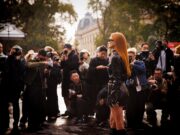
| 28 September–6 October | Women’s Paris Fashion Week | Luxury, press, buyers, production teams, chauffeurs, hotels, dining and retail. |
| 17–21 October | SIAL Paris, Paris Nord Villepinte | Large international food-industry marketplace with demand around the exhibition centre and airport corridor. |
| 23–25 October | Art Basel Paris, Grand Palais | Collectors, galleries, luxury hospitality and central-Paris cultural spending. |
| 2–5 November | EquipHotel, Porte de Versailles | Hospitality professionals, suppliers, investment and renovation business. |
| 12–15 November | Paris Photo, Grand Palais | Collectors, institutions, galleries and an international cultural audience. |
Dates checked against the Ministry of Culture, Paris je t’aime, Viparis and event organisers on 8 September 2026. Programmes can change; reservation rules vary.
Heritage turns public assets into travel reasons
The European Heritage Days on 19 and 20 September carry two 2026 themes: photographic heritage and “Heritage at risk: revive, resist, reimagine”. Their economic importance is not a ticket-revenue claim—many openings are free. They create reasons to travel, extend stays and disperse footfall into palaces, government buildings, workshops and lesser-known sites that are normally inaccessible.
That dispersal can support cafés, transport and neighbourhood commerce, but free cultural attendance should not be converted into invented visitor spending. The value is partly commercial and partly civic: revealing the institutions and skills that give Paris its identity.
Museums and performance create repeat visits
Paris je t’aime’s official autumn programme includes new seasons at the Opéra national de Paris and major exhibitions such as Auguste Bartholdi and Mary Cassatt at the Musée d’Orsay, alongside “Cézanne et nous” at the Grand Palais and other museum openings. The exact exhibition matters less economically than the rhythm: a city that renews cultural reasons to visit can attract repeat travellers who no longer need the Eiffel Tower explained to them.
Culture also protects demand when weather becomes less reliable. Museums, opera, theatre, galleries and gastronomy are indoor products with timed admissions and higher potential to generate evening and weekday consumption.
Business events change who occupies the city
Autumn’s professional calendar produces a visitor who is easy to overlook in leisure statistics. IFTM, NRF Europe, SIAL and EquipHotel bring buyers, exhibitors and delegations whose spending can include accommodation, stand production, freight, translators, security, transfers and client dinners. Their economic footprint extends beyond a hotel bill.
But trade fairs can also create congestion and price spikes without benefiting every district. The public data rarely show how much event revenue stays with local independent companies or leaks into global chains and outsourced services. A 12-month destination should measure that distribution, not only attendance.
Fashion, art and gastronomy connect tourism to exports
Fashion Week and the autumn art calendar do something standard leisure campaigns cannot: they make Paris both destination and marketplace. Buyers and media encounter French brands and venues in their cultural setting. SIAL and the International Village of Gastronomy turn food into trade as well as visitor experience. The boundary between tourism promotion and export promotion becomes thin.
This is why autumn matters strategically. A leisure visitor buys a trip; a professional visitor may also buy inventory, commission work, finance a project or return with clients. None of those outcomes should be counted without evidence, but they explain why cities compete for calendars, not just holidaymakers.
Is Paris truly a 12-month destination?
In product terms, yes: the city has cultural, gastronomic, retail, business and events demand in every month. In economic terms, the answer is more demanding. A genuine year-round model should stabilise jobs and cash flow, distribute visitors across districts and weekdays, maintain transport reliability and avoid repeated room-rate shocks that drive travellers away.
Climate and school calendars still matter. Outdoor terraces and gardens lose certainty; daylight shortens; strikes or severe weather can disrupt plans. Some visitors will always prefer spring or summer. Twelve-month tourism does not mean identical demand every month—it means the destination has independent reasons to travel after the summer peak.
Autumn may be Paris’s most economically sophisticated season because culture, commerce and business travel overlap. Its success should not be judged by whether September looks like July. The better test is whether a museum opening, a design route, a fashion week and a food fair can generate valuable visits while keeping the city liveable and its independent economy visible.
Plan further: Seasonal Paris: best times to visit and how major events change hotel planning.