








Ten crafts that shaped the memory of the world · Episode 10 and series finale
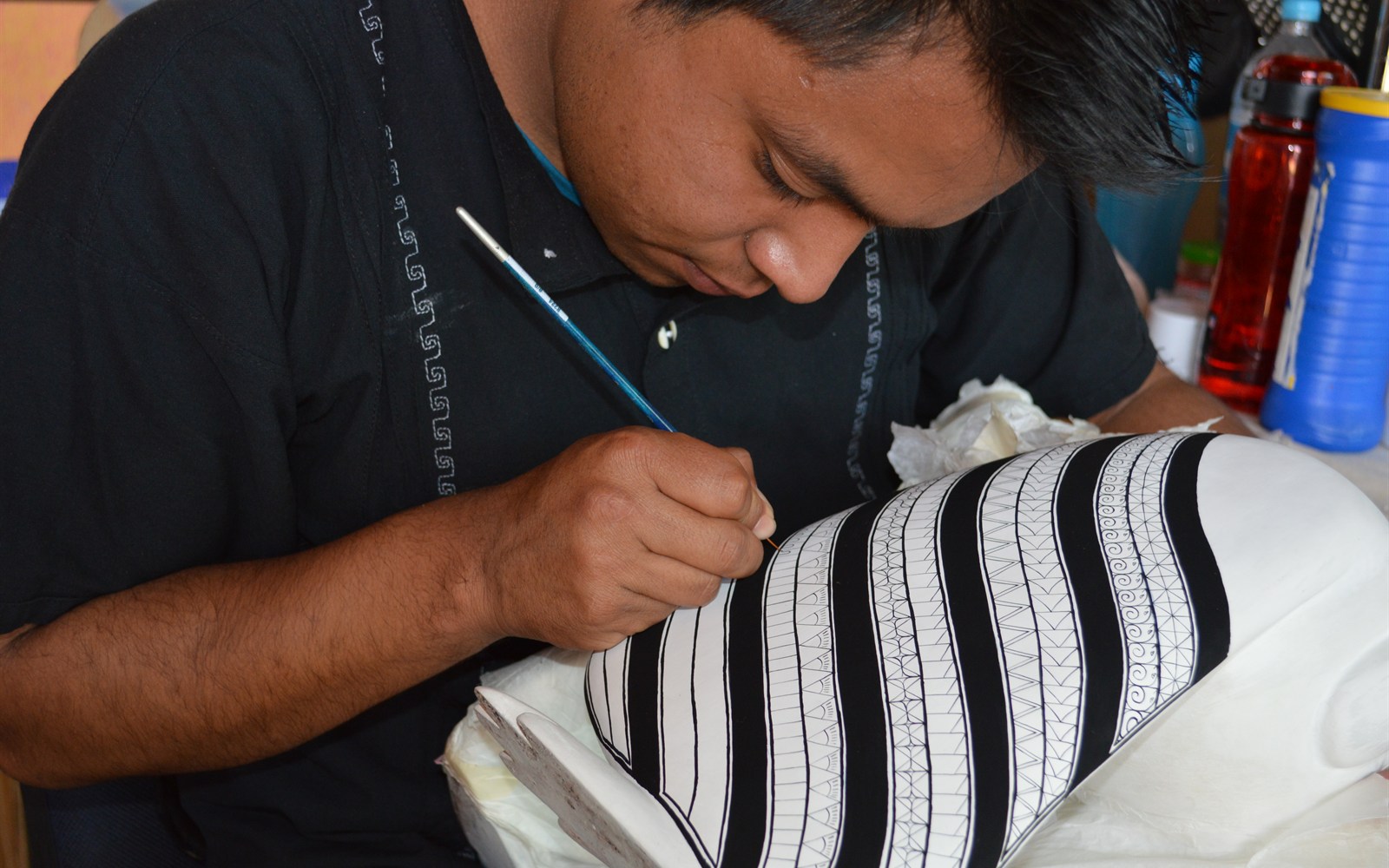
In a workshop in San Martín Tilcajete, a young painter holds a fine brush close to his face and adds one white point inside a black lattice on a creature that exists nowhere in nature. A bird’s wing meets a bull’s horn and a lizard’s tail, yet the work is not quick improvisation: carving, drying, sanding and painting may occupy an entire family. Hundreds of kilometres away in Mexico City, the Linares family builds different creatures from wire, paper and paste. That is where the word alebrije began, in a dream recounted by Pedro Linares. Between the two workshops lies a precise story: a personal invention became a family legacy, then inspired another community to create a language in wood and colour. To tell it well, every maker, material and place must keep its name.
The fever dream that found a body
Official Mexican sources record that Pedro Linares López, born in Mexico City in 1906, came from a family of cartoneros who made masks, skeletons, Judas figures and piñatas. During a severe illness, family accounts say, he saw composite animals chanting a word he did not know: alebrijes. Once recovered, he did not search for a dictionary meaning; he gave the word a body. Wire armatures, paper and paste carried tusks, wings, horns and tails into animals absent from zoology. The story matters not only because it is extraordinary, but because the dream never floated free of labour. It entered the world because Linares already possessed an inherited technique and worked long enough to make imagination stand upright.
Before the alebrije: generations of cartonería
Pedro did not begin from nothing. Mexico City cartonería is practical family knowledge: wire or cane defines the structure, layers of paper and cardboard with paste create volume, and drying, priming and paint complete the surface. The Linares family had practised it for generations, enabling Pedro to translate an impossible animal into a sculpture that was light yet structurally convincing. Children and grandchildren later learned inside the workshop, and the Linares name remains tied to the original paper tradition. Mexico City’s heritage authorities document that lineage; national museums preserve pieces with identified makers, materials and techniques. Calling the work anonymous folk art erases both authorship and the economic route by which a family survives.
What is an original alebrije?
In the Linares tradition, an alebrije is a hybrid imaginary creature made through cartonería, not a replica of a real animal and not a spirit guide with one fixed meaning. A frame establishes posture and balance; paper layers build the mass before modelling and painting. The National Museum of Popular Cultures catalogues a Felipe Linares Mendoza piece made from kraft paper, paste, wire and paints, with a wire armature wrapped in pasted paper. These details help a buyer read the object: light weight is not a defect, brush marks are not necessarily faults and slight asymmetry can belong to the hand. Humidity, compression and impact, however, are genuine threats and require intelligent display and transport.
When the imagination reached Oaxaca
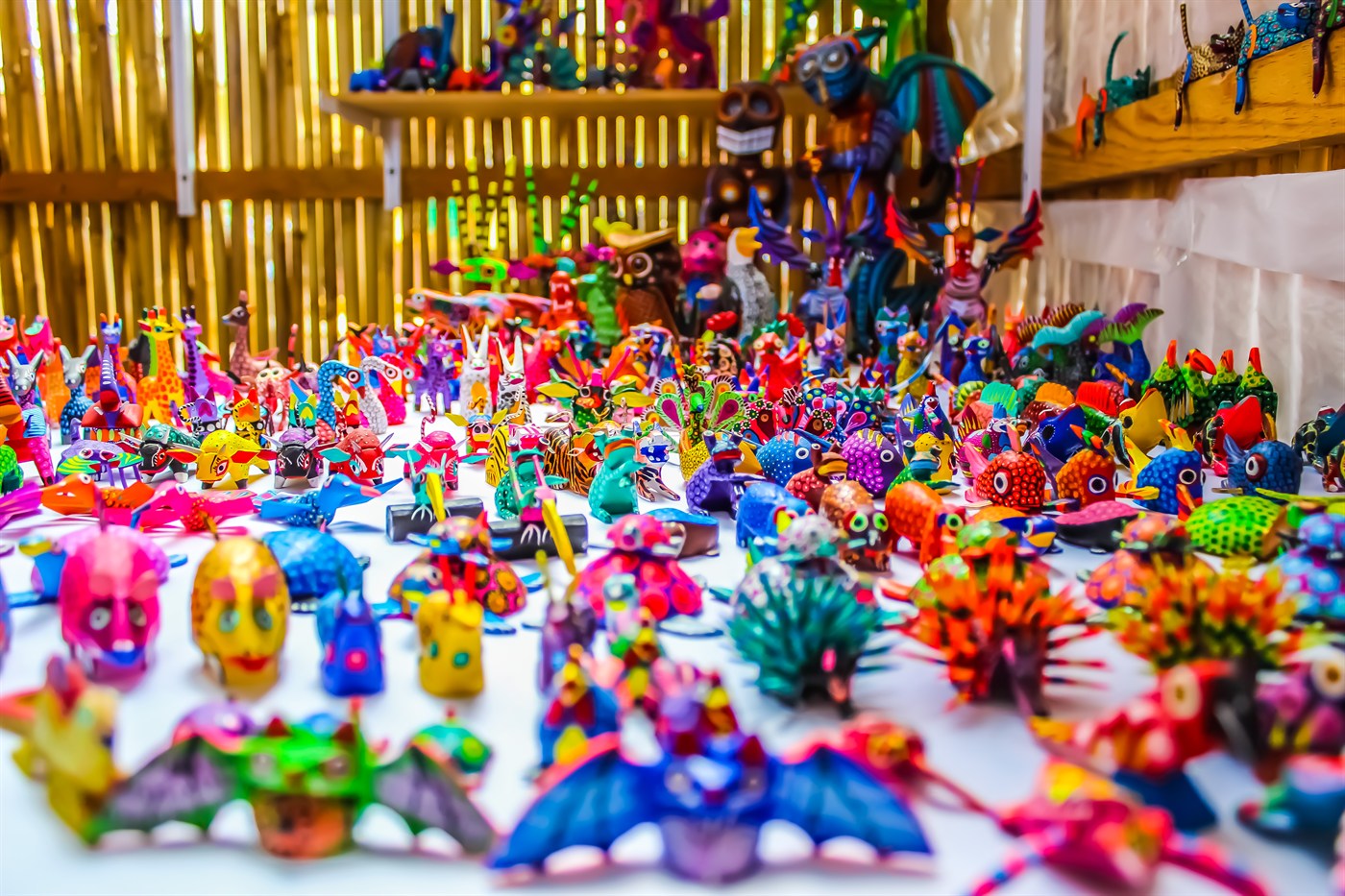
Villages in Oaxaca’s Central Valleys, including San Martín Tilcajete and San Antonio Arrazola, had wood-carving traditions before alebrije became a market name. Family workshops adopted the idea of fantastic creatures and developed it in a local material, especially copal wood. The result is not merely a paper Linares figure translated into timber. It is a distinct school of carving, curing, sanding and minute painted pattern, sometimes drawing on Zapotec visual language. Mexican cultural institutions distinguish the Mexico City cartonería origin from wood carving “in the Tilcajete style.” Respecting that distinction does not divide Mexican heritage; it prevents two histories from disappearing inside one commercial label.
From copal branch to fantastic creature
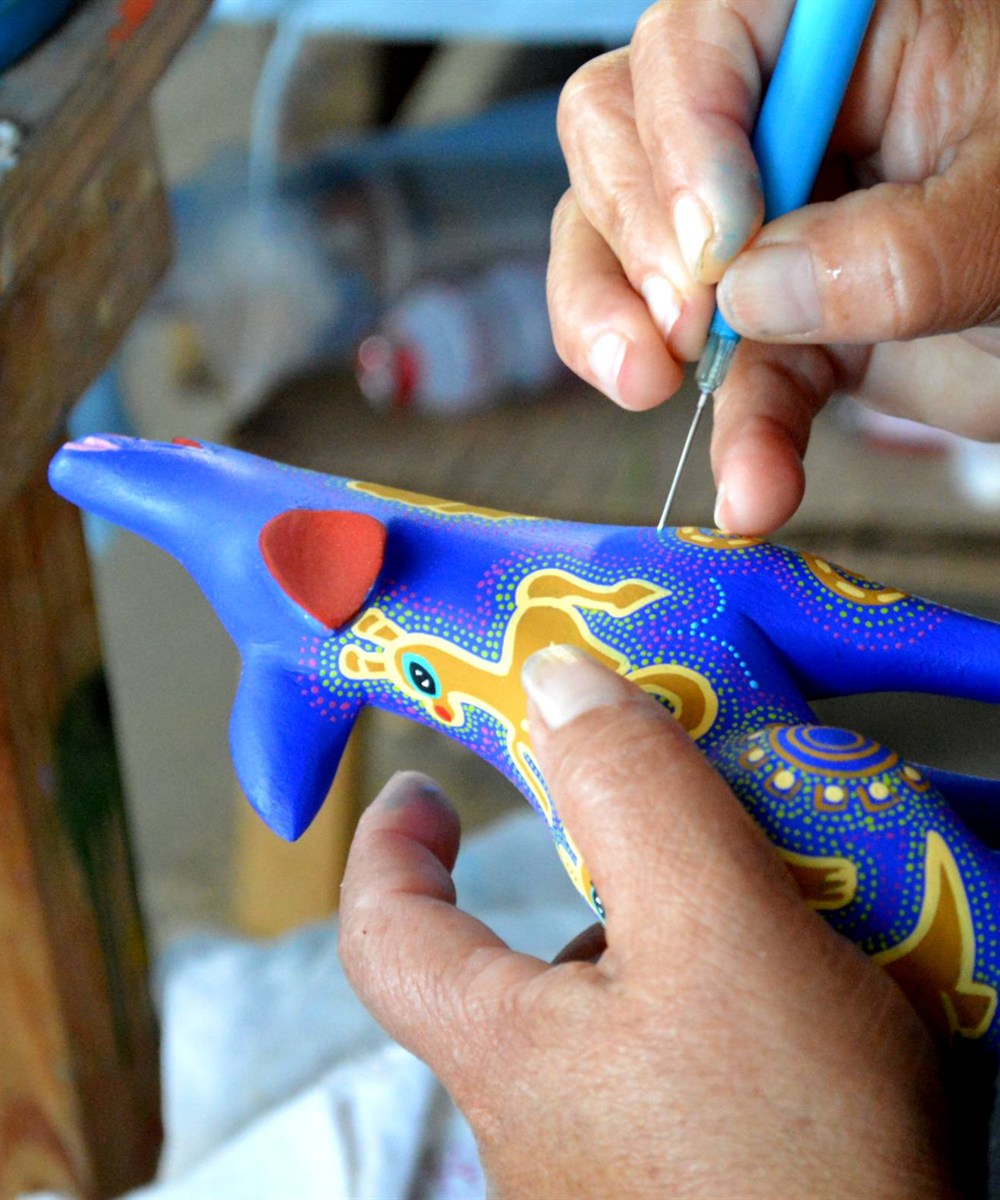
The carver reads grain and natural bends before the first cut. A branch may suggest a back or tail; machete and knife remove the mass until a form emerges. The wood then needs time to dry. Rushed curing can produce cracks or loosen joined parts. Sanding, repair and a ground coat follow, then point, line and geometric pattern may require days or weeks of painting. Families often share stages, but visitors should ask who carved and who painted rather than impose a fixed gender division on every workshop. A signature, invoice or workshop certificate can anchor those contributions and give future owners a credible provenance.
The name and the right to the story
Mexico City declared the alebrijes of Pedro Linares intangible cultural heritage of the city in 2019, and in 2024 its government formally recognised the Linares family’s role in preserving the craft. This protection is civic and national, not a blanket commercial certificate for every colourful creature sold under the word. Nor does it make every Oaxacan woodcarving a Linares family work. Documentation restores the inventor and his descendants to the foreground while allowing Oaxacan schools and masters to be named on their own terms. Responsible writing and selling identify city, material and workshop instead of collapsing an entire country into a generic sticker.
What threatens the craft?
The danger is not that colour will vanish overnight, but that artisans lose the economic time required for good work. Moulded and printed copies are cheaper; intermediaries may retain more value than makers; tourism swings can destabilise village income. Wood also raises a material responsibility: copal is a living resource that must be managed, replanted and properly seasoned. Paper works face humidity and poor storage, often without conservation records. Continuity therefore requires training, prices that pay for hours, provenance that distinguishes handwork from factories and markets through which a buyer can reach the workshop or a verified public platform.
Who teaches the next generation?
The family remains a central school. Children observe armature building or the reading of wood, then may begin with preparation, sanding or colour filling before taking on design. Public institutions add another layer through museum collections, workshops, fairs and artisan directories. In 2025 the National Museum of Popular Cultures brought several Linares generations together for a public conversation and an introductory cartonería workshop. In Oaxaca, community fairs demonstrate the process and invite children to paint. Transmission is not the mechanical copying of a master’s pattern; it is learning material, safety, cost and rights, then finding a voice without erasing the origin.
Workshop tourism without consuming the workshop
People do travel specifically for alebrijes. Oaxaca’s tourism authorities describe dozens of workshops taking part in Tilcajete fairs, with process demonstrations and painting activities. Earlier government figures for one fair linked the event to hundreds of artisans and family members. The best visit is arranged locally, asks permission before photography and does not turn a worker into scenery. When a workshop offers a free explanation, buying directly or paying for the experience returns value to the community. Bargaining over a sculpture that took weeks as though it were an identical wholesale item misunderstands both the labour and the purpose of craft travel.
How to recognise handwork
Ask for the maker, workshop, town and material. In cartonería, inspect the stability of the armature, coherence of layers, lightness and joins, then ask about paint and storage. In wood, look at grain, cracks, repairs, fixed appendages and carving depth. Examine paint closely: small variations and human transitions are natural; perfectly identical patterns across hundreds of objects justify questions about production. Price alone does not prove authenticity and a signature alone is not enough. An invoice, workshop photographs, a maker biography and a transparent chain of sale become persuasive when they agree.
Responsible buying, packing and customs
Ask how much of the price returns to the workshop, who completed each stage and whether the object is unique or part of a series. Request an invoice with artist, material, dimensions and care instructions. A paper alebrije needs a rigid box and supports that do not press horns or wings; it needs moisture protection without sealing residual damp. Wood requires immobilised protrusions and adequate seasoning. Before purchase, check the destination country’s current customs and plant-material rules; a seller cannot guarantee a border decision. Avoid works described as antiquities or protected material without credible documentation.
The lesson: preserve the dream under the maker’s name
The alebrije is a rare case of a relatively modern invention entering popular memory within a family’s lifetime and then inspiring a parallel language in Oaxaca. Its power does not depend on invented mysticism; it rests on a visible chain of imagination, technique, teaching and work. When a traveller knows the difference between Linares paper and Tilcajete wood, asks for both carver and painter and pays fairly, the trip stops collecting colour and begins preserving knowledge. The creature may have been born in a dream, but it stays alive only when a workshop can afford to teach another hand.
Watch Mexico City Culture Secretariat’s official film on the monumental alebrije parade
Craft at a glance
| Documented origin | Pedro Linares López in Mexico City; fantastic composite creatures made with paper, paste and wire |
|---|---|
| Oaxacan school | Woodcarving, often in copal, developed by workshops in Tilcajete, Arrazola and other communities |
| Protection | The alebrijes of Pedro Linares have been intangible cultural heritage of Mexico City since 2019 |
| Main stages | Design and armature or carving, drying, preparation and sanding, painting, documentation and packing |
| Best buying evidence | Maker, workshop, town, material, invoice, provenance and care instructions |
| Best visit | A workshop or community fair, booked locally, with photography consent and direct purchase where possible |
Questions before visiting
Are all alebrijes made of wood?
No. Pedro Linares’s original tradition uses paper, paste and wire; Oaxaca developed the famous carved-wood school.
Are alebrijes a pre-Hispanic tradition?
Not in their documented modern name and form. Pedro Linares created them in the twentieth century using the older craft of cartonería.
Are all Oaxacan wooden pieces made by the Linares family?
No. The Linares family is associated with Mexico City cartonería; many independent families and workshops work in Oaxaca.
Are alebrijes on UNESCO’s heritage lists?
The protection documented here is Mexico City’s intangible-heritage declaration and Mexican institutional support; this report does not present them as a standalone UNESCO inscription.
How long does one take?
From days for a simple piece to weeks or longer for carving, curing and complex painting. Ask about the specific work.
How should a paper alebrije be cared for?
Keep it away from humidity, direct sun and pressure; dust with a soft dry brush and consult a conservator after damage.
Can visitors enter Tilcajete workshops?
Many workshops, fairs and experiences receive visitors, but hours, photography and fees vary. Confirm locally before travelling.
What is the strongest proof of authenticity?
An invoice naming the workshop, maker, material and dimensions, supported by a verifiable signature or certificate and transparent purchase route.
Sources and reference institutions
- Mexico City Secretariat of Culture — recognition of the Linares family and the 2019 heritage declaration
- Mexico City Cultural Heritage Repository — Alebrijes of Pedro Linares López
- Mexico Secretariat of Public Education — Pedro Linares López
- Mexico Secretariat of Culture — Pedro Linares tribute at the National Museum of Popular Cultures
- Mexico Secretariat of Culture — The legacy of Pedro Linares remains alive
- National Museum of Popular Cultures — Alebrije by Felipe Linares Mendoza
- Mexico Secretariat of Culture — Gabriel Sosa and wood-carved alebrijes in the Tilcajete style
- Oaxaca Tourism Secretariat — San Martín Tilcajete community alebrije fair
- Government of Oaxaca — the Tilcajete alebrije fair and its impact on artisan families
- Wikimedia Commons — young artisan painting an alebrije, CC BY-SA 4.0
- Wikimedia Commons — painting an alebrije in Arrazola, CC BY-SA 4.0
- Wikimedia Commons — alebrijes of San Martín Tilcajete, CC BY-SA 4.0
Image credit: Young artisan painting an alebrije at the Jacobo and María Ángeles workshop, San Martín Tilcajete, Oaxaca. AlejandroLinaresGarcia / Wikimedia Commons, CC BY-SA 4.0; editorial crop.