

















Ten crafts that shaped the memory of the world · Episode 9
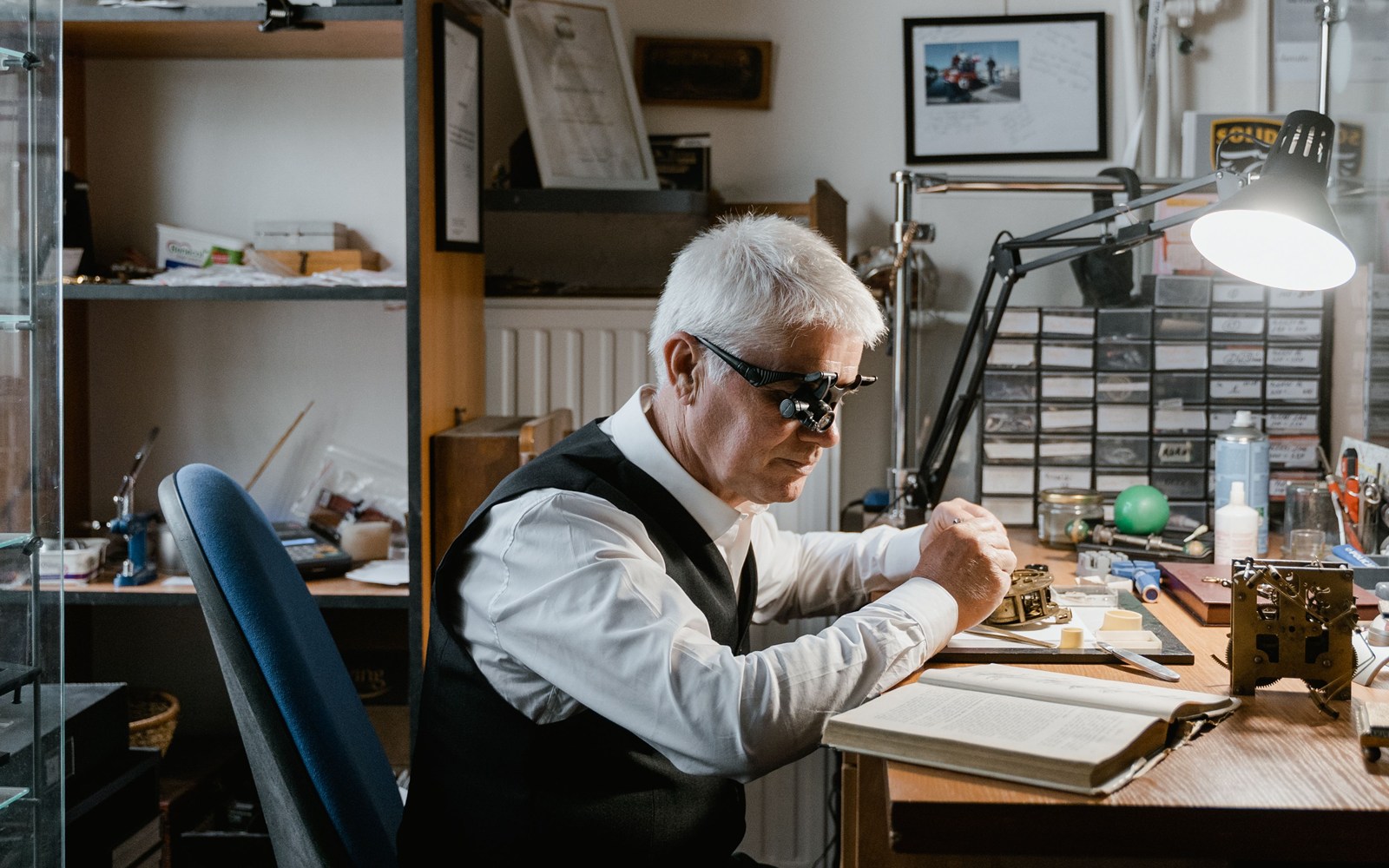
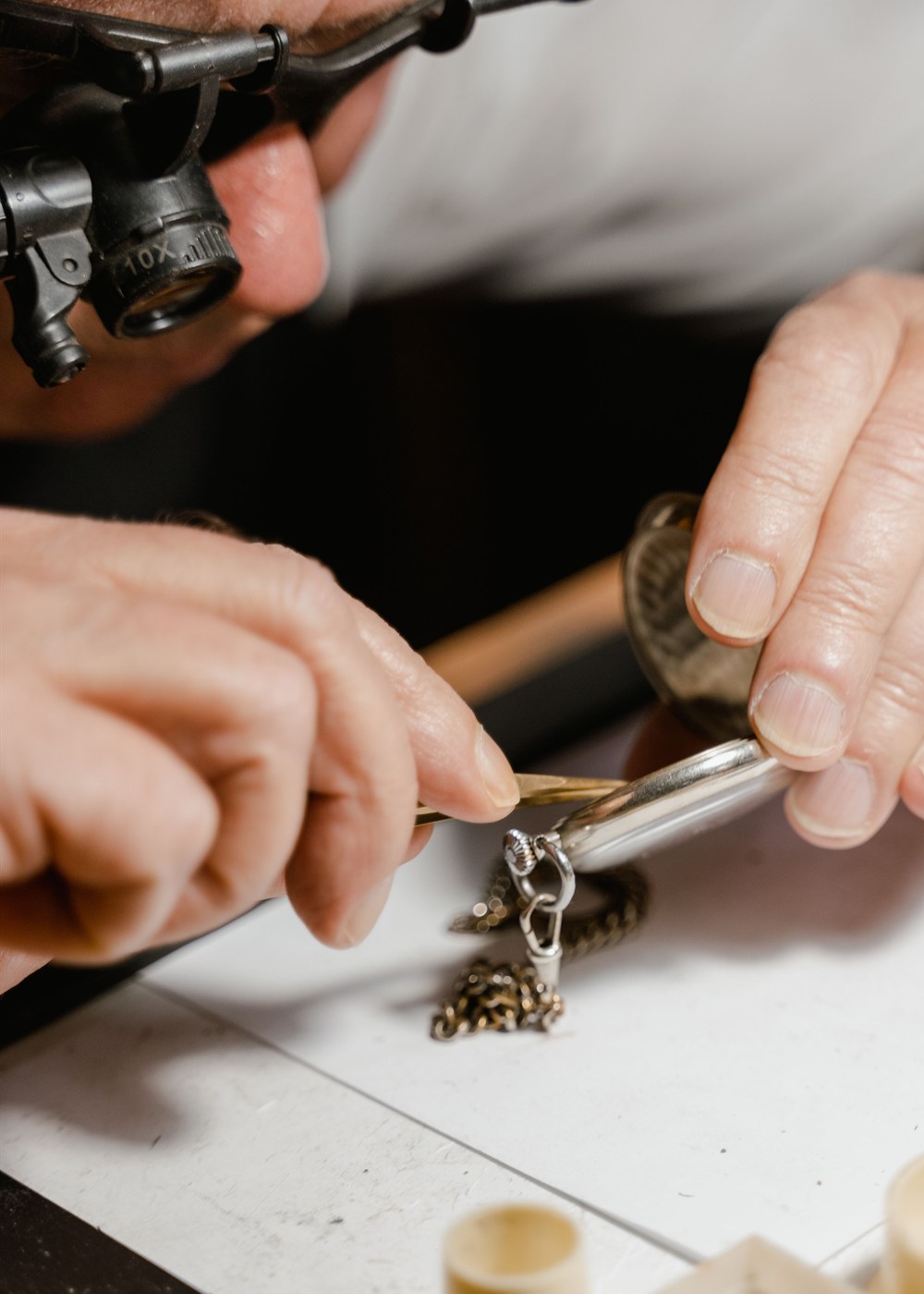
Behind glass at the restoration centre of the Musée international d’horlogerie in La Chaux-de-Fonds, a master watchmaker bends over a historic mechanism that cannot be treated as an ordinary spare-parts problem. The task is not to make it glitter or tick at any cost. It is to recover function without erasing age, and to know when operating the object would damage more evidence than it saves. Returning one tiny tooth to service may take minutes; knowing when to stop takes years. In a city whose streets and windows were organised around the light and movement of watchmaking, the Swiss watch becomes more than a luxury object: it is a network of hands, schools, towns and rules built to manufacture time without losing its memory.
At the restoration bench, success does not mean “like new”
The museum says its conservation projects follow a strict ethic: a piece may be made to operate without altering its appearance, or preserved without operation when movement would threaten original material. That reverses the commercial instinct to replace everything imperfect. An old scratch can be evidence; a nonstandard screw can record an earlier repair. The skilled restorer adds value through diagnosis, documentation and the smallest necessary intervention, not the largest pile of new parts.
What happens inside a mechanical watch?
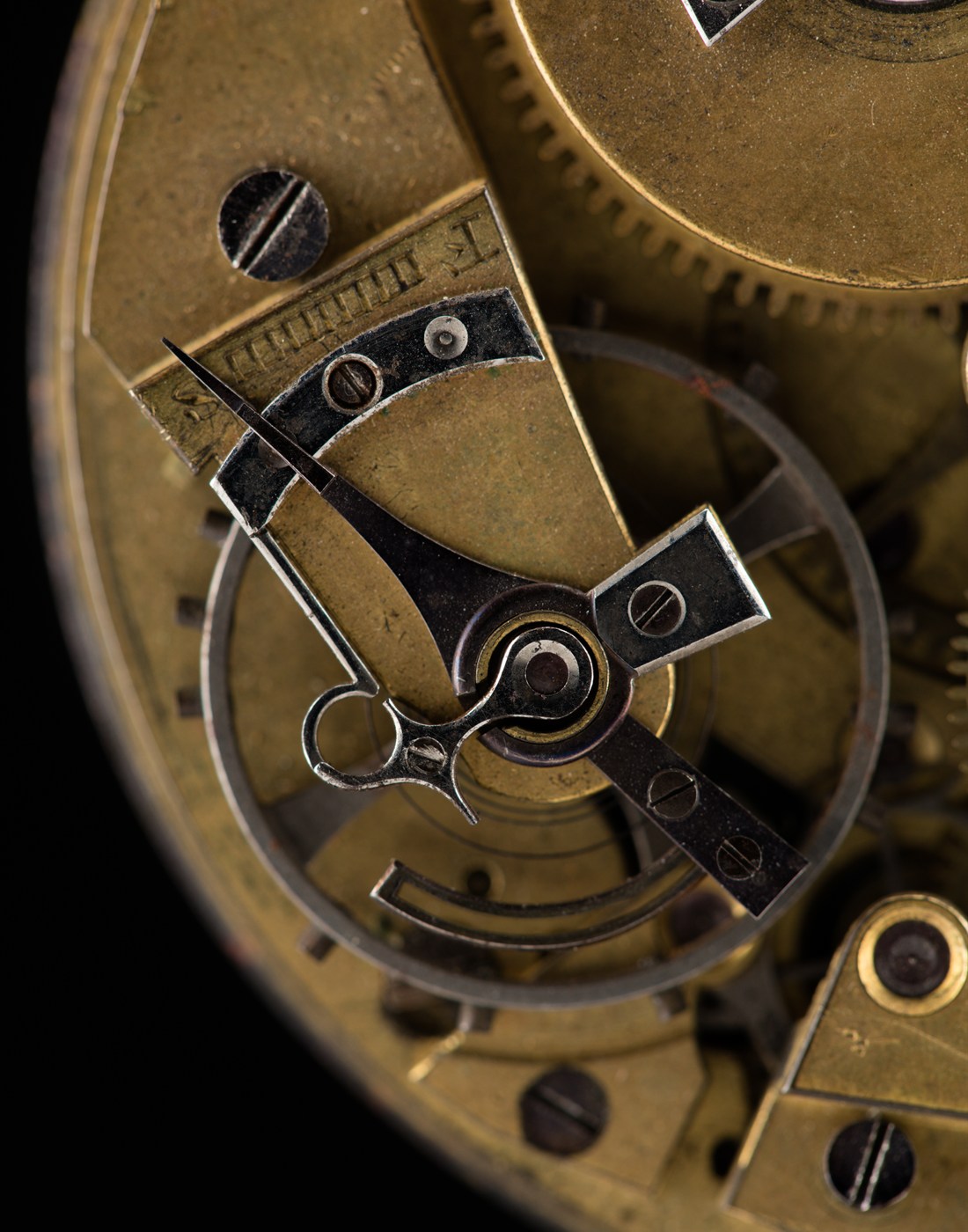
A mainspring stores energy from hand winding or the wearer’s motion in an automatic watch. The gear train carries that energy toward the time display, but uncontrolled release would empty it almost at once. The escapement parcels energy into measured impulses while the balance and hairspring regulate frequency. Rate is therefore not the work of one miraculous component: it is a negotiation among friction, lubrication, temperature, position, gravity, manufacture and adjustment. A small movement requires a surprisingly large community of skills.
From one maker to a village of specialists
Watchmaking includes far more than casing a movement. Designers calculate wheels and bridges; machinists cut microscopic parts; finishers polish edges; dial makers, engravers and case makers build the visible identity; regulators adjust the oscillator; complications specialists assemble calendars or repeaters; testers check water resistance; restorers recreate parts no factory stocks. UNESCO also includes art mechanics—music boxes, singing birds, automata and animated sculpture—within this living field of theory, practice and complementary trades.
The Jura Arc: winters turned into workbenches
Watchmaking took root on both sides of the Swiss-French border across the Jura Arc. Long winters and domestic work encouraged a dispersed system in which households and small workshops specialised in components before merchants and établisseurs coordinated assembly. One home did not necessarily build a whole watch: it might cut wheels while neighbours made springs, screws or cases. The network created a shared language of precision and a dependency that remains important today: when a tiny trade disappears, an entire product chain can become impossible.
La Chaux-de-Fonds and Le Locle: cities designed for watches
UNESCO placed La Chaux-de-Fonds and Le Locle on the World Heritage List in 2009 because their planning embodies watch production. After destructive fires, the early nineteenth-century rebuilding arranged housing and workshops in parallel strips, supporting light, circulation and the transition from domestic work to factories. Architecture is not scenery here; it is part of the tool kit. Wide windows, street geometry and mixed buildings let a visitor read how an industry organised daily life.
Precision is not decoration alone
Hand finishing may appear as polished bevels, striped bridges or heat-blued screws, but it is not merely visual theatre. Removing a burr can reduce friction; flattening a surface can improve stability; correcting a pivot can transform rate. Decoration, however, cannot rescue poor engineering. Real value appears when geometry, beauty, durability and serviceability reinforce one another—and when a maker can explain the work instead of hiding behind the word handmade.
How does the next generation learn?
Switzerland’s official career portal describes the Federal VET Diploma for watchmakers as a four-year programme in a company or full-time school, combining theory, workshop practice and inter-company courses. Students learn assembly, maintenance, repair, replacement-part manufacture, functional and aesthetic inspection, with pathways in restoration and industrial methods. A credential does not replace the master-apprentice relationship; it gives that relationship a framework connecting the hand to calculation, materials, quality and safety.
UNESCO 2020: shared heritage, not a commercial label
UNESCO inscribed the craftsmanship of mechanical watchmaking and art mechanics in 2020 through a joint nomination by Switzerland and France. Inscription is not a quality certificate for every watch and does not hand the heritage to one brand. It recognises a broad community of craftspeople, schools, museums, associations and workshops carrying knowledge across a border. UNESCO notes that these skills shaped architecture, town planning and social life, while precision, refinement and temporality became regional identity values.
The quartz crisis: accuracy was no longer enough
In the 1970s, Swiss firms confronted quartz watches that were cheaper, more accurate and easier to mass-produce. Businesses and jobs vanished, workshops closed and knowledge was lost. Recovery took two routes: accessible Swiss quartz products and a reframing of mechanical watchmaking as engineering, design, repairability and cultural memory. The lesson is not that craft defeated technology. It survived by accepting innovation while explaining a human value that a phone’s time display cannot measure.
What does Swiss Made actually mean?
The Swiss Federal Institute of Intellectual Property explains that a complete watch must satisfy defined origin rules. Technical development must occur in Switzerland, the movement must qualify, and at least 60% of the manufacturing costs of the complete watch must be generated in Switzerland. A movement has its own tests, including at least half the value of its constituent parts being Swiss-made and at least 60% of its manufacturing costs arising in Switzerland. Swiss Made is a legal origin claim, not a promise that every part is hand-finished or Swiss.
Do people travel for watches?
Yes. In La Chaux-de-Fonds, visitors can begin at the watchmaking town-planning information centre, continue to the international museum, see restorers through the glass on staffed days and book an architectural tour. Switzerland Tourism also lists a local workshop experience in which a visitor assembles a watch under guidance. Le Locle, the Vallée de Joux, Geneva and manufacturer museums extend the route. Responsible visits are booked, small and respectful of photography bans, industrial secrets and working time.
How to buy a trustworthy mechanical watch
Define the job first: daily wear or occasion, manual or automatic winding, water resistance or thinness, simple movement or a complication with higher service costs. Ask for the reference and serial number where applicable, origin papers, service record, written warranty and the name of the future repair channel. Match case, dial, hands and movement to the reference, and do not let box and papers replace an independent inspection. On vintage watches, condition and originality often matter more than fresh polish.
Price: what are you paying for?
The bill may reflect research, an in-house calibre, hand finishing, limited production, after-sales infrastructure or a name with a strong secondary market. These are different things and are not present equally in every watch. Ask how the movement was sourced, where components were made, what work was performed by hand and what routine service will cost. A luxury brand may make a superb watch, but price alone is not technical evidence, and “rare” needs a documented production number or credible provenance.
Restoring vintage: preserve evidence before shine
Photograph an inherited watch before opening it, record numbers and engravings, and request a written estimate. Agree that replaced parts will be returned. Never approve automatic refinishing of the dial, hands or case: it may erase originality and value. A general repairer can be excellent for common calibres; automata, rare complications and obsolete movements require specialist knowledge and documented replacement-part manufacture. Good restoration recovers function where possible without inventing a new past.
Care and travel
Water resistance is not permanent; seals age, so test the watch before swimming and never operate the crown under water unless the maker explicitly permits it. Avoid shocks and strong magnetic fields, and follow the manufacturer’s service advice rather than one universal interval. When travelling, keep invoices, insurance and serial-number photographs, and do not place a high-value collection in checked luggage. Check current customs rules when buying abroad; a seller’s tax assurance is not official advice.
The lesson: the mechanism measures time; the craft measures responsibility
A phone can display time more accurately than most mechanical watches, yet the watchmaker remains necessary because the question has changed from “what time is it?” to “can this object outlive its owner?” Every documented service, apprenticeship place and surviving workshop lets a tiny machine cross another generation. Heritage does not live in a safe. It lives when buyers know whose hands made the object, accept the cost of care and leave honest evidence rather than new shine.
Watch UNESCO’s official film on mechanical watchmaking and art mechanics
Craft at a glance
| Heritage status | Joint Switzerland–France UNESCO intangible heritage inscription since 2020 |
|---|---|
| Urban landscape | La Chaux-de-Fonds and Le Locle have been UNESCO World Heritage since 2009 |
| Movement essentials | Energy source, gear train, escapement, balance and hairspring, then the time display |
| Swiss training | The watchmaker Federal VET Diploma normally lasts four years in a company or school |
| Swiss Made | A regulated origin claim based on development, movement and cost criteria; not an automatic synonym for wholly handmade |
| Best buying evidence | Reference, serial, papers, invoice, service history, independent inspection and a credible repair route |
Questions before visiting
Is a mechanical watch more accurate than quartz?
Usually not. Quartz is generally more accurate and less costly for daily timekeeping; mechanical value lies in engineering, repairability, design and craft.
Is every Swiss Made watch entirely made in Switzerland?
No. The phrase is governed by origin percentages and other criteria; it does not mean every component is Swiss or handmade.
Does an automatic watch never need winding?
It winds from wrist motion, but it can stop after sufficient inactivity and may need manual winding under the maker’s instructions.
How often should it be serviced?
There is no universal interval. Follow the maker and monitor rate, power reserve, crown feel and water resistance.
Does a tourbillon always improve accuracy?
No. It is an important and impressive complication, but real-world rate depends on the entire movement, adjustment and use.
Can I visit a Swiss workshop?
Yes, through selected museums, experiences and workshops by reservation. Many manufacturers restrict access and photography.
How do I authenticate a used watch?
Match reference, numbers and components, request service history and have an independent watchmaker examine it before payment.
Should an old watch be polished?
Not automatically. Polishing can remove original edges and evidence; obtain specialist advice and written instructions first.
Sources and reference institutions
- UNESCO Intangible Cultural Heritage — Decision 15.COM 8.b.8 on mechanical watchmaking and art mechanics
- UNESCO Intangible Cultural Heritage — Craftsmanship of mechanical watchmaking and art mechanics
- UNESCO — official film on mechanical watchmaking and art mechanics
- UNESCO World Heritage Centre — La Chaux-de-Fonds / Le Locle, watchmaking town planning
- Swiss Federal Institute of Intellectual Property — Swiss Made criteria for watches
- orientation.ch — Watchmaker Federal VET Diploma
- Musée international d’horlogerie — Restoration centre
- Musée international d’horlogerie — Watch collections
- Switzerland Tourism — On the trail of watches in La Chaux-de-Fonds
- Pexels — Master Watchmaker at Work, Tima Miroshnichenko
- Pexels — Craftsman repairing a pocket watch, Tima Miroshnichenko
- Wikimedia Commons / Auckland Museum Collections — Watch movement, CC BY 2.0
Image credit: Watchmaker at the bench, illustrating the precision work described in this report. Tima Miroshnichenko / Pexels, free licence; editorial crop.