
















CAREERS | HOSPITALITY STANDARDS
Hospitality Is More Than Service: The Skills Every Hotel and Tourism Professional Must Master
Technical knowledge may get you hired, but attitude, professionalism and emotional intelligence are what build successful careers in hospitality.
Anyone can learn how to check a guest into a hotel.
Very few people know how to make that guest feel genuinely welcomed.
That difference defines true hospitality.
A room can be immaculate and a vehicle precisely on time, yet the experience may still feel cold. One observant professional can transform a difficult arrival into a story the guest retells for years. The best hospitality skills unite operational competence with human understanding.
The opportunity is enormous. The World Travel & Tourism Council’s 2026 research says Travel & Tourism supported 366 million jobs in 2025—roughly one in nine worldwide—and grew faster than the global economy. The European Commission reports that 92% of tourism SMEs struggle to hire skilled people. For professionals who combine judgement, discipline and warmth, that gap is a career opening.
What Hospitality Really Means
Service is what you do; hospitality is how the guest feels while you do it. Service follows a process: confirm the booking, carry the luggage, serve the meal, deliver the key. Hospitality notices context. Is the traveller exhausted? Is a family anxious about a child’s allergy? Does an executive need quiet rather than conversation? The professional adapts without making the guest explain everything twice.
This is not charm without competence. Warmth cannot rescue unsafe food handling or a missed wake-up call. True hospitality unites accurate execution with emotional intelligence.
That principle connects hotels, resorts, restaurants, luxury tourism, airlines, cruise lines, events, concierge services, chauffeur operations and Destination Management Companies. Each handoff can strengthen or weaken a journey. Our guide to a pre-booked CDG airport transfer shows why welcome, luggage assistance and coordination matter as much as the vehicle.

The Essential Qualities Every Hospitality Professional Should Have
1. Presence, respect and professional etiquette
Professional appearance means role-appropriate grooming, attentive posture and respect for workplace standards—not judging people by fashion, body type or background. Add punctuality, a positive attitude, integrity and courteous language. An eye roll or a phone checked mid-conversation can erase confidence.
2. Emotional intelligence and cultural awareness
Emotional intelligence means recognising emotion, regulating your response and choosing the right tone. Cultural awareness requires curiosity without stereotypes: ask preferences, pronounce names carefully and never assume eye contact, tipping or personal space mean the same everywhere. Languages build access; respectful listening remains universal.
3. Communication, listening and problem solving
Strong communicators confirm the request, explain what happens next and record details. When something fails, avoid blame: acknowledge the impact, take ownership, offer realistic options and follow through. Product knowledge makes those options credible.
4. Operational discipline under pressure
Attention to detail is memory supported by systems: note names, dietary needs, timings and authorised preferences. Time management prioritises what affects the guest now; teamwork requires clean handovers. Flexibility and stress management preserve standards during disruption. Confidentiality is non-negotiable: never discuss identities, room numbers, movements or personal information casually.
5. Digital literacy without digital distance
Modern professionals need confidence with property-management, CRM and point-of-sale systems, booking engines, secure messaging and data protection. Technology should reduce friction, not attention. Our analysis of AI and human travel advisers explains why automation scales information while people remain essential for nuance and recovery.
Luxury Hospitality Standards: Certainty Without Theatre
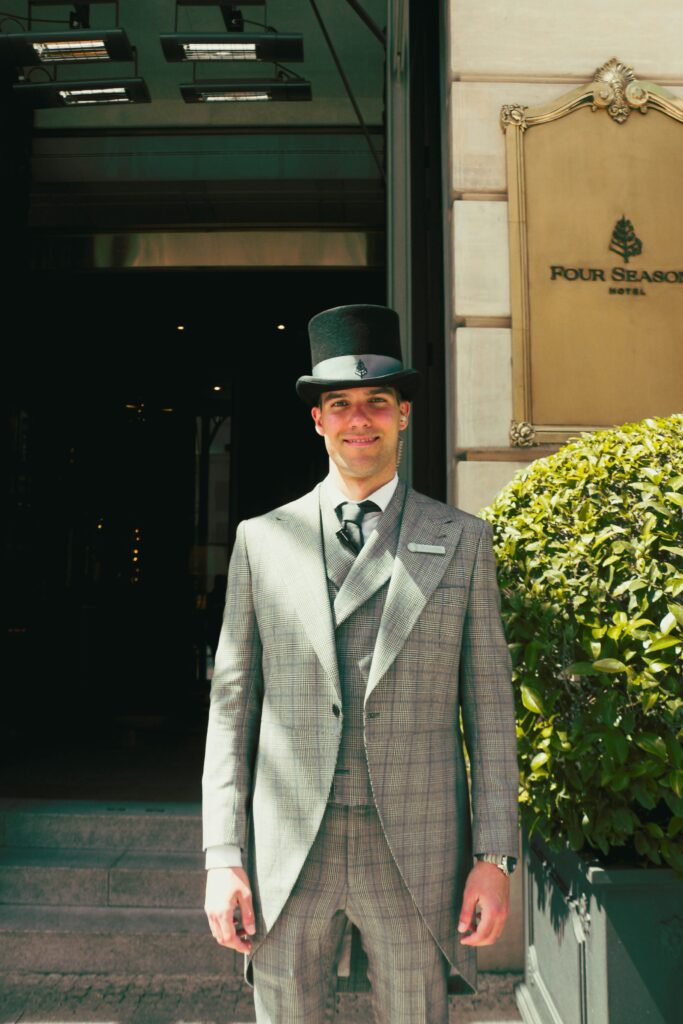
Luxury is often described through marble, thread count and price. Operationally, it is the removal of uncertainty. A premium guest expects the same polished standard at 6 a.m. as at 6 p.m., across reception, housekeeping, dining, transport and concierge.
- Discretion and confidentiality: use names quietly, protect itineraries and share information only with authorised colleagues.
- Anticipation: prepare likely needs from confirmed facts—arrival time, luggage, mobility or dietary requirements—without becoming intrusive.
- Personalisation: remember useful preferences with consent; never confuse surveillance with recognition.
- Consistency and reliability: make every handoff invisible to the guest and every promise traceable to an owner.
- Calm under pressure: resolve disruption away from the guest whenever possible; visible panic transfers anxiety.
- VIP protocols: confirm identity, access, security, titles, privacy and contingency plans before arrival.
A hotel, DMC and transport provider may share one arrival. At oui stars, for example, premium standards connect airport assistance and transfers, chauffeur service, concierge support and destination management. The guest experiences one journey, not an organisation chart. Our report on chauffeur fleets for major Paris events shows how timing and real-time communication become hospitality at scale.
Common Mistakes That Prevent Career Growth
Most careers do not stall because someone cannot complete a routine task. They stall because trust erodes. Chronic lateness tells colleagues that plans cannot depend on you. Poor grooming suggests the standard applies only when a manager is watching. Complaining in front of guests makes internal pressure their problem.
Other blockers are quieter: interrupting, ignoring feedback, protecting your department instead of solving the issue, weak product knowledge, incomplete handovers or sharing a celebrity encounter online. Managers promote people who absorb coaching, correct course and help the team improve.
There is also a danger in performing warmth while neglecting boundaries. Hospitality professionals are not required to tolerate abuse. Escalation procedures, safety rules and respectful management protect both staff and guests. Sustainable excellence depends on decent work, not permanent emotional exhaustion—a concern reflected in the ILO’s tourism and hospitality work.
How to Build a Successful Career in Hospitality
Choose education that matches your target. A hospitality degree supports management knowledge; vocational courses, food safety, first aid, revenue management, wine credentials or concierge programmes deepen a specialty. A degree helps, but employers also value consistent performance.
Internships and frontline roles provide repetitions classrooms cannot. Rotate through reception, reservations, food and beverage, housekeeping or operations. Shadow a manager or guest-relations lead, then record the problem, your response, the outcome and what you would change.
Languages and international experience expand judgement as much as employability. Build digital competence, study the economics of your operation and understand how reviews, distribution and loyalty influence decisions. For a wider view of the industry’s commercial structure, see our investigation into the companies shaping global tourism distribution.
A practical 90-day development plan
| Period | Priority | Proof of progress |
|---|---|---|
| Days 1–30 | Master standards, product knowledge and systems | Accurate tasks, fewer corrections, reliable punctuality |
| Days 31–60 | Practise listening, recovery and cross-team handovers | Documented feedback and two solved guest scenarios |
| Days 61–90 | Own a small improvement and develop leadership | A measurable change in time, quality or guest clarity |
Network by being useful: attend industry events, ask thoughtful questions and stay in contact without demanding favours. Seek mentors across departments. If your goal is corporate or luxury travel, examine how agencies and DMCs translate complex briefs into delivery; a business travel request process reveals the importance of precise names, timings, destinations and service expectations.

The Career Advantage No Technology Can Replace
The finest professionals make complex work feel effortless, but their ease is built on preparation. They notice without hovering, remember without exposing, solve without dramatizing and lead without diminishing others. Their hospitality skills travel well—from a resort in Nice to a Paris hotel, an airline lounge, a cruise ship, a Normandy itinerary or an international event.
Technical knowledge may secure the interview. Professionalism earns trust. Emotional intelligence creates loyalty. Together, they turn service into hospitality—and a job into a career with room to grow.
Hospitality Careers FAQ
What are the most important hospitality skills?
Communication, listening, emotional intelligence, cultural awareness, attention to detail, teamwork, problem solving, time management, integrity and calm under pressure form the core. Digital literacy and product knowledge make those qualities operational.
What is the difference between service and hospitality?
Service is the accurate completion of a task. Hospitality combines that task with awareness, respect and personal attention so the guest feels recognised, comfortable and secure.
Do I need a degree for a hospitality career?
Not always. Degrees can support management progression, while vocational training, certifications, internships and strong frontline performance can open many operational and specialist roles. Requirements vary by employer and country.
How important are languages in hotel and tourism jobs?
Languages improve access to international roles and help guests feel understood. However, accurate communication, patient listening and cultural respect matter more than claiming fluency you cannot use confidently.
Which digital skills do hospitality employers value?
Employers commonly value confidence with booking systems, property-management platforms, CRM and point-of-sale tools, secure messaging, spreadsheets and data protection. The best professionals use technology efficiently without losing human attention.
Editorial note: Employment conditions, qualifications and legal responsibilities vary by country and role. Candidates should confirm local requirements with employers, schools and public authorities.