






FACES OF HOSPITALITY · PARIS
Osama Samaha — Editor-in-Chief
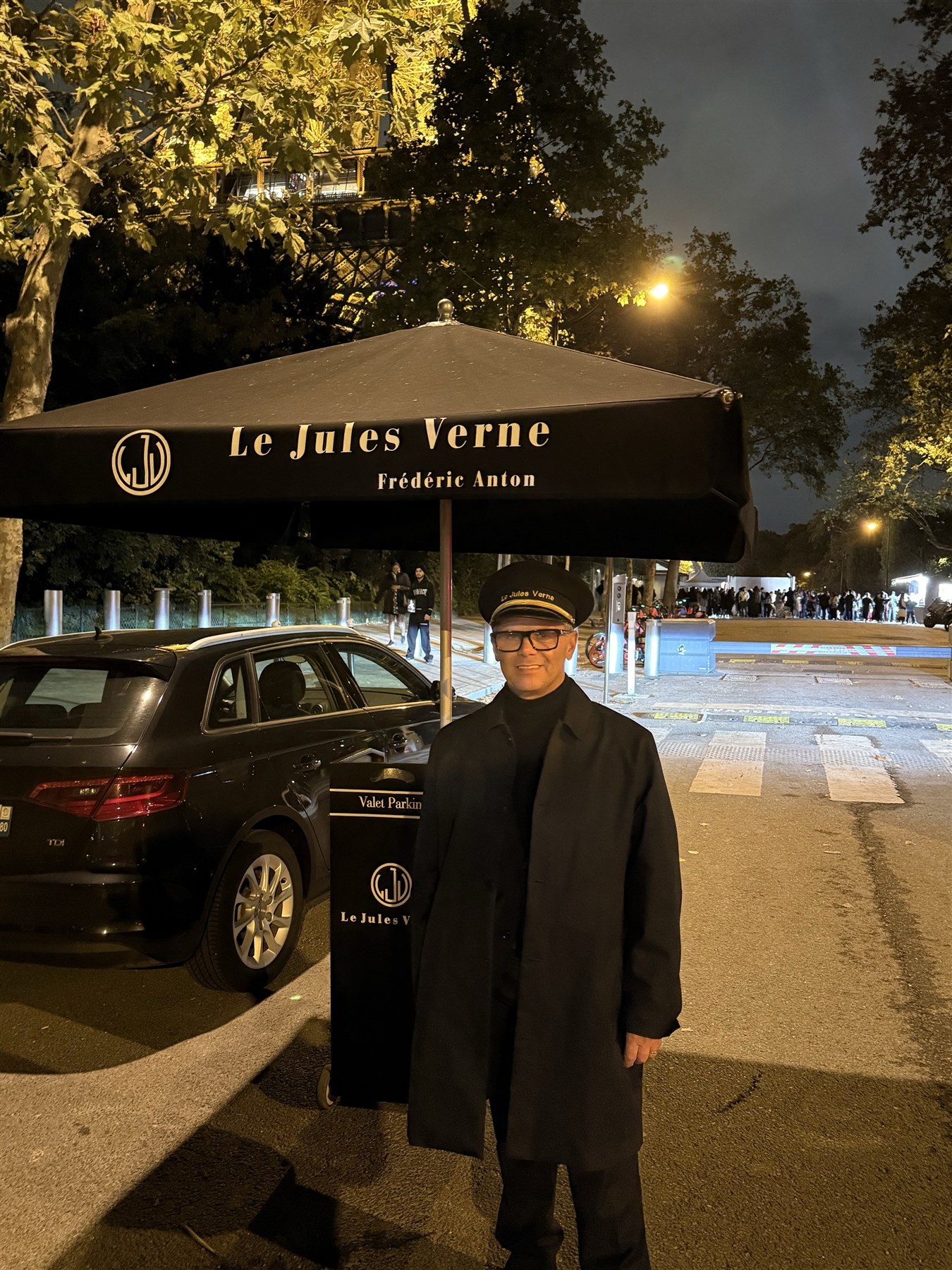
Christophe at the Le Jules Verne reception point.
Guests arrive from across the world; faces and officeholders come and go. At the entrance to Le Jules Verne, Christophe’s story spans 35 years of welcome and trust beneath the lights of the Eiffel Tower.
The key that begins the evening
Before a guest goes up to dinner, a car key changes hands. A brief moment at the kerb comes before the lift, the view and the table. At a restaurant people visit for an exceptional experience inside the Eiffel Tower, it is hospitality’s first test: leaving something valuable in another person’s care and continuing with the evening.
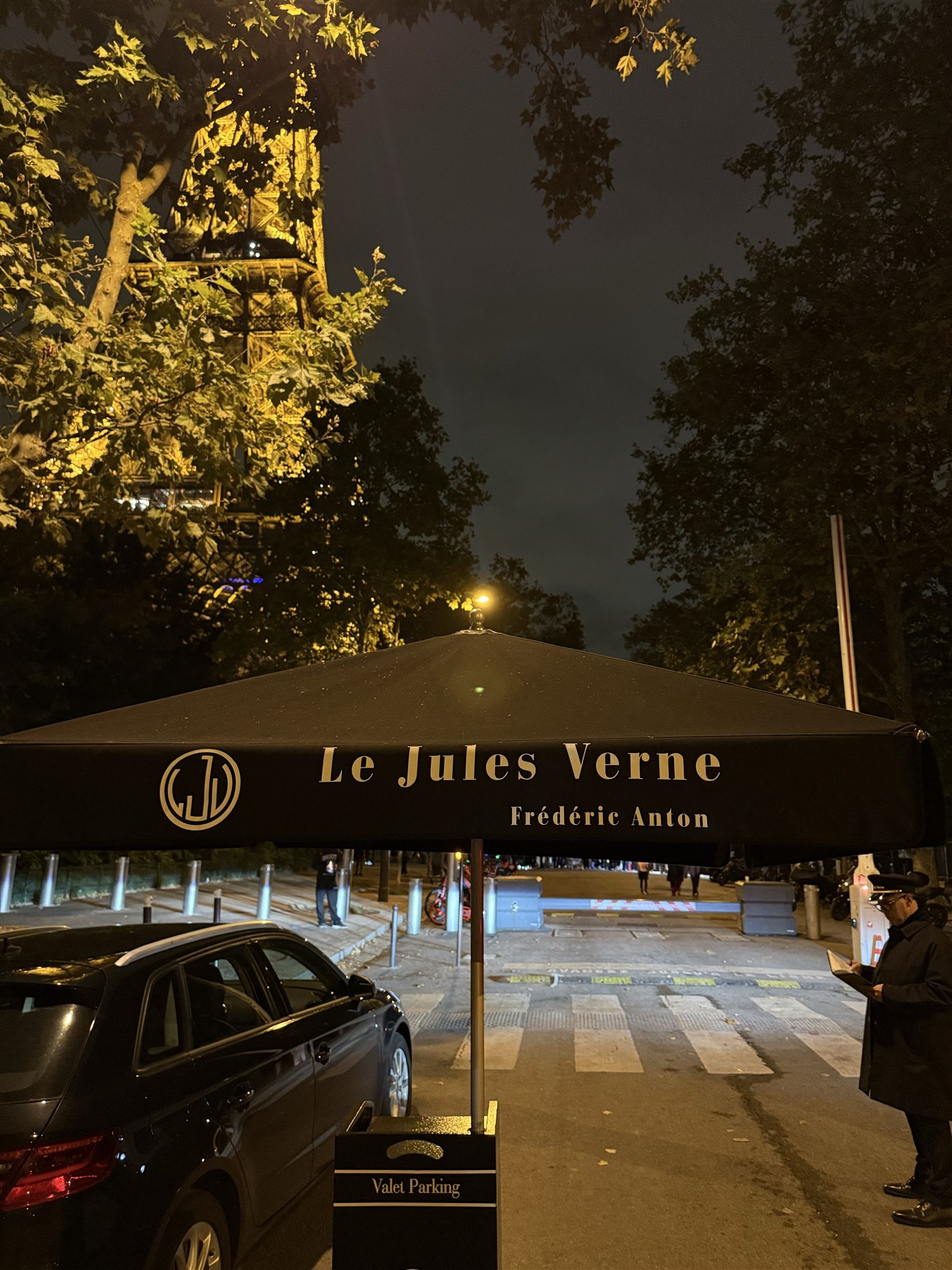
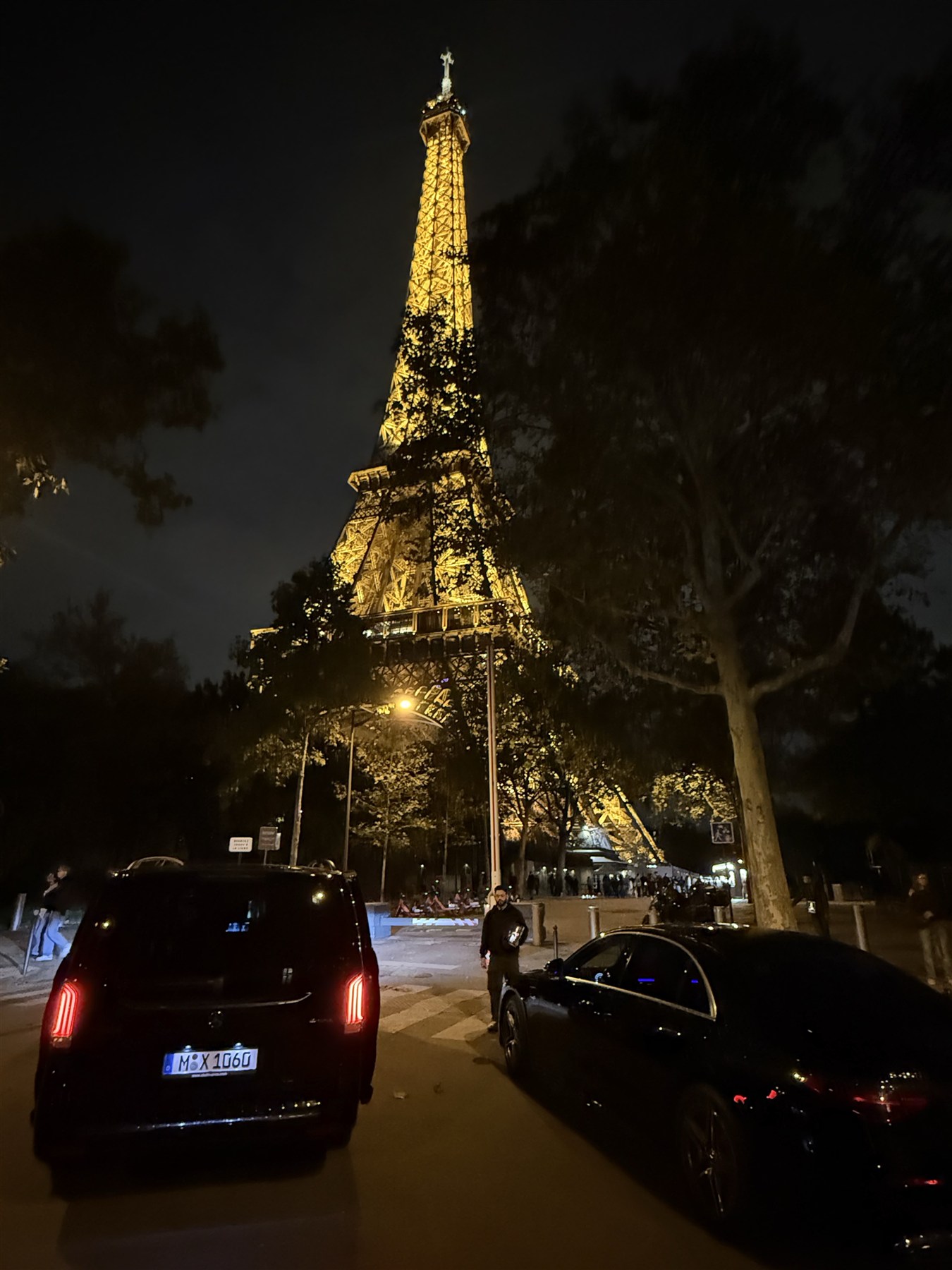
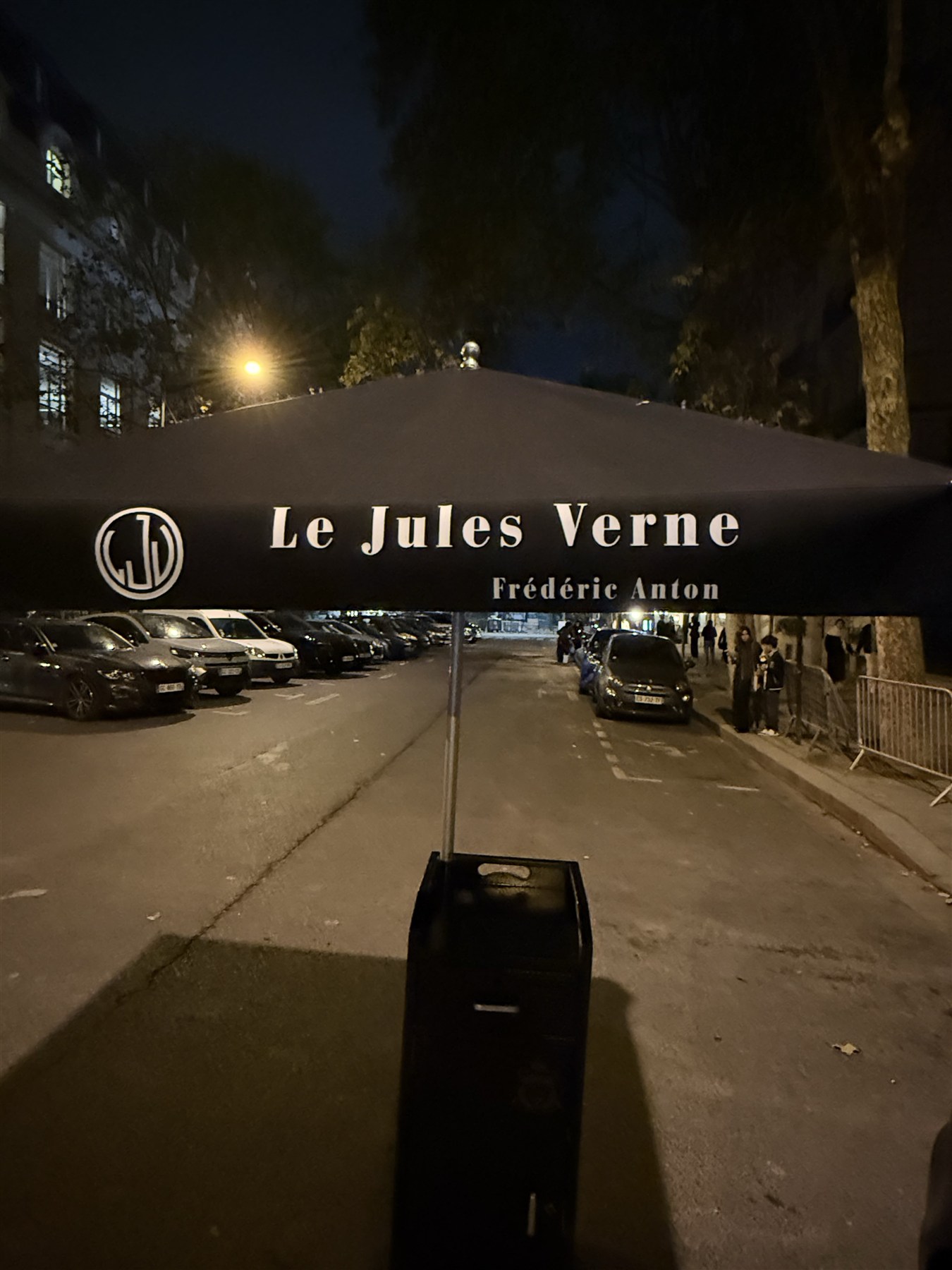
The dark canopy carries Le Jules Verne in gold lettering, with Frédéric Anton’s name below. The tower glows behind the trees. Beside a car stands a reception point marked Valet Parking. At the heart of this scene is Christophe, wearing a cap bearing the restaurant’s name. The photograph captures a moment. His story extends across 35 years, according to the account of the magazine’s Editor-in-Chief, Osama Samaha.
Thirty-five years as the world passes by
Thirty-five years in the same location, beside one of the world’s most recognisable landmarks. Parties arrive and depart, seasons turn and faces change. The street receives a succession of new visitors. Christophe is the human thread this story follows through that long passage.
He receives the cars of restaurant reservation holders, takes their keys and parks their vehicles, helping guests find the restaurant entrance. Keys to many kinds of luxury car pass through his hands. Every vehicle has an owner; every owner brings a journey, an occasion and expectations to this address.
Samaha recalls heads of state, tourism ministers, officials and managers passing through this place over those years. Visits ended, responsibilities changed hands and names left the public stage. Christophe remained at the entrance to the experience. That continuity draws attention to a memory seldom placed at the centre of the photograph: the memory of those who welcome the world while the world concentrates on its destination.
At the kerb, luxury becomes a responsibility
A luxury car readily attracts attention. Christophe’s work invites us to look at what happens once it stops: keys are transferred, a responsibility begins, and a guest needs to know the way. Here, a promise of refined service becomes something a person does.
Such details can seem small until their absence is imagined. Where should an arriving guest leave the car? Which entrance should they use? How will they return to the reception point? A smooth arrival gives the evening its opening rhythm, leaving room to enjoy the reason for coming: lunch above Paris or dinner at an address carrying so much symbolism.
This is one of luxury’s most human expressions: finding someone who takes responsibility for a detail that matters to you. Upstairs, the table is prepared and the food is precisely composed. Below, the work of looking after the guest starts before they sit down. The restaurant’s reputation passes along this kerb too.
Le Jules Verne: an appointment 125 metres above Paris
The destination occupies the Eiffel Tower’s second floor, approximately 125 metres above ground. A dedicated lift takes guests towards a view of Paris through the tower’s ironwork. Le Jules Verne brings together setting, cuisine and service, with Frédéric Anton directing its culinary vision. The restaurant holds two Michelin stars, having received its second in 2024.
The MICHELIN Guide highlights precision in the kitchen, the quality of ingredients and the welcome, as well as the outlook through the structure’s metal frame. Food here is connected to architecture and the surrounding city: a setting lends the meal part of its meaning, and a team gives that setting its daily life.
The gold in the photographs belongs to the tower’s light and the lettering above the reception point. The name on the canopy extends into a kitchen, a dining room, a lift and the people working at different stages of the journey. Within that larger undertaking, Christophe’s story lets us pause at the beginning.
The experience that does not appear on the menu
Long experience can have a quiet presence. A photograph cannot show all of it; nor can it be reduced to the number of keys someone has handled. But 35 years at one reception point is reason enough to listen. What has he noticed? What has changed? Which details are visible from the street and easily missed by someone passing through once?
Christophe deserves to be asked those questions himself. Behind every celebrated tourism address are people who accumulate experience at its everyday edges: at the entrance, in the station, outside the hotel and beside the car. They meet visitors arriving with expectations and returning with their impressions.
That is where this story finds its inspiration. Long service in a role dependent on trust places daily work where it belongs: within our field of respect. A guest may remember one evening for years; someone who has spent years welcoming evenings like it shares a moment of that memory.
A message to decision-makers: ask Christophe
If you want to understand how this place has changed over 35 years, ask Christophe. Ask about each five-year chapter. What changed in the street, in reaching the restaurant, in visitors’ questions and expectations? What became easier, and what became harder?
Set your maps and plans alongside that first-hand account. Give its author time to speak; ask for examples, dates and details. What someone has noticed over so many years at this entrance can open practical questions about welcoming visitors and managing a place. It can give a new decision-maker a starting point closer to what happens on the ground.
A decision to change something may begin in an office, but its story often begins in the street. Here, beneath the Eiffel Tower, stands a man worth listening to before we head upstairs. His name is Christophe. If you want to know what changed in every five years of those thirty-five, begin with him.
Planning a visit to Le Jules Verne
The restaurant’s official website gives the private valet reception address as 1 avenue Charles Floquet and lists the service as included. Restaurant access is by its dedicated lift from Entrance 1, Allée des Refuzniks. Check your reservation confirmation, arrival instructions and dress requirements before visiting. The Eiffel Tower website explains that a restaurant reservation does not include general admission to the monument; a public visit requires separate arrangements and a ticket.
Add OUISTARS Travel as a preferred source on Google
Inside Le Jules Verne
A restaurant video published by Les Nouvelles Gastronomiques.