

Ten crafts that shaped the world’s memory · Episode two
After the Great East Japan Earthquake of 11 March 2011, some survivors brought repairers objects that were not commercially precious: fragments of bowls rescued from homes and families that were gone. Kintsugi practitioner Kunio Nakamura joined the pottery with Japanese lacquer and traced the wound in gold. A participant later wrote that he had healed not only the keepsake, but her as well. That letter is where the real story of kintsugi begins—not as decoration for a crack, but as slow work that returns an object’s name and restores its owner’s connection to what was lost.
The letter that came out of the rubble
Japan’s official Highlighting Japan magazine records that Nakamura, founder of Tokyo cultural space Rokujigen, held workshops to repair vessels broken in disaster areas after 2011. Some pieces were reminders of family members who had died; replacing them with new bowls was not an answer. Kintsugi returned them to use without erasing the event. The gold line said plainly that the object had broken, but it also said that someone had given it time to return. That distance between fracture and return gave the craft its human force and helped it travel far beyond Japan.
How shards become a golden line
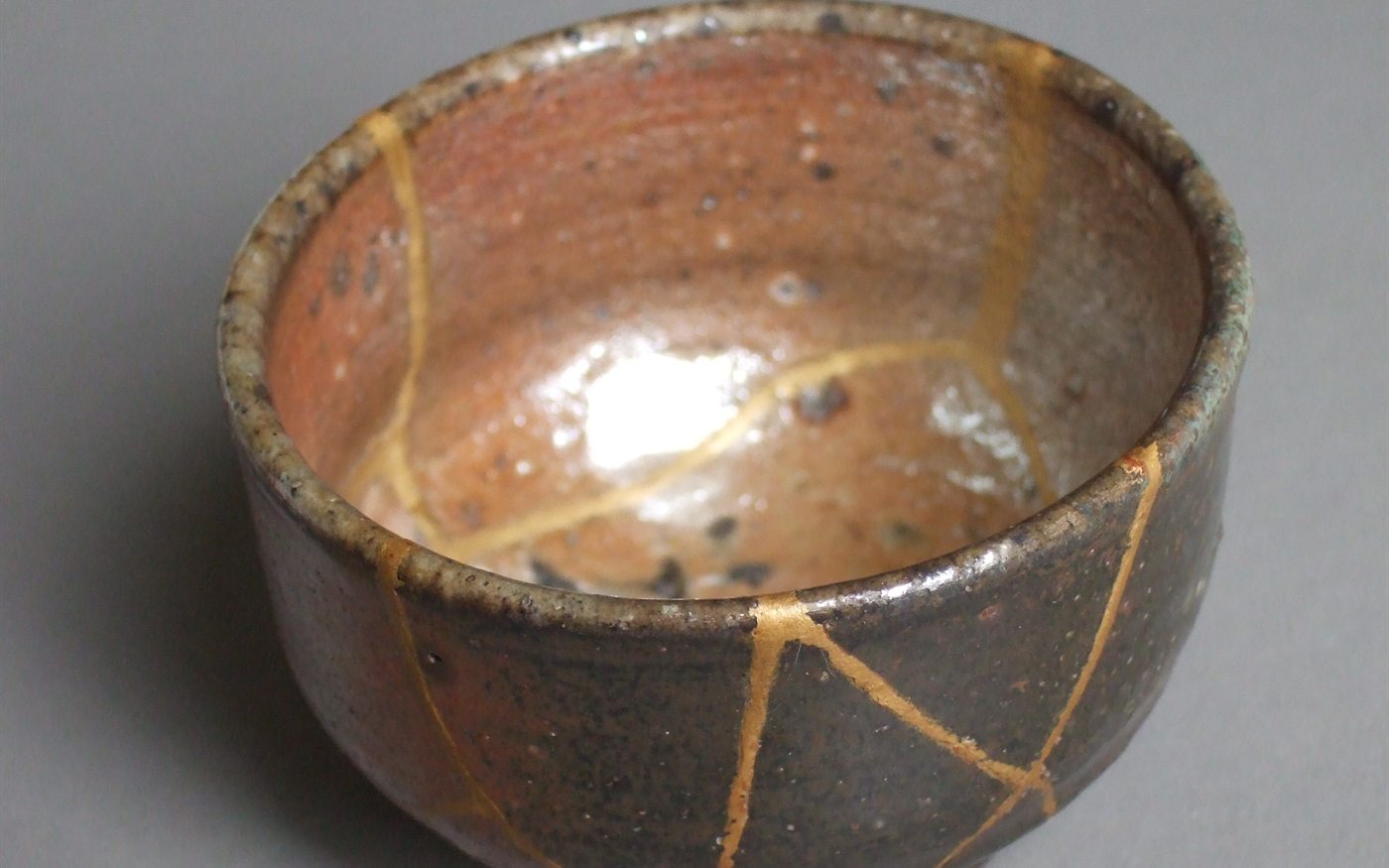
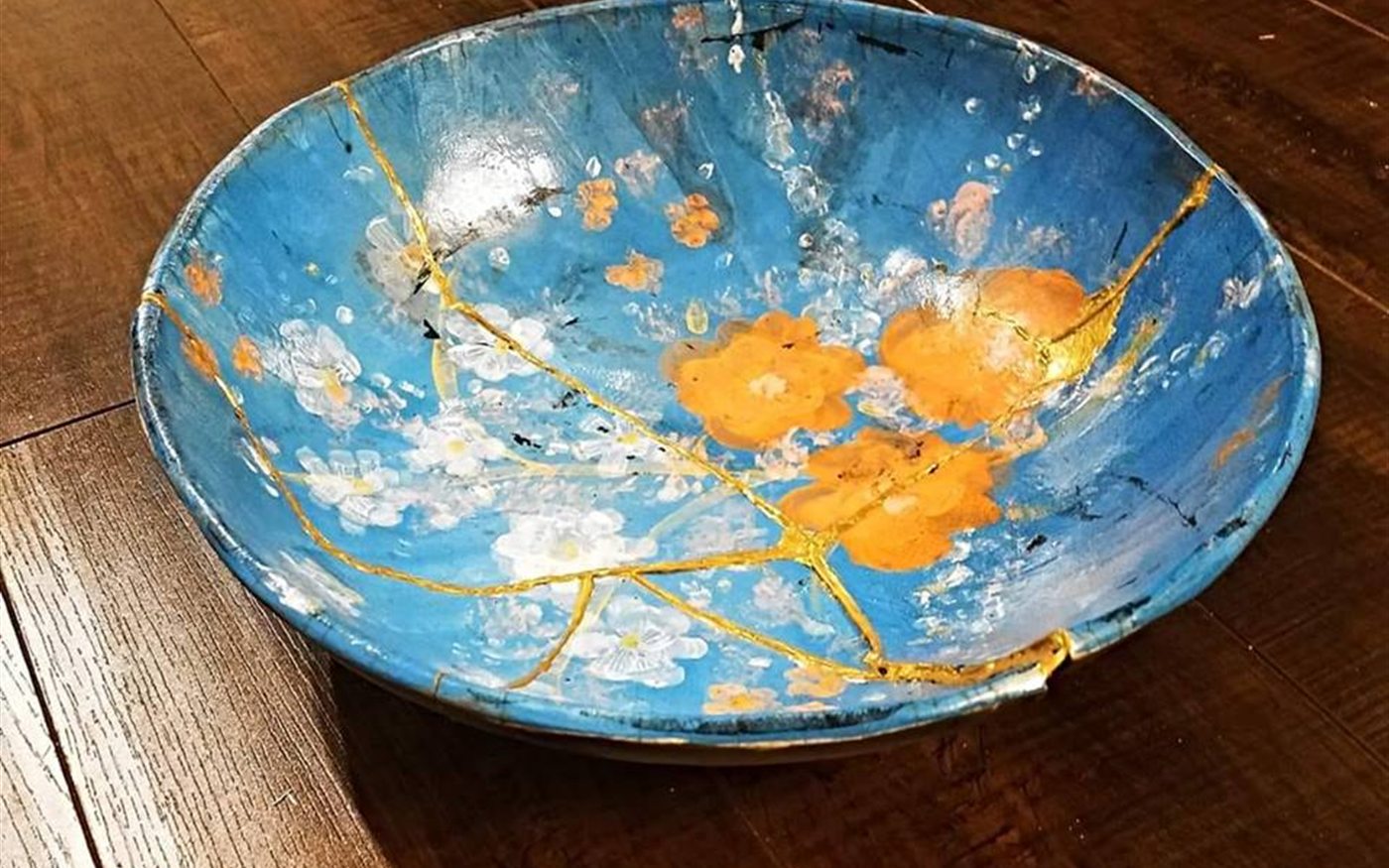
Traditional repair joins the fragments with preparations based on urushi, the sap of the Japanese lacquer tree. Gaps are filled, layers levelled and cured in controlled humidity, then polished before gold or silver powder is applied to the seam. This is not instant glueing. The work may take weeks or months because every layer needs time. Gold does not give the vessel its structural strength; the artisan’s knowledge does—how to prepare lacquer, manage humidity, read a fragile edge and prevent today’s repair from becoming tomorrow’s break.
From tea bowls to an ethic of use
Kintsugi grew alongside the tea culture refined in sixteenth-century Japan, when chawan bowls became part of hospitality and of an aesthetic that valued restraint and use. Bowls inevitably chipped or broke. Instead of disguising the fault, visible repair became part of the vessel’s biography. Japanese government sources describe the lines as lightning across darkness, a golden river or a branch reaching into the sky. No two objects carry the same map, because the accident itself becomes part of the design.
A skill learned by the hand, not reduced to a kit
The worldwide popularity of quick repair kits has blurred the distinction between traditional kintsugi and decorative versions made with synthetic resin and metallic paint. A modern workshop can be an enjoyable introduction, but it is not automatically equivalent in material, time, food safety or durability to an urushi repair. Traditional practitioners learn to handle raw lacquer, which can irritate skin before it cures, and to respect stages that cannot be rushed. Passing on the craft therefore requires a teacher, a workshop and responsibility—not only a slogan about the beauty of scars.
Urushi: the forest behind the bowl
Every repaired seam begins far from the worktable, at a lacquer tree. Japanese government reporting shows that domestic urushi production fell sharply from the 1950s as plastics spread and imported lacquer increased. In Joboji, Iwate Prefecture, residents, companies and local government worked together to plant trees, train sap collectors and protect the industry. A single tree yields only a small amount over a season, and collection depends on precise cuts and timing. Safeguarding kintsugi therefore means safeguarding an entire chain: tree grower, lacquer tapper, refiner, brush maker and repairer.
What Japan and UNESCO actually protect
Kintsugi is not independently inscribed on UNESCO’s Intangible Cultural Heritage list, and it should not be presented as if it were. Its knowledge base, however, sits within Japanese policies that protect urushi and traditional craft skills. In 2020 UNESCO inscribed a group of traditional skills used to conserve and transmit Japanese wooden architecture, including knowledge connected to the production and use of lacquer in conservation. The distinction matters: serious safeguarding does not market a fashionable word; it supports original materials, skilled people and long training.
Will a traveller cross borders for a broken bowl?
Yes—when the journey becomes an encounter with knowledge. In Tokyo, Kyoto and craft regions, visitors can book reputable classes, visit ceramics and lacquer museums or entrust a personally important object to a specialist after agreeing on time, materials and cost. This form of travel creates income for teachers, extends stays and links museums with workshops and local shops. Respectful visitors follow photography and safety rules, do not expect months of work in one hour, and ask whether a class uses natural urushi or a modern substitute.
The repair economy versus the replacement economy
Kintsugi’s economic value does not come from gold alone. It turns repair into a high-skill knowledge service. A cheap mass-produced bowl may not justify months of labour, but a family object, an artist’s ceramic or a tea bowl can carry value far beyond its first price. The craft becomes part of a circular economy that preserves objects and stories while giving artisans income from restoration, teaching and visits. By contrast, factory products printed with imitation gold cracks consume the craft’s image without supporting the people who hold its knowledge.
The lesson: repair does not restore the past unchanged
Kintsugi never promises to return a bowl to the second before it fell. Its promise is more honest: the vessel can live again while what happened remains visible. That is why it mattered to people who had lost homes and relatives, and why travellers find in it more than a souvenir. Gold does not erase the fracture; it locates it. The artisan does not conceal time; they give it form. When we repair, pay for a master’s time and ask where the lacquer came from, we preserve not only a bowl but a human chain that knows how to make memory usable again.
Craft at a glance
| Home | Japan, with contemporary workshops in Tokyo, Kyoto and ceramics and lacquer regions |
|---|---|
| Core material | Natural urushi and gold or silver powder in traditional practice |
| Time | Weeks or months depending on damage, materials and curing stages |
| Ask before booking | Lacquer type, food safety, completion time and photography policy |
| Tourism value | Classes, museums, personal restoration and documented craft purchases |
Questions before visiting
Is every gold-coloured repair traditional kintsugi?
No. Many classes use modern resins. Ask about natural urushi and the full process.
Can I eat from the repaired vessel?
That depends on materials and execution. Obtain clear advice from the practitioner.
Can a workshop finish the repair in one session?
Introductory versions may; traditional work requires repeated stages and long curing.
May I bring an object from abroad?
Often, by prior arrangement with photographs and a discussion of transport, customs and time.
Sources and reference institutions
- Government of Japan — Kintsugi: The Healing Power of Pottery Repair
- Japan Creative Centre, Embassy of Japan in Singapore — Kintsugi
- Government of Japan — Joboji Urushi Lacquer and Joboji-nuri Lacquerware
- UNESCO — Traditional skills, techniques and knowledge for the conservation and transmission of wooden architecture in Japan
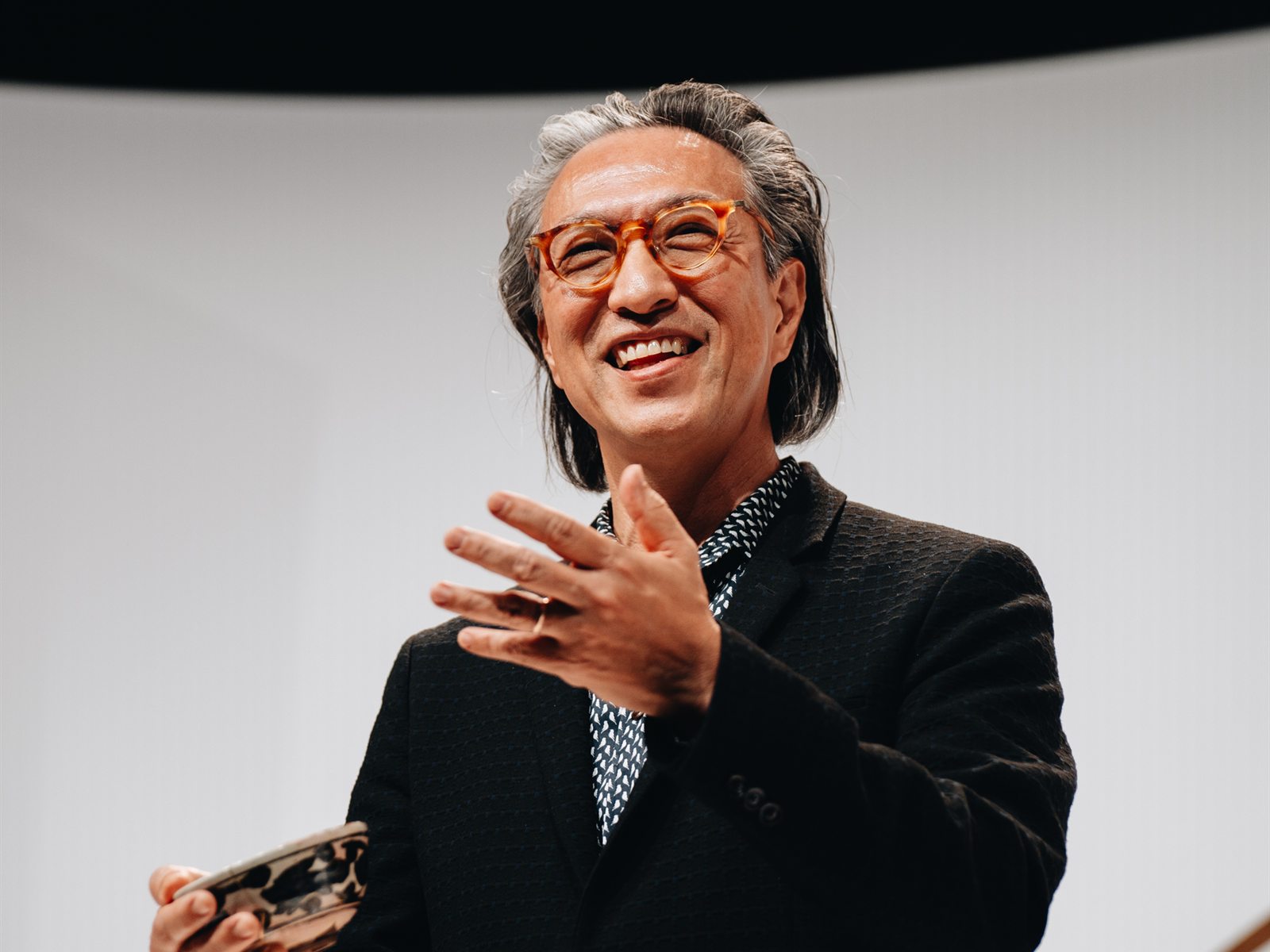
Image credit: Artist Makoto Fujimura explaining kintsugi in London, 2023. ARC Forum / Wikimedia Commons, CC0.