


















Ten crafts that shaped the memory of the world · Episode 7
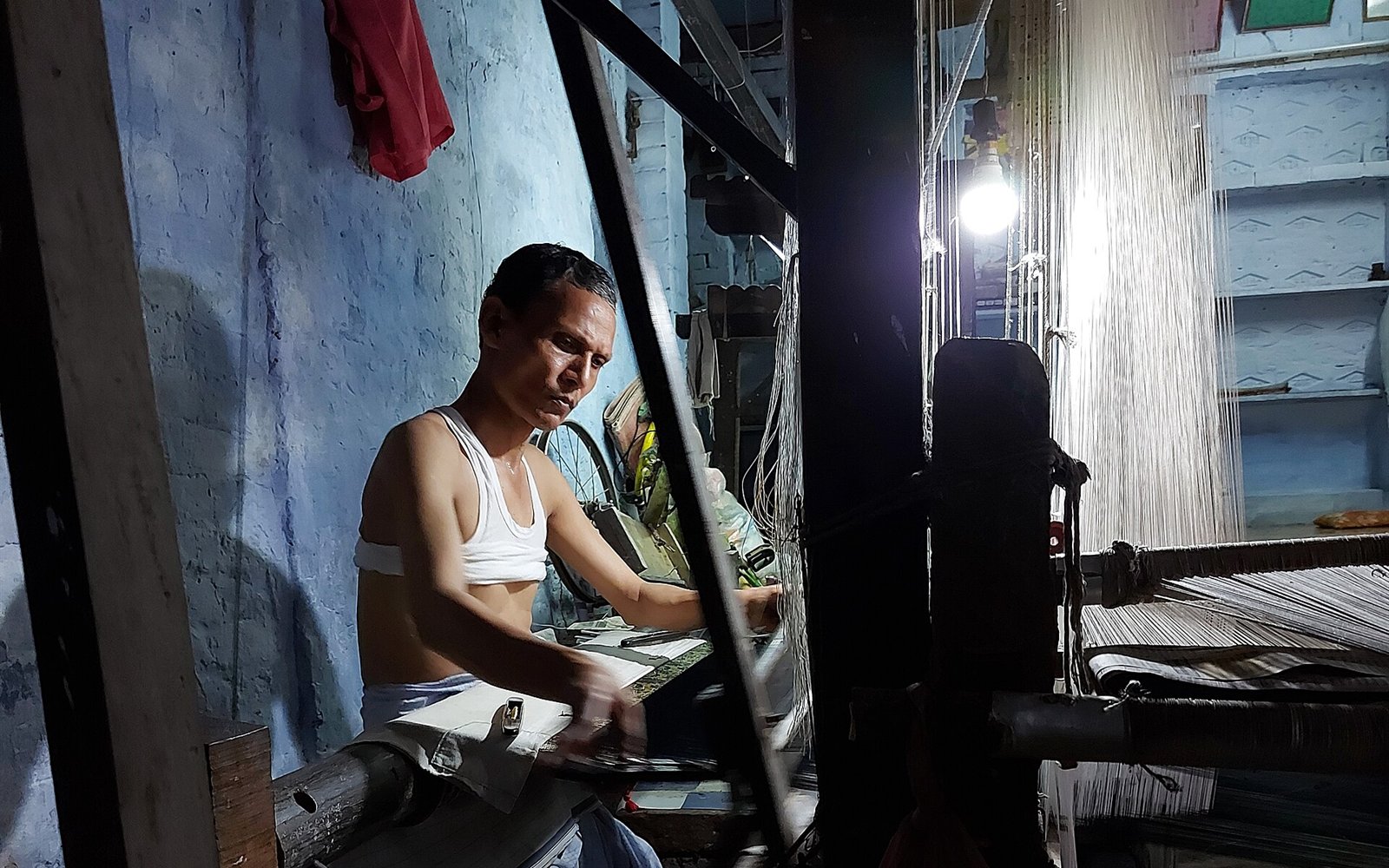
In a narrow Varanasi workroom, a weaver sits between the timber of his loom and a luminous wall of warp. The visitor cannot yet see a finished sari—only a concentrated face, a hand driving the shuttle, and fine threads slowly becoming metal, flower and shadow. One wrong movement can spoil a line of pattern; one correct movement must be repeated thousands of times before cloth associated with weddings, prestige and the city itself is born. This is where the story of Banarasi silk begins: not in a shop window, but with a person who measures luxury in hours missing from the price tag.
Cloth that carries a city’s name
Varanasi is also called Banaras and Kashi, which is why Banarasi silk, Banarasi sari and Varanasi brocade coexist in English. The name is not a colourway or a motif that may be printed anywhere. It describes an ecosystem of materials, techniques, families and neighbouring trades. India’s intellectual-property registry recorded “Banaras Brocades and Sarees” as a geographical indication in 2009, linking the product to a defined region, reputation and skill. A GI cannot make every market piece authentic, but it gives the buyer a traceable starting point.
What actually happens on the loom?
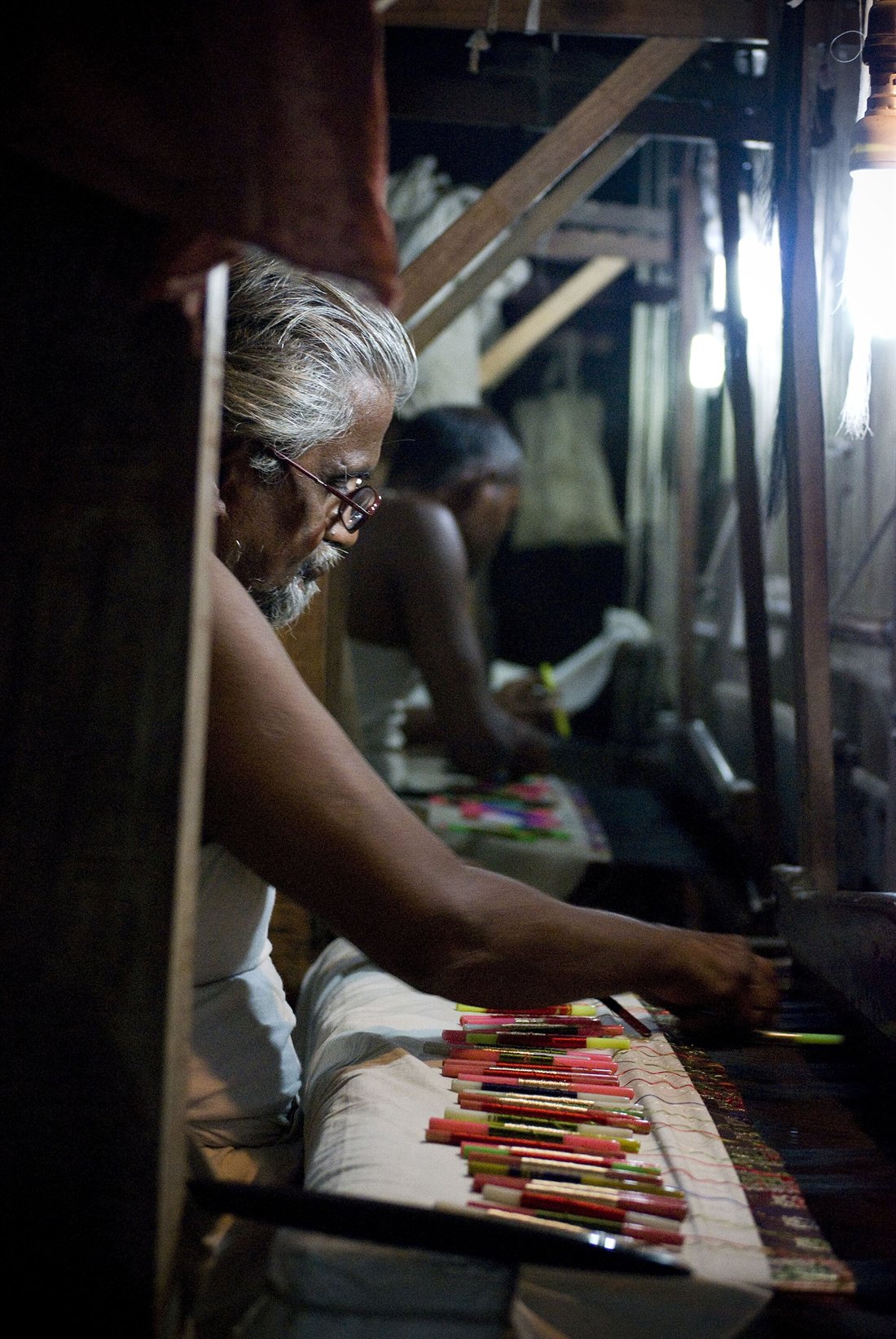
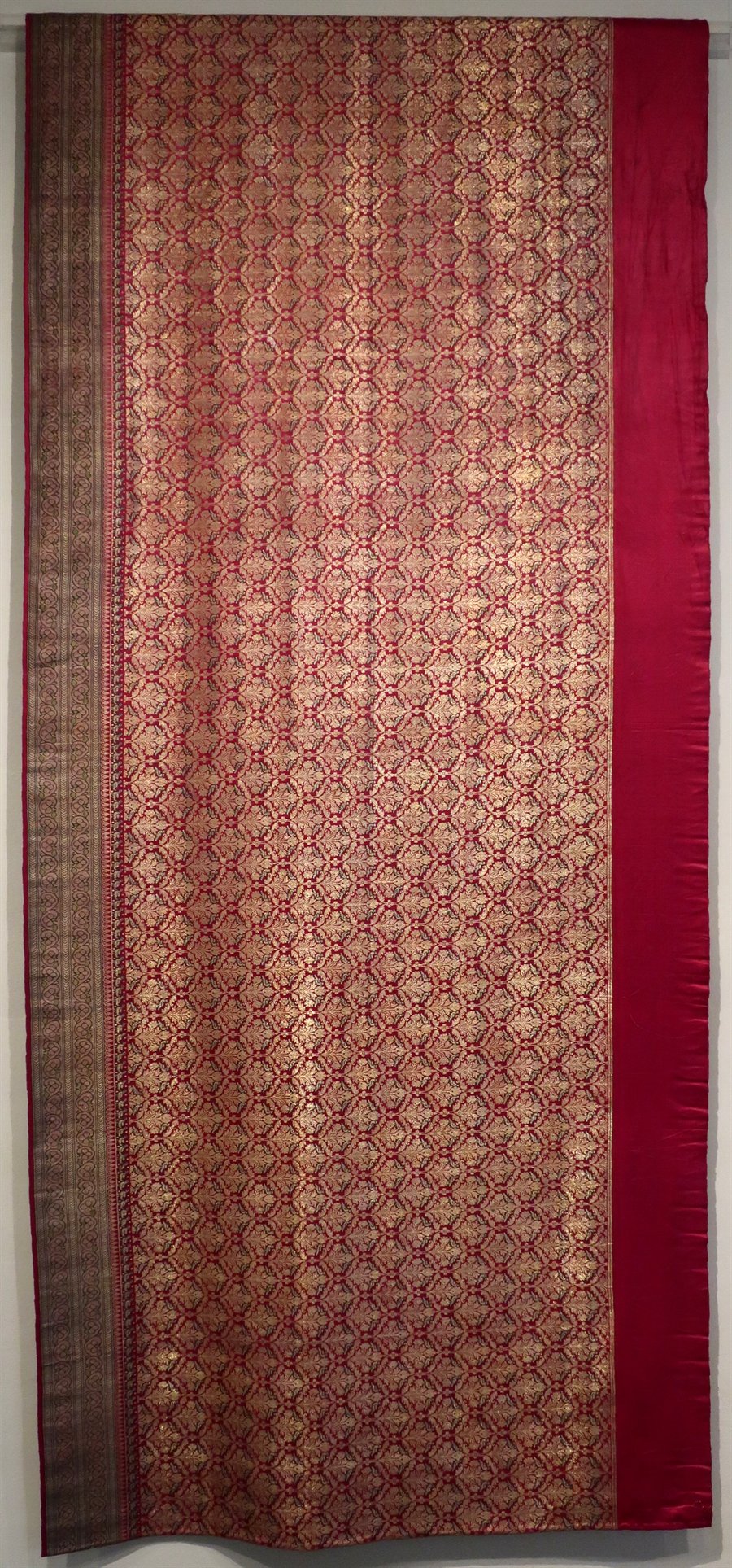
Brocade is patterned during weaving by supplementary weft rather than decorated after the base cloth is finished. In fine silk pieces, warp and weft may use twisted mulberry silk known as katan, while zari provides metallic light. The loom lifts calculated groups of warp threads, the shuttle carries the ground weft, and extra yarns construct flowers, nets or borders. Pattern becomes part of the fabric’s body, not a film sitting on its surface. This structural difference is essential when a printed imitation is marketed as woven brocade.
From naqshaband to weaver: one sari has many authors
The chain begins with the pattern designer, or naqshaband, whose drawing is converted into a grid the loom can read. Dyers colour yarn, specialists prepare the warp, card punchers translate the graph for jacquard, winders fill bobbins, weavers build the cloth and finishers cut floats and complete edges. Older jala and naksha systems organised pattern before punch-card jacquard spread. “The weaver’s hand” is an honest phrase, but it can hide the full orchestra that makes that hand possible.
Karwa and fekwa: technique is visible on the reverse
In karwa work, small separate bobbins carry supplementary weft into selected areas, demanding time and control and often leaving a cleaner reverse when finely executed. In fekwa, the extra weft travels across a broader width and the floating sections are cut after weaving, leaving clipped yarns on the back. Both are established methods; it is misleading to reduce one to “real” and the other to “fake”. The professional questions are which technique is declared, how well it is executed, and whether description and price match the labour.
Jangla, tanchoi, tissue and butidar: a buyer’s vocabulary
Jangla spreads flowing vegetal networks across the field. Tanchoi builds dense pattern with multiple wefts and can minimise long floats. Tissue creates a light metallic surface; butidar distributes small repeated motifs; cutwork trims supplementary-weft floats after weaving. These names do not guarantee one grade of quality, but they explain construction. Ask a seller to point out the technique and motif on the actual cloth instead of relying on words such as “royal” or “exclusive”.
A long history without an easy legend
Varanasi has traded textiles for centuries, and documentary records and surviving objects confirm the later prosperity of its brocade and zari, particularly through courtly patronage and encounters with Persian and Mughal ornamental languages. Some popular stories about a single migration or an exact birthday for the sari lack firm documentation. An Indian government craft study itself notes that the precise origin is difficult to establish before assembling clearer later evidence. The tradition needs no invented date: its achievement lies in turning many encounters into a local visual grammar.
Knowledge passes through the home—and now needs school as well
Generations learned in the household: a child watching a father at the pit loom, women preparing yarn and bobbins, a young worker mastering tension before being trusted with a border. Family transmission becomes fragile when incomes fall and younger people seek faster careers. India’s Development Commissioner for Handlooms operates Weavers’ Service Centres, while the Indian Institutes of Handloom Technology system includes Varanasi. These institutions need not replace the master; they can add design, testing, technology and market access to workshop knowledge.
GI and India Handloom Brand: what do they protect?
GI application 99 identifies Banaras Brocades and Sarees as handicraft goods from Uttar Pradesh, and the official registry lists authorised users who can be checked. India Handloom Brand, launched by the Government of India in 2015, connects its label to stated standards for raw material, quality, processing and social and environmental criteria; Banaras Brocade Silk Saree appears in its product portfolio. Neither mark guarantees taste or artistry, but both reduce anonymous claims and create a paper trail behind a purchase.
The crisis: imitation moves faster than the maker
Powerlooms and metallic printing can create a similar look rapidly, while an intricate handloom sari may require weeks or months. The issue is not clearly labelled machine-made cloth at an accessible price; it is machine production sold as handloom, or missing information about fibre and zari. Opaque chains of middlemen can compress wages, and fashion volatility pushes families out of weaving. Safeguarding therefore needs honest labels, pay that reflects time, and contemporary design that does not erase origin.
Do people travel to Varanasi for textiles?
Yes. Incredible India presents meeting Muslim master weavers and buying directly as part of understanding the city, not an afterthought to temples and ghats. A responsible itinerary can include a pre-arranged workshop, a craft centre or exhibition, and a demonstration of drawing, cards and weaving before purchase. Godowlia, Chowk and Rajan Silk Market offer broad selections. Treat the workshop as a workplace: book ahead, keep groups small, photograph with permission and do not demand a long unpaid performance.
How to buy authentic Banarasi silk
Ask in writing where the cloth was woven, whether it is handloom or powerloom, its fibre content, the type of zari, the weaving method, and the workshop or maker. Request an invoice and, when a GI-authorised-user or India Handloom Brand claim is made, obtain the registration details and check the official record. Inspect front, reverse, selvedge, floats and repeat, but reject any “one glance” test: hand jacquard can be remarkably regular and imitation may manufacture irregularity. Written traceability is stronger than sales folklore.
Why there is no single correct price
Price varies with silk purity, zari, pattern density, number of colours, karwa or fekwa construction, weaving time and the maker’s reputation. Precious-metal zari is not the same product as synthetic metallic yarn, and a heavy sari is not automatically finer than a light, precise one. Ask for the components of the price instead of bargaining only against the total. If a price cannot plausibly cover weeks of labour, the material or method may not be what the description implied.
Caring for silk and zari after the journey
Keep silk and zari away from direct light, damp and perfume. A breathable cloth wrap and acid-free tissue are appropriate for valuable pieces; change fold lines periodically and avoid hanging a heavy sari for long periods. Dry cleaning should be entrusted to a specialist who understands silk and metallic thread. Store the invoice, workshop name and label photograph with the textile. Documentation is part of the object’s future value.
The lesson: luxury begins before the boutique
A traveller can see a sari in minutes; the weaver first sees graph paper, punch cards, stretched warp and a body bent over a pit loom. Banarasi silk’s lasting value is not shine alone, but whether the person who holds the knowledge can afford to pass it on. When a buyer asks who wove, where and with what—and pays fairly for the answer—luxury becomes a relationship that can sustain a city, a craft and a family.
Craft at a glance
| Protected name | Banaras Brocades and Sarees — Indian GI application 99 |
|---|---|
| Registration | Registered in 2009; verify the current record and authorised user at purchase |
| Construction | Katan silk with supplementary weft and zari, woven on traditional or jacquard handlooms |
| Key techniques | Karwa, fekwa, jangla, tanchoi, tissue, butidar and cutwork |
| Best evidence | Invoice, fibre and technique description, identified workshop, and verifiable GI or India Handloom Brand details |
Questions before visiting
Is every sari sold in Varanasi authentic Banarasi handloom?
No. Location alone is not certification. Ask for written origin, fibre, weaving method and identified workshop or registration details.
Does handloom always show obvious mistakes?
No. A skilled weaver using hand-operated jacquard can achieve high regularity. Irregularity is not a reliable stand-alone test.
What is the difference between silk and zari?
Silk forms the textile; zari is the decorative metallic yarn. It may contain silver or plated metal, or be synthetic, so its composition should be stated.
Where can I meet weavers?
Use a reputable local organiser or craft centre to arrange a respectful Varanasi workshop visit. Book, keep the group small and ask before photographing.
Is Banarasi silk specifically protected by UNESCO?
Not as a separately inscribed UNESCO heritage element in the official sources used here. Varanasi’s Tentative List riverfront dossier mentions sari-making and silk weaving among the city’s traditions; that is not a separate inscription of the craft.
How should I store the sari?
Away from light and damp in a breathable wrap, changing folds periodically and using a specialist for silk and metallic-thread cleaning.
Sources and reference institutions
- Intellectual Property India — GI application 99: Banaras Brocades and Sarees
- Development Commissioner for Handlooms — Banaras Brocades and Sarees product profile
- Development Commissioner for Handlooms — Sustainability in the Handloom Traditions of India
- Development Commissioner for Handlooms — Citizens’ Charter and training institutions
- India Handloom Brand — Know your products
- India Handloom Brand — Banarasi Brocade Silk Saree specification
- India Handloom Brand — store finder
- Incredible India — Seven stories of Varanasi
- Incredible India — Shopping in Varanasi
- UNESCO World Heritage Centre — Iconic Riverfront of the Historic City of Varanasi, Tentative List
- Wikimedia Commons — Banaras handloom weaver in Varanasi
- Wikimedia Commons — Silk Looms, Varanasi
- Wikimedia Commons — 18th-century Varanasi sari, Honolulu Museum of Art
Image credit: Handloom weaver at work in Varanasi, Uttar Pradesh, 2020. Learningleaders / Wikimedia Commons, CC BY-SA 4.0; editorial crop.