









Paris · Luxury hotels · Analysis
Could Louis Vuitton persuade a loyal Plaza Athénée, Four Seasons George V or Prince de Galles guest to try a different Paris address? Of course the name could arouse curiosity. But the question starts with a correction: a bookable Louis Vuitton hotel in Paris is not an announced opening. Confusing a powerful brand destination with an operating hotel changes the entire comparison.
Our argument is that a compelling new reason to visit Paris could bring business to established hotels, not simply take it away. That is a reasoned possibility, not a forecast of guaranteed bookings. Here is what is documented, what remains unknown, and how competition could coexist with a larger luxury-travel market.
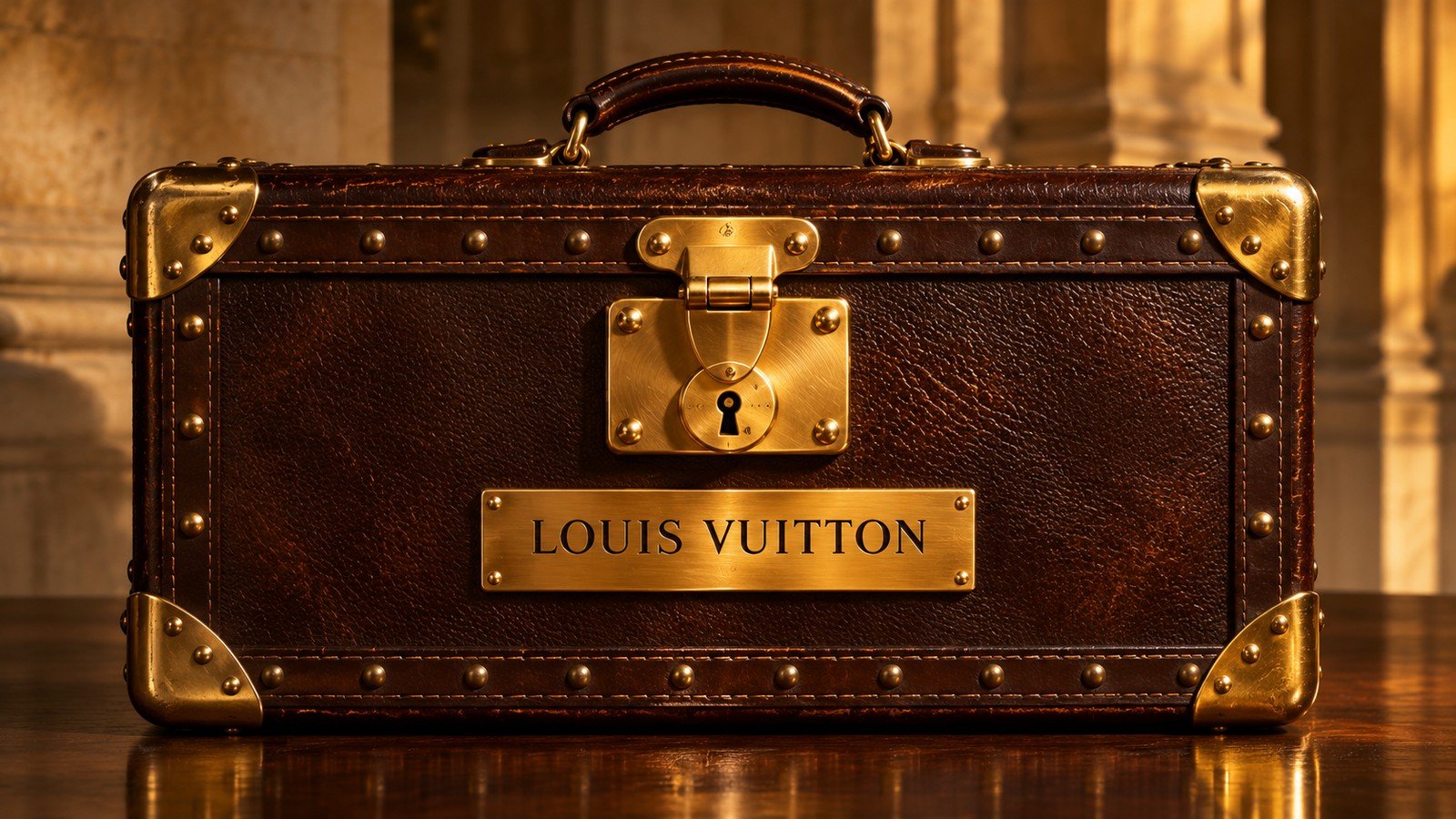
Original editorial illustration inspired by luxury travel: an imagined trunk bearing the Louis Vuitton name. Not an authentic product photograph, an official design or a photograph of a hotel.
Why does everyone keep searching for a Louis Vuitton hotel?
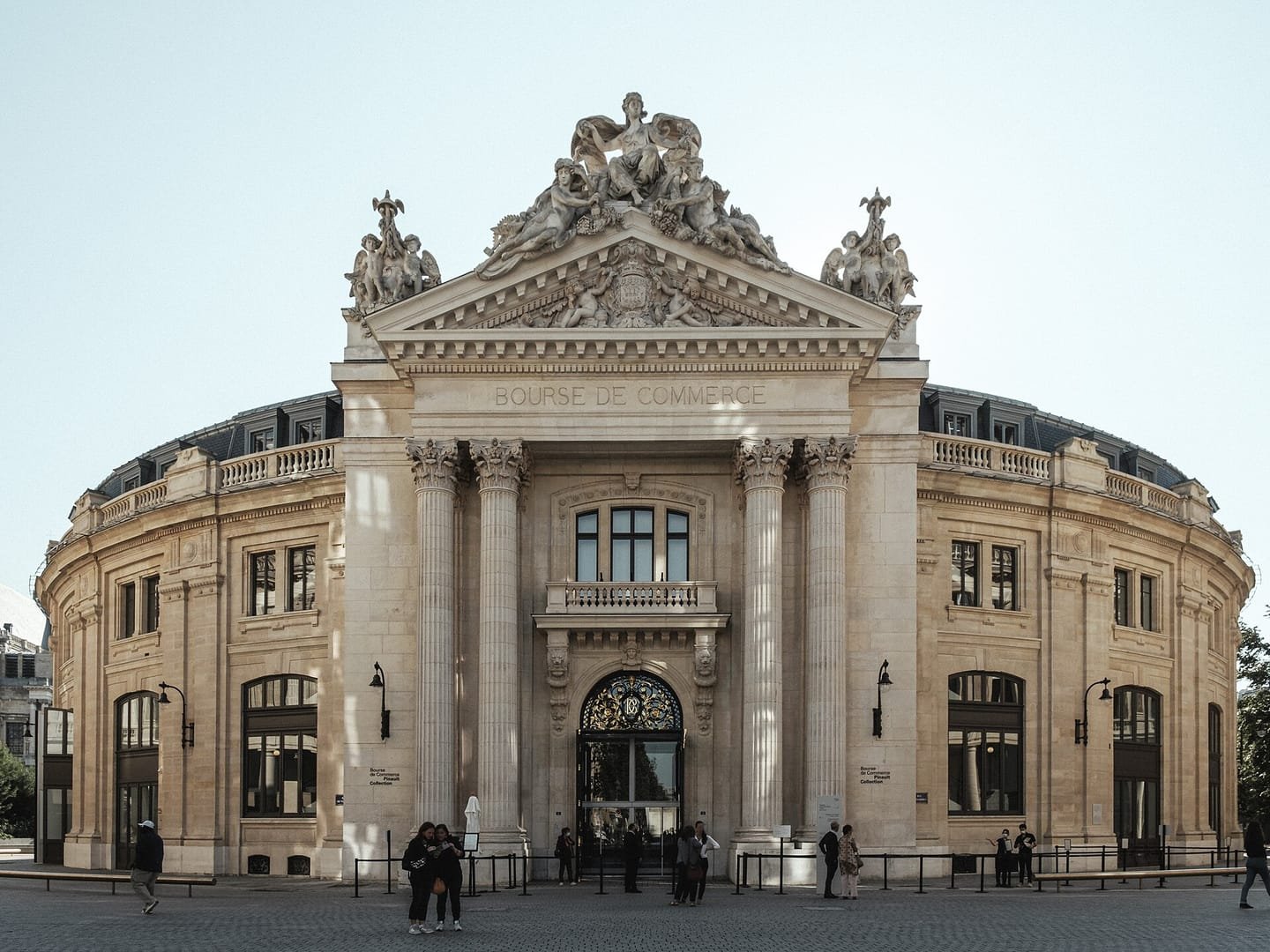
There is a real project behind the searches. The Paris planning record published in October 2023 authorised a 5,886 m² Louis Vuitton store at 103–111 avenue des Champs-Élysées and described complementary hospitality uses. That historic document explains the hotel story; it does not prove the final operating concept.
Skift’s 30 January 2026 report and La Tribune de l’Hôtellerie’s 2 February report describe Bernard Arnault rejecting a Louis Vuitton hotel business at the January results presentation. LVMH’s official calendar dates that presentation to 27 January. This is later evidence than the 2023 planning file.
The distinction matters to anyone planning a real trip. A planning permission can include possible uses years before a business decides what to operate. It is not a room inventory, a reservation contract or an invitation to pay a deposit. Our review on 2 November 2026 did not identify a subsequent official hotel launch announcement that overturns that position.
When will the Louis Vuitton Paris hotel open?
There is no verified hotel opening date to put in a travel calendar. A year attached to construction, a shop opening or an older industry forecast cannot be presented as the date on which guests will be able to sleep at a Louis Vuitton hotel. We are not converting those separate timelines into a booking promise.
What would change the answer? A dated announcement naming an accommodation operation, a stated opening period, an official booking channel and published stay conditions. Until those appear, a traveller should arrange existing accommodation for the intended dates rather than build a journey around an unconfirmed bedroom.
The name can also mislead across cities. Louis Vuitton’s own description of its London “Hotel” calls it a temporary shopping experience and says it is now closed. A hotel-themed experience is not evidence of overnight accommodation in Paris.
Plaza Athénée, George V and Prince de Galles: why guests choose them
The three neighbours are not interchangeable beds under prestigious names. They represent different ways of experiencing the Golden Triangle. Their established hospitality, atmosphere and location give a returning visitor reasons to remain loyal even when a new brand attracts attention.
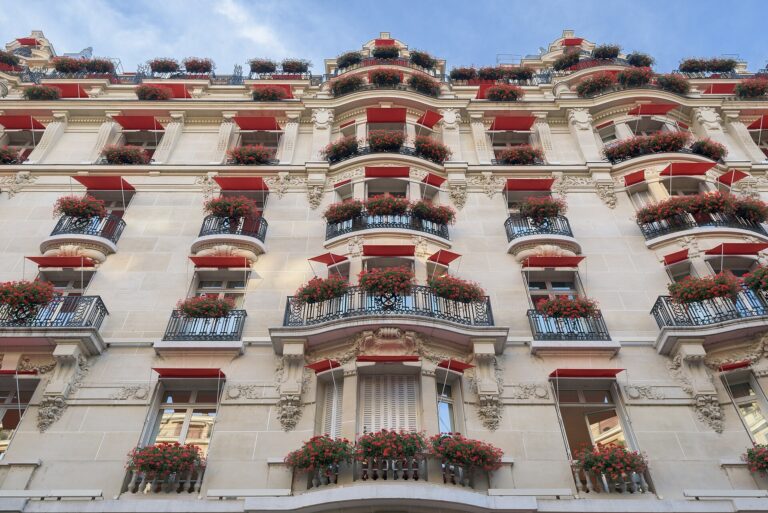
Hôtel Plaza Athénée, at 25 avenue Montaigne, connects a stay with couture shopping, dining and its Dior Spa. Four Seasons Hotel George V, at 31 avenue George V, combines accommodation, a spa and destination restaurants. Prince de Galles, at 33 avenue George V, offers an Art Deco identity and membership in The Luxury Collection. These are existing offers on the hotels’ official sites.
The competitive question is therefore personal. One guest wants the familiar concierge and the same suite; another wants a new story to tell; a third puts restaurant access and walking distance first. A fashionable opening can win a trial stay without permanently winning that guest’s annual travel budget.
Hôtel Plaza Athénée · Four Seasons Hotel George V · Prince de Galles
Could Louis Vuitton bring more guests to the neighbouring hotels?
Our analysis: yes, that is plausible—even without a Louis Vuitton hotel. Imagine a traveller coming to Paris primarily to discover a major new brand destination. If that destination has no bookable bedrooms, the traveller still needs somewhere to sleep. Nearby hotels could benefit from the reason to travel rather than compete for the same room sale.
Three mechanisms could enlarge the market. A brand devotee who had not planned a Paris trip could add one. An existing visitor could extend a stay to include the experience. Someone sleeping elsewhere in the city could spend more time and money in the neighbourhood’s restaurants and shops. These are different economic effects: extra visits do not automatically mean extra hotel nights.
The strongest version of the argument depends on a destination worth travelling for, access visitors can actually obtain, and demand that reaches beyond a single launch week. Attention alone is insufficient. A queue photographed on social media does not reveal how many customers flew in, stayed overnight or spent money with neighbouring businesses.
What if a real Louis Vuitton hotel were announced later?
That would be a different scenario and would require fresh reporting. Some regular luxury-hotel guests could try it for one stay, especially if the experience offered something distinctive. The resulting loss for another hotel would be real on those nights, even if the guest returned the following season.
At the same time, a new hotel could attract visitors who would otherwise have chosen a different city. Guests unable to obtain their preferred dates might book a neighbour instead. A traveller could also split a longer stay between a new address and an old favourite. Competition for individual reservations and growth in the overall destination can occur together.
Neither effect should be assumed in advance. Capacity, service quality, international travel demand and the calendar would determine the balance. A small, highly restricted offer would have a different impact from a hotel with a large public room inventory. No verified inventory exists here on which to build a numerical occupancy forecast.
Would its prices match its neighbours—or go higher?
There is no official Louis Vuitton Paris hotel rate to compare. Quoting a spectacular nightly figure would create an impression of precision without a product to book. The brand’s reputation alone cannot establish a starting price, a suite premium or what breakfast and taxes would include.
If accommodation were announced, a fair comparison would use the same arrival and departure dates, number of guests, room or suite category, included meals, taxes, deposit and cancellation terms. A flexible suite rate and a prepaid entry-level room are different products even when both are sold by luxury hotels.
A premium could reflect rarity or design without proving better hospitality. We therefore move from the absence of an official rate to explicitly labelled editorial scenarios, rather than attributing them to the company.
Our pricing hypothesis: a 20% opening premium—or 50% from day one?
We can go further than saying “prices unknown”, provided we keep the condition visible: if Louis Vuitton ever announces a bookable Paris hotel, what pricing strategy might it choose? These are two editorial scenarios, not inside information, an announced tariff or the only possible strategies.
Scenario A: start around 20% above a genuinely comparable neighbouring offer, then test increases. The opening premium could monetise curiosity without making the first stay as difficult to justify as a much larger jump. Later rises would make sense only if demand, guest satisfaction and repeat business support them. Gradual increases are a possibility, not an automatic second stage.
Scenario B: begin around 50% above the comparator. This would use a high initial price to signal rarity and target a narrower audience. It might appeal to clients seeking distinction rather than value per square metre. The trade-off is a smaller addressable market and a higher expectation of exceptional service. An ambitious price does not manufacture demand by itself.
Our preference between the scenarios would depend on the product. A very small, highly distinctive hotel could make the 50% launch premium more coherent; a larger offer seeking trial and repeat stays might find the 20% route easier to test. Public access, service, capacity and the Paris travel cycle could also lead to a different strategy entirely.
What published neighbouring prices actually show: the BusinessClass review published in August 2026 records €2,400 per night for a Plaza Athénée Superior Room and €3,720 for a courtyard Junior Suite for 23–25 November 2026. These are the reviewer’s historical direct-rate observations, not prices we obtained from checkout today. Tax and meal inclusion are not established here.
A Travelocity listing examined for 2–3 November 2026 displays Four Seasons George V from US$1,986 nightly, US$2,220 with taxes and fees. It does not establish the exact room category or a suite price. The indexed Google Hotels listing for Prince de Galles displays an Art Deco king room at €1,041, €1,064 with the listed tax component, and a Mosaic Junior Suite at €1,417, €1,440 with that component. These are dated listing references, not freshly confirmed booking quotes; their dates, conditions and currencies cannot be treated as a like-for-like ranking.
We could not independently complete a live same-date room-and-suite checkout comparison across all three hotels. We therefore use the following calculation as a transparent sensitivity model. The €1,200 row is a purely illustrative reference; the Plaza Athénée rows use the historical observations above. None is a Louis Vuitton offer.
| Reference per night | Hypothesis: +20% | Hypothesis: +50% |
|---|---|---|
| Illustrative €1,200 baseline | €1,440 | €1,800 |
| Plaza Athénée Superior: €2,400 historical reference | €2,880 | €3,600 |
| Plaza Athénée Junior Suite: €3,720 historical reference | €4,464 | €5,580 |
Calculation: reference × 1.20 or × 1.50. No Louis Vuitton opening, room category, price or future increase is confirmed. For comparison, €1,200 to €1,500 is a 25% increase, not 20%.
Price references: BusinessClass — Plaza Athénée (August 2026 research) · Travelocity — Four Seasons George V listing · Google Hotels — Prince de Galles indexed listing
Could anyone reserve, or would it be for selected clients?
No official Paris hotel policy reviewed establishes either open public reservations or an invitation-only system. Fashion-show invitations, private client appointments, restaurant reservations and hotel room bookings are separate arrangements. Restrictions in one category cannot be transferred to another by analogy.
The distinction also protects the meaning of VIP. A more private experience might be appealing to some customers; others need predictable access for families, work or repeated visits. Until the operator publishes an actual accommodation offer, neither audience should be told it is eligible, excluded or able to secure a place through this magazine.
This article does not offer Louis Vuitton hotel reservations, a waiting-list position or privileged access. For the existing neighbouring hotels, use their published reservation channels and confirm the terms for your dates. There is no implied partnership between those hotels, Louis Vuitton and this publication.
What we are waiting to learn—and what would prove the impact
The next useful information is concrete: the final programme at the Champs-Élysées address, its opening timetable, public access, appointment rules and any officially announced overnight accommodation. If bedrooms are ever offered, the number available, booking channel and complete rate conditions would matter more than speculation.
To judge the effect on the neighbourhood, we would look for additional overnight visitors, length of stay, hotel occupancy and room revenue across comparable dates, plus restaurant demand and repeat visits after the opening excitement. Paris Fashion Week and other busy periods would need to be separated from the effect of this one project.
The most interesting possibility is not a new name simply dethroning three familiar ones. It is Paris gaining another reason to be chosen. Louis Vuitton could compete for a visitor’s attention while the established hotels supply the stay. Whether that becomes additional business for everyone will depend on the final offer and the people it brings.
The analysis in 18 seconds
Questions travellers are asking
Is the Louis Vuitton Paris hotel taking bookings?
No official Paris hotel booking offer was found in the reviewed sources. The brand’s retail or event appointments are separate.
Is a 2026 or 2027 opening confirmed?
No official hotel opening date was identified. A retail or construction timetable is not confirmation of overnight stays.
Are room prices available?
No official Paris hotel room tariff was found; comparisons with Plaza Athénée, George V and Prince de Galles would be speculative.
Will it take clients from the established hotels?
There is no confirmed hotel inventory to compare. A brand destination could instead bring visitors who stay nearby; any future hotel would create a different competitive scenario.
Sources and reporting method
Sources reviewed on 2 November 2026. Administrative records establish the earlier authorised programme; January reporting establishes the later management position. The discussion of demand, loyalty and competition is OUISTARS Travel Magazine’s analysis, not a claim of measured economic impact.
- Paris planning decision, October 2023, pages 6–10
- LVMH: results presentation on 27 January 2026
- Skift: reporting published 30 January 2026
- La Tribune de l’Hôtellerie: reporting published 2 February 2026
- Louis Vuitton: London hotel-themed pop-up
- Plaza Athénée: official hotel website
- Four Seasons George V: official hotel website
- Prince de Galles: official hotel website
Continue reading
The earlier Louis Vuitton Paris project: the administrative background
Explore independent travel, hotel and culture stories in OUISTARS Travel Magazine.
Share this analysis with someone following the Louis Vuitton Paris project.