




Editorial analysis verified 10 November 2026. Official dates and administrative facts are sourced below; the recommendations are OUISTARS Travel’s editorial proposals.
Paris Fashion Week is not made inside a runway room alone. It depends on the streets between a hotel and a venue, the permit issued on time, the loading zone that works, the pavement that is clean, the route that is not unexpectedly closed and the teams who can move a collection across the city. Paris still leads the global fashion conversation. The harder question is whether the city is organised to protect that advantage through 2030.
Paris is still ahead—and that is why complacency is dangerous
There is no credible evidence that Milan has already taken Paris’s crown. The most recent comparable figure we found points the other way. DEFI’s November 2025 summary of Onclusive’s study recorded 25.5 million social mentions for Paris in the Spring/Summer 2026 cycle, against 5 million for Milan, 3.8 million for New York and 2.7 million for London. Paris also benefits from the concentration of major houses, ateliers, schools, buyers, media and cultural institutions that cannot be reproduced overnight.
But a lead is not a permanent entitlement. Cities compete on the friction surrounding an event: how quickly a production can secure a venue, whether suppliers can load and unload, whether guests can cross town, whether a hotel can plan arrivals, and whether residents receive clear information. A prestigious name attracts attention; a well-run city converts that attention into repeat investment.
The 2027 calendar turns city planning into an immediate issue
The Fédération de la Haute Couture et de la Mode has published the main 2027 windows. Menswear Fall/Winter 2027–2028 runs from 19 to 24 January, womenswear from 1 to 9 March, menswear Spring/Summer 2028 from 22 to 27 June, and womenswear from 27 September to 5 October. Haute Couture is scheduled for 25–28 January and 5–8 July.
Those dates are more than diary entries. They allow the city, transport operators, hotels, venues and contractors to identify sensitive routes months in advance. They do not confirm a specific house, venue or invitation. Travellers should use our separate Paris Fashion Week 2027 dates and venues guide for the official framework and wait for house-by-house calendars before making brand-specific plans.
The administration exists; what Paris needs is a single operating picture
The City of Paris explains that events occupying public space require temporary authorisation. Commercial uses—including fashion shows—fall within the Direction de l’Attractivité et de l’Emploi. The city also states that fashion shows must be sent to the Paris Police Prefecture through the designated declaration system. This is an important division of responsibility between public-space management and public order.
For a global event, however, a sequence of permits is not the same as an integrated operating plan. OUISTARS Travel proposes a seasonal Fashion Week operations room linking the city, police, FHCM, transport and waste teams, venue managers, hotel representatives and production companies. Its public output should be simple: one live map of planned works, access points, temporary closures, loading zones, peak windows and contact channels.
Roadworks are necessary; timing is a competitiveness decision
A city that fails to renew water, energy and transport infrastructure will eventually become less attractive. The argument is therefore not “no construction during Fashion Week”. It is better scheduling, faster execution and honest information. Non-urgent work on a key event corridor should not begin days before an international week if it can be moved without compromising safety. A barrier should not remain after active work has stopped. A delay should have a published reason and revised completion date.
The same discipline benefits residents all year. Paris could publish a small dashboard for sensitive projects: planned duration, daily working window, actual progress, inactive days and the reason for any extension. If a job designed for one week takes a month, the public and businesses deserve to know why. Fashion Week becomes a useful stress test for ordinary urban performance, not a reason to suspend everyday life.
Cars matter—but the answer is managed mobility, not a permanent motorcade
Many models, technicians and visitors use the Metro and walk. It would be inaccurate to pretend that everyone travels by car. Yet runway production also moves garments, sets, equipment, hair and make-up teams, photographers and guests between tightly timed locations. DEFI says it helps fund shuttles between shows, while FHCM highlights responsible-mobility initiatives and hybrid vehicles for professional groups.
The practical answer is controlled access: short drop-off windows, pre-declared loading vehicles, shared low-emission shuttles, clear temporary signage and direct alerts when a route changes. Luxury is not a queue of cars blocking a pavement. It is an arrival system that is quiet, punctual and respectful of residents, pedestrians, cyclists and public transport.
Fashion Week is a visitor economy and a labour ecosystem
The French Economy Ministry says fashion and luxury bring together close to 600,000 jobs. A Paris show activates more than designers and models: venue technicians, electricians, carpenters, lighting and sound teams, casting staff, stylists, hair and make-up professionals, photographers, security, cleaners, caterers, interpreters, drivers, hotels and restaurants all participate.
DEFI also supports eligible young designers with costs linked to official-calendar shows and presentations, including venues, fittings, models and press communication, and funds shared services around the week. That makes urban friction an economic cost. A delayed production vehicle can affect payroll, overtime, supplier schedules and a hotel’s operations. A smooth event creates room nights, restaurant covers, retail spending, contracts and repeat commissions.
The runway itself has a labour economy too. Our evidence-led guide to fashion-model pay in Paris explains official minimum rates and why celebrity-income lists should not be treated as ordinary salaries.
Cleanliness and safety cannot become cosmetic campaigns
Clean pavements, predictable waste collection, lighting and a sense of safety matter to residents before they matter to visitors. A city that maintains them only around cameras is not building a durable event economy. Operations should cover the route network and continue before, during and after the event, with published service standards and a channel for neighbourhood complaints.
The presence of people experiencing homelessness must not be treated as a visual defect to be moved beyond the frame. It is a social and housing emergency. A credible city response is year-round shelter, health care, outreach and pathways to stable housing. Paris’s image is strengthened by dignified public policy, not by hiding vulnerable people for a luxury week.
What Paris should deliver before the next seasons
| Action | What it would improve | How to measure it |
|---|---|---|
| One event-and-roadworks calendar | Fewer avoidable clashes on priority routes | Number of last-minute closures and diversions |
| Joint operations room | Faster decisions across agencies | Average incident-response time |
| Single organiser portal | Clearer permits, access and waste rules | Median approval time and incomplete applications |
| Managed arrival zones | Less double parking and safer pavements | Dwell time, complaints and blocked-lane minutes |
| Clean low-emission mobility | Efficient movement with lower local impact | Shared trips and low-emission vehicle share |
| Local economic dashboard | Evidence beyond publicity value | Room nights, restaurant activity, jobs and local procurement |
Could the crown move to Italy?
Part of the fifth season of Emily in Paris travelling to Rome and Venice is a cultural metaphor, not proof of an economic transfer; the series also returned to Paris. But it captures a real truth: global attention is mobile. Milan does not need to erase Paris’s history to win a production, a showroom, a campaign or an extra night of visitor spending. It only needs to make one decision easier.
Paris should not imitate Milan, London or New York. It should behave like a city that understands its advantage is valuable and measurable. The goal is a capital that is elegant without stage management, safe without exclusion, clean without temporary campaigns and open to investment without ignoring the people who live there.
Frequently asked questions
When is Paris Fashion Week in 2027?
The official FHCM windows are 19–24 January and 22–27 June for menswear, and 1–9 March and 27 September–5 October for womenswear. Haute Couture runs 25–28 January and 5–8 July.
Does the City of Paris organise Paris Fashion Week?
FHCM coordinates the official fashion calendars. The city and Police Prefecture manage responsibilities such as public-space occupation, safety and public order when events use relevant sites.
Why do roadworks matter to Fashion Week?
Shows depend on timed movement of people, garments and equipment. Unplanned or poorly communicated closures can add cost and delay, while good coordination also improves daily life for residents.
Is Milan replacing Paris as fashion capital?
Current comparative media evidence cited by DEFI still places Paris well ahead. The article argues that future leadership depends on operational quality as well as heritage.
Official and primary sources
- FHCM: official upcoming season dates
- FHCM: event operations and responsible mobility
- City of Paris: events in public space
- City of Paris: commercial occupation and fashion-show declarations
- French Economy Ministry: fashion and luxury sector strategy
- DEFI: shared Fashion Week services and mobility
- DEFI: summary of the Onclusive media-impact study
Share this analysis with a reader interested in how fashion, tourism and urban policy meet in Paris.
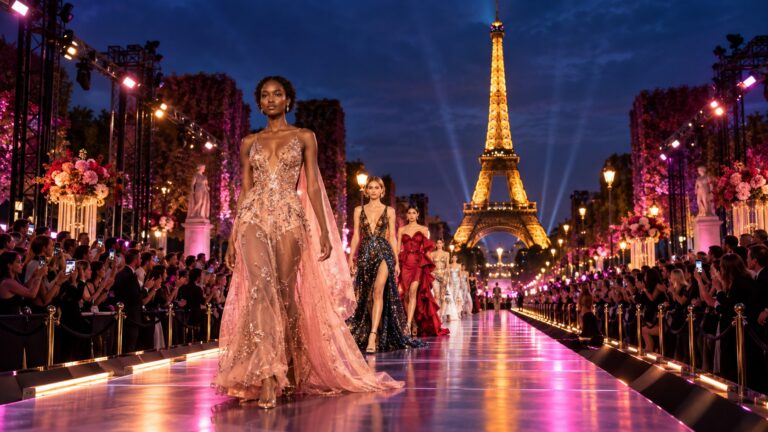
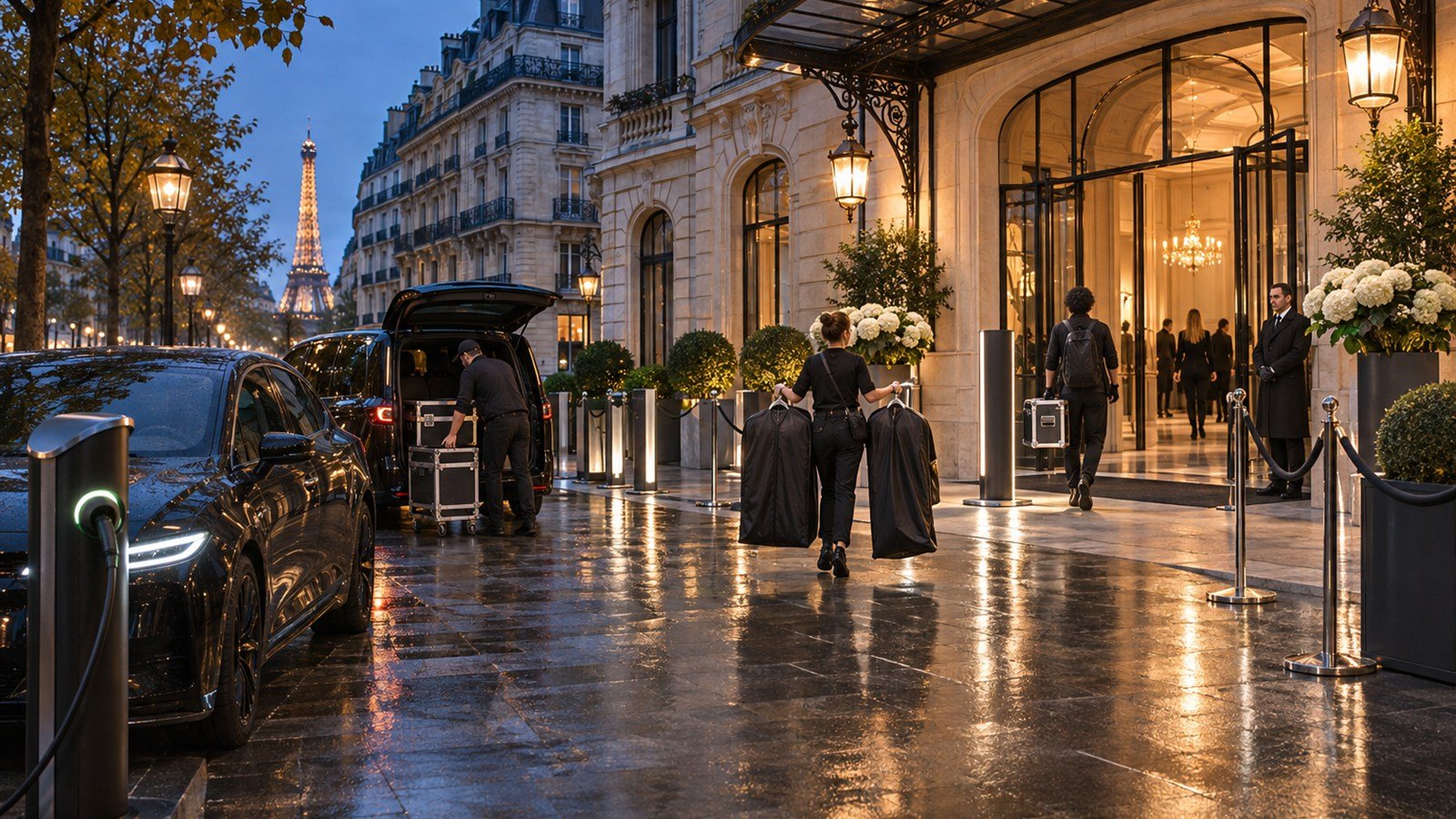
Cover note: conceptual editorial image created for this analysis. It illustrates event logistics and does not document a named venue, house or edition of Paris Fashion Week.