










Updated: 15 October 2026, Paris time
Gigi Hadid wearing a gold dress in Paris, 2025; archival portrait. Photo: Manuela Muniz Feijó Scarpa — CC BY-SA 4.0. Source · CC BY-SA 4.0
A runway show can be over in minutes. Securing the room can take months. Paris Fashion Week is not literally leaving Paris—but the capital is struggling to supply enough safe, workable and geographically sensible venues for an event that keeps expanding.
Paris sells the world an image of effortless fashion authority. Behind that image sits a hard logistical problem: dozens of houses want a memorable Paris address, at the right hour, with enough backstage space, safe public access, loading capacity, power, ventilation and a route that buyers can realistically reach from the previous show.
Nine days, many competing uses
FHCM’s womenswear season for Spring/Summer 2027 ran from 28 September to 6 October 2026. The official schedule sits alongside showrooms, press appointments and private events. Those different uses compete for premises, crews and transport, even when they do not appear in a single calendar.
- Official season: September 28–October 6, 2026.
- Beyond the calendar: showrooms, press appointments and private events also need space.
- Daily reality: several shows and presentations can overlap across different districts.
- Public map: there is none for the complete programme; many addresses circulate only with invitations.
- Shared pressure: venues, hotel rooms, production crews, vehicles, security and curb space are all competing at once.
That is why “running out of Paris” is more than a provocative headline. The shortage is not of beautiful buildings. It is of buildings that can become a functioning runway—legally, safely and on time.
An empty room is not a Fashion Week venue
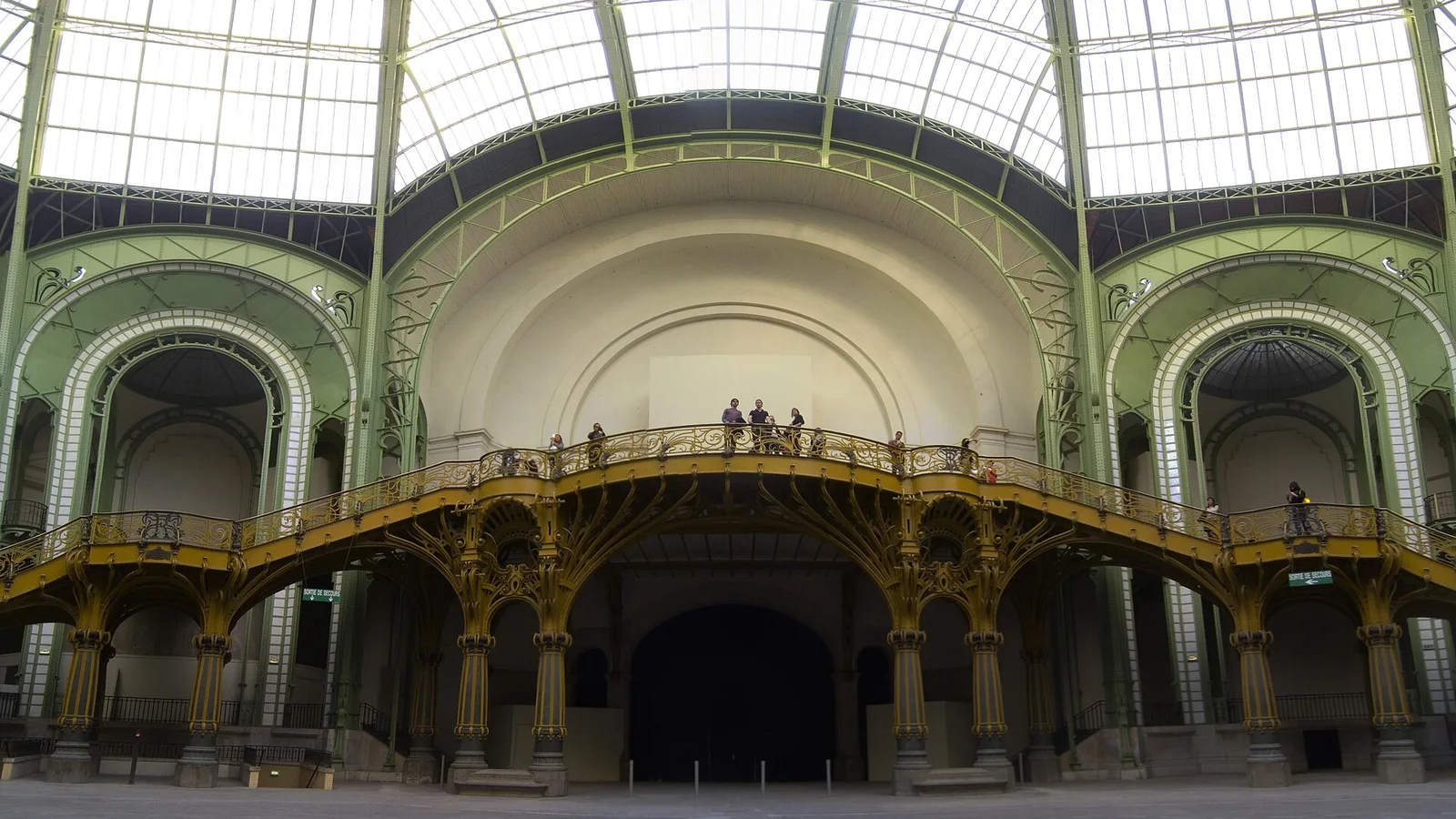
A spectacular hall can fail before the first model is cast. A production team needs separate flows for guests, models, staff and deliveries; space for hair, makeup, fittings and quick changes; reliable electricity; rigging options; toilets; emergency exits; accessibility; crowd control; and enough hours for construction and removal.
Public-facing buildings must also satisfy the rules that apply to establishments receiving the public. Temporary use does not remove responsibility. Organisers using public space face another layer: the City of Paris requires a technical file, expected audience, installation plan, build and breakdown timetable, and usually a request at least two months ahead. Police approval may also be required for security and public order. The city explicitly lists fashion shows among commercial occupations of public space.
In other words, the venue is not a backdrop. It is part building, part transport operation, part temporary theatre and part security plan.
What the 2026 season reveals about space
The official calendar is only the visible spine. Around it sits a parallel city of sales appointments, press events, showroom visits and dinners. Each generates vehicles, crews and guests, often in the same central districts and during the same narrow windows.
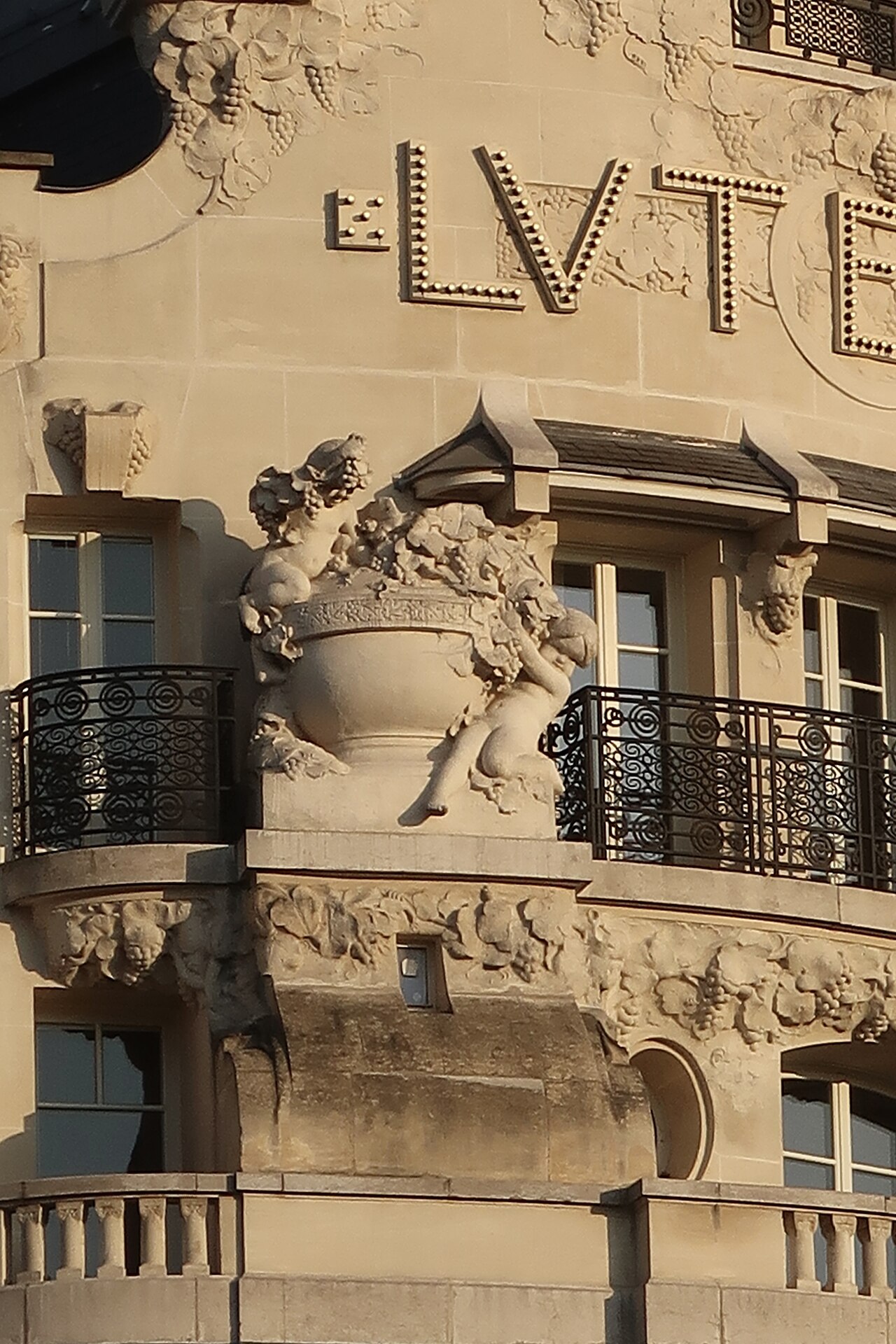
Security scrutiny has also become sharper. A venue that looks perfect on a mood board can be rejected or become economically unrealistic once capacity, emergency circulation and temporary construction are examined. Historic interiors create the strongest images, but they are rarely blank studios: floors, walls, access points and listed details may impose strict limits.
Then comes the least glamorous factor of all—time. A show may last minutes, yet trucks need loading windows, sets need hours or days, and the venue must be returned on schedule. Two houses can want the same room in the same week while neither can surrender the build day.
In Paris, geography is a form of currency
Fashion Week is a relay race. Editors, buyers and clients can attend only if the next address is reachable. A remote venue may be cheaper or more dramatic, but a long transfer risks empty seats, delayed arrivals and missed appointments. Centrality therefore carries a premium that has nothing to do with square metres alone.
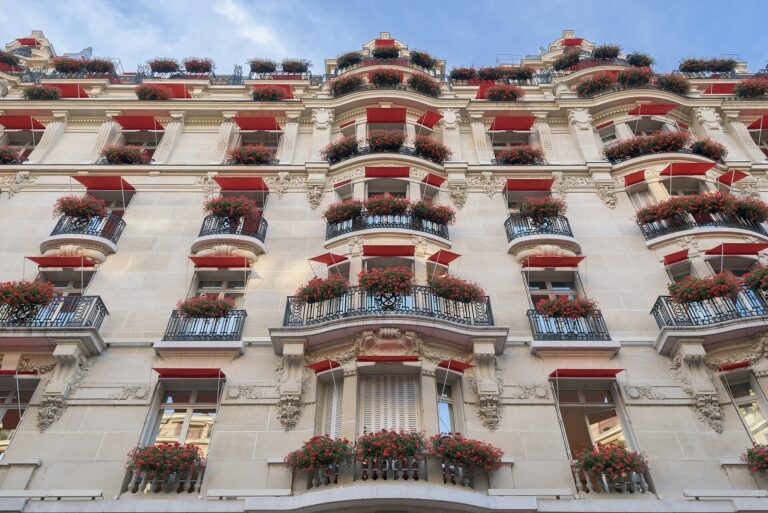
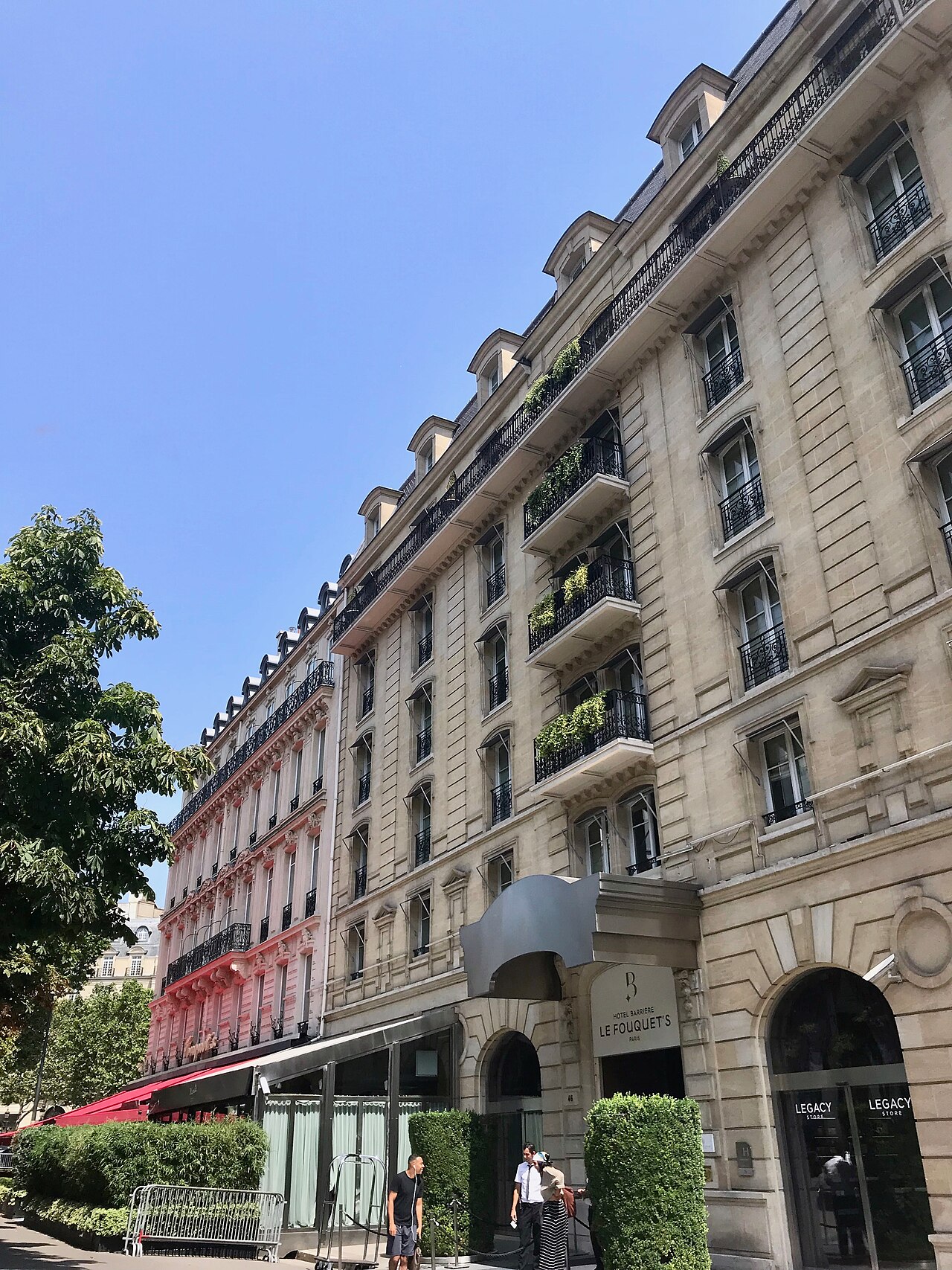
The public tends to see the most visible pressure around the Tuileries and Louvre area, the Grand Palais–Petit Palais corridor, the Haut-Marais and selected Left Bank or western Paris sites. Paris je t’aime identifies these as recurring Fashion Week zones—not as a confirmed address list for every 2026 show. Treat them as activity indicators, not invitations.
This geography rewards established houses. They can secure landmark spaces, large teams, fleets and complex security. Emerging labels often solve the problem differently: presentations instead of seated runways, shared venues, off-calendar timing, compact showrooms or less central addresses.
The shared-venue answer—and its limit
The FHCM’s eco-scenography framework says the Paris Fashion Week Center at the Palais de Tokyo can host around ten womenswear shows per season. Shared venues reduce repeated construction, transport and waste while giving younger houses professional infrastructure.
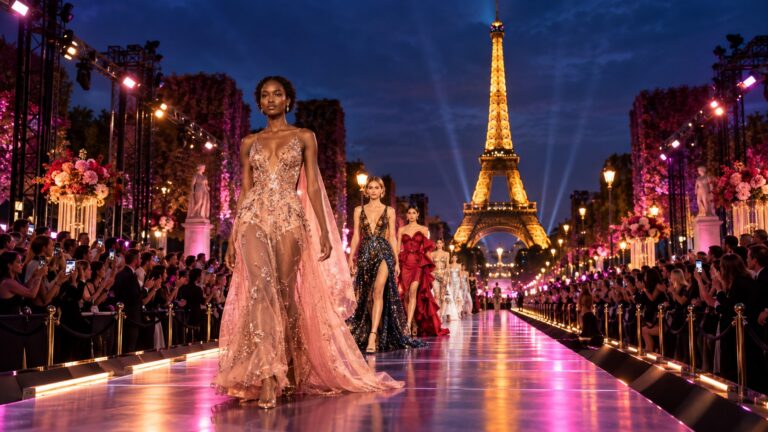
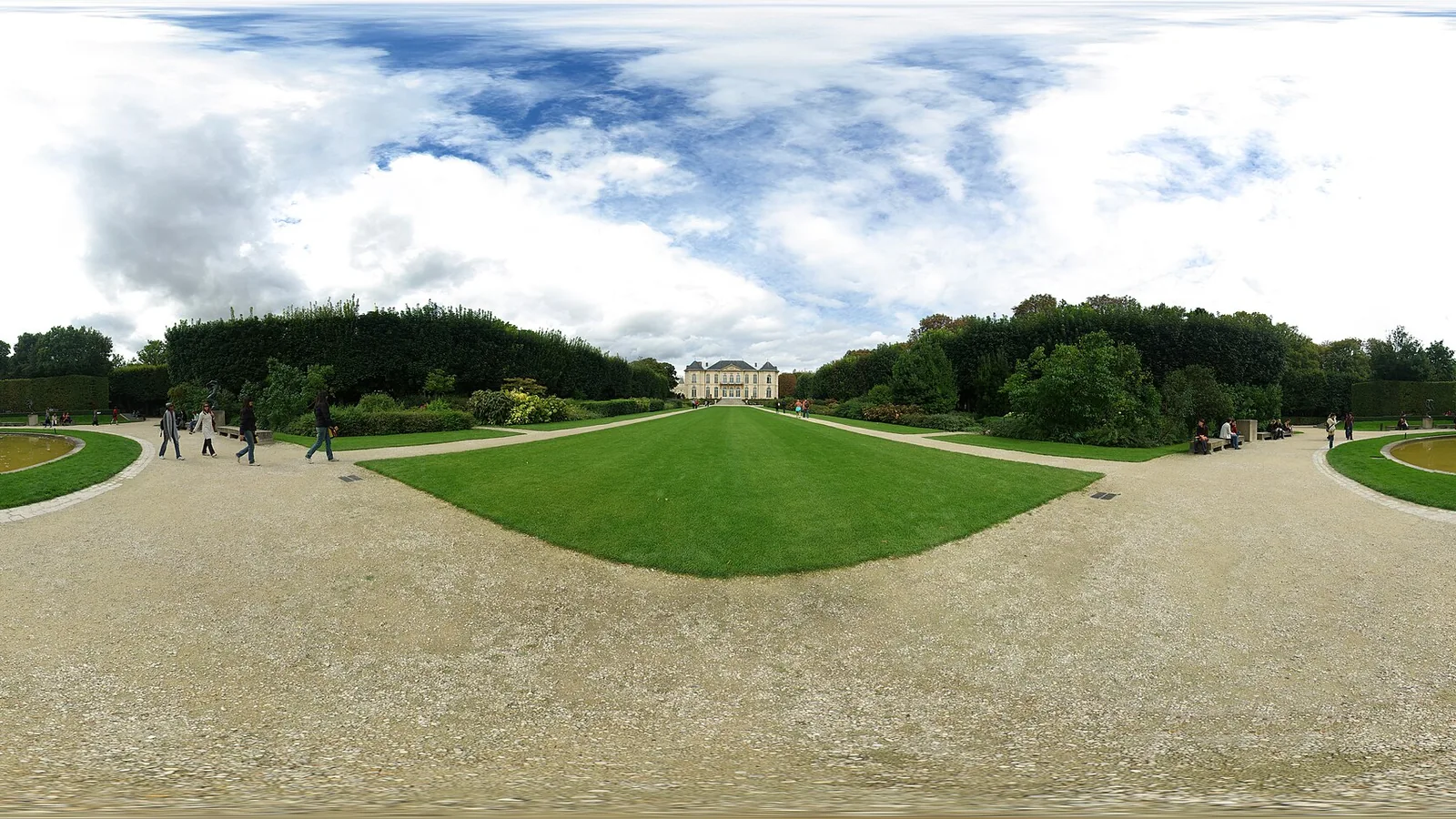
But centralisation cannot fully replace the Paris model. A fashion house does not choose a venue only for capacity. The address becomes part of the collection’s argument: a scientific institution, a courtyard, a former shop or a severe industrial shell can say as much as the soundtrack. Paris Fashion Week remains powerful precisely because the city itself functions as scenography.
What visitors will actually notice
Most travellers will not encounter a sealed city. The effect is fragmented and mobile: a sudden queue, a temporary barrier, idling cars, vans loading scenery, a dense knot of photographers, or a street that slows for 30 minutes and then returns to normal.
- More pressure on taxis and ride-hailing: especially before major show times and after evening events.
- Short curbside disruptions: production vehicles and guest drop-offs can narrow already busy streets.
- Unpredictable crowds: addresses may become obvious only when guests and photographers arrive.
- Hotel-lobby traffic: fittings, interviews and private appointments spread the event beyond runway venues.
- No automatic public access: seeing a crowd does not mean tickets are being sold.
Do not infer an official closure from social media footage. Check Île-de-France Mobilités, the RATP app and City of Paris traffic notices on the day of travel. Event operations can change faster than evergreen guides.
Paris Fashion Week 2027 dates—and how to plan around them
The completed Spring/Summer 2027 womenswear week ran from 28 September to 6 October 2026. The next official pressure points are:
- 19–24 January 2027: Menswear Fall/Winter 2027–2028
- 25–28 January: Haute Couture Spring/Summer 2027
- 1–9 March: Womenswear Fall/Winter 2027–2028
- 22–27 June: Menswear Spring/Summer 2028
- 5–8 July: Haute Couture Fall/Winter 2027–2028
- 27 September–5 October: Womenswear Spring/Summer 2028
These dates are published by the FHCM. Individual addresses and access rules remain event-specific.
- Use rail for cross-city journeys. Metro and RER are usually more predictable than cars when central streets slow.
- Add 30–45 minutes. Do not place a timed museum entry or restaurant reservation immediately after a cross-city transfer.
- Avoid chasing leaked addresses. Invitations are controlled, and false ticket sellers exploit the secrecy.
- Travel one district at a time. Combine exhibitions, shopping and public street-style observation geographically.
- Keep luggage away from show zones. Large bags complicate security and slow movement.
- Check the same day. A production schedule, security perimeter or demonstration can alter the route.
The 2026 season is now complete. For 2027 planning, use the FHCM dates above, verify each invitation or public event at source, and check RATP, Île-de-France Mobilités and City of Paris notices on the day. Venue secrecy is never a reason to buy access from an unverified seller.
Watch: why shared infrastructure matters
The official FHCM feature below looks inside the SPHERE showroom model at the Palais de Tokyo—one answer to the cost and space problem facing emerging brands.
Is Paris losing control of Fashion Week?
No. The pressure is evidence of demand, not decline. Paris still concentrates the houses, buyers, media, institutions and symbolic power that make its fashion week the final stop of the international season. But success has physical limits. The next competitive advantage may not be another spectacular set; it may be smarter venue sharing, longer reuse, cleaner transport and a calendar designed around the city’s real travel times.
The contradiction is pure Paris: the industry comes for irreplaceable places, then discovers that everyone else wants those places too.
Frequently asked questions
How many official events are on the September 2026 calendar?
FHCM’s womenswear season for Spring/Summer 2027 ran from 28 September to 6 October 2026. The official schedule sits alongside showrooms, press appointments and private events. Those different uses compete for premises, crews and transport, even when they do not appear in a single calendar.
Are Paris Fashion Week venue addresses public?
Usually not in full. Many show addresses are shared with invited guests and accredited professionals. Public tourism guidance names recurring areas, but it is not a guaranteed map of current show locations.
Will Paris Fashion Week close roads or Metro stations?
Local traffic controls are possible around individual events, but Fashion Week does not automatically mean citywide closures. At publication, there was no single official comprehensive closure list. Check live transport and city notices on the day.
Why not hold every show in one exhibition centre?
A central hub would simplify transport and production, but location is part of each house’s storytelling and positioning. Shared venues help, especially for emerging brands, without replacing the decentralised Paris model.
Can tourists visit a runway venue?
Official calendar shows are generally invitation-only. Some public events, exhibitions and livestreams are accessible; verify them through the organiser rather than resale listings.
Continue reading
- Why choosing the right Paris hotel becomes critical during Fashion Week
- The hidden economy of Paris Fashion Week
- Paris events calendar 2026–2027
Watch: how shared Fashion Week infrastructure works
This official FHCM film visits the SPHERE Paris Fashion Week showroom at the Palais de Tokyo—one practical response to the cost, space and production pressure facing emerging houses.
Sources
- FHCM — Paris Fashion Week Womenswear Spring/Summer 2027
- FHCM — final calendar
- Le Monde — the challenge of finding runway venues
- City of Paris — authorising events in public space
- Paris je t’aime — Fashion Week visitor guidance and recurring areas

.jpg)