







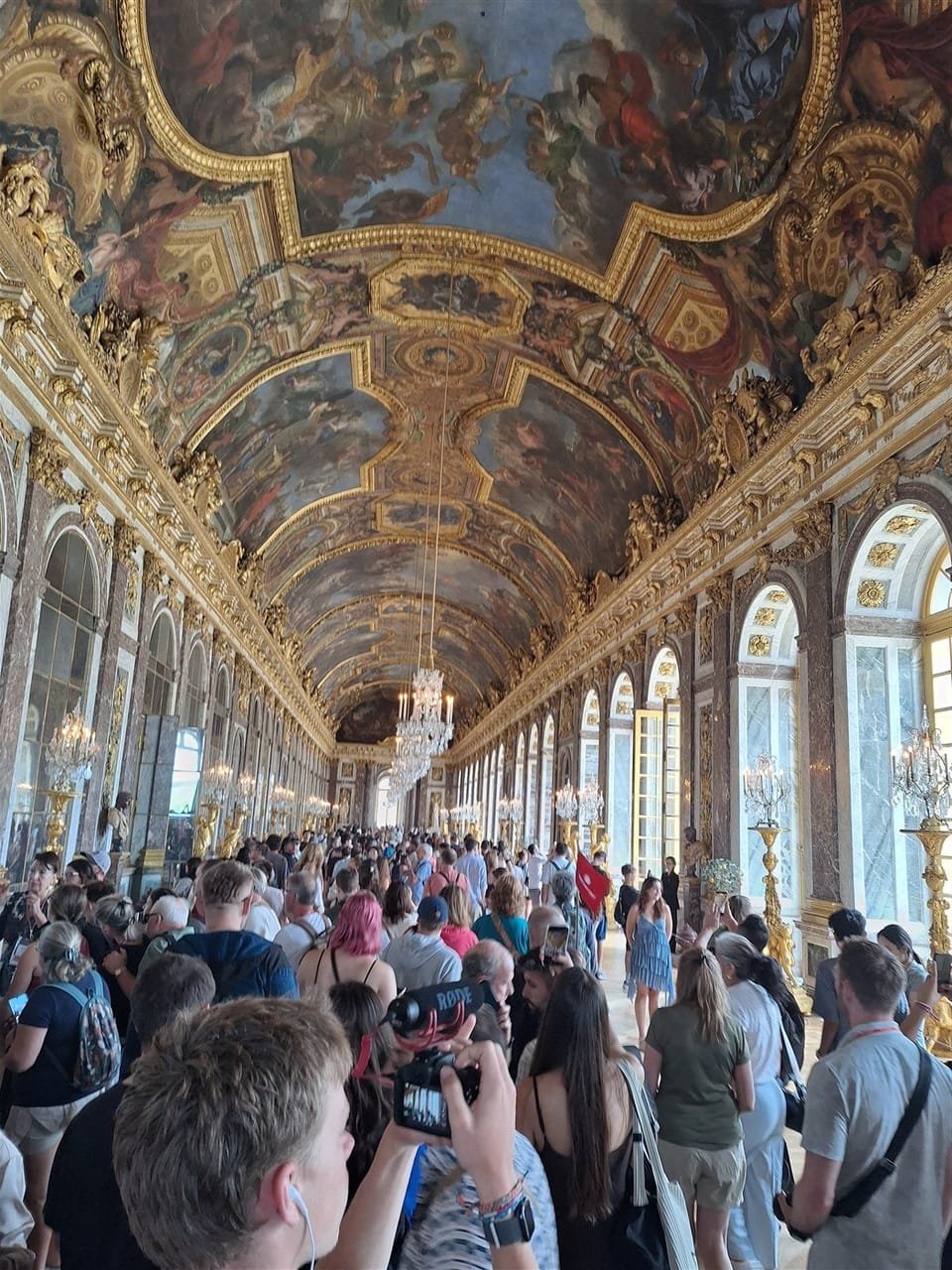
The Hall of Mirrors in 2026: Versailles remains both a living cultural destination and a protected monument. Photo: Heidi Meudt/Wikimedia Commons, CC BY 4.0. Cropped.
The story in one minute
- On 28 November 1973, a gala at the Royal Opera raised money for the restoration of Versailles.
- Five French houses and five American designers presented radically different visions of fashion.
- The Americans brought movement, music and ready-to-wear energy; Black models made the runway unforgettable.
- Versailles records a donation of 1.2 million French francs—not euros—for restoration work.
- Its legacy links fashion, representation, heritage finance and destination storytelling.
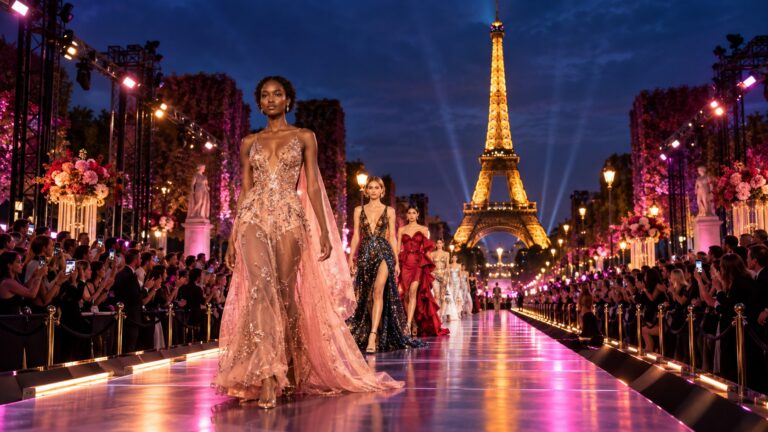
The chandeliers were lit, the palace needed restoration and fashion’s old hierarchy looked secure. By the end of one November night, the audience had seen something more consequential than a glamorous show: a new idea of who could own the runway—and how a cultural event could finance heritage.
It began as a fundraiser, not a battle
On 28 November 1973, the Royal Opera of the Palace of Versailles hosted a benefit created to support restoration. The Palace’s own history identifies chief curator Gérald Van der Kemp and Baroness Marie-Hélène de Rothschild among the organisers; American publicist Eleanor Lambert helped bring the United States delegation. Around 700 guests watched a programme involving roughly 100 performers and models.
The French side brought Yves Saint Laurent, Pierre Cardin, Emmanuel Ungaro, Hubert de Givenchy and Christian Dior, represented by Marc Bohan. The Americans were Anne Klein, Bill Blass, Oscar de la Renta, Halston and Stephen Burrows. There was no jury and no official scoreboard. “Battle” became the memorable label for a contrast of systems: couture ceremony on one side, fast-moving American ready-to-wear on the other.
When movement became the message
The American presentation was lighter on scenery and stronger on pace. Models moved with personality rather than serving as silent supports for clothes. Museum at FIT records the programme and surviving garments; the Met describes the American presentation’s modernity and vitality as a moment when US fashion claimed a new place on the world stage.
That shift mattered because the runway suddenly communicated freedom. The clothes could be worn, danced in and inhabited. The emotional charge did not come from a monument alone; it came from bodies in motion inside it.
The models changed the frame
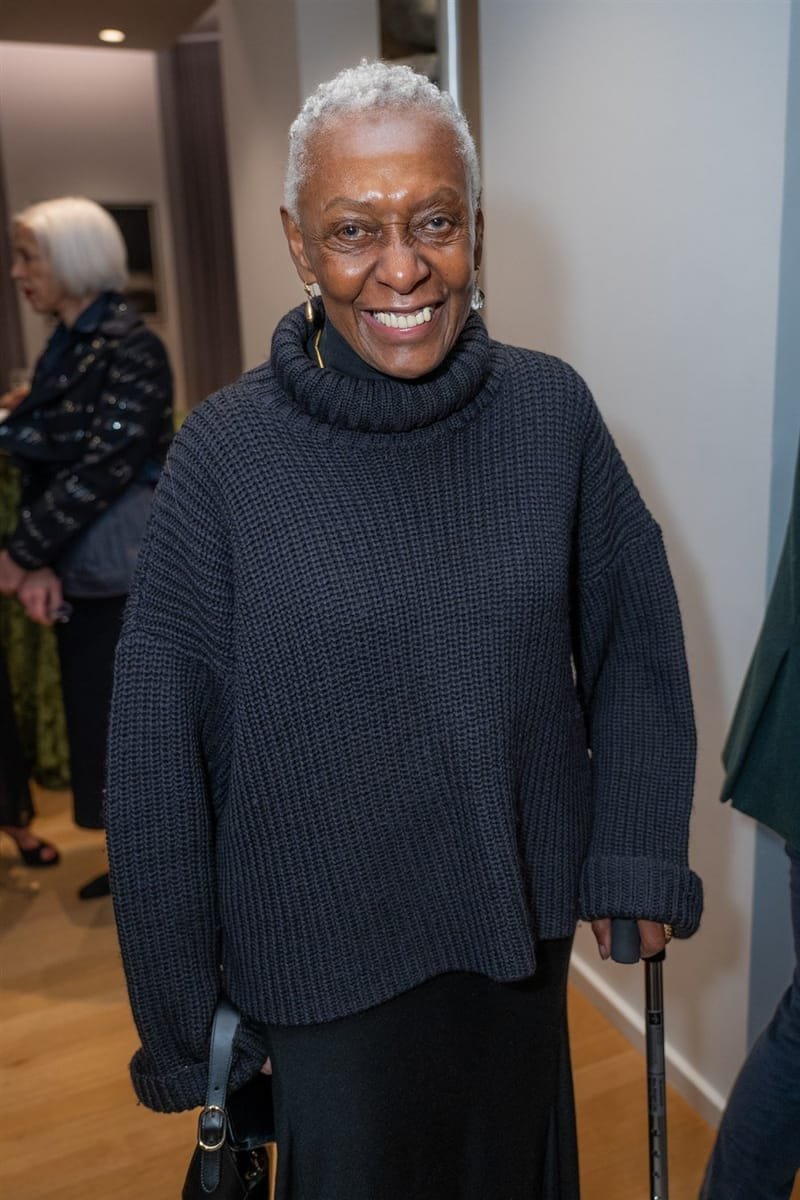
Bethann Hardison, Pat Cleveland, Alva Chinn and Billie Blair were among the Black models whose presence gave the American show its force. CFDA records Hardison’s path from model and Stephen Burrows collaborator to agency founder, Black Girls Coalition co-founder and campaigner for greater diversity.
Primary institutions count the cast differently: the Palace of Versailles refers to ten Black models, while a Metropolitan Museum tribute honours eleven models of colour. Rather than disguise the discrepancy, the responsible conclusion is simple: the totals reflect different descriptions and counting frames, but both institutions agree that women of colour were central—not incidental—to the event’s impact.
Heritage gained more than spectacle
The Palace records a contribution of 1.2 million French francs for restoration. That detail is easy to lose behind the mythology, yet it gives the gala modern relevance. A fashion event can become a bridge between creative industry, cultural diplomacy and heritage funding when the purpose is explicit and the venue is respected.
What today’s fashion cities can learn
Give the venue a purpose. A landmark should not be a decorative rental; its story and preservation should benefit.
Casting is editorial power. Representation changes how audiences read clothes, cities and culture.
Design the whole visitor economy. Guests also use hotels, restaurants, transport, museums and local creative services.
Credit every contributor. Models, producers, craftspeople and local partners are part of the value—not background labour.
Protect image rights. Historic fashion photographs are not automatically free to reuse; OUISTARS has therefore used current, licensed images of the venue and Hardison.
From 1973 to the next runway
The night at Versailles did not solve inequality in fashion. It did, however, demonstrate the commercial and emotional power of a runway that moved differently and looked more like the world beyond couture salons. That lesson now sits beside new questions about digital twins and models’ rights, while travellers planning the 2027 fashion circuit increasingly judge events by their cultural value as well as access.
The Royal Opera remains a working venue within Versailles. Access and programming vary, so visitors should consult the official Palace and performance calendar before travelling. The real legacy is not a promise that every show changes history. It is the proof that one carefully designed night can change the story a destination tells about fashion—and the people allowed to tell it.
Primary sources
- Palace of Versailles: Gala of 28 November 1973
- The Metropolitan Museum of Art: In America, an Anthology of Fashion
- Museum at FIT: The Traphagen School and the Versailles programme
- CFDA: The moment the world said “oui” to American fashion
- CFDA: Bethann Hardison profile
- Palace of Versailles: Royal Opera
 Add OUISTARS Travel as a preferred source on Google
Frequently asked questions
What was the Battle of Versailles?
A 28 November 1973 fashion gala at the Royal Opera of Versailles, organised to raise restoration funds and featuring five French and five American designers.
Who won the Battle of Versailles?
There was no formal jury or official winner. Contemporary memory treats the American presentation as a breakthrough because of its energy, casting and ready-to-wear approach.
How many Black models took part?
The Palace of Versailles says ten Black models; a Metropolitan Museum tribute honours eleven models of colour. The difference reflects distinct counting descriptions in primary sources.
Did the event fund restoration?
Yes. The Palace of Versailles records a donation of 1.2 million French francs for restoration work.
Can travellers visit the Royal Opera?
The Royal Opera is part of Versailles and remains a working venue. Access varies with tours, performances and palace operations, so check the official programme before visiting.
Cite this article
When citing the text or analysis, include the magazine, title, original URL and publication date. Preserve the stated attribution of statistics and photographs.