









OUISTARS TRAVEL · THE HISTORY OF TASTE AND TRAVEL
Before it became a gift for someone we love, chocolate was a royal privilege, a craft carried across borders and an industrial adventure beside a river. A small piece melting on the tongue holds another story of France.
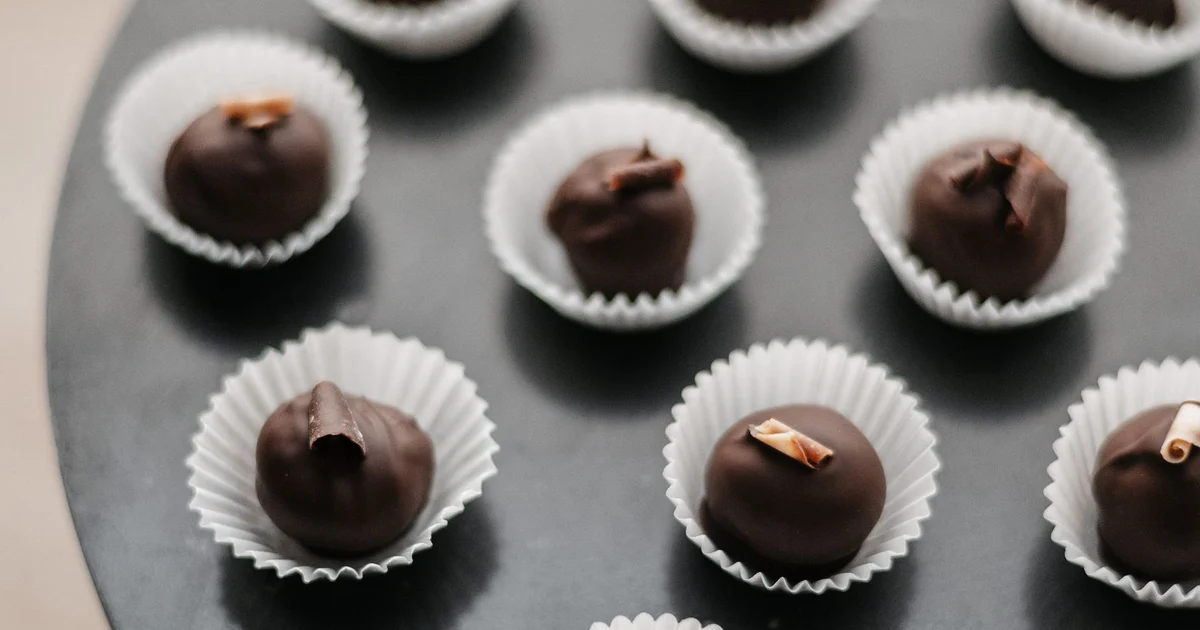
Illustrative photograph of chocolates; it does not depict products from the shops mentioned. Anete Lusina / Pexels. Cropped for the cover. Pexels · License.
There is a moment before tasting that can be as pleasurable as the taste itself: paper slowly unfolding, a dark piece between your fingers, a scent that makes conversation pause. Then comes the first snap, followed by a slow melt that leaves memory to do the rest. Perhaps it recalls a gift, a distant winter or someone who knew exactly what would make you smile.
That is why chocolate can be more than a holiday purchase. It can lead us through French cities, from Bayonne to Paris and Noisiel, tracing how a rare taste became a trade, an industry and a social ritual. First, though, we must distinguish the arrival of cacao from the opening of a chocolate-making shop and the development of a large industrial factory.
Bayonne: a craft that crossed borders with its makers
The story does not begin with an elegant Parisian shopfront alone. In southwestern France, near Spain, Bayonne was one of its gateways. The local tourist office links the spread of chocolate there during the seventeenth century to Portuguese Jewish refugees and a port connected to trading networks. The newcomers settled in Saint-Esprit, bringing chocolate-making knowledge with them. [3]
This gives the taste a human dimension: expertise crossing borders with the people who carry it, then becoming part of a city’s identity. Visiting Bayonne today can mean following the traces of people, commerce and local memory. Reducing that history to a single arrival date—or treating Bayonne and Paris as contestants for precisely the same title—obscures the difference between the transmission of a craft and a documented commercial establishment.
Paris, 1659: chocolate acquires a commercial doorway
Imagine Paris before the displays of chocolate bars and praline boxes we know today. In 1659, a firm point appears in the record: David Chaliou receives a privilege to make and sell chocolate. The Ministry of Agriculture places the first chocolaterie in Les Halles and describes chocolate being served as a drink. A “workshop” here should therefore not be imagined as a modern production-line factory. [1, 2]
The royal privilege tells us something about the product’s position: its rarity and appeal made the right to produce and sell it a matter of official decision. Between that world and the everyday chocolate bar, craftspeople, shops and machines would reshape the story.
From pharmacy to gift box: Paris learns the art of temptation
According to Debauve & Gallais’s account of its history, Sulpice Debauve opened his first chocolate shop on rue Saint-Dominique in 1800, moving to rue des Saints-Pères in 1819. The house connects its beginnings to its founder’s work as a pharmacist, helping explain chocolate’s historical association with preparations marketed as “health chocolates.” That is a description of past practice, not a medical recommendation today. [4]
What this chapter leaves the traveller is an address one can still seek out: a historic shop reminding us that buying chocolate can itself become an experience. Choosing the piece, considering the box and thinking of its recipient give the gift a life beyond the few moments needed to eat it.
Noisiel: when the aroma of cacao became an industry
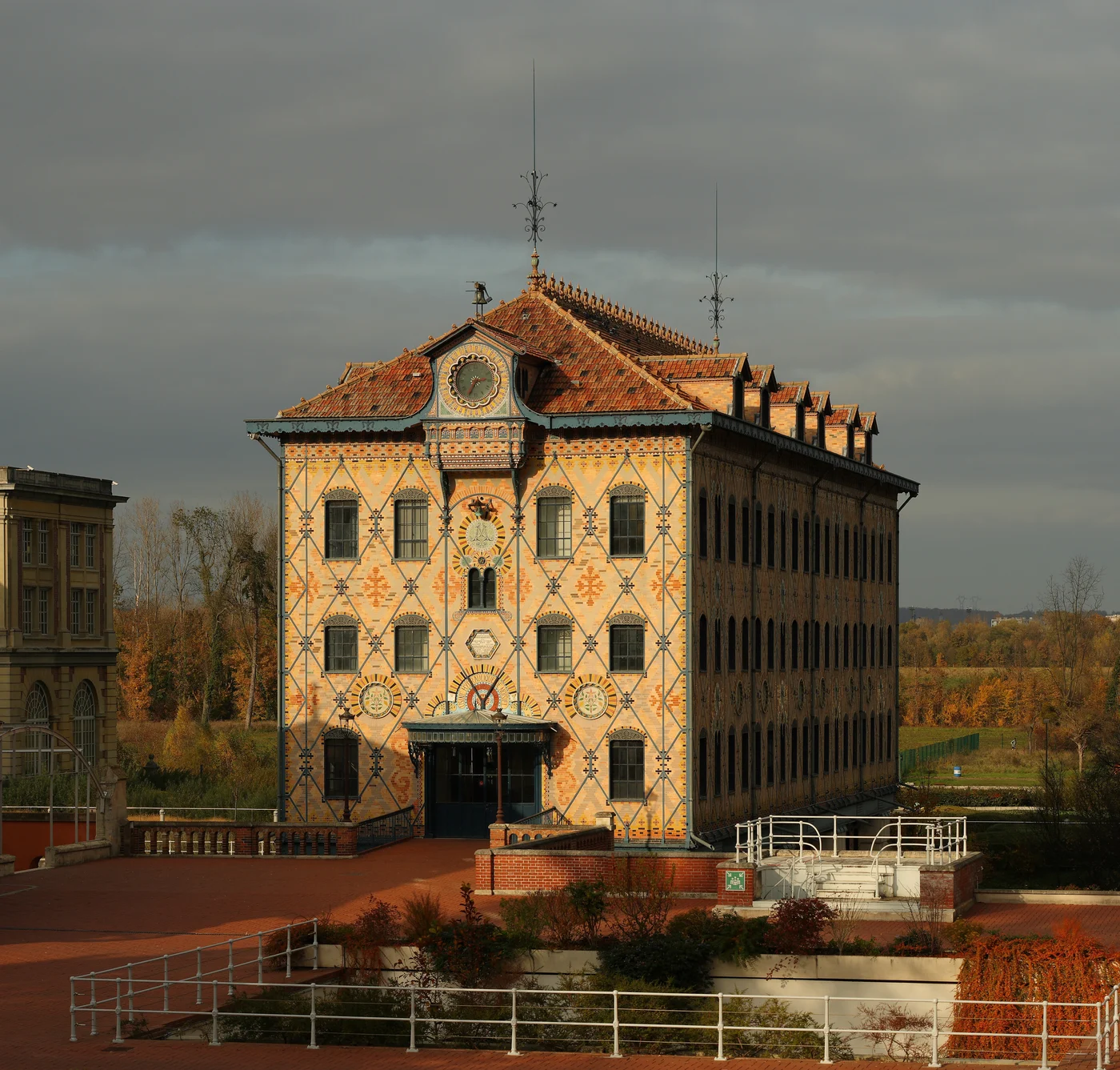
Beside the Marne, the story moves from a shop counter to a large production site. In 1825, Jean-Antoine-Brutus Menier acquired the Noisiel mill, according to the Seine-et-Marne archives. Nestlé, owner of the Menier brand, explains that the activity began with pharmaceutical powders and that Menier entered chocolate production in 1836. These dates describe different stages: the mill’s acquisition should not automatically be presented as the opening of France’s first chocolate factory. [5, 6]
Émile-Justin Menier took over management in 1853. The business expanded beyond France, building a London factory in 1870. Its development shows chocolate moving beyond local craftsmanship into production networks, distribution and overseas markets. The factory needed workers, energy and raw materials; the brand needed recognition far from the place where its chocolate was made. [5]
How did chocolate shops and markets spread?
Angers municipal archives offer a revealing local snapshot. In 1839, the press carried several closely spaced advertisements announcing new chocolate-making establishments. One producer promoted a machine that would let him compete with Paris factories on price and quality. In 1847, the local commercial directory added a “Chocolatiers” category. [2]
The change is tangible: expanding production, more names and addresses, advertising and competition outside the capital. In 1853, a local industrial report praised René Priou’s lower-priced chocolate and its accessibility to less affluent buyers. These are documented signs of wider availability, not a basis for inventing a national count of French chocolate shops. [2]
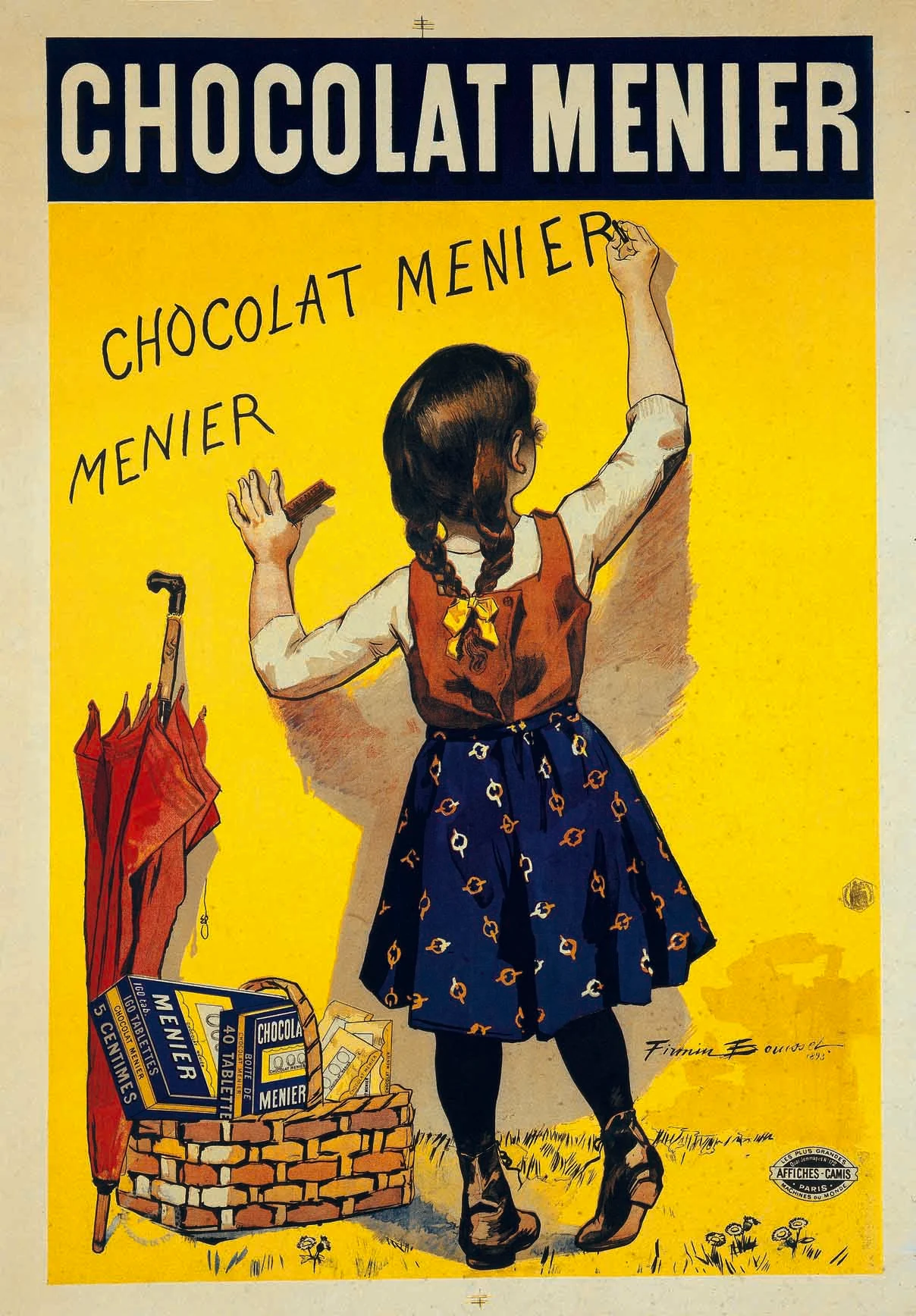
Images then become part of the story. Firmin Bouisset’s 1893 “Chocolat Menier” poster depicts a girl writing the brand’s name. Chocolate was no longer sold through a description of its ingredients alone: a memorable figure could carry its identity. This helps explain the connection between factory, shop window and advertisement. Growing production needed new buyers, and visual storytelling could help a name reach them. [7]
From history to a visit: three chocolate addresses in France
These choices relate to the story. They are not a ranking of the best shops or a claim of personal tasting experience. Names and addresses were checked against official websites; confirm opening hours before travelling, particularly around holidays.
1. Debauve & Gallais: a historic shop in Saint-Germain
Address: 30 rue des Saints-Pères, 75007 Paris. This stop connects a Left Bank walk with a house whose history reaches back to the early nineteenth century. Its collections include ganaches, pralines and bars. Choose for your own preferences and ask about ingredients rather than judging the contents by the box alone. Official shops.
2. Le Chocolat Alain Ducasse: a contemporary workshop chapter
Address: 40 rue de la Roquette, 75011 Paris. The manufacture opened in 2013, according to its official press material. This address connects history with the present: making chocolate in Paris remains part of the brand’s identity. A shop at a production site does not automatically mean a workshop tour is available; ask about visit arrangements if that is your aim. Official address · [8].
3. Cazenave: returning to chocolate in a cup
Address: 19 rue Port Neuf, 64100 Bayonne. The house gives its founding date as 1854 and describes its hot chocolate as thick, with a hand-whipped foam. After factories and bars, this choice returns us to the drink: another way to approach the city’s cacao history. Official address · The drink.
Questions about the history of chocolate in France
Did France invent chocolate?
No. Cacao and its uses predate its arrival in France and have roots in the Americas. This story concerns chocolate’s development within France, not its invention worldwide.
Was Menier France’s first chocolate workshop?
That description needs qualification. The French official account dates the first chocolaterie to Paris in 1659. Noisiel represents a later industrial chapter: the mill was acquired in 1825 and Menier entered chocolate production in 1836.
Why is Bayonne known for chocolate?
Its history is linked to Portuguese Jewish refugees bringing the craft in the seventeenth century, the role of its port and merchants, and the continuation of local chocolate-making traditions.
Where can you find historic chocolate shops in Paris?
One documented address in this article is Debauve & Gallais on rue des Saints-Pères. Alain Ducasse’s manufacture on rue de la Roquette is a contemporary address, not a nineteenth-century shop.
Who will get the last piece?
A journey can end with a box in your bag. Knowing its wider story gives that box another weight: Bayonne’s craftspeople, a privilege granted in Paris, a mill beside the Marne and a girl on an old poster. Centuries of work and choices come together in something small enough to hold in your palm.
When you open it, you may not think of those dates at all. You will look for a favourite piece, then pause over the last one: eat it, or leave it for someone you love? In that small space between appetite and generosity, the story becomes yours.
Sources and verification
Information and addresses checked on 15 November 2026. The sensory opening and closing are editorial writing, not a personal visit or tasting account. The house’s account of its own past is distinguished from archival evidence.
- French Ministry of Agriculture: the first chocolaterie, Paris, 1659.
- Angers municipal archives: royal privilege and nineteenth-century chocolate makers.
- Bayonne tourist office: chocolate and Portuguese Jewish artisans.
- Debauve & Gallais: the house’s own history.
- Seine-et-Marne archives: the Menier family and Noisiel.
- Nestlé France: Menier’s entry into chocolate production in 1836.
- Musée des Arts Décoratifs, Paris: Bouisset’s Menier poster, 1893.
- Alain Ducasse official press kit: the manufacture’s opening in 2013.
Cite this article
When citing the text or analysis, include the magazine, title, original URL and publication date. Preserve the stated attribution of statistics and photographs.
OUISTARS Travel — How France Fell in Love with Chocolate: Its First Workshop and Addresses to Visit
Published: