




OUISTARS TRAVEL · PARIS AFTER DARK
Paris at night is more than a sparkling tower and a quick photograph beside the Seine. As daylight fades, the city becomes easier to read in a different way: bridge lines sharpen, façades become theatrical and the river turns into part of the composition rather than a background. A good night walk, however, is not a race to collect landmarks. It needs a coherent route, the right start time and a clear journey home.
These five walks show five versions of Paris: the iconic west, the historic river, the grand theatrical city, the hilltop village and the contemporary canal district. Each route can be walked without a ticket. A dinner, performance or late museum visit can be added, but the public space remains the main experience.
Before you go: decorative lighting does not remain on all night. Paris switches off some municipal façade and monument lighting earlier as part of its energy-saving policy. Start within the first hour after sunset and check current conditions on the day.
Choose your route
| Route | Character | Approx. time | Best for | Suggested return station |
|---|---|---|---|---|
| Palais de Tokyo to Trocadéro | Iconic, seen from street level | 45–60 min | First visits and photography | Trocadéro or Bir-Hakeim |
| Louvre to Place Dauphine | Historic and relatively calm | 35–50 min | Architecture and short stays | Pont Neuf or Saint-Michel |
| Opéra Garnier to the Louvre | Grand façades and urban theatre | 40–55 min | Design and cultural shopping | Palais Royal–Musée du Louvre |
| Anvers to Abbesses via Montmartre | Hilltop views and many steps | 45–70 min | Atmosphere and panoramas | Abbesses |
| Stalingrad to La Villette | Water and contemporary architecture | 45–70 min | Returning visitors | Porte de Pantin |
1. Palais de Tokyo to Trocadéro: see the Eiffel Tower in motion
Route: Palais de Tokyo → Passerelle Debilly → Quai Branly → Champ-de-Mars → Trocadéro.
Begin around the Palais de Tokyo, where modern architecture meets an open river view. Cross the pedestrian Passerelle Debilly slowly. The point is not to reach the Eiffel Tower as fast as possible, but to notice how its scale and angle change as you move. Continue along Quai Branly, approach the Champ-de-Mars and, if you still have the energy, finish on the Trocadéro esplanade for the broadest view.
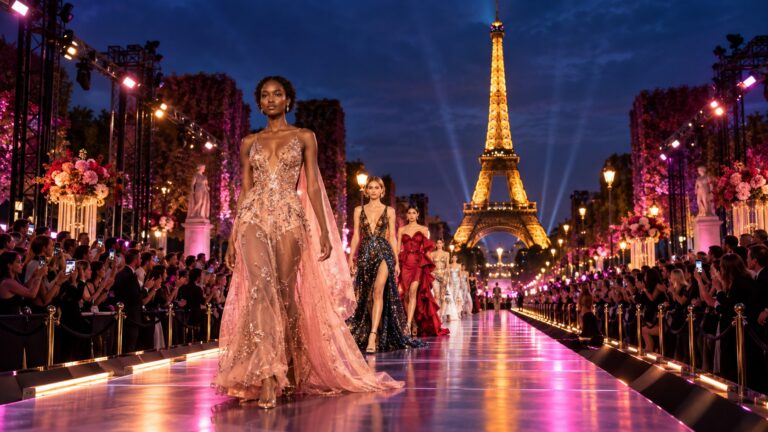
The Eiffel Tower’s official website says its golden lighting begins after nightfall and that the tower sparkles for five minutes at the start of each hour until closing. The final display varies with the season, so do not build the evening around an old timetable saved on your phone. Check the official Eiffel Tower lighting page on the day.
This route is stronger than a single Trocadéro stop because the tower changes from destination to visual thread. It produces varied images: reflections, a bridge perspective, framed views and then the wide finale.
Practical note: the tower area can be crowded. Keep your phone and bag close, and never step into a cycle lane or roadway for a photograph.
2. Louvre to Place Dauphine: reading Paris through stone and water
Route: Cour Napoléon du Louvre → Pont des Arts → Institut de France → Pont Neuf → Place Dauphine.
This is the most balanced route for visitors who want historic Paris without a long itinerary. Start in the Louvre’s outdoor courtyards, then move towards Pont des Arts. From the middle of the bridge, the dome of the Institut de France, the two riverbanks and the boats below form one coherent scene. Continue towards Pont Neuf and step into Place Dauphine if the square remains comfortable and open.
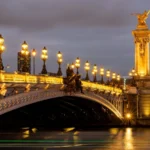
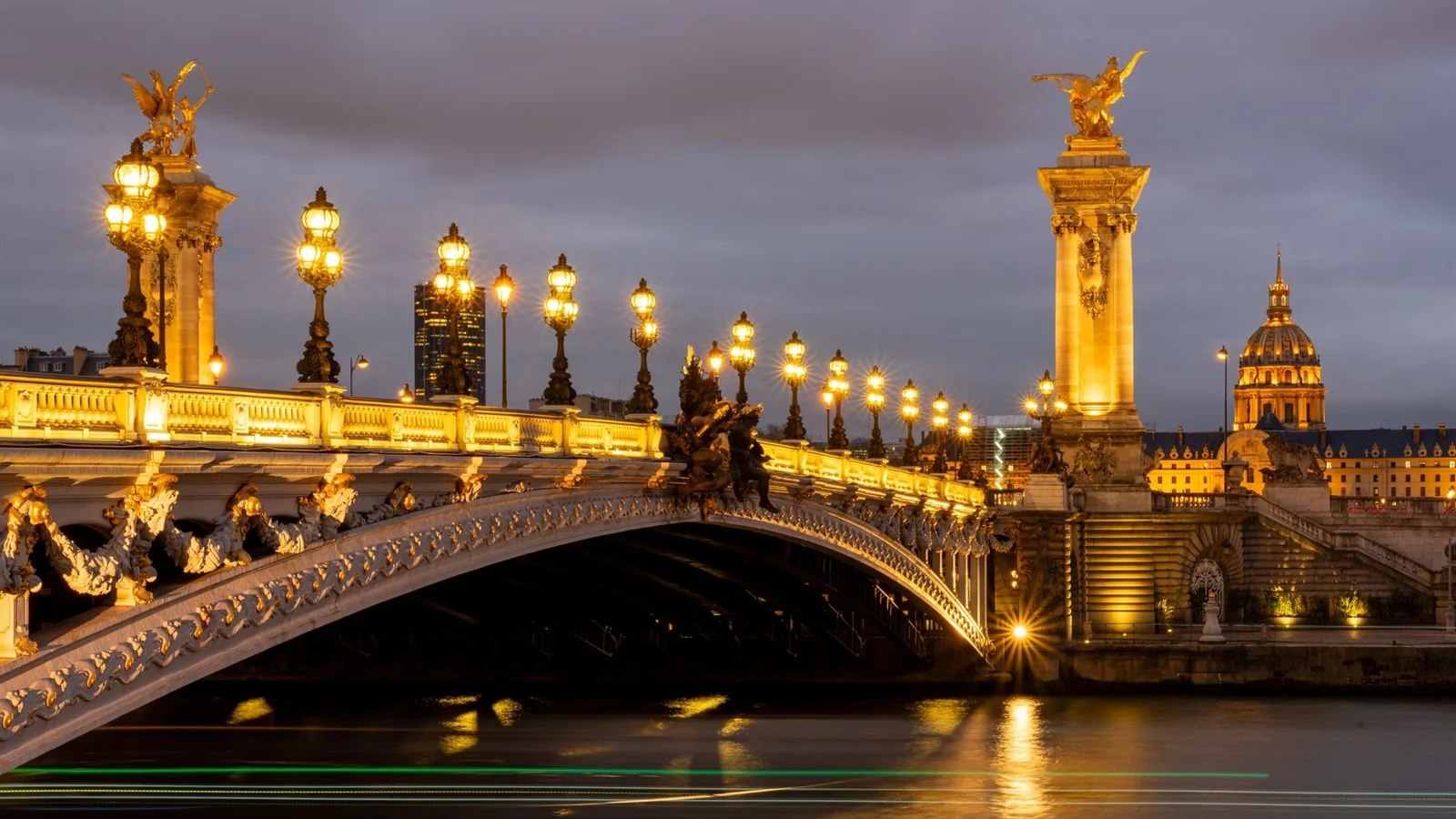
Paris je t’aime, the official tourism office, highlights Pont des Arts, the Institut de France and the bridges between Pont Alexandre III and Pont Neuf among the city’s strongest night views. The route works because it is compact and full of changing angles, with no transport connection between stops.
Best timing: before dinner, or after a late Louvre visit on an evening when the museum stays open. Museum hours change, so check the official hours and admission page on the day.
This walk suits a short stay and is gentler than Montmartre, although wet stone can be slippery and the bridges are often windier and colder than the inner streets.
3. Opéra Garnier to the Louvre: when the façade becomes the performance
Route: Opéra Garnier → Rue de la Paix → Place Vendôme → Rue Saint-Honoré → Palais-Royal → Louvre.
You do not need to enter a single shop for this route to feel rich. Begin with the façade of the Opéra Garnier, which the official tourism office presents as one of Paris’s most theatrical night-time monuments. Continue via Rue de la Paix to Place Vendôme, then leave the formal luxury axis for Rue Saint-Honoré and the area around Palais-Royal before reaching the Louvre.
The interest lies in comparison: an opera house designed to be seen, a disciplined royal square, a contemporary retail street and then a palace turned museum. It is a short lesson in how Paris uses architecture and light to express culture, authority and commerce.
Watch the gates: Palais-Royal garden hours vary by season. If the gates are closed, stay on public streets and continue towards the Louvre rather than looking for a private shortcut.
An opera performance or early dinner makes a natural paid addition, but the walk itself is free and requires no booking.
4. Anvers to Abbesses: Montmartre from top to bottom
Route: Anvers → Square Louise-Michel → Sacré-Cœur → Place du Tertre → Abbesses.
Start at Anvers and approach the foot of the hill. The funicular is an alternative to the steps if the climb is unsuitable. From the Sacré-Cœur forecourt, Paris feels less like a postcard and more like a wide field of lights. Continue to Place du Tertre, then descend gradually towards Abbesses.
The official tourism office proposes a similar Montmartre route linking Sacré-Cœur, Place du Tertre and Abbesses, and identifies the hill as one of the city’s most powerful night panoramas. After dark, keep to lively, legible streets instead of chasing silent alleys for the sake of a photograph.
This is not the best choice for travellers who find slopes, cobbles or steps difficult. The Louvre or La Villette routes offer gentler alternatives.
A better photograph: do not stop at the first crowded point in front of the basilica. Move across the forecourt and let the city, rather than the crowd, become the subject.
5. Stalingrad to La Villette: contemporary Paris beside the water
Route: Rotonde de Stalingrad → Bassin de la Villette → Quai de la Loire/Quai de la Seine → Canal de l’Ourcq → Parc de la Villette → Philharmonie.
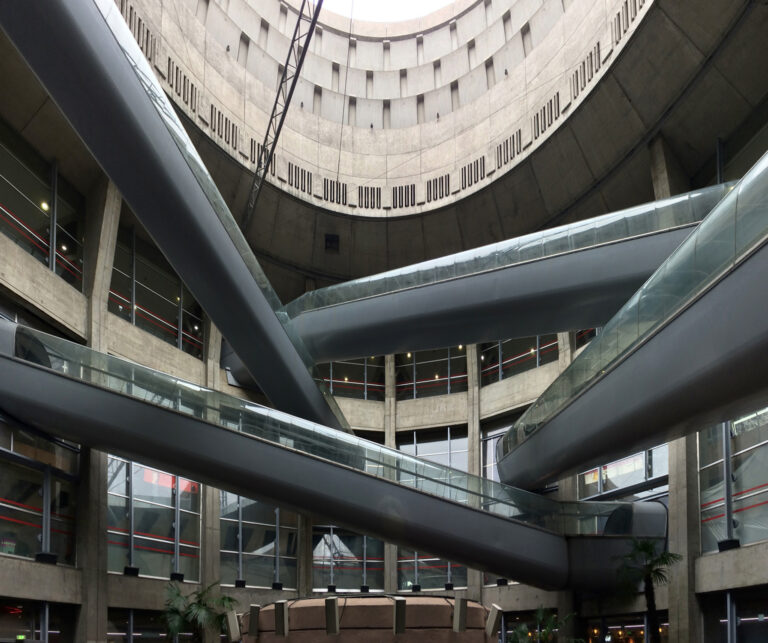
This is the route for travellers who already know central Paris. Begin by the Rotonde de Stalingrad and follow the Bassin de la Villette. The visual language gradually shifts from stone façades to bridges, water and contemporary cultural buildings. Continue towards Parc de la Villette, where the red Folies and modern structures create a very different night identity from western Paris.
Paris je t’aime describes the walk from Canal Saint-Martin to La Villette as a mix of waterfront, urban culture and street art, and identifies the Bassin de la Villette as the largest artificial body of water in Paris. Our evening version is shorter than the full daytime itinerary and ends near clear transport options.
Best timing: choose an evening with a concert or event at the Philharmonie or Grande Halle. Audience movement makes the district feel active, but always check the programme and access details first.
Stay on the main lit quays. Do not use empty garden paths as late-night shortcuts.
How to make a Paris night walk genuinely comfortable
- Start just after sunset. Blue sky and warm artificial light create better photographs, and you are less likely to arrive after decorative lighting has been switched off.
- Choose one route. Combining the Eiffel Tower, Montmartre and the Louvre in one evening produces transfers, not a walk.
- Fix the return point first. RATP states that the metro runs approximately until 1:15 a.m. on weekdays and 2:15 a.m. on Friday and Saturday nights and before public holidays. When the metro stops, Noctilien night buses operate roughly from 12:30 a.m. to 5:30 a.m. These are indicative times; check your line live.
- Wear stable shoes. Historic paving, wet stone and steps are part of the experience.
- Respect residential Paris. Lower voices and clear doorways are part of better tourism, especially in Montmartre and beside the canals.
Why night walking matters to the visitor economy
A free walk is not economically empty. A clear route can lead to dinner, a performance, a café stop or a more satisfying hotel stay because the visitor does not feel that the day ends at five. More importantly, these walks distribute time and spending—from the iconic west to the contemporary northeast, and from a single viewpoint to a complete neighbourhood.
The answer is not unlimited brightness. Paris switches off some façade lighting earlier to save energy, and light pollution affects the urban environment. The better destination is not the brightest one; it is the city that uses light intelligently and leaves room for darkness.
Frequently asked questions
What is the best time to begin a Paris night walk?
Within the first hour after sunset. The sky retains colour, photographs are stronger and more decorative lighting is likely to be visible.
Are all five routes free?
The public walking routes are free. Museums, performances, restaurants and guided visits are optional additions.
Which route is best for a first visit?
Louvre to Pont Neuf is compact and central. The Eiffel Tower route delivers the most immediately recognisable view.
Which route is easiest if I avoid stairs?
Skip Montmartre. Choose Louvre–Pont Neuf or Bassin de la Villette, while checking current roadworks and lift availability at metro stations.
Does public transport run all night?
The metro does not. It runs late, then Noctilien buses provide overnight coverage. Check the exact route and real-time departure before returning.
Official sources
- Paris je t’aime: night walks and tours
- Official Eiffel Tower: illuminations and sparkle schedule
- Louvre Museum: hours and admission
- RATP: public transport operating hours
- City of Paris: energy-saving lighting measures
- Paris je t’aime: Canal Saint-Martin to La Villette
- Paris je t’aime: walking through Montmartre
Cite this article
When citing the text or analysis, include the magazine, title, original URL and publication date. Preserve the stated attribution of statistics and photographs.