





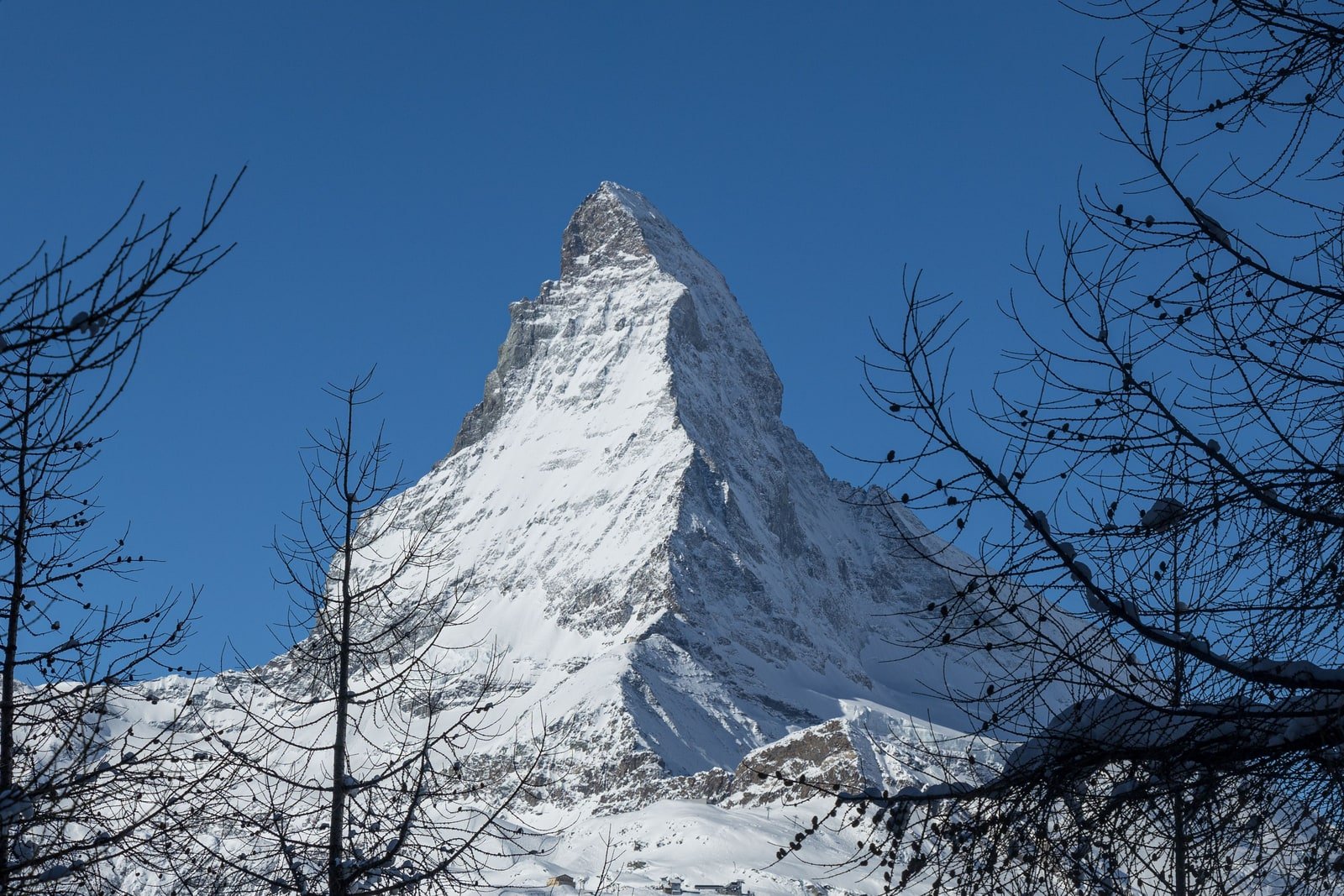

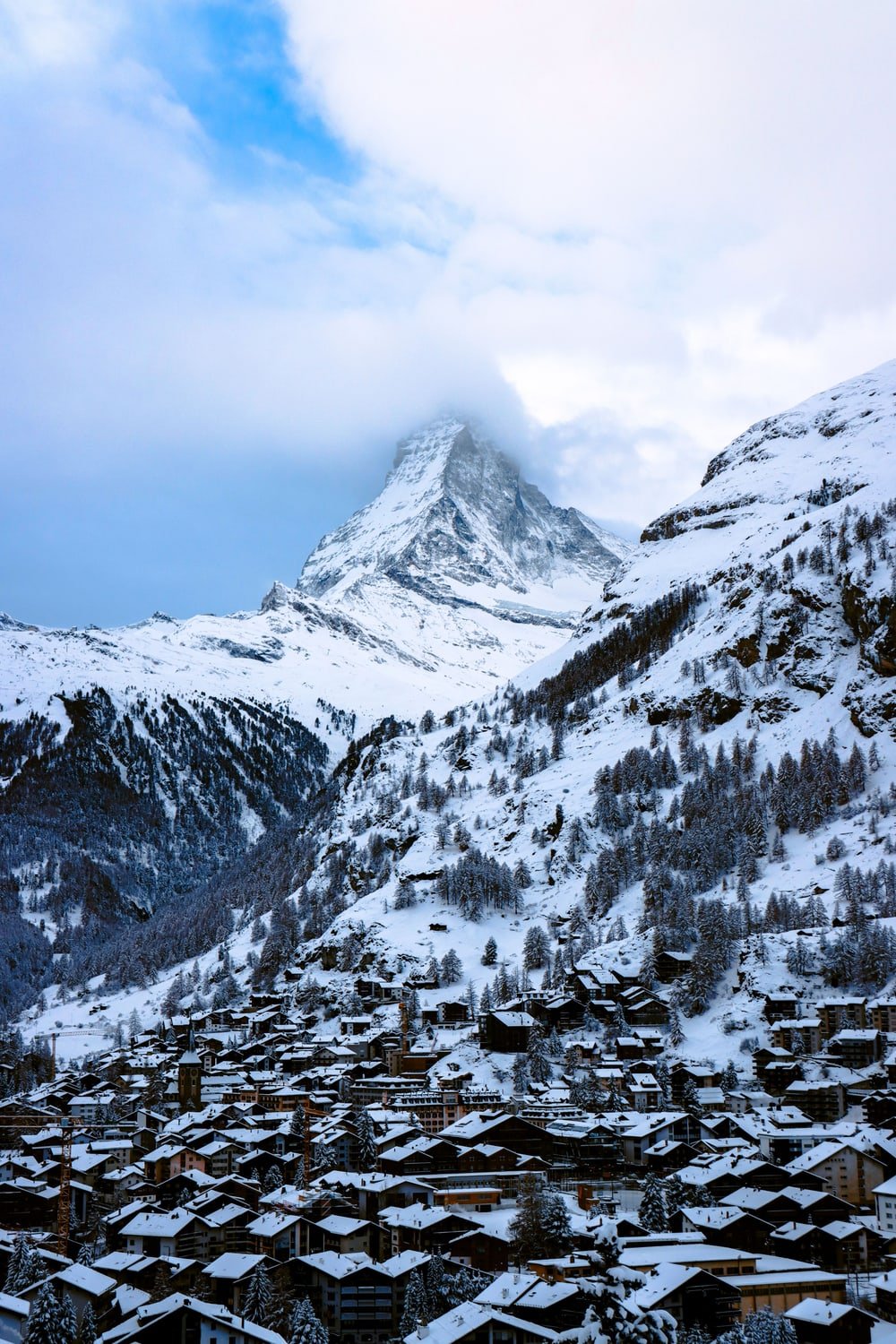
The Matterhorn seen from Zermatt, 7 March 2024. Photograph: Phil Evenden / Pexels.
You do not need to ski to enjoy Switzerland in winter. A week can combine lakeside walks, old towns, scenic rail journeys and a mountain outing chosen around the weather. This suggested itinerary starts in Lucerne, continues to Interlaken and finishes in Zermatt, using three bases rather than changing hotels every night.
It is designed for travellers who value scenery and unhurried days. Its success depends less on collecting famous summits than on choosing practical accommodation and leaving room to change activities when visibility deteriorates.
Is Switzerland worth visiting in winter if you do not ski?
Yes, provided you choose places you can also enjoy at town or village level. Lucerne combines an old town with a lake; Interlaken provides a base for exploring the Jungfrau region; Zermatt adds the atmosphere of an Alpine village. Switzerland Tourism’s Lucerne guide introduces the city, lake and surrounding excursions.
Do not make snow in the cities a condition for a successful holiday, or choose a winter activity from a summer photograph. Check the operating status of each attraction on your travel dates, particularly mountain excursions, and keep an alternative in town for a cloudy day.
A seven-day Switzerland itinerary: where to stay
| Days | Suggested base | Focus |
|---|---|---|
| 1–2 | Lucerne: two nights | Old town, lake and a gentle start |
| 3–4 | Interlaken: two nights | Regional exploring and a flexible mountain day |
| 5–6 | Zermatt: two nights | Alpine scenery and village life |
| 7 | Departure | Transfer to your departure airport, allowing for the timetable |
This plan assumes seven days and six nights. If your return flight leaves early, spend the sixth night near the departure airport rather than relying on a long journey that morning. Check the complete rail itinerary before paying for accommodation.
Days one and two: take your time in Lucerne
Use your arrival day for a walk through the old town and around Chapel Bridge, followed by dinner close to your hotel. Avoid committing to a distant reservation on the first evening: flight delays and baggage collection can quickly change the schedule.
On day two, choose between more time by the lake and an excursion outside the city, depending on the weather and operating schedules. An indoor activity can provide an alternative. Accommodation within an easy walk of the station makes handling luggage simpler and leaves more of the day for the city itself.
Days three and four: Interlaken and a flexible mountain day
Travel to Interlaken and keep the rest of the arrival day light. The following day, choose one outing in the Jungfrau region rather than squeezing several villages and a high summit into a crowded schedule. Grindelwald or Lauterbrunnen may suit your plans, depending on access, open routes and available time. Consult the official Interlaken destination guide when planning the region.
A famous mountain excursion can become an expensive disappointment if cloud obscures the view. Check the forecast, visibility and operating status before committing, and weigh the experience against its actual price. A line on a map does not establish that a path is suitable for winter walking: use designated routes that are open.
Days five and six: leave time for Zermatt itself
Zermatt is more than a stop for a photograph of the Matterhorn. Allow time for its streets, old houses and cafés, then choose the next day’s activity around visibility. Switzerland Tourism identifies Zermatt as a car-free destination, while the official arrival guide explains how to reach it by train.
That makes luggage arrangements and hotel location particularly important. Check the distance from the station and how you will reach your accommodation; do not plan on driving your private car into the village. If seeing the summit is a priority, a flexible day gives you more options than a short stop between trains.
How to choose Swiss train tickets without overspending
List the journeys you will actually make, then compare individual fares, day passes and the Swiss Travel Pass. The best-known pass is not automatically the best fit. The number of travel days, included routes and additional charges determine the comparison.
Swiss Federal Railways, SBB, lists second-class Saver Day Pass fares from CHF 52 without a Half Fare Travelcard, or CHF 29 with one. These are starting prices subject to availability, not a guaranteed fare for your travel date. Check the area of validity and ticket conditions before buying; do not assume every mountain ascent is included.
The Swiss Travel Pass covers extensive travel within its network, but some panoramic trains require separate seat-reservation fees or supplements, and mountain-excursion coverage varies. Include those costs before deciding that a pass will cover the whole itinerary.
How much does a winter trip to Switzerland cost?
A single total is not useful without your dates, accommodation standard and party size. Build a realistic budget from six nights in your chosen bases, actual transport costs, meals and paid activities, then allow a margin for changes. Keep flights separate so that accommodation and transport options remain easy to compare.
Make a paid mountain day a deliberate choice rather than adding another summit every morning. Compare the final room rate, including breakfast where relevant and cancellation terms. A hotel near the station may justify a modest premium if it saves repeated transfers and time, but calculate that using the offers available for your trip.
Does this itinerary suit families?
It can suit families comfortable with train travel and managing their luggage, especially if arrival days remain relaxed. With very young children, or for a slower holiday, consider splitting the six nights between Lucerne and Interlaken and leaving Zermatt for another trip. Fewer transfers create space for rest instead of a race against departure times.
Before confirming your bookings
Check flight and train times together, winter operating schedules, cancellation conditions and exactly what your tickets include. If Christmas markets are part of the plan, verify each market’s dates through the official Christmas-market directory and the organiser. They do not necessarily run throughout winter.
The railway journey, lake and village can be the experience in their own right. Choose fewer stops, spend longer in each place and keep the mountain outing for a day when the view deserves it.
Read more from the magazine
A planning guide from OUISTARS Travel. Ticket information and official sources checked on 20 November 2026. Prices and operating schedules may change.

Cite this article
When citing the text or analysis, include the magazine, title, original URL and publication date. Preserve the stated attribution of statistics and photographs.
OUISTARS Travel — Switzerland in Winter Without Skiing: A 7-Day Train Itinerary
Published: