





Opinion
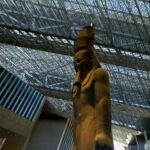
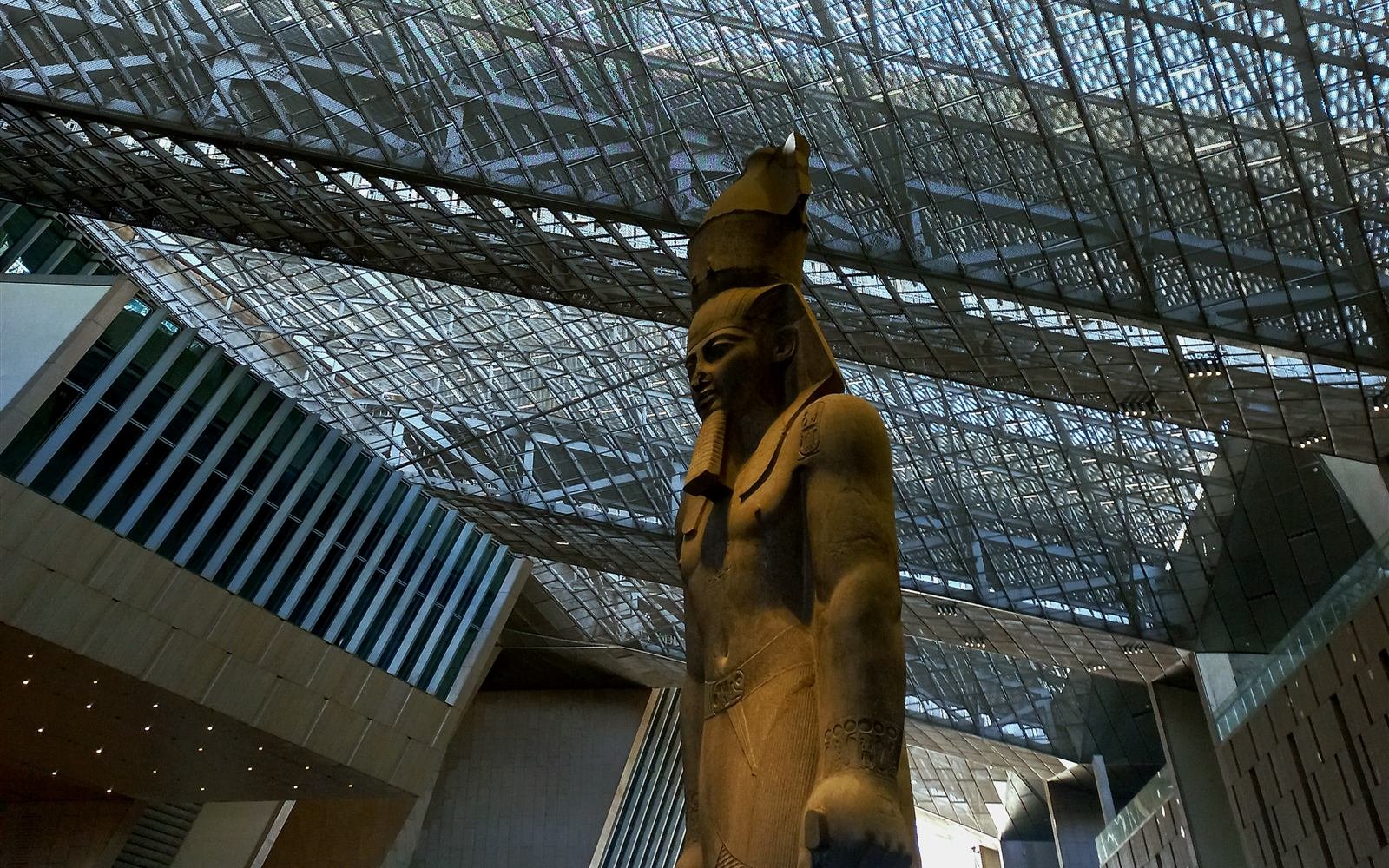
The Grand Egyptian Museum is a magnificent gift from Egypt to the world. Bringing these treasures together in a setting worthy of them is an achievement to be proud of. I want visitors to encounter the same care from the moment they step off the aircraft.
Eight entries from Egypt in Forbes Middle East’s Top 100 Travel and Tourism Leaders 2026 provide an occasion to ask how the success of investment and construction can reach the everyday details of a visitor’s trip. Forbes Middle East — 2026
An achievement that deserves a fitting welcome
The museum brings together more than 5,000 objects from Tutankhamun’s treasures, according to the Egyptian Presidency. Its cultural importance extends far beyond Egypt. The opportunity it creates for tourism deserves care at every stage: people travelling to see this heritage should find a straightforward route to it and helpful service along the way. Egyptian Presidency
The first test is at the airport exit
After a flight, travellers need simple answers. Where do I go? Where is my car? Who can help if something goes wrong? Clear signs, understandable procedures and staff able to assist in visitors’ languages set the tone. Outside the terminal, vehicle routes, driver waiting areas and passenger pickup points need to work together.
I want a visitor to know the meeting point before leaving the terminal, to be able to identify the driver and vehicle, and to understand the fare or how it is calculated. Compared with a major development, these seem small matters. They are among the first things a guest encounters.
Service must extend beyond the hotel
Expansion in new urban developments, hotels and resorts brings a responsibility to operate them well. Guests leave the hotel, take a car, buy tickets and deal with sellers. Service standards must follow them into the street, transport areas and entrances to visitor sites.
Leaders with experience in aviation, hospitality and destination management can contribute alongside the responsible authorities. The goal is an arrangement visitors can understand, workers can follow and managers can enforce.
The right to enjoy a visit without harassment
Visitors need protection from harassment, persistent sales pressure and changes to agreed prices or terms. They should be able to decline a purchase, move around comfortably and know where to seek help. A complaint needs someone who understands it, a clear follow-up process and an answer that reaches the person who raised it.
Attention to these encounters protects the destination’s reputation and the livelihoods of people who serve visitors well. Respectful treatment makes an impression. An incident left unresolved can undo considerable effort spent attracting a guest.
When a police vehicle follows the group
I also question the impression a police escort may leave on some visitors. Does the traveller understand why it is there, or wonder whether moving around without it would be safe? In my view, that question deserves a hearing when tours are planned.
Security professionals must decide what protection is necessary. I am asking for understandable measures proportionate to that need, allowing visitors to feel reassured and free to move. Technology, organised information and a prompt response can help. When looking at Spain, Italy or Austria, or at Saudi Arabia and the UAE, we should compare the ease of arrivals, transport and service without imagining any country to be free of police or risk.
What reaches the decision-maker?
I would like to see unannounced service checks covering the route from airport to hotel and museum, and back. How long did the transfer take? Was the agreed fare honoured? How was a woman reporting harassment treated? Did a disabled traveller receive the assistance they needed? Reports should bring the answers to those responsible.
Workers need to be heard too. They know where delays arise and what training or authority would help. Independent checks, visitor feedback and complaint follow-up let decision-makers see service as it is actually delivered.
Protecting what Egypt has achieved
I write out of pride in Egypt and a wish for its people and economy to benefit from this achievement. I hope the Ministry of Tourism and Antiquities, the Egyptian Tourism Authority and the sector’s business leaders will give these questions serious attention.
The Grand Egyptian Museum deserves to remain in a visitor’s memory for its extraordinary treasures. The journey there, from arrival to departure, should be a good part of that memory too.
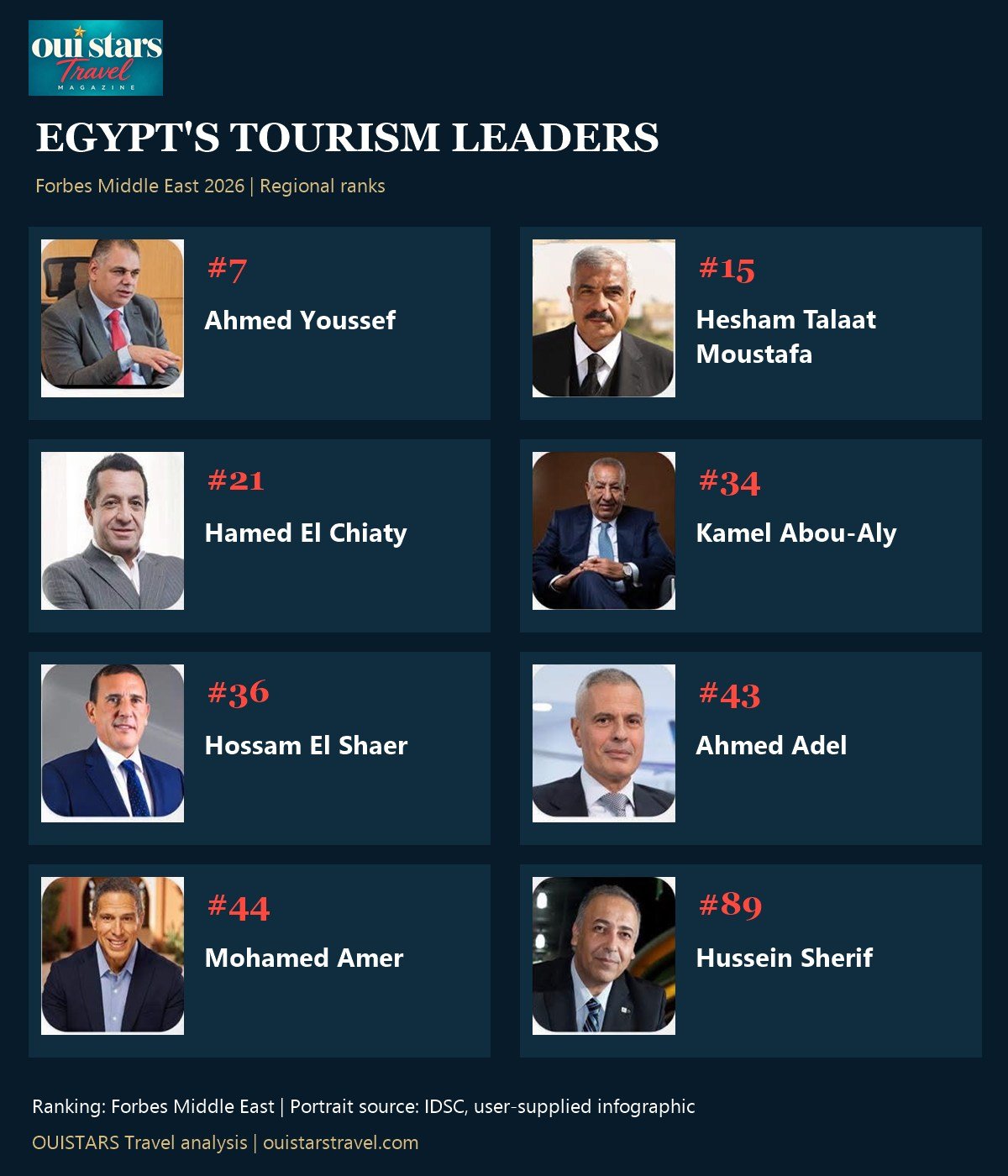
Egypt’s entries in the Forbes 2026 list
The positions below are regional ranks in Forbes Middle East’s 2026 list.
| Regional rank | Name | Organisation listed |
|---|---|---|
| 7 | Ahmed Youssef | Egyptian Tourism Authority |
| 15 | Hesham Talaat Moustafa | TMG Holding |
| 21 | Hamed El Chiaty | Travco Group |
| 34 | Kamel Abou-Aly | Pickalbatros Hotels & Resorts |
| 36 | Hossam El Shaer | SUNRISE Resorts & Cruises; Madaar Developments |
| 43 | Ahmed Adel | EGYPTAIR Holding Company |
| 44 | Mohamed Amer | El Gouna; Orascom Development Egypt |
| 89 | Hussein Sherif | AIRCAIRO |
Sources
- Forbes Middle East — Top 100 Travel and Tourism Leaders 2026
- Egyptian Presidency — Grand Egyptian Museum
Museum photo: Sohilaali869 / Wikimedia Commons, 20 December 2025, CC BY-SA 4.0; cropped and resized. Portraits: Egypt’s Information and Decision Support Center.
Cite this article
When citing the text or analysis, include the magazine, title, original URL and publication date. Preserve the stated attribution of statistics and photographs.
OUISTARS Travel — Egypt Gave the World a Great Museum. Does the Arrival Experience Match?
Published: