



HIDDEN LANDMARK STORIES — EPISODE ONE
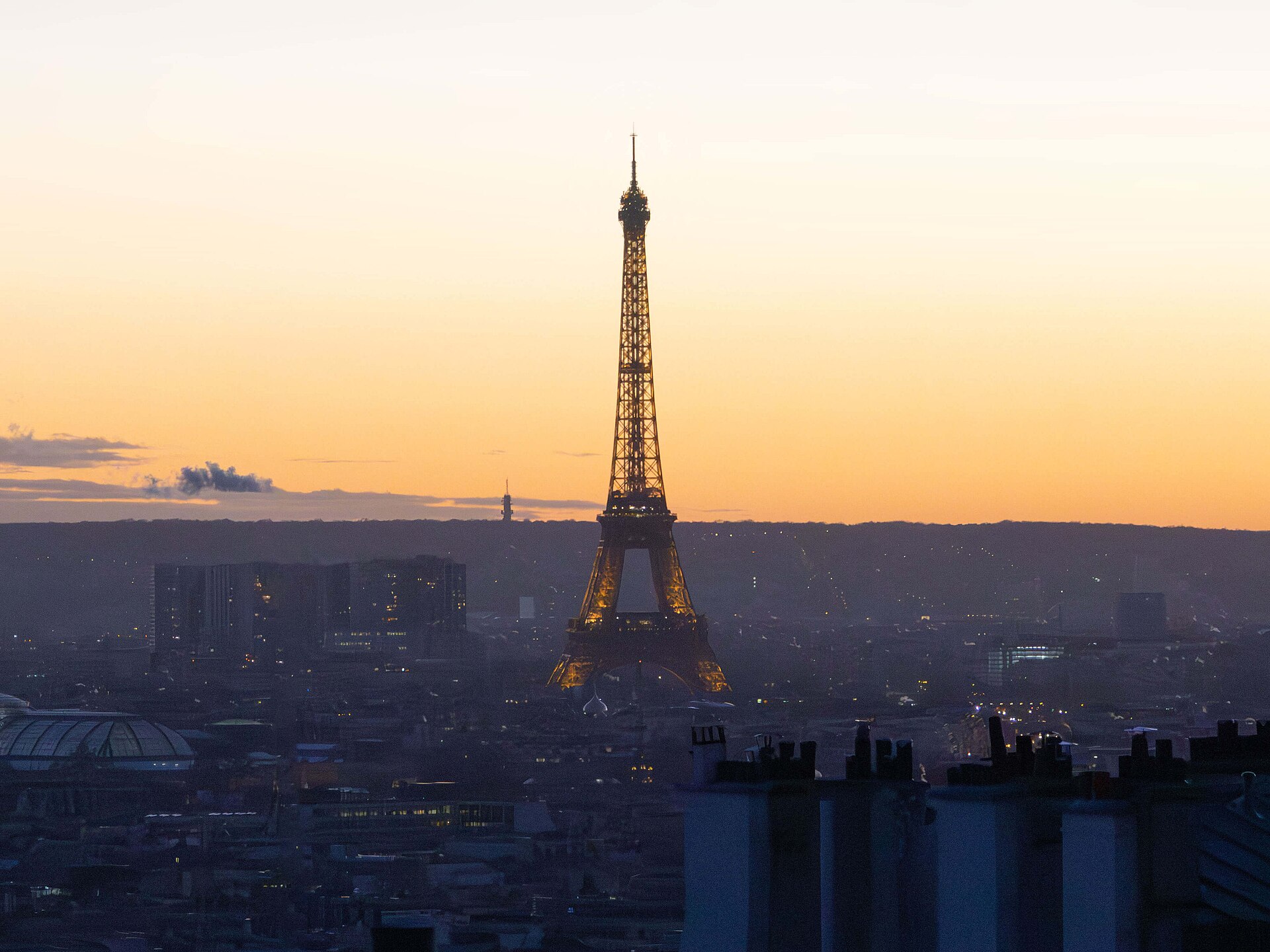
Paris, 1909. The most recognisable silhouette in the city had reached the end of its promise.
For twenty years, the Eiffel Tower had looked down on the Seine as if it belonged there. But the agreement behind it told another story. Gustave Eiffel’s concession was expiring. The City of Paris would take full control on 1 January 1910, and keeping the iron giant was not guaranteed. The tower had been conceived for an exhibition, attacked as an insult to French culture and watched by critics who expected it to vanish when its time was up.
Had events followed the logic of the original deal, postcards of Paris might now show an empty Champ-de-Mars.
Instead, a signal travelled through the air—and changed the tower’s fate.
The Eiffel Tower’s 20-year clock
The Eiffel Tower was never a casual monument-building project. It was the spectacular answer to an extraordinary brief: could France erect a 300-metre iron tower for the 1889 Exposition Universelle, staged to mark the centenary of the French Revolution and display the country’s industrial power?
The winning project was selected from 107 proposals. Eiffel would be allowed to operate the tower under a 20-year concession; after that, it would revert to the City. The arrangement made the economics possible, but it also placed an expiry date over the structure from the start.
In 1889, that deadline felt remote. By the first decade of the twentieth century, it was close enough to hear.
The tower was not invented by one man
The name “Eiffel” can make the monument sound like a solitary flash of genius. The documented story is more interesting.
In 1884, two engineers in Eiffel’s company—Maurice Koechlin and Émile Nouguier—imagined a 300-metre metal pylon inspired by the logic of bridge piers. Koechlin drew the first sketch. The architect Stephen Sauvestre then reshaped the severe engineering diagram into something the public could inhabit and perhaps even admire, introducing floors, reception spaces and great decorative arches.
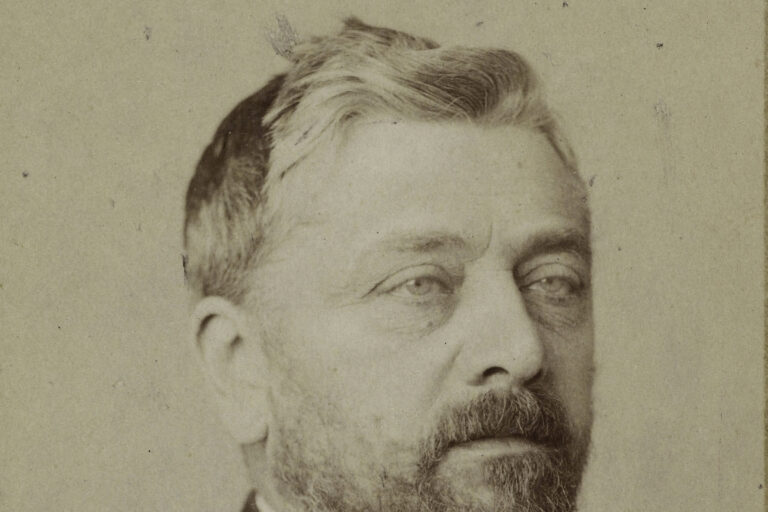
Gustave Eiffel, initially unconvinced, recognised the project’s potential after that transformation. He secured the patent, championed the proposal, organised the financing and turned a daring drawing into a buildable enterprise. The official Eiffel Tower history therefore credits a team: entrepreneur, engineers, architect, draughtsmen, factory workers and the crews who assembled it in the sky.
Paris declared war on the “monstrous” tower
Construction did not begin to applause. On 14 February 1887, while work was under way, Le Temps published a protest signed by prominent writers, painters, composers and architects. Among the names were Charles Garnier, Guy de Maupassant and Charles Gounod. They feared that a colossal industrial structure would humiliate the historic city and dominate its monuments.
Their language was ferocious. The proposal was presented as useless, monstrous and hostile to French taste. For readers today, the controversy is a reminder that landmarks do not become inevitable until long after someone has fought to stop them.
Eiffel answered with engineering confidence. He argued that the tower’s curved profile was not arbitrary: its form responded to wind forces. He also predicted that its scale and audacity would acquire a beauty of their own. Paris had to wait to decide who was right.
How 18,038 pieces climbed into the sky
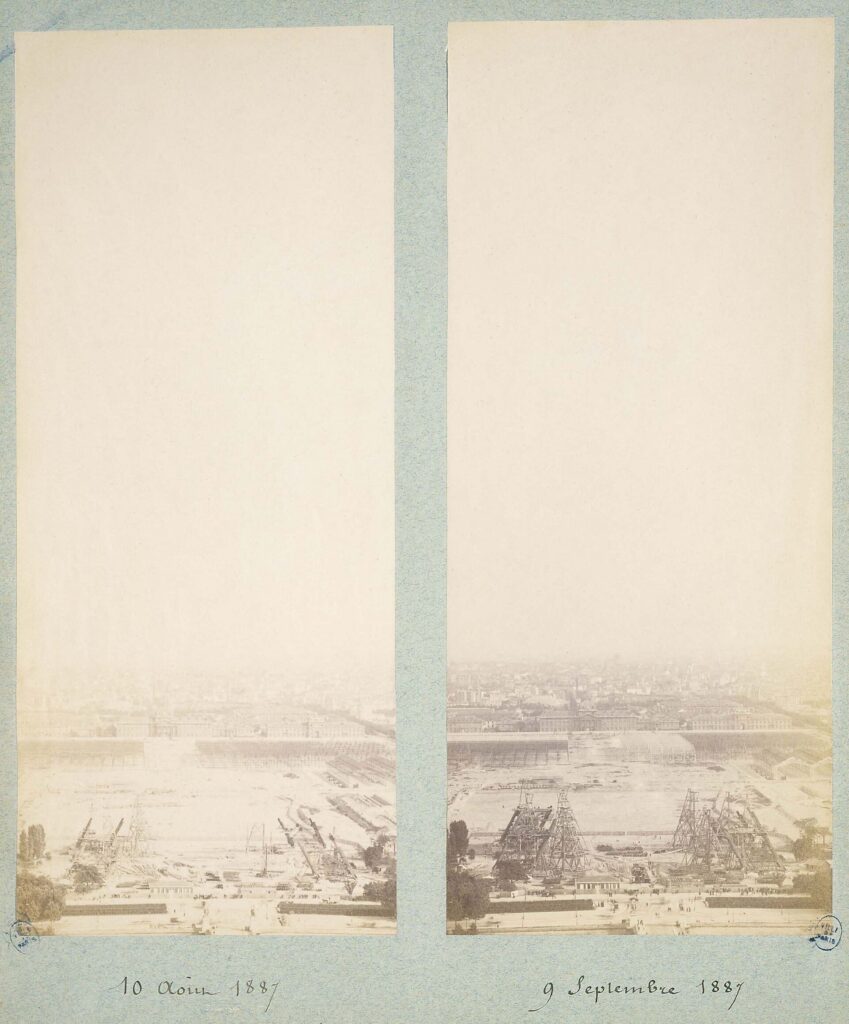
Work began on 26 January 1887. According to the official construction record, the tower required 18,038 metallic parts, 5,300 workshop drawings, around 2.5 million rivets and 7,300 tonnes of iron.
Precision began away from the Champ-de-Mars. Parts were calculated and prefabricated at Eiffel’s Levallois-Perret works, traced to a tenth of a millimetre and assembled into manageable sections. About 150 people worked in the factory; between 150 and 300 worked on site.
The riveters operated in teams. One heated each rivet, another positioned it, a third formed the head and a fourth finished it with a sledgehammer. As the hot metal cooled, it contracted and locked the joint tight. Steam cranes climbed with the structure along tracks intended for the future lifts. Temporary wooden scaffolds supported the early stages; hydraulic jacks helped align the four immense legs at the first platform.
It was noisy, physical and astonishingly exact. Five months went into the foundations and twenty-one months into assembling the ironwork. On 31 March 1889—after two years, two months and five days—Eiffel climbed to the summit and raised the French flag while interior work continued below.
The public climbed before the lifts worked
The Exposition opened on 15 May 1889. The elevators were not ready, but almost 30,000 people climbed 1,710 steps in the first week. By the fair’s close on 6 November, the tower had welcomed 1,953,122 visitors.
Popular fascination quieted much of the aesthetic revolt. From the top, visitors saw Paris from a height no public building had offered before. The tower was not merely an object on the skyline; it was a new way of seeing the city.
Yet success in 1889 did not cancel the 20-year clock. Attendance weakened after the fair, and the 1900 Exposition did not recreate the first rush. Temporary exhibition architecture was routinely dismantled. In 1906 Paris decided to demolish the vast Galerie des Machines from the same 1889 fair because it lacked a lasting use. The Eiffel Tower needed to prove that it was more than a profitable memory.
The signal that saved the Eiffel Tower
Gustave Eiffel had understood the danger early. From 1889 onward, he opened the tower to experiments in meteorology, aerodynamics, physics and astronomy. Scientific usefulness could make demolition harder to justify.
Then wireless telegraphy arrived.
On 5 November 1898, inventor Eugène Ducretet established a Morse-code radio link between the Eiffel Tower and the Panthéon, roughly four kilometres away. A permanent transmitter followed. In 1899 signals crossed the Channel to London.
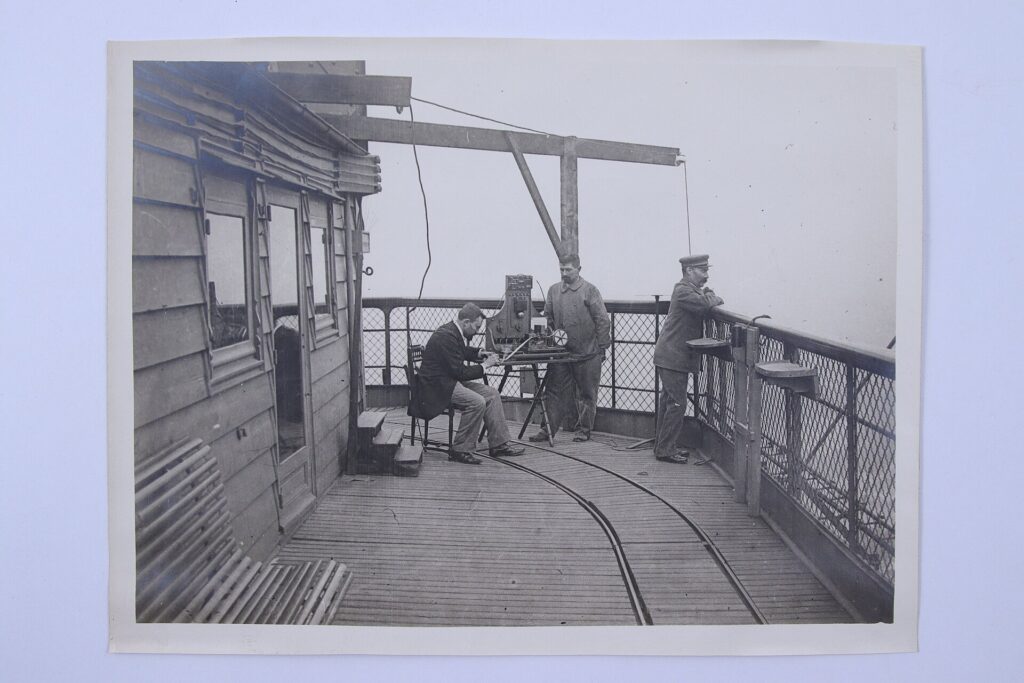
The decisive partnership involved army officer Gustave Ferrié. Eiffel made the tower available for military experiments and helped finance an antenna system. Ranges expanded: hundreds of kilometres, then links to Bizerte in Tunisia, and by 1908 a claimed reach of 6,000 kilometres. A permanent military radiotelegraph station was installed beneath the Champ-de-Mars.
The tower was no longer just a spectacle. It had become communications infrastructure with strategic value. As the official account of its survival records, Eiffel received a 70-year extension to the concession beginning on 1 January 1910.
Radio did not rescue the tower in one cinematic instant. Science, military communications, Eiffel’s persistence and the search for a permanent public purpose built the case over years. But without the antenna above Paris, the verdict could have been very different.
From intruder to the image of Paris
The structure once condemned for overwhelming Paris gradually became the shorthand for Paris. Its survival created time for taste to change.
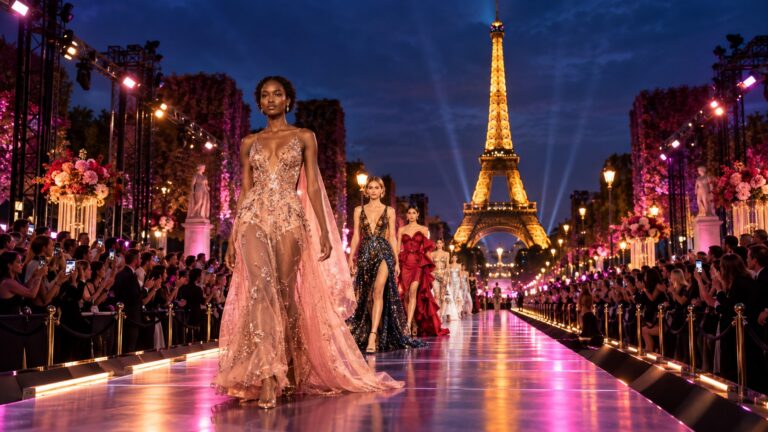
Artists who had feared industrial ugliness were followed by photographers, filmmakers, painters and advertisers who discovered an endlessly adaptable form. Radio and television antennas increased its practical life. Major events turned it into a public stage. UNESCO now describes it as a universally recognised icon of Paris and iron architecture within the Banks of the Seine World Heritage site.
The transformation carries a useful lesson: heritage is not always born beloved. Sometimes it survives because it proves useful long enough for a city to understand what it has.
What visitors experience today
Today the experience still contains traces of the original experiment. The iron lattice makes wind and light visible. The first and second levels expose the scale of the assembly; the summit makes the geometry of Paris suddenly legible. Even the lifts continue a technical story that began when hydraulic systems were an attraction in their own right.
For a broader route around the monument, the Seine and the historic centre, use our Paris in one day itinerary or compare the city’s essential landmarks. Buy timed tickets only from the official Eiffel Tower website, allow time for security checks and verify the day’s opening conditions before travelling.
A subtle OUISTARS travel note
A landmark this famous attracts crowds, queues and complicated traffic. Travellers who want the history rather than a rushed photo can build the tower into a tailor-made Paris experience with OUISTARS. If the visit begins after a flight, arranging a private CDG airport transfer can protect the first hours of the itinerary. The monument remains the story; good planning simply creates the time to hear it.
The Eiffel Tower survived because it became useful before Paris decided it was beautiful.
Frequently asked questions
Was the Eiffel Tower really supposed to be demolished?
Its operating concession lasted 20 years. The tower would pass fully to the City of Paris on 1 January 1910, and its continued existence was not guaranteed. Official histories say it could have been dismantled, although no single demolition day was fixed.
Why was the Eiffel Tower built?
It was built for the 1889 Exposition Universelle, which celebrated the centenary of the French Revolution and showcased French industrial and engineering power.
Who designed the Eiffel Tower?
Engineers Maurice Koechlin and Émile Nouguier developed the first 300-metre pylon concept. Architect Stephen Sauvestre transformed its appearance. Gustave Eiffel backed, patented, financed and delivered the project through his company.
Why was the Eiffel Tower not demolished?
Scientific experiments and especially wireless telegraphy demonstrated lasting strategic value. Its use as a giant radio antenna helped secure a 70-year extension from 1910.
How long did construction take?
The official construction period lasted two years, two months and five days, from January 1887 to 31 March 1889.
How many pieces and rivets are in the Eiffel Tower?
The original structure used 18,038 metallic parts joined with roughly 2.5 million rivets.
Primary sources and further reading
- Official Eiffel Tower: history, design and construction
- Official Eiffel Tower: how radio saved the Tower
- Official Eiffel Tower: Koechlin, Nouguier, Sauvestre and Eiffel
- Bibliothèque nationale de France, Gallica: Eiffel Tower collections
- UNESCO: Paris, Banks of the Seine