












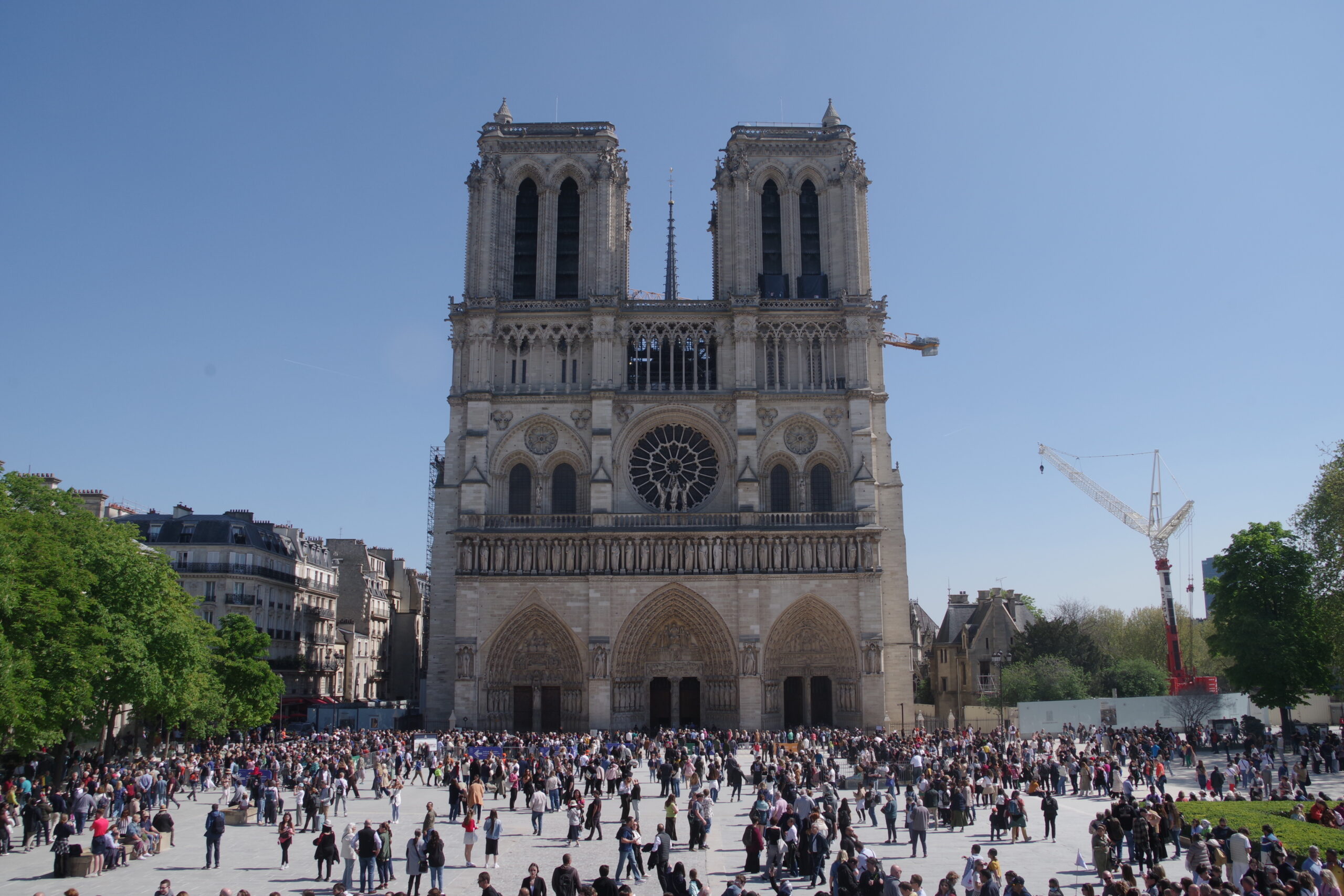
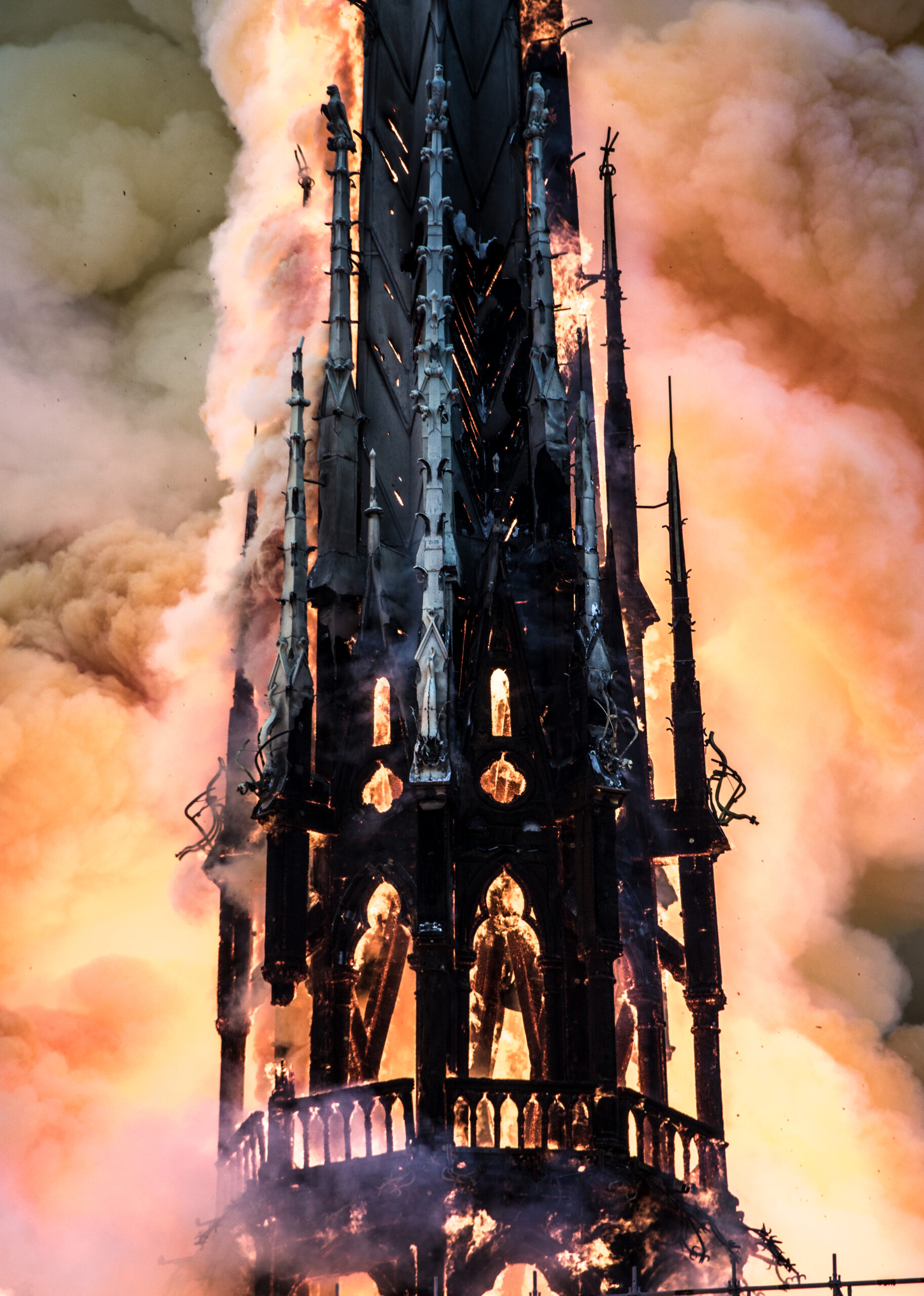
At 7:50 p.m. on 15 April 2019, the spire of Notre-Dame de Paris bent, broke and vanished into a cathedral already consumed by fire. On the quays of the Seine, people stopped speaking. For a few terrible hours, Paris did not know whether an 850-year-old monument would still be standing at dawn.
The Notre-Dame fire had entered the medieval roof, the vast timber structure known as “the forest.” Lead melted. Burning beams crashed through parts of the stone vaulting. Firefighters confronted an impossible calculation: how close could they push into a weakening Gothic building without losing lives, and which towers, relics and structural lines had to be saved first?
They won that battle. But Notre-Dame’s survival was never a single miracle. It was the latest chapter in a long sequence of human decisions: to build higher, to support stone with daring external arches, to rescue a neglected church from fashion and revolution, to reinvent a lost spire, and finally to rebuild a monument without turning it into a replica of itself.
How did a cathedral begun in the 12th century survive revolutions, neglect, transformation and one of the most devastating nights in its modern history?
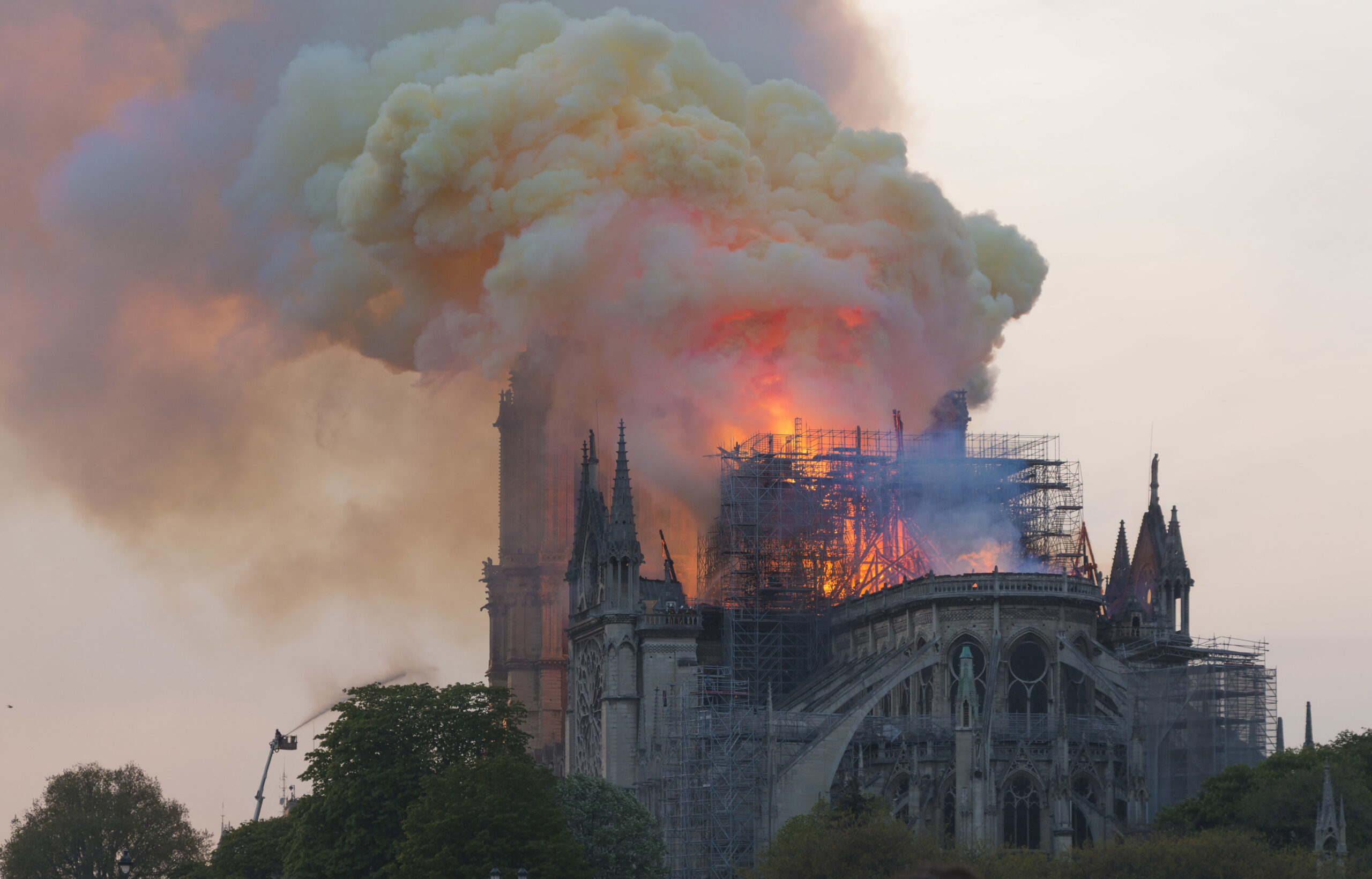
15 April 2019: the night the roof became an inferno
The fire was reported in the early evening while renovation work was under way around the roof and spire. Its cause remains undetermined. What is documented is the speed with which the flames moved through dry ancient timbers above the vaults. The blaze ultimately destroyed the medieval roof, the 19th-century spire and parts of the vaulting.
Nearly 400 firefighters were mobilised. The most consequential decision came when crews concentrated on preventing the flames from taking the north bell tower. Had fire established itself there, the heavy bells and weakened structure might have triggered a far wider collapse. Firefighters also worked from inside the cathedral, beneath unstable vaults, while colleagues cooled the towers and controlled the spread from elevated positions.
According to the French Ministry of Culture, the fire was finally declared extinguished at 9:50 a.m. on 16 April, about 15 hours after it began. The two towers, the main structure and the façade survived. The danger, however, did not end with the flames.
A chain of people, and the treasures it carried to safety
As fire spread overhead, clergy, firefighters, police officers and cultural officials formed a human chain to remove precious objects. Among the works saved were the Crown of Thorns, relics associated with the Passion of Christ and the tunic attributed to Saint Louis. The great organ escaped direct burning, although dust, water and humidity made a painstaking dismantling and restoration necessary. The great rose windows endured.
Other losses were irreplaceable. The medieval timber roof disappeared. Viollet-le-Duc’s spire collapsed. Sections of the stone vaults fell. Lead from the roof and spire contaminated the site, creating a health and conservation problem alongside the structural emergency.
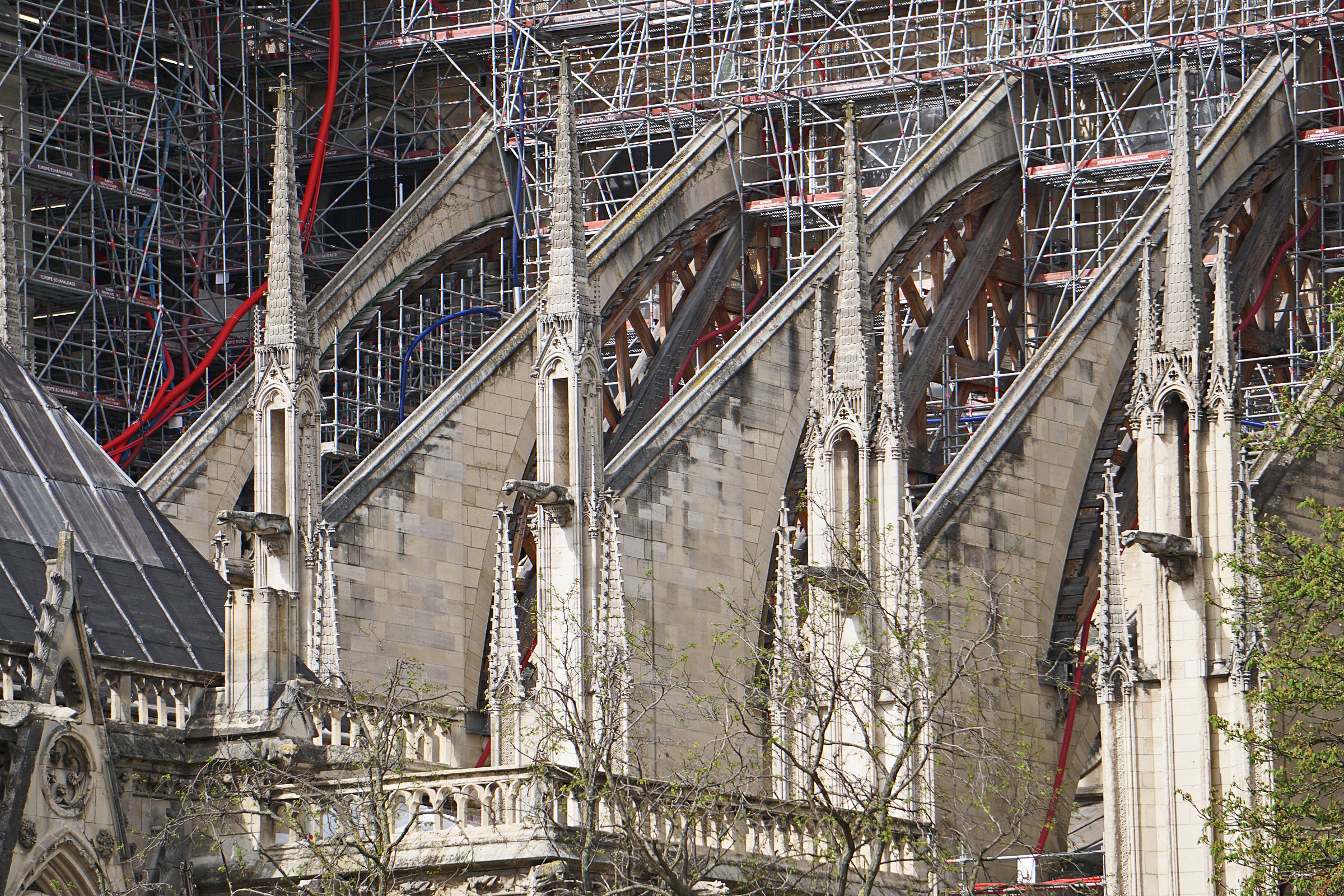
In the first months, engineers treated Notre-Dame less like a building site than a patient in critical care. They covered vulnerable areas, stabilised gables, secured the flying buttresses and installed monitoring systems. The remaining vaults could not be assumed safe. Every intervention had to avoid loading or shaking masonry already altered by heat, water and impact.
Why Notre-Dame was built in the first place
To understand what nearly disappeared, return to the Paris of Bishop Maurice de Sully. In the middle of the 12th century, the city was growing in population, power and religious importance. The older cathedral complex on the Île de la Cité no longer matched the ambitions of the capital. Sully initiated a new cathedral dedicated to the Virgin Mary, on a scale that would express both faith and the authority of a changing Paris.
Construction is generally dated from 1163. There was no single architect in the modern sense whose vision remained unchanged for two centuries. Generations of master masons, carpenters, sculptors, glaziers and labourers worked through successive campaigns. The choir was sufficiently advanced for worship by the 1180s. The nave, western façade, portals, upper galleries and towers followed. Alterations and chapels continued into the 14th century.
Notre-Dame therefore was not “built in a day,” or even in a lifetime. Its basic construction stretched across roughly two centuries, while almost every later age left a mark.
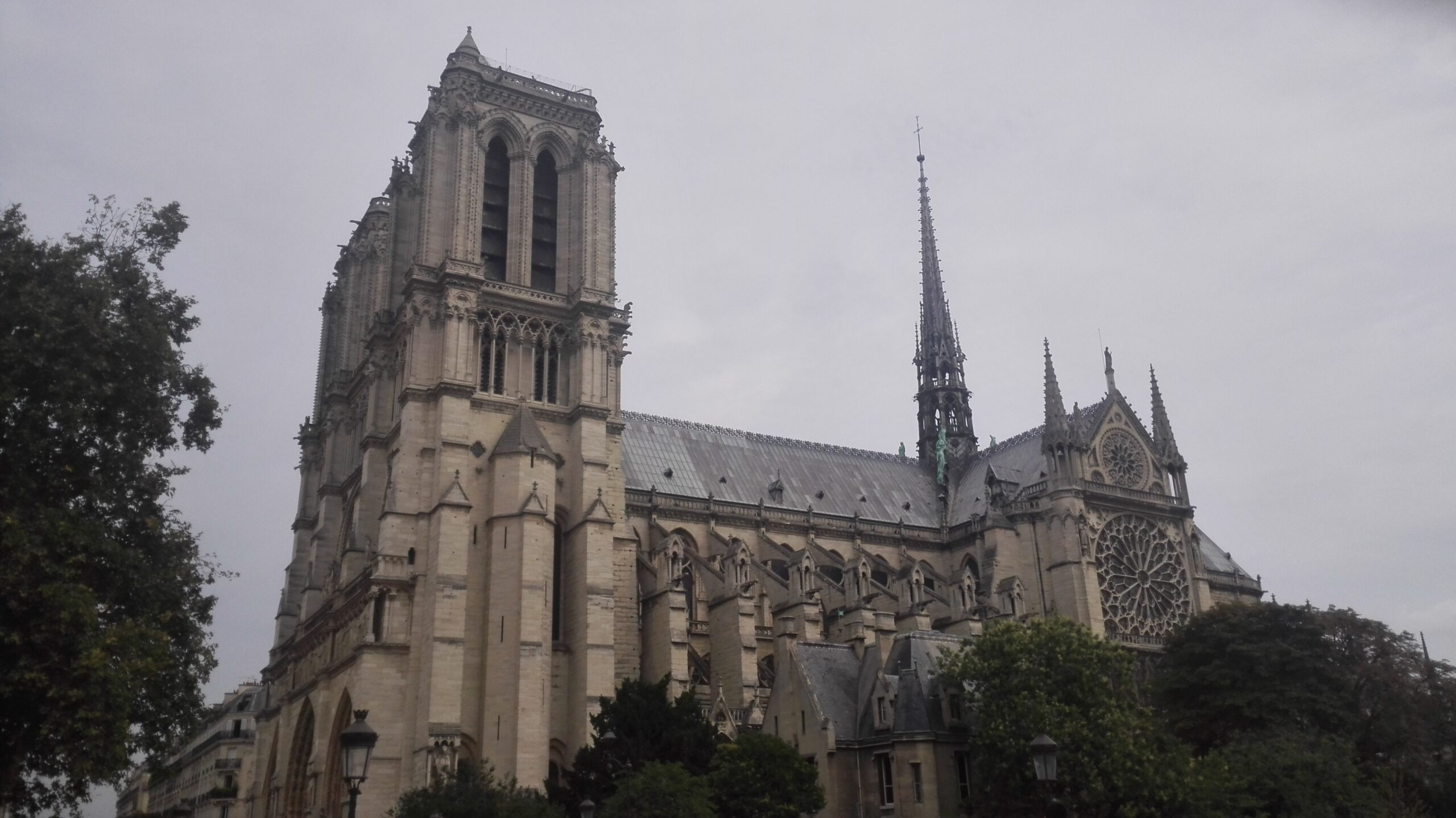
How medieval builders made stone seem weightless
The cathedral’s drama comes from a structural idea: move the forces of the high stone vaults outward and down, then open the walls to light. Pointed arches allowed more flexible proportions than the rounded Romanesque arch. Ribbed vaults concentrated loads along stone ribs and piers. Flying buttresses carried the lateral thrust outside the building, making taller walls and larger windows possible.
These were not decorative afterthoughts. They were the visible machinery that kept the cathedral standing. Builders worked without modern cranes, computer models or standardised industrial materials. Stone arrived by river and cart. Timber frames supported arches while mortar set. Human-powered lifting wheels raised blocks. Templates and practical geometry guided repeated forms. Each stage depended on craft knowledge passed from workshop to workshop.
Notre-Dame also records experimentation. Buttresses were enlarged or replaced as builders learned how the structure behaved. The transept façades and rose windows transformed the silhouette in the 13th century. The result is not one frozen design but a conversation between generations.
Revolution, neglect and the danger of becoming obsolete
The French Revolution did not burn Notre-Dame, but it stripped the cathedral of religious status, treasures and symbols. Statues of the biblical kings on the western façade were mistaken for French monarchs and decapitated. The building was used for revolutionary ceremonies and later as a warehouse. After worship returned, neglect and changing taste still threatened its future.
Then literature altered the building’s fate. Victor Hugo’s 1831 novel Notre-Dame de Paris, known in English as The Hunchback of Notre-Dame, made the cathedral a protagonist. Hugo was writing not only a story but a protest against the destruction and careless alteration of medieval architecture. Public emotion helped create political pressure for restoration.
Viollet-le-Duc, restoration and the spire Paris later mourned
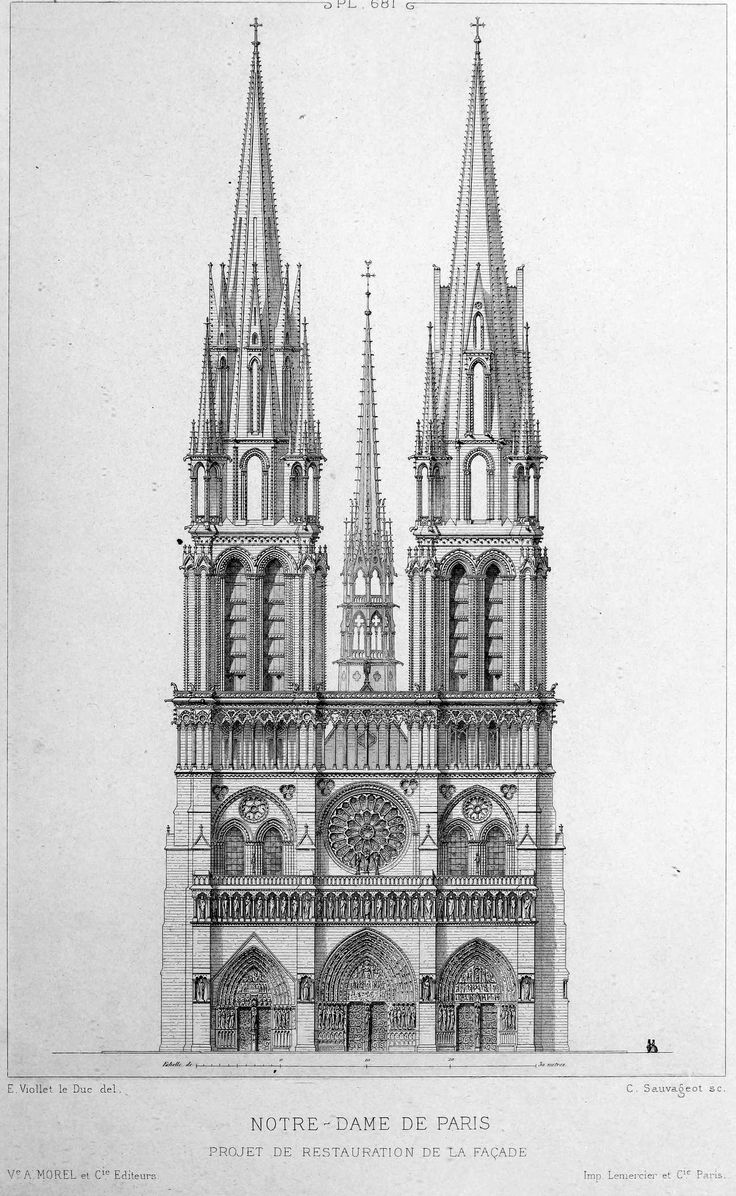
In 1844, Eugène Viollet-le-Duc and Jean-Baptiste Lassus were appointed to lead a major restoration. After Lassus died, Viollet-le-Duc continued the work. Their campaign repaired sculpture, masonry, chapels, stained glass and the sacristy, while also making choices that reflected 19th-century ideas of Gothic unity.
The new spire, completed in the 1850s and 1860s, replaced an earlier medieval spire removed in the 18th century. It was not part of the 12th-century cathedral, yet it became inseparable from the Paris skyline. Around its base stood copper statues of the apostles. One figure, Saint Thomas, carried the features of Viollet-le-Duc himself and looked back toward the spire.
Days before the 2019 fire, those statues had been removed for restoration. Their survival became one of the strange mercies of the disaster.
Rebuilding without falsifying the past
After the fire, France set an ambitious target: reopen Notre-Dame in five years. Before reconstruction could begin, the cathedral had to be made safe. A vast web of fire-damaged scaffolding around the spire was dismantled piece by piece. Archaeologists, structural engineers, chemists, conservators and historians studied timber, stone, metal, glass and lead.
The decision was taken to restore the roof and spire to their pre-fire appearance, using traditional materials and methods where appropriate, supported by modern analysis and improved fire protection. Oak trees were selected for the new framework. Carpenters used full-scale drawings and hand-finished joints alongside contemporary surveying. Stonemasons matched damaged limestone. Conservators cleaned interior surfaces darkened by centuries of dust and deposits, revealing an unexpectedly luminous cathedral.
The project was not an attempt to erase 2019. It was an effort to preserve the monument’s historical continuity while meeting modern safety demands. New detection, compartmentation and water-mist systems were part of a far more rigorous fire strategy.
The return of the “forest”
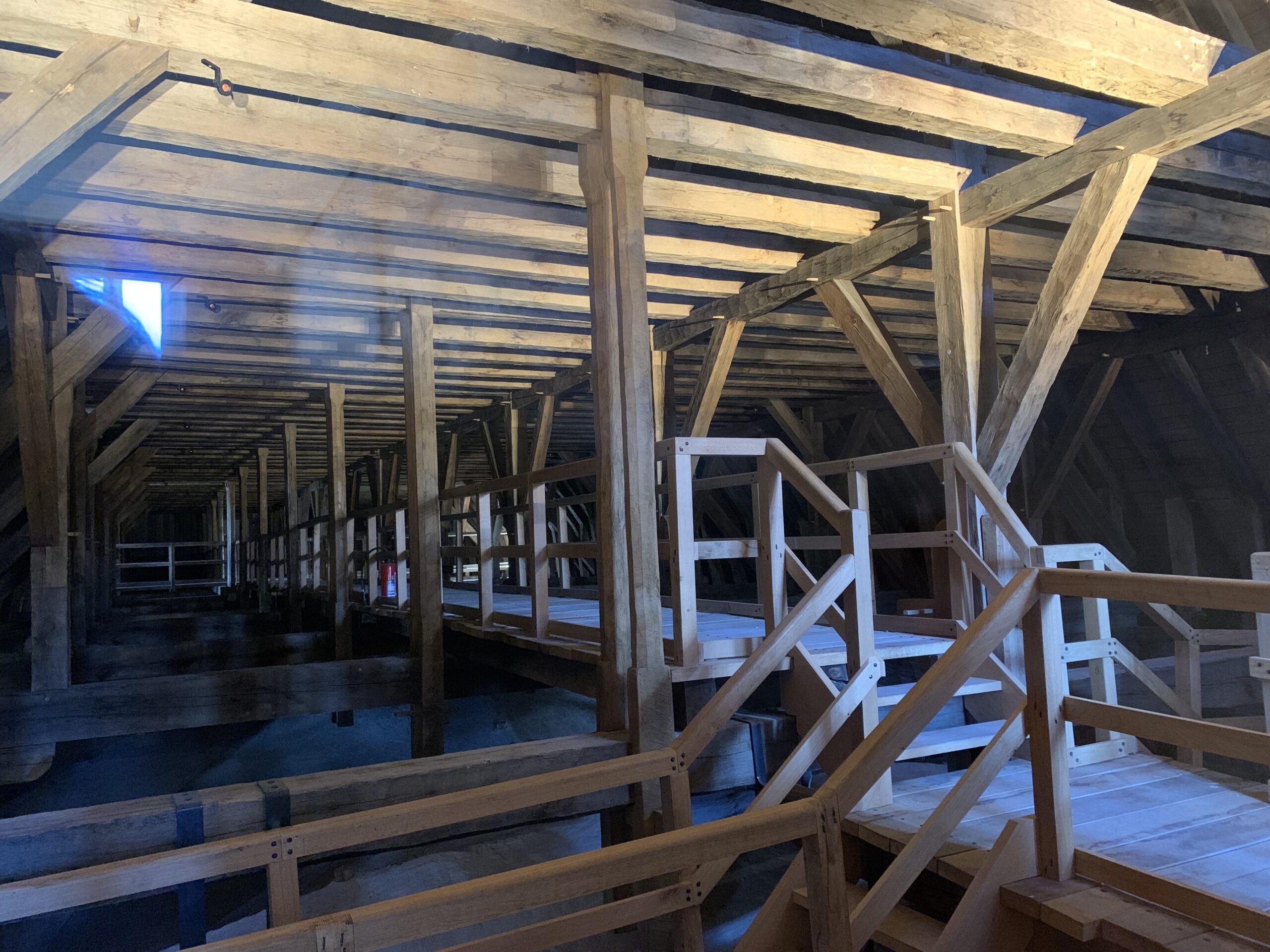
The original roof contained thousands of oak timbers, many cut from trees that grew in medieval France. Its nickname, “the forest,” described both the density of the frame and the amount of woodland it embodied. Reconstructing it required rare trees, specialist carpenters and a decision about how faithfully to reproduce a lost system.
Teams recreated the medieval choir and nave frames using oak and traditional assembly techniques. The new timbers are not antiques. Their meaning comes from the continuity of craft: axes, geometry, joints and shared knowledge applied by people working in the 21st century.
December 2024: the doors open again
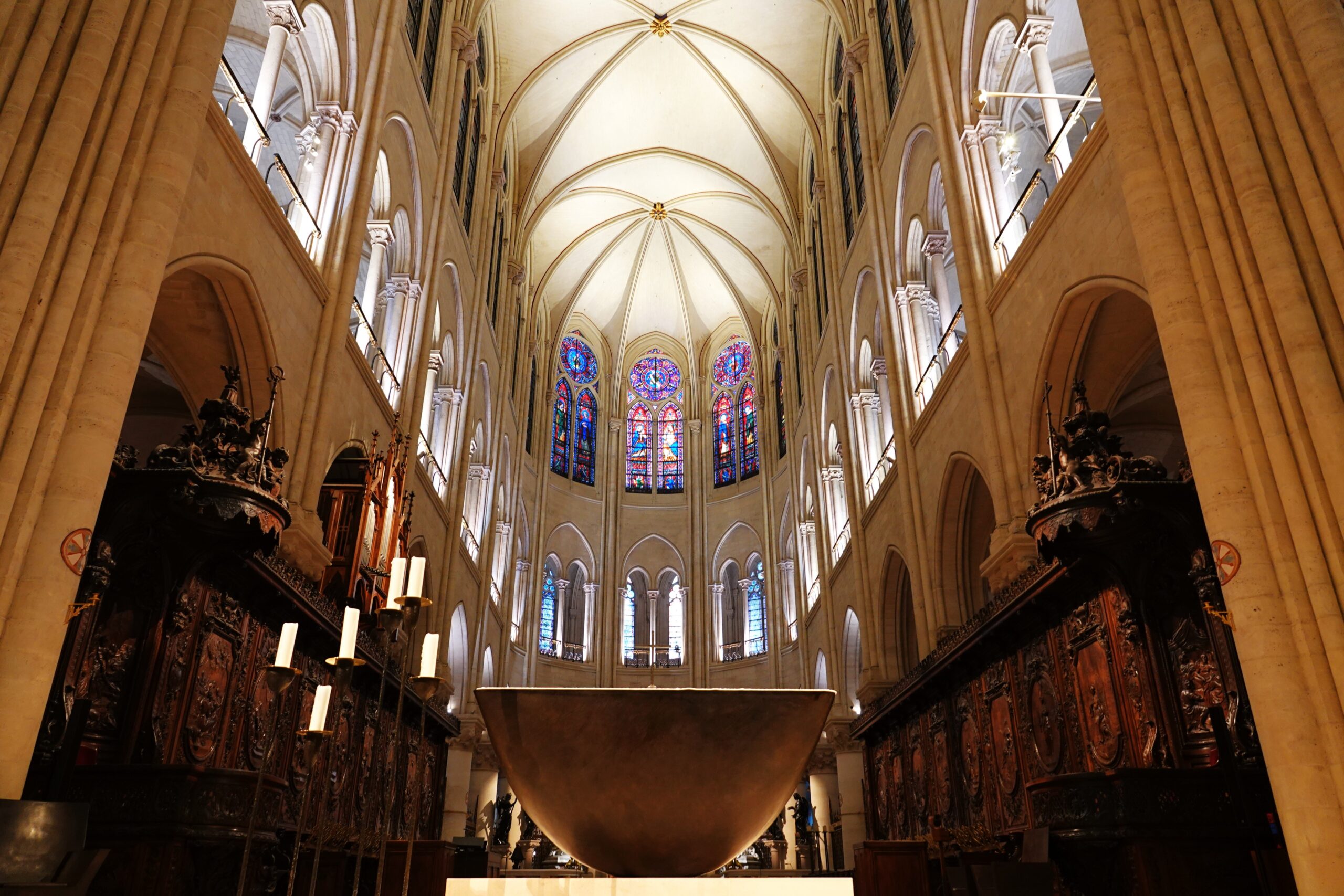
On 7 and 8 December 2024, Notre-Dame reopened with ceremonies attended by worshippers, public officials, craftspeople and international guests. For the first time in more than five years, visitors could enter the restored nave and see the cleaned stone, renewed liturgical furnishings and light moving across spaces long hidden behind scaffolding.
The reopening was a milestone, not the final sentence. Exterior restoration and work around the cathedral continue, with the public body overseeing the project mandated through 2028. The monument is open again, but its conservation remains an active responsibility.
Notre-Dame today: what visitors can experience
Entry to the cathedral is free. An official free reservation can reduce waiting, but it is optional; visitors should beware of websites selling fake “cathedral admission.” Access, opening hours and services can change, so consult the official Notre-Dame reservation page before travelling.
Inside, the greatest surprise is often the light. Cleaning revealed pale stone and sharper colour, changing the mood from the dark interior many visitors remember before 2019. The nave, choir, chapels, rose windows and great organ tell different layers of the story. Outside, the west façade, parvis, Seine quays and viewpoints from the Left Bank show how the cathedral still organises the landscape of central Paris.
Plan at least 45 to 60 minutes for a respectful interior visit, longer if you want to study the chapels and architecture. Early morning generally offers a calmer experience. Appropriate dress and quiet behaviour are expected because Notre-Dame is an active place of worship, not only a monument.
A landmark series: Paris is built from stories
Notre-Dame’s survival belongs beside the extraordinary story of another Paris icon once considered temporary. Read the first feature in this series: The Eiffel Tower Had an Expiry Date. First-time visitors can also place both landmarks into a practical route with our two-day Paris itinerary.
For travellers who need a smoother arrival, a private Paris route or reliable movement between the airport, hotel and historic centre, see the verified options for a CDG airport transfer and private mobility in Paris. These links are included as practical planning resources; the cathedral story remains the reason for the journey.
The monument that survived because people chose to save it
Notre-Dame did not survive 2019 because stone is invincible. Stone cracked. Iron expanded. Timber burned. It survived because firefighters accepted extraordinary risk, because experts stabilised a wounded structure, because craftspeople recovered knowledge, and because generations before them had already decided that this building mattered.
At dusk, the rebuilt spire again rises above the Île de la Cité. It looks familiar, almost inevitable. It is neither. On one April night, Paris saw how quickly a symbol could become an absence. The cathedral standing today is not proof that monuments live forever. It is proof that survival is work.
Frequently asked questions
When was Notre-Dame de Paris built?
Construction began in 1163 and continued through major campaigns into the 14th century. The cathedral’s core therefore took roughly two centuries to complete, with later alterations and restorations.
Who designed Notre-Dame?
Bishop Maurice de Sully initiated the project, but Notre-Dame was created by generations of mostly unnamed medieval master builders, masons, carpenters, sculptors and craftspeople rather than one single architect.
What caused the 2019 Notre-Dame fire?
The exact cause remains undetermined. Investigators found no established basis for claims of deliberate destruction, and responsible accounts should not speculate beyond the official findings.
What was destroyed in the fire?
The medieval timber roof, Viollet-le-Duc’s 19th-century spire and sections of the stone vaulting were lost. The main façade, towers, much of the structure, great rose windows, major relics and many works survived.
When did Notre-Dame reopen?
The cathedral formally reopened on 7 and 8 December 2024, with public access and worship resuming after more than five years of rescue and reconstruction.
Is Notre-Dame free to visit?
Yes. Entry is free. The cathedral offers an optional free official reservation system to help manage queues.
Authoritative sources
- Notre-Dame de Paris: official history
- Notre-Dame de Paris: official architecture guide
- French Ministry of Culture: Notre-Dame, renaissance of a symbol
- French Ministry of Culture: emergency stabilisation
- French Ministry of Culture: rescue of artworks and the treasury
- UNESCO: Notre-Dame’s reopening