












PARIS — 15 September 2026. Maison&Objet Pulse closed at Paris Nord Villepinte last night after five days in which furniture, decoration, craftsmanship, retail and hospitality were treated as one connected economy. The fair is over; the argument it made is not. If France wants to remain the place where the world comes to understand the art of living, it must protect the designers, workshops and brands that give that promise substance.
Held from 10 to 14 September 2026, this professional-only edition brought together 1,700 brands from 49 countries, including 450 new brands, across seven sectors and four halls, according to the official Maison&Objet record. One quarter of the participating brands exhibit only at Maison&Objet Paris. That figure explains why this is more than another stop on the trade-fair calendar: for many buyers, architects and hotel groups, Paris is the only physical encounter with part of this market.
WHAT MAISON&OBJET PULSE 2026 ACTUALLY CHANGED
“Pulse in Motion,” developed with trend agency NellyRodi, was not simply a visual slogan. Its four ideas—union, leadership, elevation and intensity—gave the September session a practical agenda: reconnect people, give creators cultural authority, make daily life better and restore sensory force to interiors. The fair’s own language described design as bold, sensitive and sustainable. On the floor, the stronger message was that design must now perform emotionally, environmentally and commercially at the same time.
That is a demanding brief. A chair must have a point of view, survive use, travel through a supply chain and still make economic sense. A hotel interior must photograph well without becoming disposable scenery. A shop must connect digital sourcing with the pleasure of physical discovery. The best work at Maison&Objet Pulse did not pretend these pressures could be solved with a colour palette alone.
THE SIX STRONGEST SIGNALS FROM THE SEPTEMBER EDITION
1. Emotion returned as a design tool
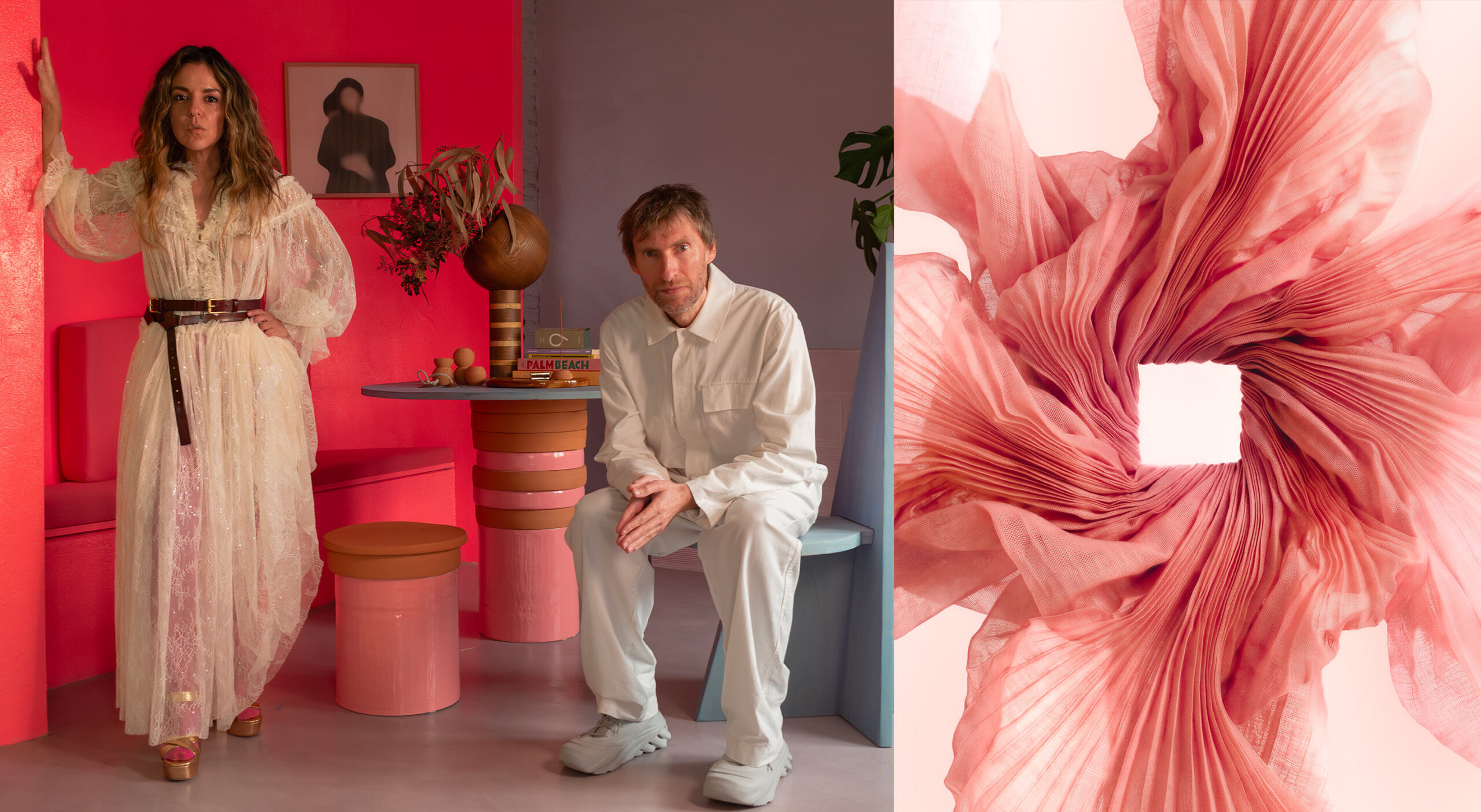
Ambassadors Ana Hernández and Christophe Penasse of Masquespacio translated the theme into Feel the Shift, an immersive environment populated by more than 35 pieces from Mas Creations. Colour, tactile materials and handmade detail were used to slow the visitor down. The important point was not maximalism for its own sake; it was the conviction that, in an age of infinitely reproducible images, physical experience and an identifiable creative voice become more valuable.
2. Material intelligence mattered more than novelty theatre
In In Materia: Living Materials, curator Elizabeth Leriche placed hammered metal, veined wood, crackled ceramic and blown glass at the centre of the story. Created with Ateliers d’Art de France and partners Léém and Marius Aurenti, the circular scenography made the artisan’s gesture legible in the finished object. The message for luxury and hospitality was clear: material origin, repairability, patina and human skill are no longer backstage details. They are part of the value proposition.
3. Retail became a landscape, not a shelving plan
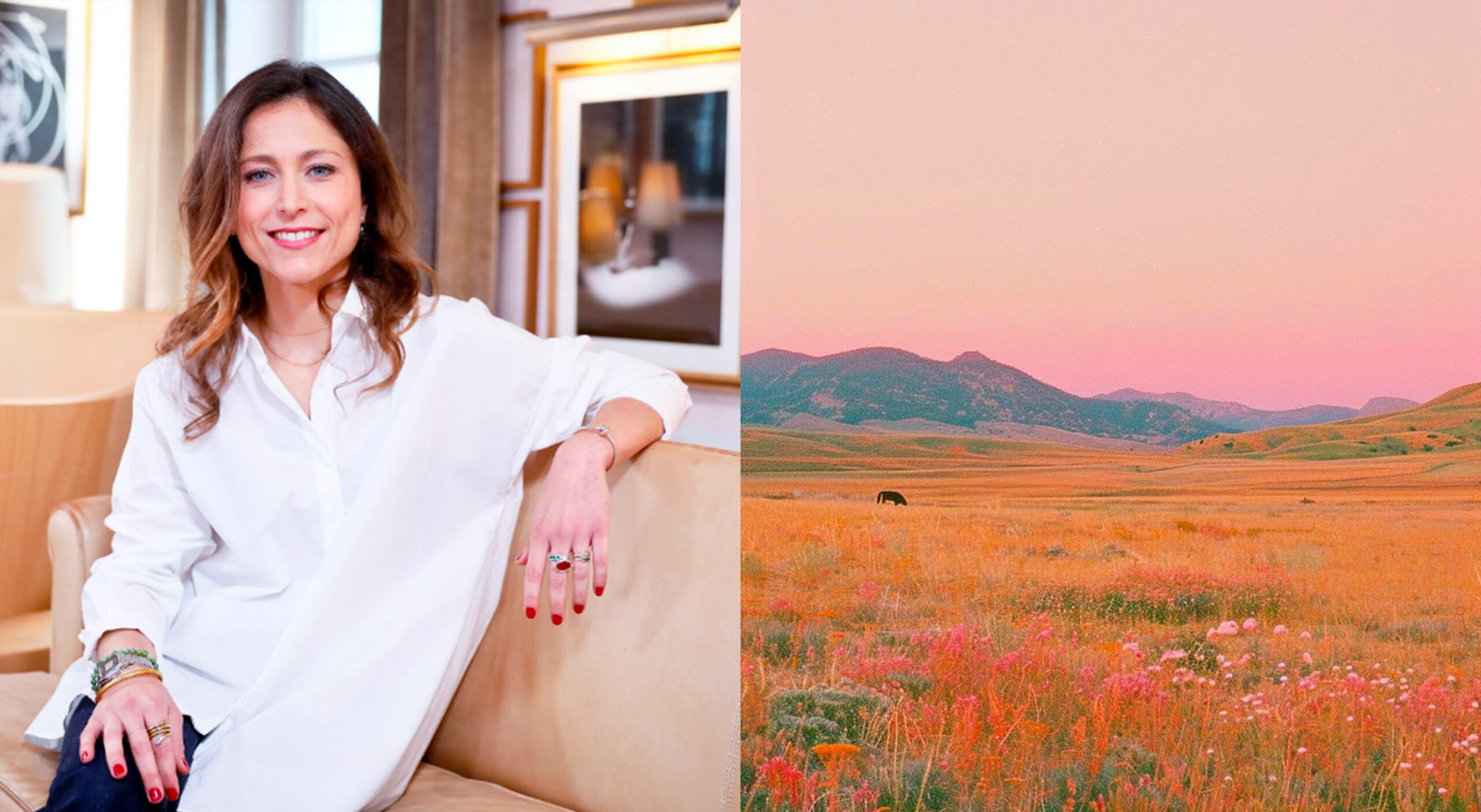
Pauline Glaizal’s Nouveau Souffle — What’s New? In Retail combined a field of wildflowers, a nomadic glass workshop and links between physical and digital experience. It argued for stores that offer knowledge, surprise and human exchange, rather than merely holding stock. For department stores, museum shops and independent boutiques, the lesson is useful: atmosphere attracts attention, but curation and service convert it into trust.
4. Hospitality and the table became laboratories
Across the Contract and hospitality itineraries, surfaces, lighting, fragrance, wellness and bespoke production were presented as parts of one guest experience. In Cook & Share, French artist Sarah Espeute created an eight-metre Table de Réception, bringing her embroidered visual language together with natural-wood furniture supplied by French brand Tikamoon. Nearby, CRISTEL marked 200 years of industrial heritage and 40 years of innovation. Tableware was no longer a minor accessory: it became a meeting point between design, food culture, manufacturing and service.
5. The new guard was expected to be market-ready
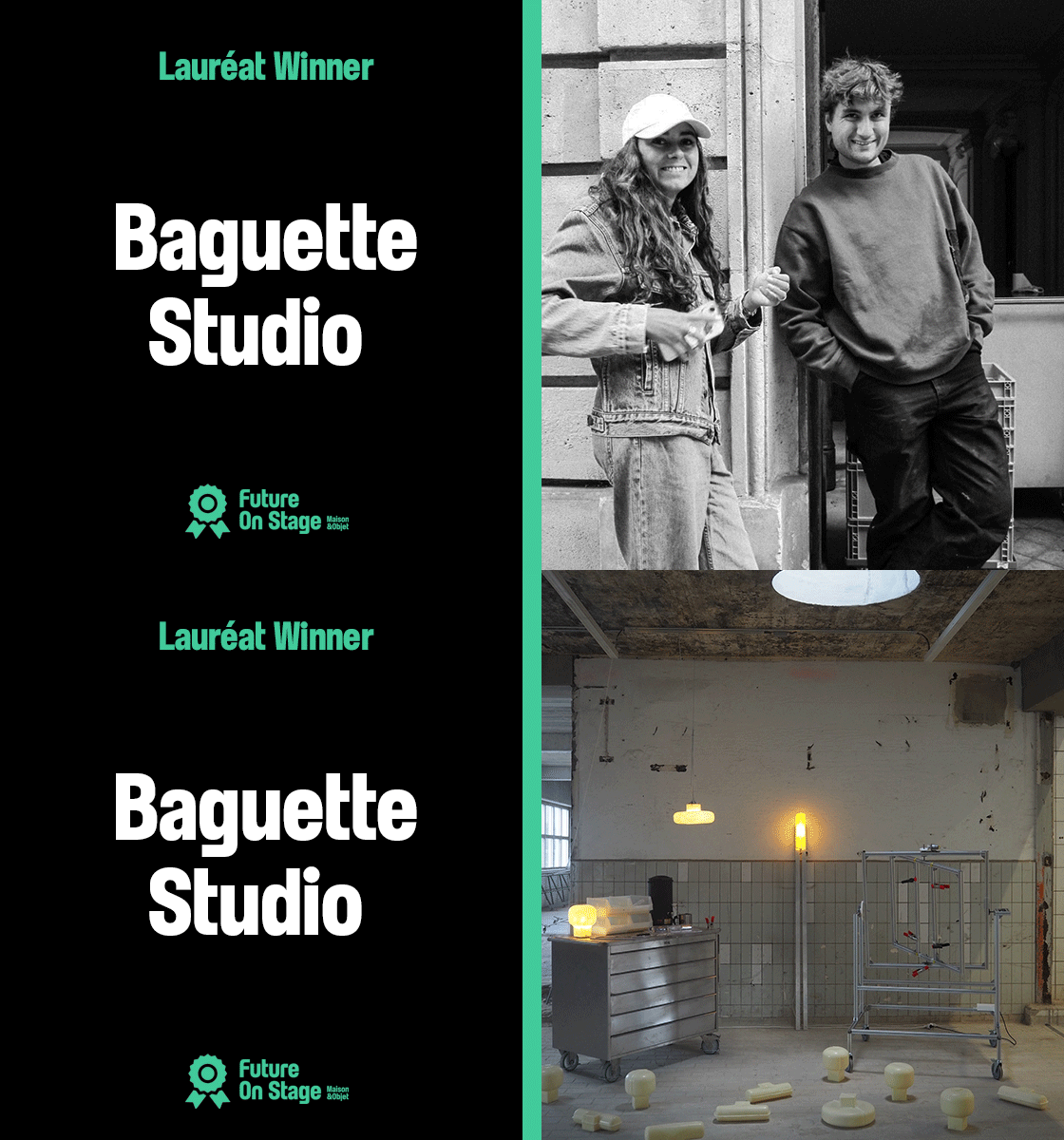
Under the artistic direction of Hall Haus, the Design District operated as a fair within the fair. The 2026 Future On Stage winners were not speculative school exercises. Paris-based Baguette Studio, founded by Emma Lohner and Philippe Gaud, demonstrated remouldable lighting made from vegetable and beeswax. The Netherlands-based Risette, created by César Moncaut, made paper and cardboard lamps interactive. British project LightMass by Raw-Edges, led by Yael Mer and Shay Alkalay, turned lightweight LED structures into spatial sculpture. The programme received 331 applications—30% more than the previous year, according to Maison&Objet.
6. International design was presented through place, not stereotype
The Rising Talent Awards focused on South Africa through seven distinct practices: Ashleigh Lloyd, Meetlo Studio, Simphiwe Mlambo, NISH Design, DEFT Studios, Pinda Interior Design and ceramicist Karlien van Rooyen, selected in the Craft category by Ateliers d’Art de France. Monumental crochet lighting, ceramics, heritage-informed furniture and experimental objects showed an international fair doing its best work: giving specific voices access to a global professional audience without flattening their context.
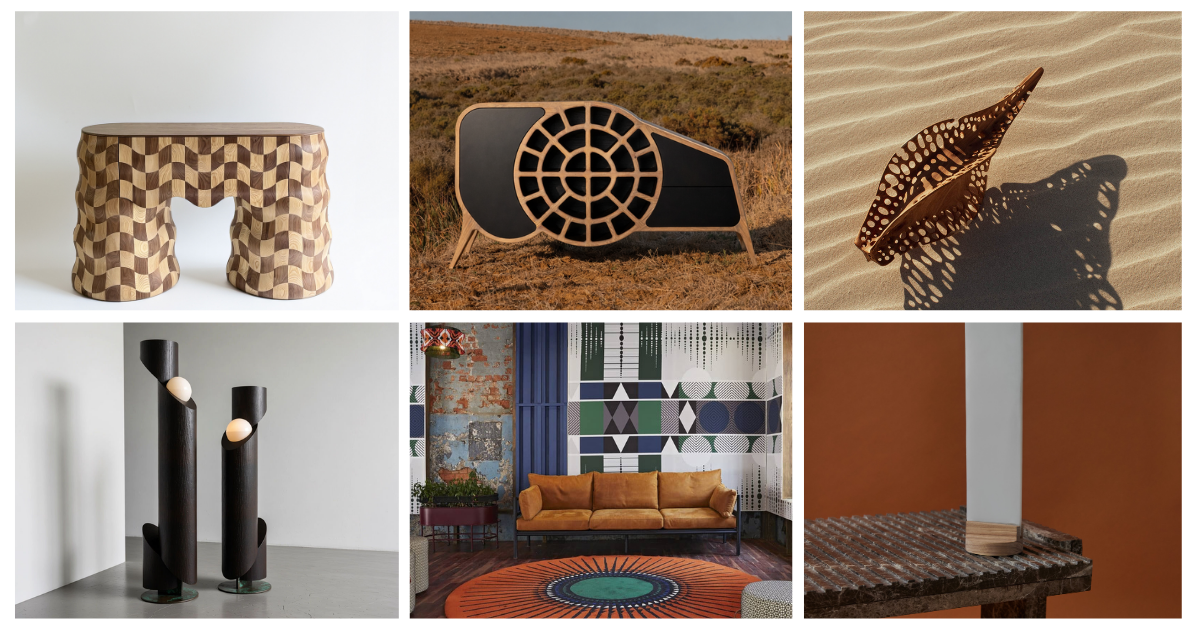
VERIFIED BRANDS WORTH REMEMBERING
No serious review can reduce 1,700 brands to a winner’s list. The following names are an editorial selection, and their participation is verified in Maison&Objet’s official programme or MOM exhibitor records.
- CRISTEL, France: cookware as a case study in the continuity between industrial production, culinary culture and French manufacturing.
- Marius Aurenti, France: French-made paint, lime and micro-concrete for residential, retail and hospitality projects; also a partner of In Materia.
- RÉ-ÉDITION, France: a fifth generation of cabinetmaking in Picardy, connecting furniture memory with contemporary production.
- C’est Bien Fait, France: furniture and accessories made in Ain from industrial offcuts, using low-tech assemblies designed for durability and repair.
- Baguette Studio, France; Risette, Netherlands; LightMass by Raw-Edges, United Kingdom: the three verified Future On Stage winners.
- Masquespacio / Mas Creations, Spain: the fair’s emotional and chromatic centre of gravity.
- The seven South African Rising Talents: a reminder that Paris’s authority grows when it opens an informed platform to other design cultures.
This distinction matters: an exhibitor directory proves presence; it does not by itself prove that every displayed claim, material or product is superior. Our selection highlights examples that illuminate the edition’s major themes rather than pretending to be a universal ranking.
FRENCH MADE: THE STRATEGIC VALUE OF SAVOIR-FAIRE
The official French Made route connected creators who combine local production, inherited skill and innovation. Fine Craft — métiers d’art, selected with Ateliers d’Art de France, gave visibility to unique pieces and limited editions. These are not nostalgic corners of the fair. They are where France can differentiate itself from anonymous global production.
French savoir-faire is an economic chain: training, tools, raw materials, workshops, designers, publishers, agents, retailers, hotels and export buyers. Break one link and the finished object becomes harder to produce, repair and sell. Support must therefore go beyond ceremonial praise. France needs stable craft education, accessible workshops, transmission between generations, financing for prototypes and small series, public and hotel procurement that values origin and durability, and export support for young brands that cannot carry the cost of international visibility alone.
The most persuasive French luxury has always united imagination with execution. Design fairs keep that alliance visible. If France loses the production knowledge behind the image, “French style” risks becoming a marketing surface manufactured elsewhere.
WHY THE FAIR MATTERS TO LUXURY, HOTELS AND RESTAURANTS
Hospitality is where design becomes lived rather than observed. A hotel room tests acoustics, lighting, textiles, hardware and furniture hundreds of times a year. A restaurant turns tableware, seating and circulation into part of the meal. Luxury retail depends on architecture, scent, display and service to make a brand legible in three dimensions.
Maison&Objet allows hotel owners, restaurateurs, architects and purchasing teams to compare these components in one trip, meet producers and discuss customisation or contract quantities. Its value is therefore not limited to objects ordered during the fair. It lies in shortening the distance between an idea, a qualified supplier and a real project.
DESIGN IS ALSO PARIS BUSINESS
There is no published, audited 2026 economic-impact figure for Maison&Objet Pulse alone, so it would be misleading to invent one. The structure of the impact is nevertheless clear. Brands build stands and hire technicians; international buyers book rooms, eat in restaurants, use the RER, taxis and chauffeurs, visit showrooms and extend meetings into central Paris. Freight, interpretation, catering, communications, photography and event staff also benefit.
The scale of the wider market is documented. Paris je t’aime says trade fairs and congresses generate more than €5 billion in local economic benefits annually, while tourism represents almost one job in ten in Paris. This is citywide context, not a Maison&Objet-specific total. It nonetheless explains why defending a leading design fair is also a policy for hotels, restaurants, transport and business tourism.
The strongest fairs create a double journey: Villepinte for concentrated professional sourcing, then Paris for culture, showrooms and relationships. That is why the link to Paris Design Week 2026 is so effective.
THE FAIR HAS CLOSED; PARIS DESIGN WEEK CONTINUES
Maison&Objet Pulse ended on 14 September, but its city-facing counterpart continues through 19 September 2026. Paris Design Week carries the conversation into galleries, museums, studios, heritage sites and public space. Visitors still in Paris can see work at venues including the Grand Palais, Musée Bourdelle, Palais-Royal and the Marais; dates, addresses and remaining opening hours are in our current Paris Design Week guide.
WATCH: THE 2026 EDITION IN MOTION
NEXT: MAISON&OBJET PREMIER, 14–18 JANUARY 2027
The next Paris appointment is Maison&Objet Premier, 14–18 January 2027, again at Paris Nord Villepinte. The organiser positions Premier as the international session for high-end design, exceptional craftsmanship and distinctive signatures. Professionals should verify registration, exhibitor and transport information on the official Maison&Objet website as the January programme develops.
PROFESSIONAL MOBILITY DURING PARIS TRADE FAIRS
For exhibitors, companies and professional delegations attending major Paris trade fairs, oui stars coordinates CDG and Orly airport transfers, chauffeur-driven availability, VIP and business transport, delegation movements and multi-vehicle logistics. The service is most useful when airport arrivals, Villepinte appointments, central-Paris showrooms and evening events must run on one operational schedule.
THE OUI STARS VIEW
Maison&Objet should be judged not only by attendance or spectacle but by what happens after the stands come down: orders, prototypes, apprenticeships, export relationships and workshops that remain alive. France’s leadership is real, but it is not automatic. It must be renewed through investment in people and production.
Protecting French designers and artisans is not cultural protectionism. It is how Paris keeps the authority to convene the world—confident enough to champion its own savoir-faire and open enough to place it in conversation with the best international work.
Osama Samaha
Editor-in-Chief — oui stars Travel
Editorial verification: Updated 15 September 2026. Dates, scale, programme features and named participants were checked against Maison&Objet’s official website, official MOM exhibitor records, official Maison&Objet social publications, Ateliers d’Art de France reporting and Paris je t’aime. Statistics announced by the organiser are identified as such.