










THE STORY BEHIND THE HOTEL — PARIS, EPISODE 2
At 15 Place Vendôme, a surname escaped its owner and entered the dictionary. “Ritzy” came to mean glittering, expensive, almost impossibly polished. Yet the real story of the Ritz Paris is more interesting than the adjective. It begins with an eighteenth-century aristocratic house, a Swiss hotelier who understood the psychology of comfort, a French chef who reorganised the modern kitchen—and a promise that luxury should feel effortless rather than intimidating.
The result opened on 1 June 1898. Behind a disciplined classical façade, electricity ran on every floor and private bathrooms relieved guests of the indignities of the old grand hotel. Writers turned its tables into offices. Couture moved in upstairs. During the Occupation, elegance shared the building with fear and moral compromise. After decades of legend, decline, tragedy and costly restoration, the Ritz remains one of the few hotels whose name describes an entire idea of living.
Editorial note: this independently selected story was researched without a hosted stay, sponsorship or commercial relationship with the hotel.
Before the hotel: two mansions on a royal square
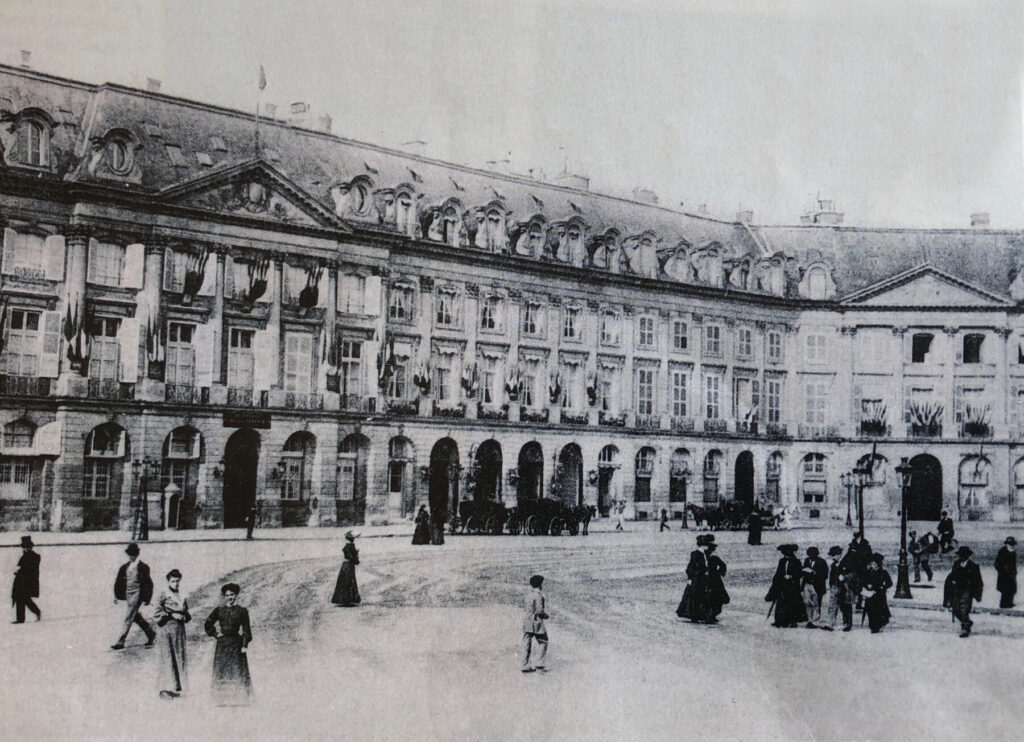
The Ritz did not begin as a purpose-built hotel. Its Place Vendôme frontage belongs to the strict urban composition devised for Louis XIV’s royal square at the end of the seventeenth century. The property at numbers 15 and 17 incorporates the former hôtels particuliers of Gramont and Crozat, built in the early eighteenth century. Their façades, roofs and important interiors form part of France’s protected architectural heritage.
When César Ritz acquired the Hôtel de Gramont in 1897, he asked architect Charles Mewès to perform a delicate trick: create an advanced hotel inside a residence that still read as an aristocratic Parisian home. The adjoining Hôtel Crozat was later integrated into the complex. The achievement was not theatrical excess. It was continuity—stone façades, courtyards, ceremonial rooms and domestic scale sheltering machinery, service routes and new standards of hygiene.
César, Marie-Louise and Escoffier: the three minds behind the house
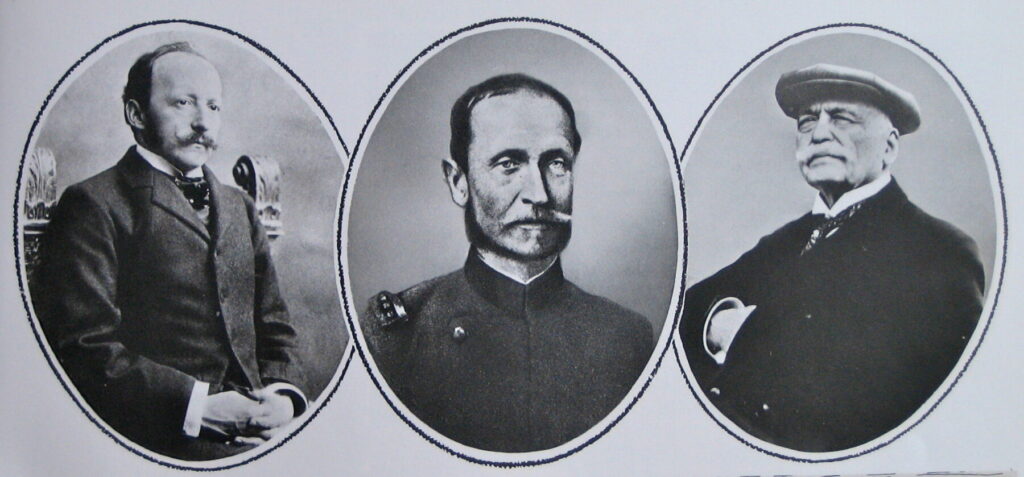
César Ritz had learned that the richest clients did not merely buy ornament. They bought recognition, privacy and freedom from friction. His wife, Marie-Louise Ritz, helped shape the house as a vast private residence, attentive to atmosphere and welcome. Auguste Escoffier, Ritz’s longtime collaborator and the hotel’s first chef, supplied the culinary system: disciplined brigades, refined French cooking and an organisation that would influence professional kitchens around the world.
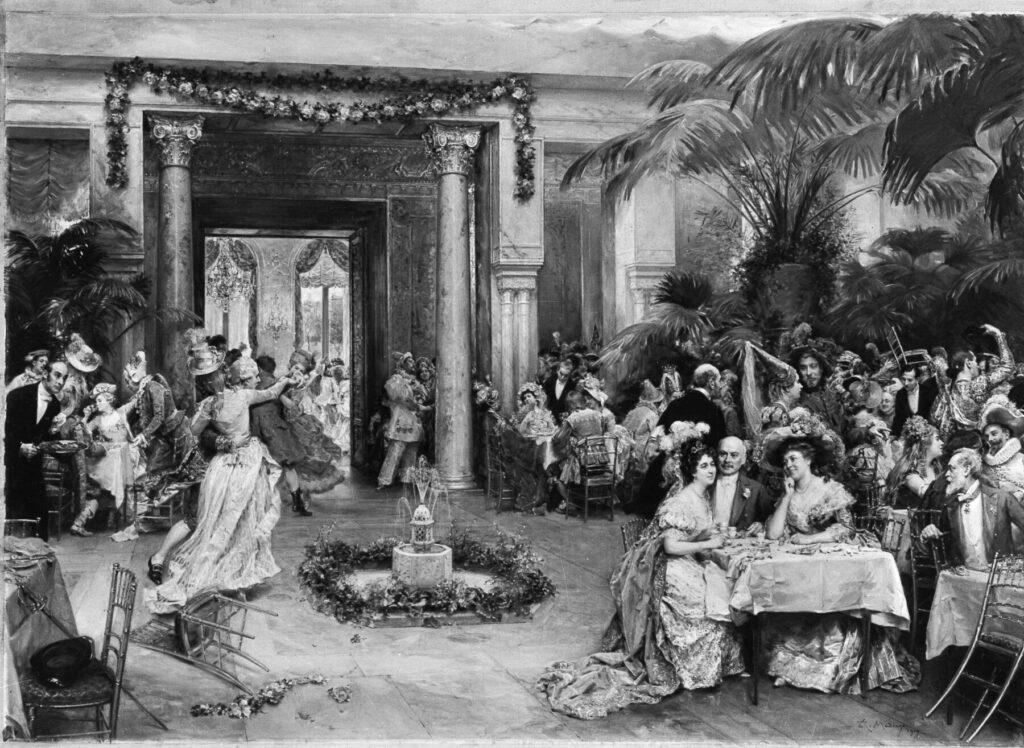
Their opening proposition was revolutionary because its innovations were made almost invisible. The hotel’s own history records electricity on every floor and rooms with private bathrooms—astonishing amenities in 1898. Service was highly choreographed but meant to appear natural. Women could come for tea without a male escort. Tables could be arranged in the lobby for celebrations. The palace hotel became less like a public institution and more like the best-connected private house in Europe.
Architecture as discretion
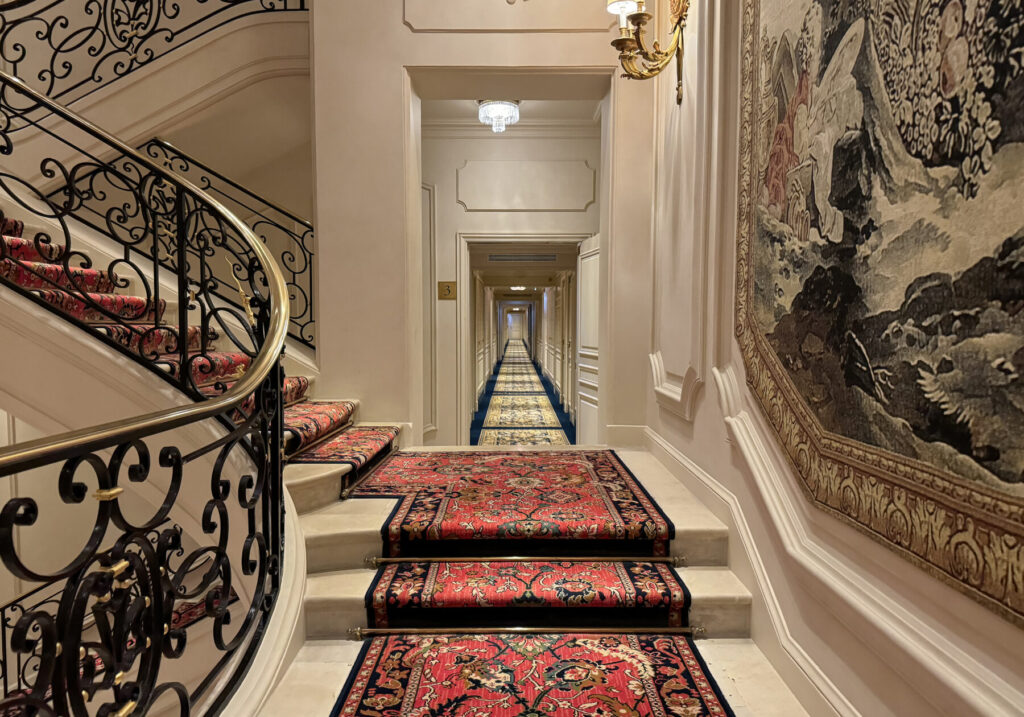
Mewès did not fight Place Vendôme’s order; he used it. From the square, the Ritz remains part of the honey-coloured architectural ensemble. Inside, circulation gradually shifts from the ceremonial to the intimate: entrance, gallery, salons, garden and suites. Louis XV and Louis XVI references, gilding, boiseries, marble and carefully controlled proportions create historical continuity without turning the building into a museum.
That balance explains why the hotel’s architecture is still persuasive. The important effect is not any single chandelier or cornice, but the transition from one world to another. Place Vendôme is public theatre; the hotel turns it into privacy.
Where literature, fashion and power checked in
The documented guest list reads like a cultural map of the twentieth century. Marcel Proust treated the Ritz as a second home and a place to observe society. Ernest Hemingway made its bar one of his Paris addresses. F. Scott and Zelda Fitzgerald belonged to its Jazz Age orbit. The hotel records Sarah Bernhardt, Jean Cocteau, Elsa Schiaparelli, Marguerite Yourcenar, Maria Callas, Pablo Picasso, Audrey Hepburn and Gianni Versace among the artists and creators connected to the house.
Coco Chanel’s relationship went further than a stay. She lived at the Ritz for more than three decades, crossing Place Vendôme and rue Cambon between residence and work. She died in her apartment at the hotel on 10 January 1971. Today, the suite bearing her name turns that history into an address within the address.
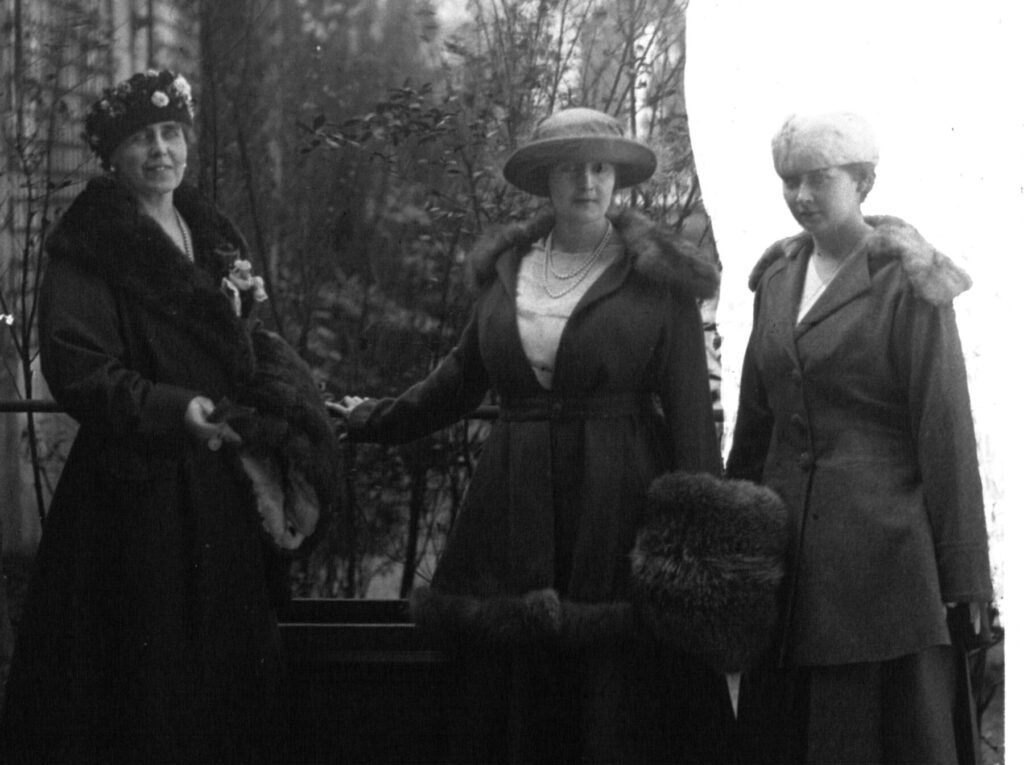
Royalty also arrived at moments when private travel and public history were inseparable. In 1919, Queen Marie of Romania stayed at the Ritz with her daughters Elisabeth and Maria while lobbying at the Paris Peace Conference. An Agence Meurisse photograph preserves them in the hotel courtyard—not as decorative celebrities, but as political actors in a continent being redrawn.
IF THESE WALLS COULD TALK: did Hemingway really “liberate” the Ritz?
It is one of the most irresistible stories in hotel history: on 25 August 1944, Ernest Hemingway supposedly swept into the Ritz with armed men, freed the bar from German occupation and ordered Champagne for everyone. The image is perfect—too perfect.
What is documented is already cinematic. Hemingway was in France as a war correspondent and entered liberated Paris around the time French and American forces were defeating the German garrison. He went to the Ritz and celebrated there. But Paris was liberated by French Resistance fighters, General Leclerc’s 2nd Armoured Division and the U.S. 4th Infantry Division—not by a novelist. Even a CBS archival account describes Hemingway’s “liberation” of the hotel as something he was reputed to have done.
The legend survives because it expresses an emotional truth: the bar represented the Paris Hemingway wanted back. But good history requires the distinction. He returned to the Ritz at liberation; he did not liberate it militarily. The walls would probably tell us that the best hotel stories often begin with fact, then improve themselves over drinks.
The darkest years
The joke cannot erase what preceded it. From 1940 to 1944, German forces occupied Paris and requisitioned its grand hotels. Historical material produced with the City of Paris records the Ritz among the addresses taken for German military use; the Luftwaffe occupied part of the property. The hotel remained open, creating a morally charged interior where staff, civilians, celebrities and representatives of the occupying power crossed paths under radically unequal conditions.
This period resists the soft-focus mythology that often envelops famous hotels. It belongs to the story because a historic building does not only preserve glamour; it also preserves the pressure of the regimes and choices that passed through it.
Post-war glamour—and history’s harder intrusions
After the Liberation, the Ritz resumed its role as a meeting place for culture, fashion and international society. Yet its name also became attached to moments no hotel would choose. On the night of 30–31 August 1997, Diana, Princess of Wales, and Dodi Fayed dined at the Ritz before leaving from rue Cambon. Their car crashed in the Pont de l’Alma tunnel; Diana, Dodi and driver Henri Paul died. The official Operation Paget record fixes the hotel within the final timeline, but the tragedy should never be converted into tourism folklore.
By the late 1970s, the building itself needed renewal. Mohamed Al-Fayed acquired the hotel in 1979 and undertook a major renovation through the 1980s. A still larger intervention required the unprecedented closure of the Ritz in 2012.
Four years behind closed doors
The 2012–2016 restoration, led in design by Thierry W. Despont with specialist architecture and craft teams, tried to solve the essential Ritz problem: how to install twenty-first-century systems without making the hotel feel newly invented. Rooms and suites were reconfigured, the Grand Jardin renewed, new gallery spaces created and historic interiors restored. Hundreds of craftspeople worked across stone, gilding, upholstery, painting and joinery.
A roof fire in January 2016 damaged two suites and part of the roof, although no injuries were reported. The hotel finally reopened on 6 June 2016. The successful transformation is less about novelty than editing: modern comfort is present, but the story remains legible.
Official video: “Behind the Door”
Official Ritz Paris film directed by Zoë Cassavetes for the hotel’s 2016 reopening. Embedded from YouTube; video is not downloaded or rehosted.
The Ritz Paris today
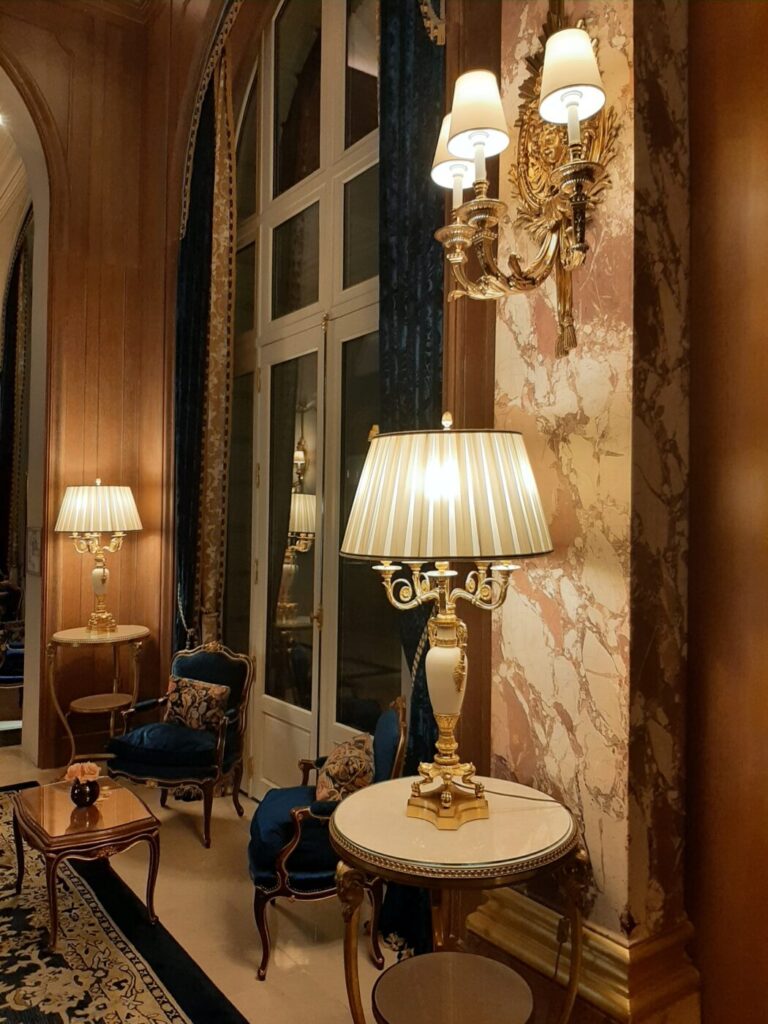
The hotel now presents 142 rooms and suites, including Prestige Suites associated with figures such as Coco Chanel, Ernest Hemingway, Marcel Proust, F. Scott Fitzgerald and Maria Callas. The listed reception room and woodwork of the Suite Impériale connect the hotel directly to French decorative heritage. The Salon Proust turns literary memory into a tea room; Bar Hemingway preserves an intimate, club-like scale; the École Ritz Escoffier carries the founding culinary partnership into teaching.
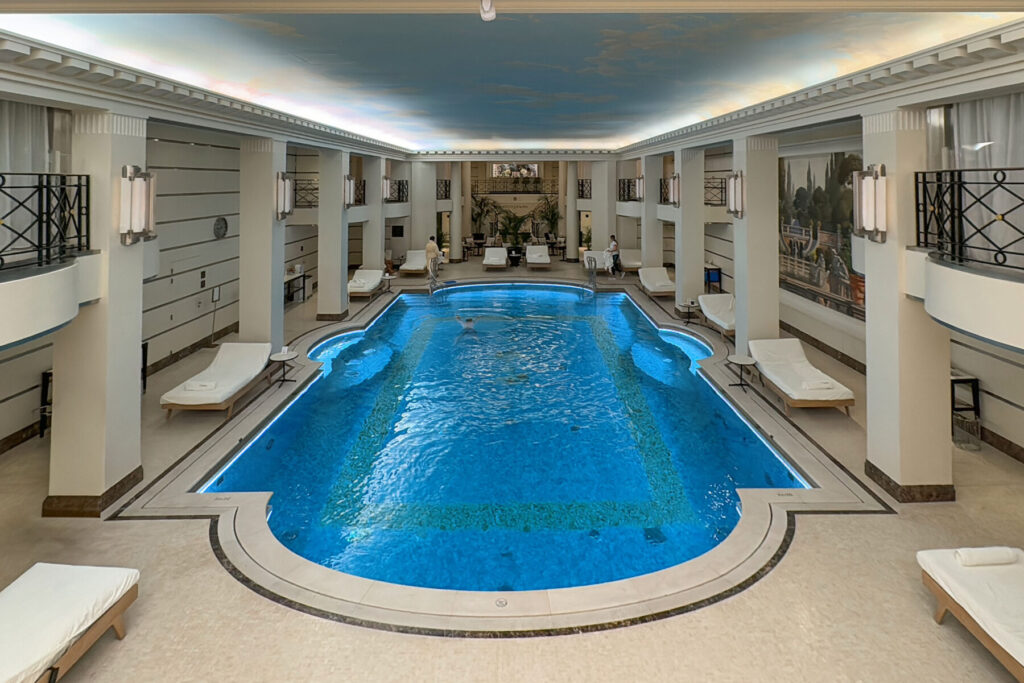
Espadon, led by chef Eugénie Béziat, has held one Michelin star since March 2024. The Ritz Club & Spa centres on the hotel’s celebrated indoor pool, while the Grand Jardin supplies something scarce in central Paris: a private green pause behind Place Vendôme.
A palace by reputation—but not the official French label
The word “palace” is often used culturally for the Ritz, but France’s Distinction Palace is a specific government-administered designation that hotels must seek. The Ritz Paris is a five-star hotel and does not appear in Atout France’s official 2026 Palace collection; reporting by Le Monde indicates that it deliberately opts out. The distinction matters: legend and legal classification are not the same thing.
Why travellers still choose it
Travellers do not choose the Ritz only for square metres or facilities. They choose the compression of Parisian history into a functioning hotel: a Place Vendôme façade, Proust’s social world, Chanel’s commute, Escoffier’s discipline, Hemingway’s myth and a restoration that leaves room for all of them.
Its strongest luxury is continuity. A guest can cross the same threshold that appeared in photographs from 1900 and still find a hotel calibrated to contemporary expectations. That combination—recognisable history without museum stillness—is difficult to reproduce and impossible to franchise convincingly.
Practical location
Address: 15 Place Vendôme, 75001 Paris, France.
Arrondissement: 1st.
Nearest Métro: Opéra, Madeleine, Pyramides and Tuileries are all within walking distance.
Nearby: Jardin des Tuileries, Musée du Louvre, Palais Garnier, rue Saint-Honoré and the jewellers of Place Vendôme.
The position works especially well for travellers interested in art, fashion, architecture and central Paris on foot. The main entrance faces Place Vendôme; rue Cambon runs behind the property.
Sources and further reading
- Ritz Paris: official history and documented guests
- French Ministry of Culture: former hôtels de Gramont and Crozat
- Musée de la Libération de Paris: the liberation of the capital
- City of Paris: grand hotels under the Occupation
- Operation Paget report: the Ritz timeline, 30–31 August 1997
- Ritz Paris FAQ: present-day rooms, dining and history
Osama Samaha
Editor-in-Chief — oui stars Travel
Continue the Paris season: Hôtel de Crillon: The Palace That Watched Paris Make History. Related architecture: How I. M. Pei’s Louvre Pyramid Changed Paris.