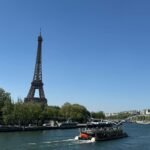











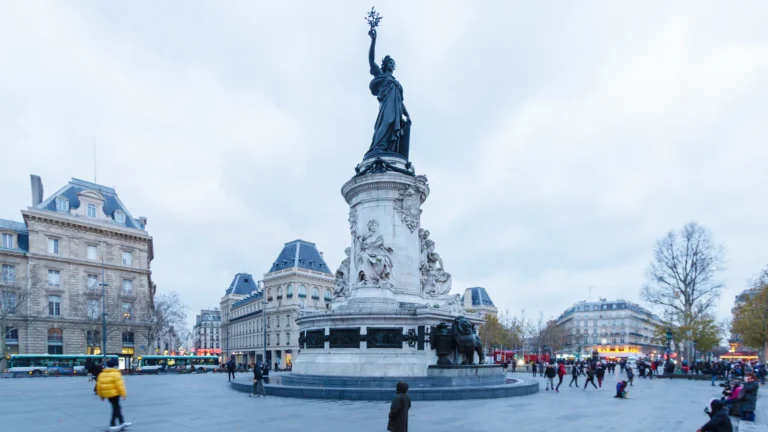
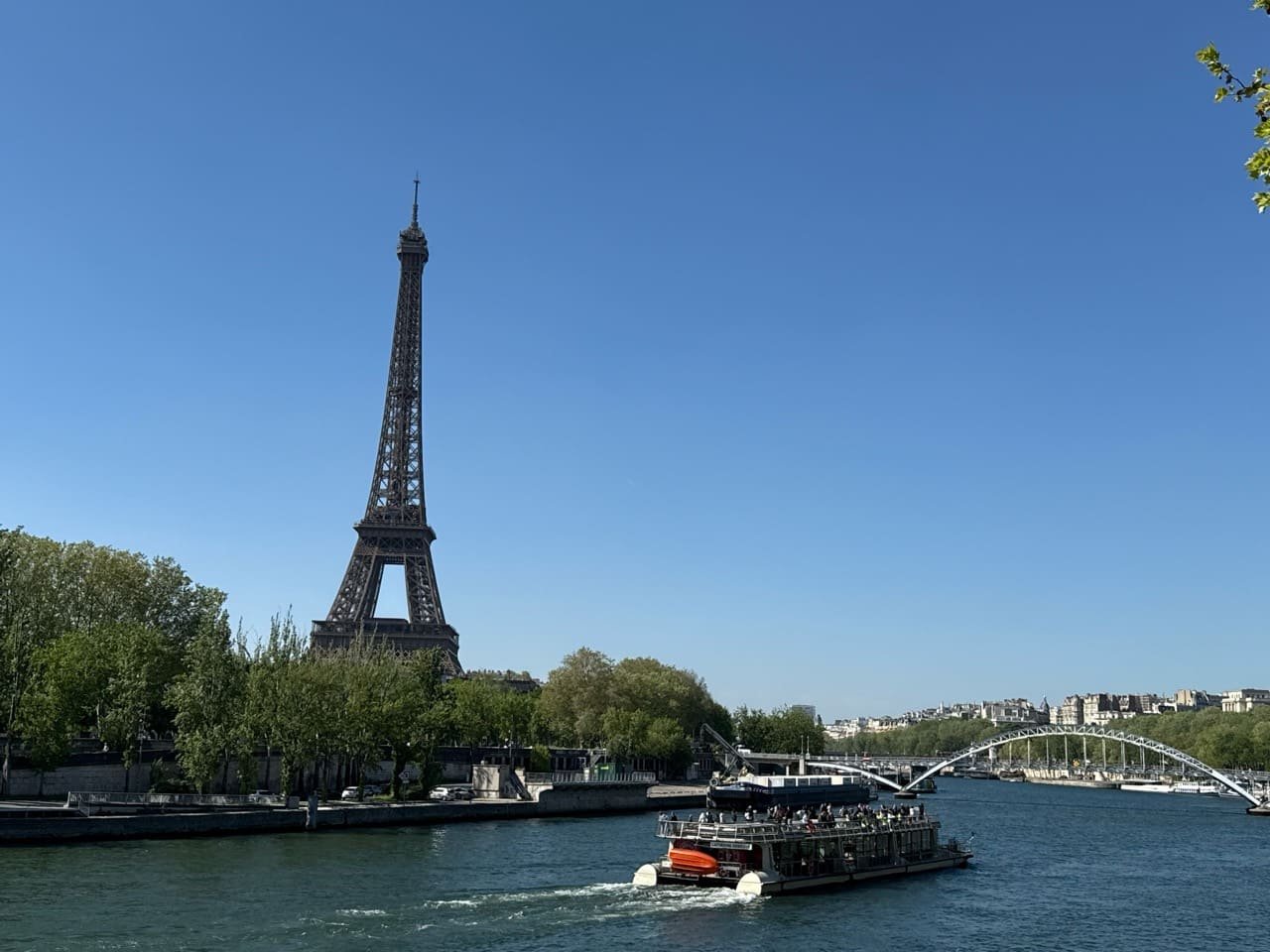



The Eiffel Tower and the Seine in Paris. OUISTARS Travel photograph.
Economic analysis — Osama Samaha | OUISTARS Travel
A traveller may discover a destination through a spectacular concert, then book somewhere else because the journey is easier and the final bill clearer. A city may announce billions in investment while a smaller rival gains two extra nights from each stay. The competition ahead concerns both the ability to inspire a trip and the ability to deliver one that people will pay for again.
Our argument for the period to 2032 is that destinations combining resilience with steady improvements to the visitor experience will be better placed to compete. Patience matters when it protects staff, service standards and the ability to invest. Waiting alone does not create a winner.
We apply the same question to France, Spain, Egypt, the United Arab Emirates and Saudi Arabia: can investment in infrastructure, culture and entertainment become sustained visitor nights and local economic value when costs rise or travel routes change?
A shock reaches the booking before it reaches the beach
The OECD documents how the Russia–Ukraine war has affected connectivity and confidence, alongside the transport and energy pressures associated with Middle East disruption. Their effects vary by destination; a single cause cannot explain an entire country’s tourism performance. OECD, 2026.
IATA’s June 2026 fuel-cost forecast, recorded in the reference table below, illustrates the pressure on airlines before travellers receive their bills. It is a dated forecast, not a fixed price or a projection to 2032. IATA, June 2026.
Costs pass through airfares, insurance, supplies and household budgets. A person may still travel but shorten the stay, choose somewhere closer or book later. More trips worldwide therefore need not mean more income for every hotel. Nor does higher nominal revenue establish better performance if operating costs absorb the increase.
UN Tourism’s September update reports just 0.4% growth in worldwide international arrivals in the first half of 2026, with the Middle East down 22% and Europe up 3%. Regional, partial-year figures do not describe every country or establish a full-year result. Strong 2025 totals cannot demonstrate that the shocks of 2026 have been overcome. UN Tourism.
Our contribution: follow the distance between an announcement and its return
Resilience is already a substantial research topic. Both the OECD and the World Economic Forum address it, and the latter cautions that expanding tourism activity does not automatically deliver wider benefits. Travel & Tourism Development Index 2026.
This article follows the chain connecting an announcement to a lasting return: financing and construction; reliable operation; a visitor who can reach and book the destination; paid nights and spending; and value retained locally. Success at one stage does not guarantee success at the next.
An airport needs regular services and practical onward connections. A museum needs dependable opening times and understandable ticketing. A resort needs trained staff, water, energy and services beyond peak weeks. A major concert must be judged partly by the bookings, skills and suppliers it leaves behind after the lights go out.
France: turning recognition into longer stays
France reported 102 million international tourists and €77.5 billion in international tourism receipts in 2025. European markets remain important to its visitor-night base. These strengths do not remove the need to examine costs and ease of movement. Atout France, February 2026.
In our reading, France can defend its position by connecting museums, dining, fashion, exhibitions and regional cities into trips that are straightforward to buy and complete. Luxury also means time saved, appointments honoured and competent help when something goes wrong. Higher prices without a better experience leave an opening for competitors.
The question through 2032 is whether France can increase the real value of stays and distribute it beyond crowded locations. An extra night in a regional city, linked to a cultural visit or conference, may do more for a destination than a brief rise in footfall at an already congested landmark.
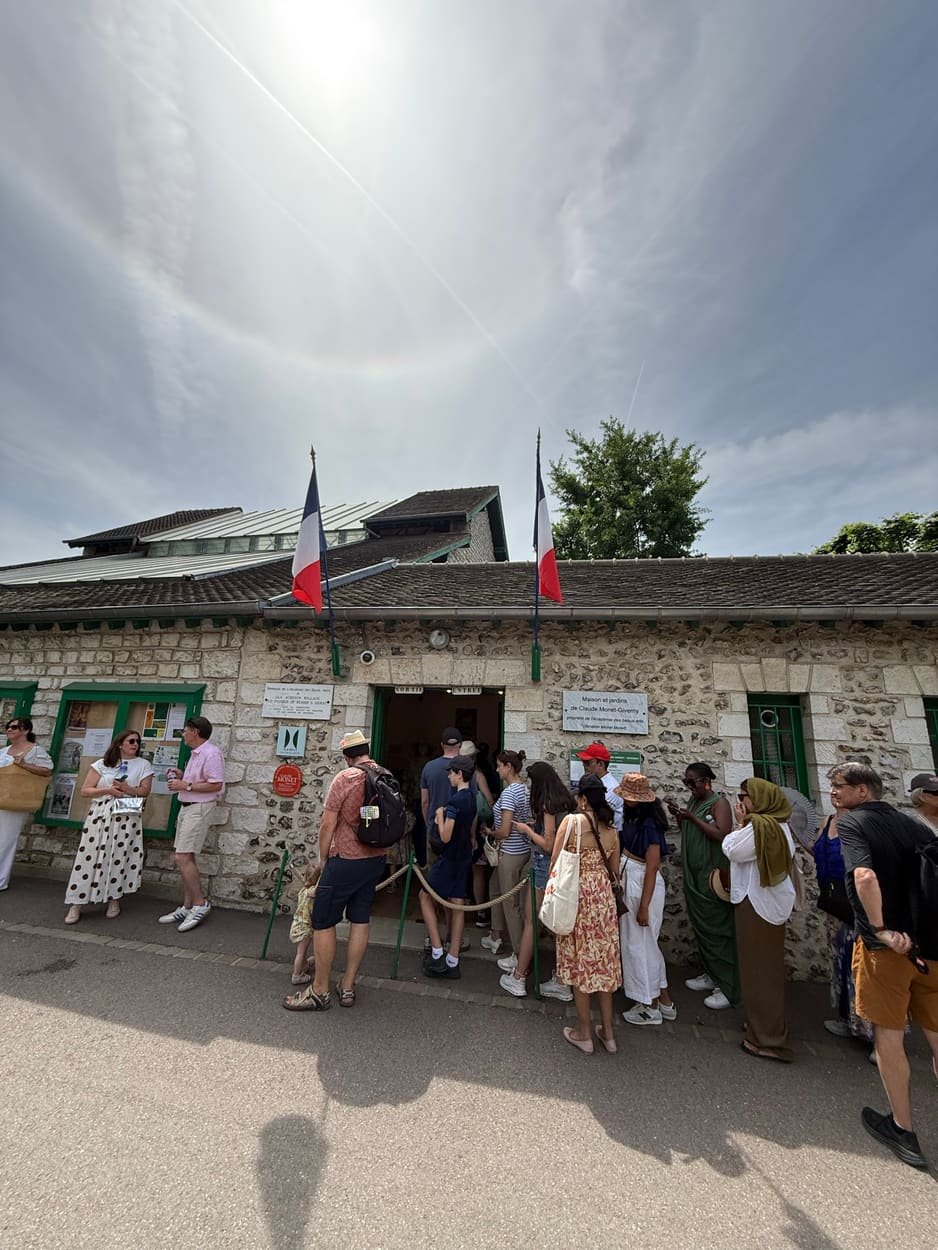
Spain: protecting the destination’s strength without exhausting it
Spain recorded around 96.8 million international tourists in 2025 and €134.712 billion in expenditure under the EGATUR survey. Spending rose faster than arrivals. This measure should not be placed directly against French tourism receipts to produce a yield ranking: definitions must first be aligned. Spanish government, using INE data.
Spain’s test is to sustain the appeal of its coasts, cities and culture while managing seasonal pressure. Our proposed conditions for success include balancing visitors’ and residents’ needs, extending demand into quieter months and maintaining service quality. Selling more than a place can comfortably accommodate can eventually damage reputation and raise costs.
France and Spain are not a single vulnerable bloc. Nor does all European tourism depend on long-haul flights. Nearby markets, roads and rail offer some destinations a different set of options from those heavily dependent on a long international air journey.
Egypt: connect the projects, then prove that they operate
Egypt’s official 2025 review reported close to 19 million tourists and a 32% rise in charter traffic to its destinations. Alamein also saw substantial charter growth. A large increase from a smaller base does not by itself establish a mature, year-round destination. Ministry figures published by the State Information Service.
Our proposition is that Egypt can connect coast, heritage and entertainment into a stronger itinerary if the links work: airport to hotel, hotel to cultural site, and daytime visit to evening activity. A good road creates an opportunity; dependable service makes travellers use it. Infrastructure should be assessed through actual journey time and reliability, not only construction totals.
Investment geography also requires precision. Ras El Hekma is an Egyptian–Emirati partnership; Alam El Roum is associated with Qatari Diar; and SouthMED is a partnership involving Talaat Moustafa Group. They are distinct from New Alamein City, although they belong to the broader North Coast development story. Ras El Hekma; Alam El Roum; SouthMED.
An agreement or announced investment value does not mean that all the tourism capacity is operating. We assign no common three-year opening deadline to these projects: each has its own phases. Property sales are also different from recurring tourism income. The relevant tests are bookable rooms, occupied nights, services that remain open, stable jobs and local purchasing.
The UAE: testing the resilience of a travel and business centre
Dubai welcomed 19.59 million international overnight visitors in 2025. Its tourism authority also reported 504 successful event bids for hosting through 2029. The first figure describes Dubai, not the entire UAE; the second concerns future hosting commitments, not completed events or realised revenue. Dubai DET, February 2026.
This offers a useful test of how a business trip becomes a longer leisure stay. A hotel, restaurant and shop may benefit from the same visitor without each needing to attract a new traveller. Yet reliance on air connectivity makes alternative routes and an effective response to disruption part of what a destination must deliver.
In this analysis, the UAE’s opportunity is to protect convenience while diversifying reasons to visit. Sustainability of demand must be examined outside major conferences and events, alongside businesses’ ability to serve different customer groups without permanent discounting.
Saudi Arabia: from hosting events to building an economy around them
The General Entertainment Authority’s regulatory-sector report recorded more than 89 million attendances in 2025, 1,690 events and 6,778 participating companies. These are entertainment-sector activity figures, not unique international tourists. Residents and visitors may attend repeatedly. Saudi Press Agency, reporting GEA figures.
GEA is expanding seasons, activities and the regulatory ecosystem, while developments such as Qiddiya add permanent attractions. Qiddiya’s official website lists Aquarabia’s opening among its milestones. Entertainment, sport, culture and tourism involve several Saudi bodies; their projects should not all be attributed to GEA. Qiddiya City.
The economic proposition is to build a reason to travel around which an itinerary can be designed, and to develop producers, technicians, restaurants, hotels and supporting services. Ticket sales are only the beginning. Does the visitor stay another night, return in another season, and support local suppliers capable of producing the next experience?
The Gulf’s role in the events industry is growing. That does not establish that the whole industry has relocated there. Hosting, rights ownership, content creation, technology and exported expertise are separate capabilities. The argument becomes stronger as these capabilities accumulate and repeat demand survives without an exceptional incentive every time.
Six questions that can identify durable competitors earlier
OUISTARS proposes an annual assessment using the following questions. This is an analytical framework, not an internationally accredited index or a set of country scores.
| Test | What to monitor | Warning sign |
|---|---|---|
| Access | Service reliability, alternative routes, actual journey time and cost | Airport capacity without sufficient services, or dependence on one route |
| Trip clarity | Processing times, final prices and complaint resolution | Easier visas followed by confusing charges or procedures |
| Investment becoming operation | Capacity genuinely open and available to book | Contracts or property sales presented as stable tourism operation |
| Continuity of demand | Off-peak nights, length of stay and repeat visits | Full occupancy during an event and weak demand afterwards |
| Local value | Real spending per night, stable employment and local procurement | Nominal growth absorbed by inflation, imports and costs |
| Ability to continue | Business liquidity, skills, water, energy and resident satisfaction | Lower service standards or excessive pressure on the host community |
Safety and stability run across all six tests. Entry and exit procedures, service speed and the range of activities then help determine whether interest becomes a booking. Removing friction saves visitors time and can reduce businesses’ handling costs, but does not replace a good underlying experience.
Three paths to 2032, with different conditions for winning
If disruption eases and energy costs stabilise: our reading favours destinations whose projects become operational as confidence recovers. Egypt and Saudi Arabia have opportunities to convert new capacity into demand; France and Spain can defend their positions through product depth; and the UAE can connect business and leisure. All may grow: the global tourism market is not a fixed pie.
If shocks recur: liquidity, domestic demand, nearby markets and alternative access become more important. One region can outperform another within the same country because of a different season or better connections. Flexible booking and retaining capable service teams become advantages that advertising cannot easily replace.
If travel costs remain high and climate pressure intensifies: shorter journeys, milder seasons and the full trip bill matter more. Low prices alone cannot protect a destination if water, cooling and energy costs undermine delivery. These are conditional scenarios, not numerical forecasts with assigned probabilities.
Competition extends beyond these five cases. Destinations in Asia, North Africa and elsewhere can gain demand as prices and connectivity change. Our selection compares different investment and demand models; it is not an exhaustive list of future winners.
Endurance wins when it protects the right things
A durable destination continues to deliver what it sold: access that works, an understandable price, respectful service and a reason to return. Success may appear in a conference that generates later bookings, a resort operating beyond summer, or a cultural city that adds two nights to a short break.
France and Spain test the renewal of mature destinations. Egypt tests the conversion of infrastructure and development into a connected, year-round product. The UAE tests a global travel and business centre’s resilience. Saudi Arabia tests whether entertainment can generate repeat stays and value beyond a season. These are different propositions requiring measured outcomes.
Patience worth backing preserves operating capacity, corrects delivery problems and builds diverse demand. Continuing to finance a model that cannot convert visitors into nights or revenue into local value may simply extend the wait. The destination that retains trust during disruption and delivers a better experience when conditions improve is better placed to win.
Method and limitations
Sources were reviewed on 8 November 2026. The 2032 horizon defines the scenarios; it does not guarantee a trajectory. Annual 2025 data are kept separate from first-half 2026 results and dated IATA forecasts. Entertainment attendance is not treated as international arrivals, Dubai as the whole UAE, or property sales as tourism income. Comparable definitions, periods and price bases are required before ranking receipts.
The link between investment stages, visitor experience and local value is the magazine’s analysis. Statistics and announcements retain their original attribution. This is not field research, an econometric estimate of causality or a recommendation to buy an investment. The argument can be tested by updating operation, nights, real spending, connectivity and post-event outcomes.
References and baseline data
| Scope and measure | Period | Reported value | Source |
|---|---|---|---|
| France: international tourists; international tourism receipts | 2025 | 102 million; €77.5 billion | Atout France — Bilan touristique 2025, 19 February 2026 |
| Spain: international tourists; EGATUR expenditure | 2025 | 96.8 million; €134.712 billion | La Moncloa / INE — FRONTUR and EGATUR, 3 February 2026 |
| Egypt: tourists; charter traffic change | 2025 | Close to 19 million; +32% | Egypt State Information Service / Ministry of Tourism and Antiquities — 2025 results |
| Dubai: international overnight visitors; successful hosting bids | 2025; hosting through 2029 | 19.59 million; 504 bids | Dubai DET — 2025 annual results, 9 February 2026 |
| Saudi Arabia: entertainment attendance; events | 2025 | Over 89 million; 1,690 events | Saudi Press Agency / GEA — 2025 regulatory affairs results, 2 April 2026 |
| World; Middle East; Europe: arrivals change | H1 2026 versus H1 2025 | +0.4%; −22%; +3% | UN Tourism — World Tourism Barometer, September 2026 |
| Fuel share of airline operating expenditure | June 2026 forecast; 2025 comparison | 31.4% in 2026; 25.4% in 2025 | IATA — airline outlook, 7 June 2026 |
A reference table defining the figures, not a country ranking. Monetary values are nominal as reported. We calculate no profit or real return and perform no currency conversion.
- OECD Tourism Trends and Policies 2026
- IATA — airline outlook, 7 June 2026
- UN Tourism — World Tourism Barometer, September 2026
- World Economic Forum — Travel & Tourism Development Index 2026
- Atout France — Bilan touristique 2025, 19 February 2026
- La Moncloa / INE — FRONTUR and EGATUR, 3 February 2026
- Egypt State Information Service / Ministry of Tourism and Antiquities — 2025 results
- Egypt State Information Service — Ras El Hekma agreement
- Egypt Ministry of Investment and Foreign Trade — Alam El Roum investment zone
- Egypt IDSC — April 2025 reform report, SouthMED
- Dubai DET — 2025 annual results, 9 February 2026
- Saudi Press Agency / GEA — 2025 regulatory affairs results, 2 April 2026
- Qiddiya City — official development milestones
- Ville de Paris — Nuit de la Solidarité 2026, updated 24 July 2026
- France SSMSI — Insécurité et délinquance en 2025
- Spain Ministry of the Interior — irregular arrivals to 31 October 2026, page 7
- SSMSI — Public transport recorded crime, 2025; published 10 September 2026
The five cases were selected deliberately to compare mature destinations, expansion projects and travel-and-events centres; they are not a random sample representing the world. We assign no composite scores using hypothetical weights. To test the argument, compare each destination with itself over time: off-peak nights, average stay and spending per night adjusted for prices where a suitable index exists. Examine actual project operation and demand after an event, considering changes in flights, currencies and energy. Attendance growth without additional nights or stronger local value weakens the case for an events-led model; new capacity unavailable to book has not yet demonstrated tourism conversion. Correlation alone does not establish that an event or project caused a change. Reassess when comparable annual figures appear, a new phase starts operating or access and energy conditions change materially.
Cite this analysis: OUISTARS Travel — Global tourism to 2032: who can turn resilience into lasting value? — 8 November 2026.
For the numerical background: who holds the largest share of global tourism?