









A Normandy travel story · Honfleur from the inside
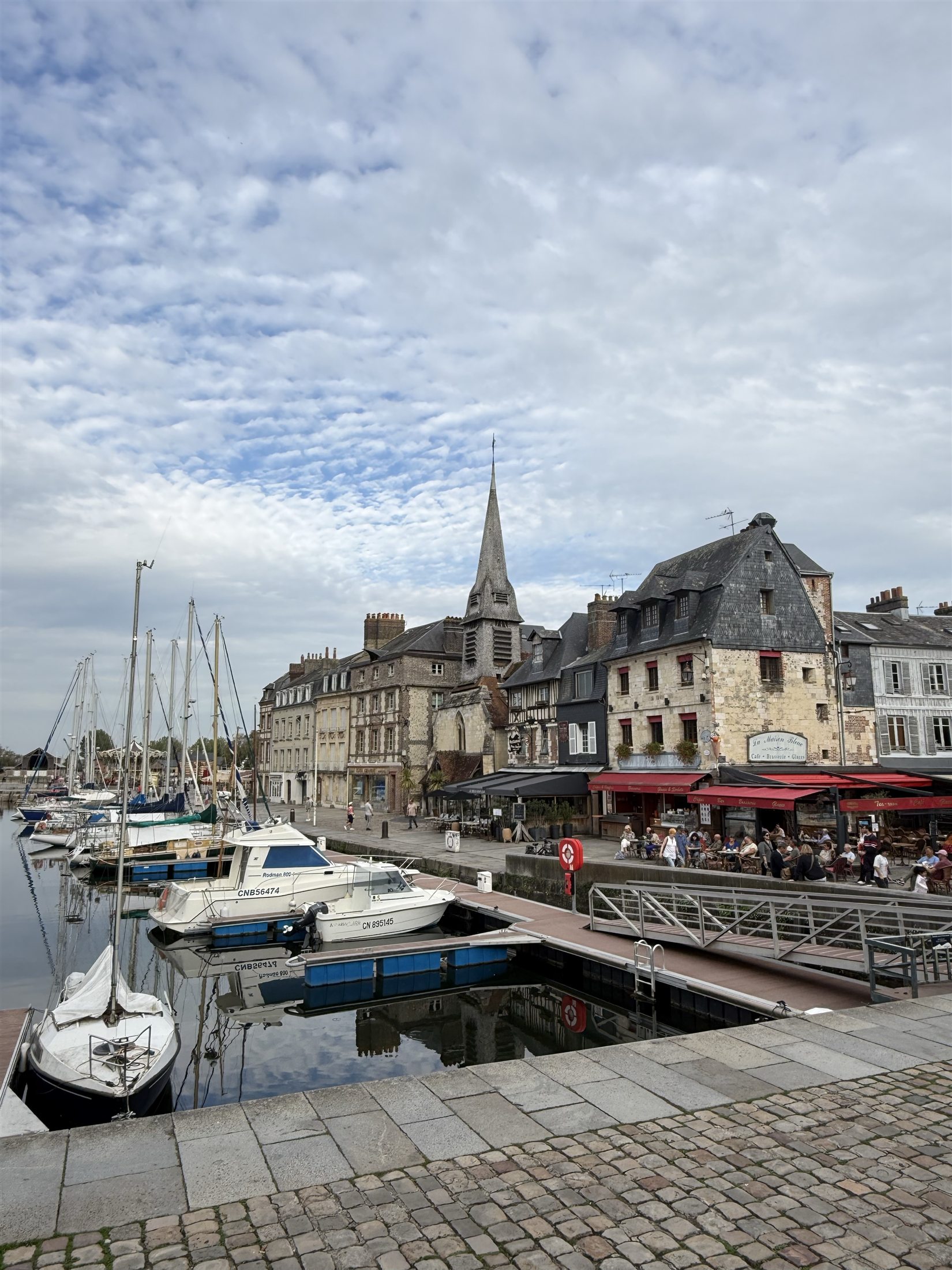
Honfleur’s story begins before your first step onto the quay. In the still mirror of the Vieux Bassin, boats and narrow houses appear twice, while the Normandy sky changes colour as if a painter were still searching for the right shade. You are not simply visiting a harbour; you are entering a town that turned the memory of departure into beauty.
We follow the water slowly. Salt, timber and slate façades create a scene that never quite stands still. Every old doorway seems to remember a sailor who left and returned changed. Honfleur is best read not as a checklist, but as a sequence of scenes: harbour, light, a church shaped by shipwrights, and a bronze traveller whose suitcase remains whole while part of his body has vanished.
First scene: a town drawn by water
Honfleur stands in Calvados on the southern bank of the Seine estuary, looking roughly towards Le Havre and the Pont de Normandie. Its character comes from two forces: the sea, which carried ships, commerce and long departures; and the changing light, which drew generations of painters.
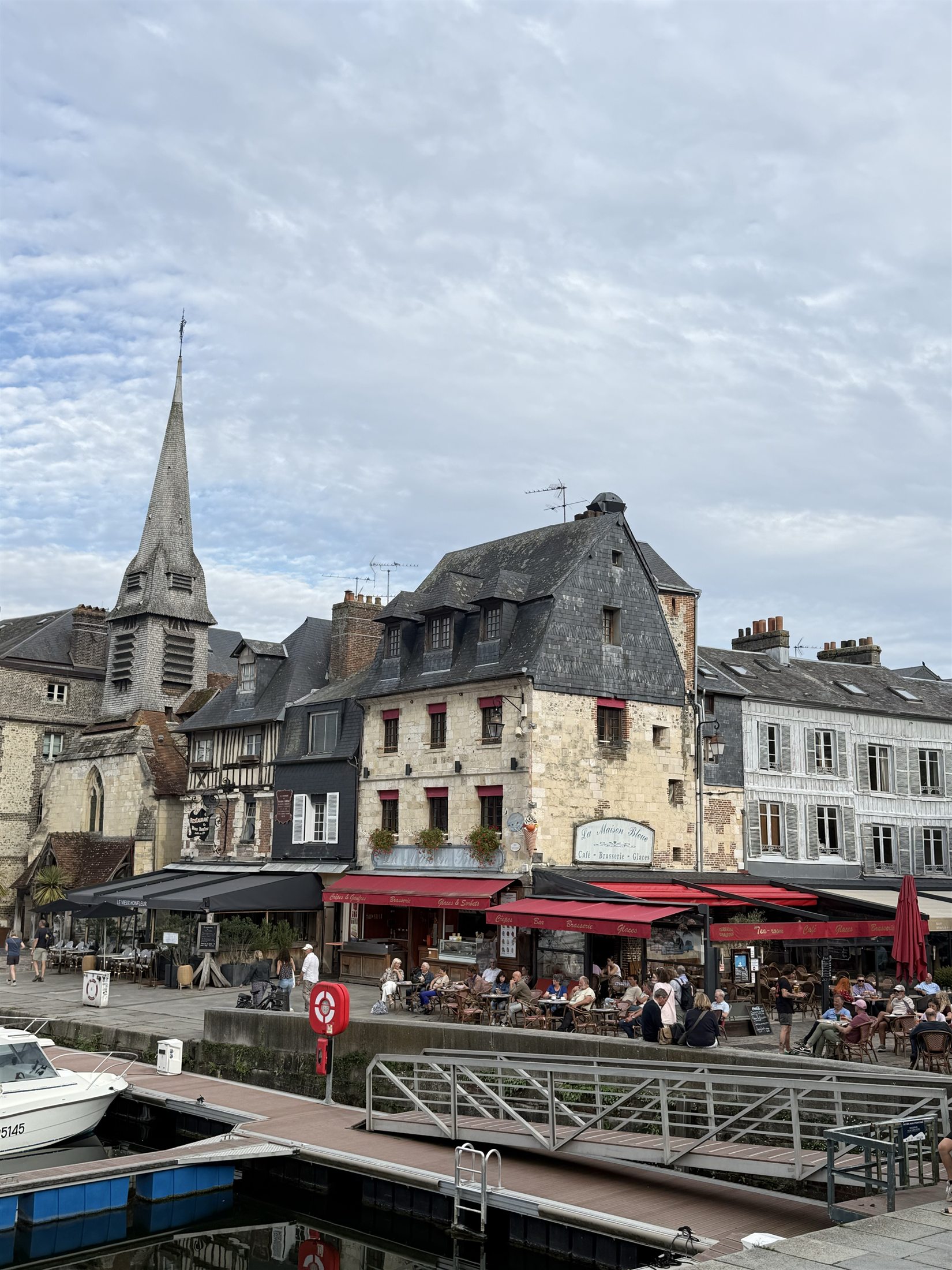
The Vieux Bassin was created on Colbert’s orders in 1681. Around it rise tall, narrow houses—many slate-clad and dating from the seventeenth and eighteenth centuries. Their irregular rooflines and shifting reflections are the point: Honfleur’s beauty is built on variation rather than symmetry.
Video: Honfleur in motion
Before the walk continues, this film from the Honfleur tourist office captures the town’s true rhythm: water, façades, lanes and a harbour still alive.
Official film by the Honfleur Intercommunal Tourist Office.
The Vieux Bassin and the Lieutenance: heart and gatekeeper
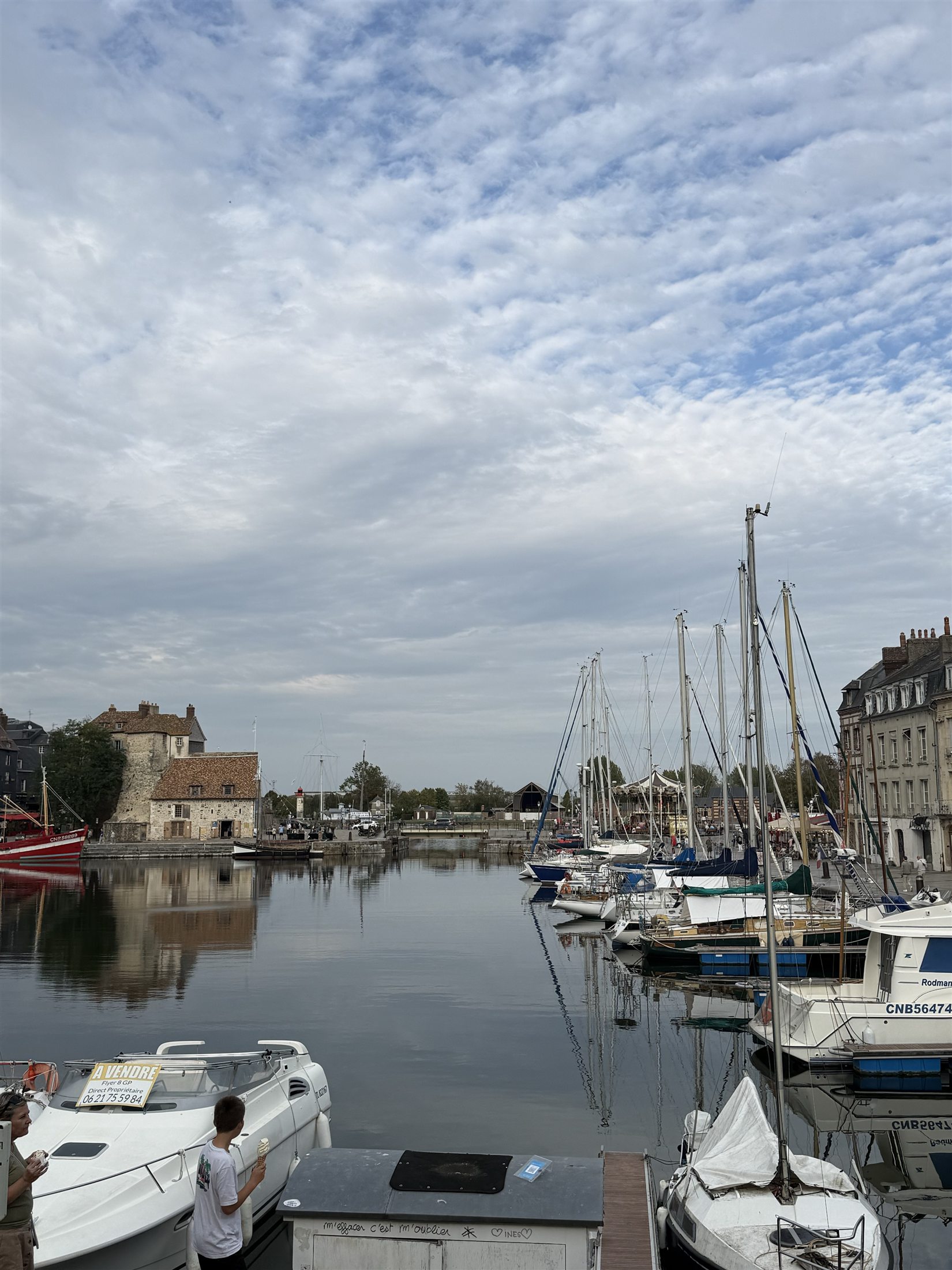
The old harbour is Honfleur’s best-known view, but it first deserves to be understood as a working port. Sailors once prepared vessels here for distant routes. Today, boats, quays and cafés keep everyday life inside the historic frame.
At the entrance stands the Lieutenance, the clearest surviving element of the town’s former fortifications. Restored and open to visitors, it houses a maritime heritage interpretation centre and an artists’ residence. Its terraces reveal the shape of the basin and the town’s relationship with the estuary.
The town where light became the subject
Honfleur’s tourist office describes the town as one of the cradles of Impressionism. Honfleur-born Eugène Boudin watched skies, beaches and atmospheric changes outdoors. Monet, Jongkind, Courbet and others were drawn to the estuary. The harbour was no longer a neutral backdrop; it became a laboratory for colour and movement.
The Eugène-Boudin Museum brings together works by painters of Honfleur and the estuary, from pre-Impressionism onwards. A visit changes the way you look outside the museum: a shifting cloud, a slate façade or a surface of water can be the true subject.
Sainte-Catherine: a church shaped by shipwrights
Built in the second half of the fifteenth century, Sainte-Catherine is one of France’s largest wooden churches and has a separate bell tower. Its builders drew on shipbuilding knowledge, which is why the timber vaults resemble inverted hulls. The surrounding seafarers’ quarter retains cobbled lanes, old houses, studios and galleries.
Morning
Vieux Bassin and the Lieutenance before peak crowds, followed by Sainte-Catherine and its surrounding streets.
Afternoon
Eugène-Boudin Museum, then a slower walk towards Saint-Léonard and the historic washhouse.
Saint-Léonard: Honfleur beyond the postcard
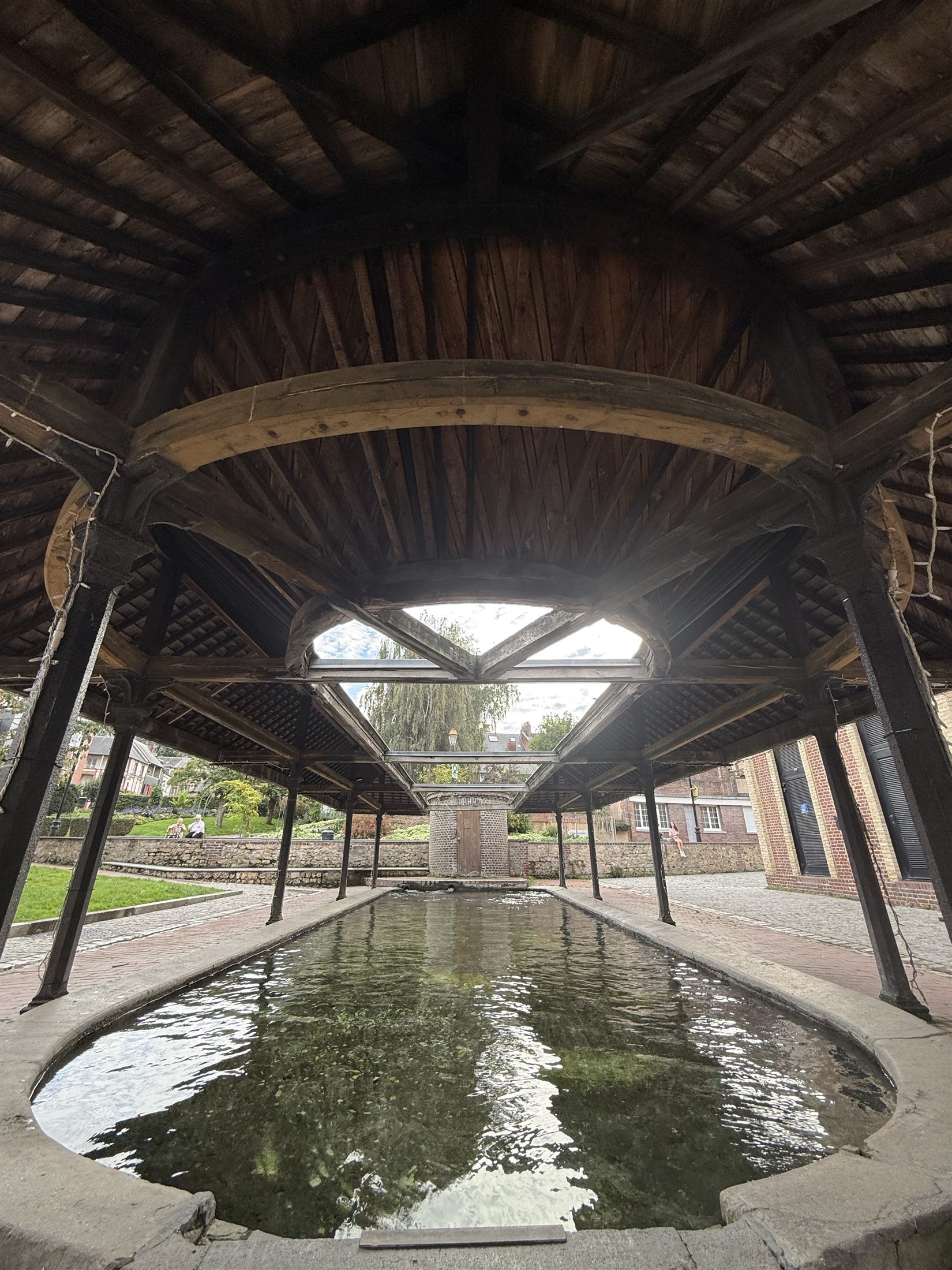
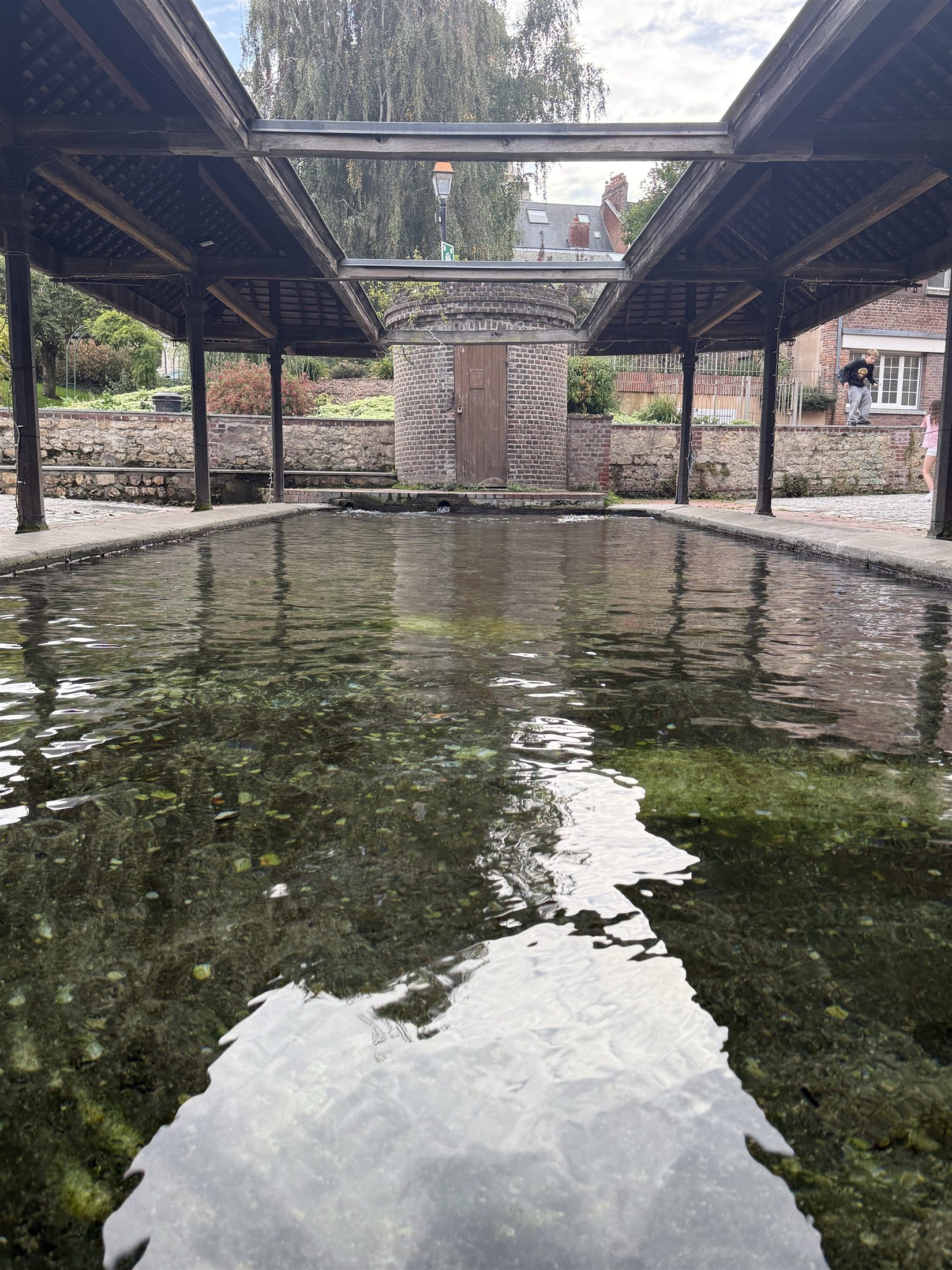
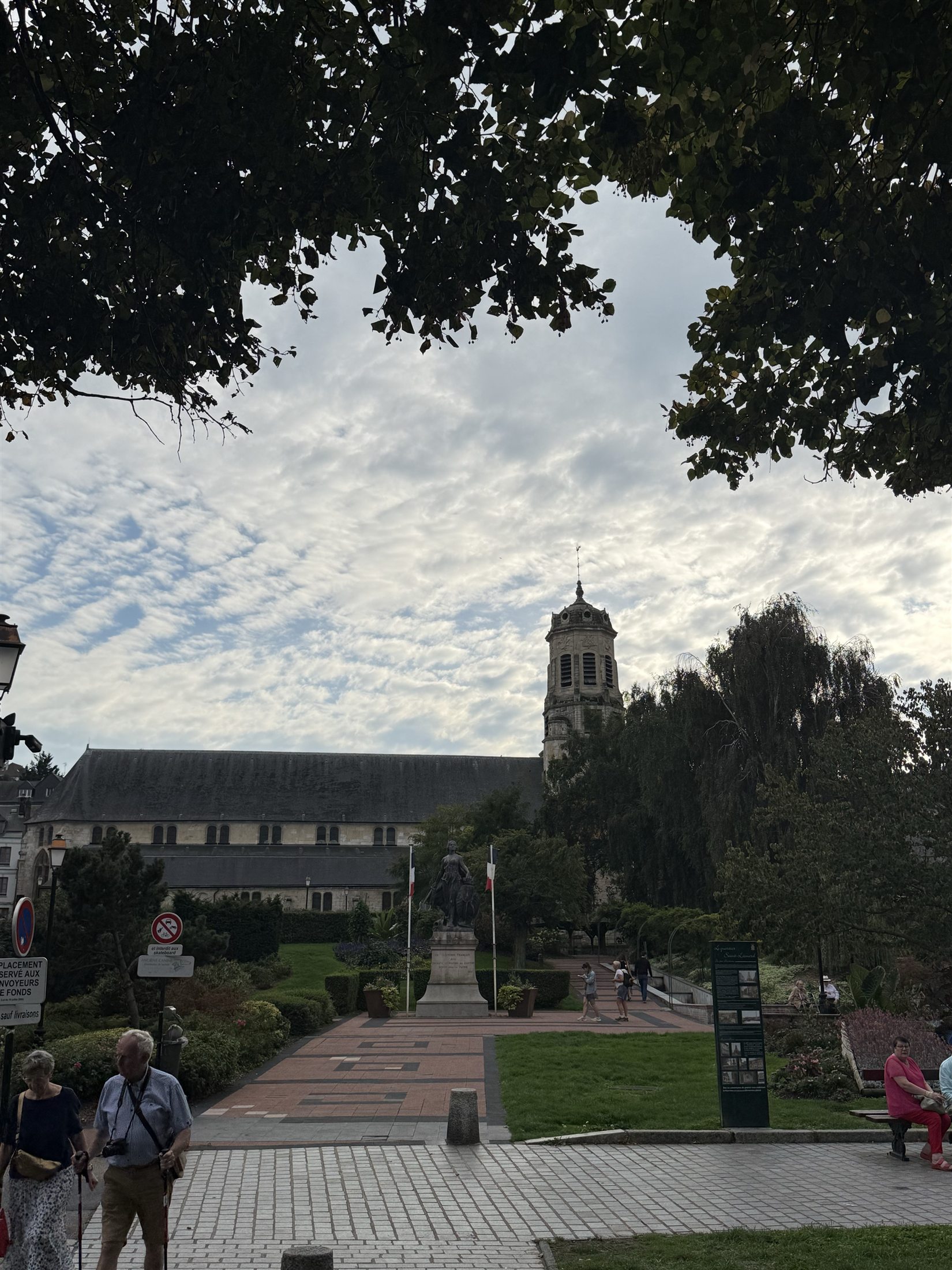
East of the centre, Saint-Léonard reveals a more local town. Parts of the church are protected as historic monuments and its octagonal stone tower dates from the seventeenth century. Nearby, the Saint-Léonard washhouse—fed by the Côte Vassal springs—is the oldest in Honfleur and was restored in 1807. This short detour returns water to its former role in ordinary life.
Art in the street: “Khadine” and the meaning of departure
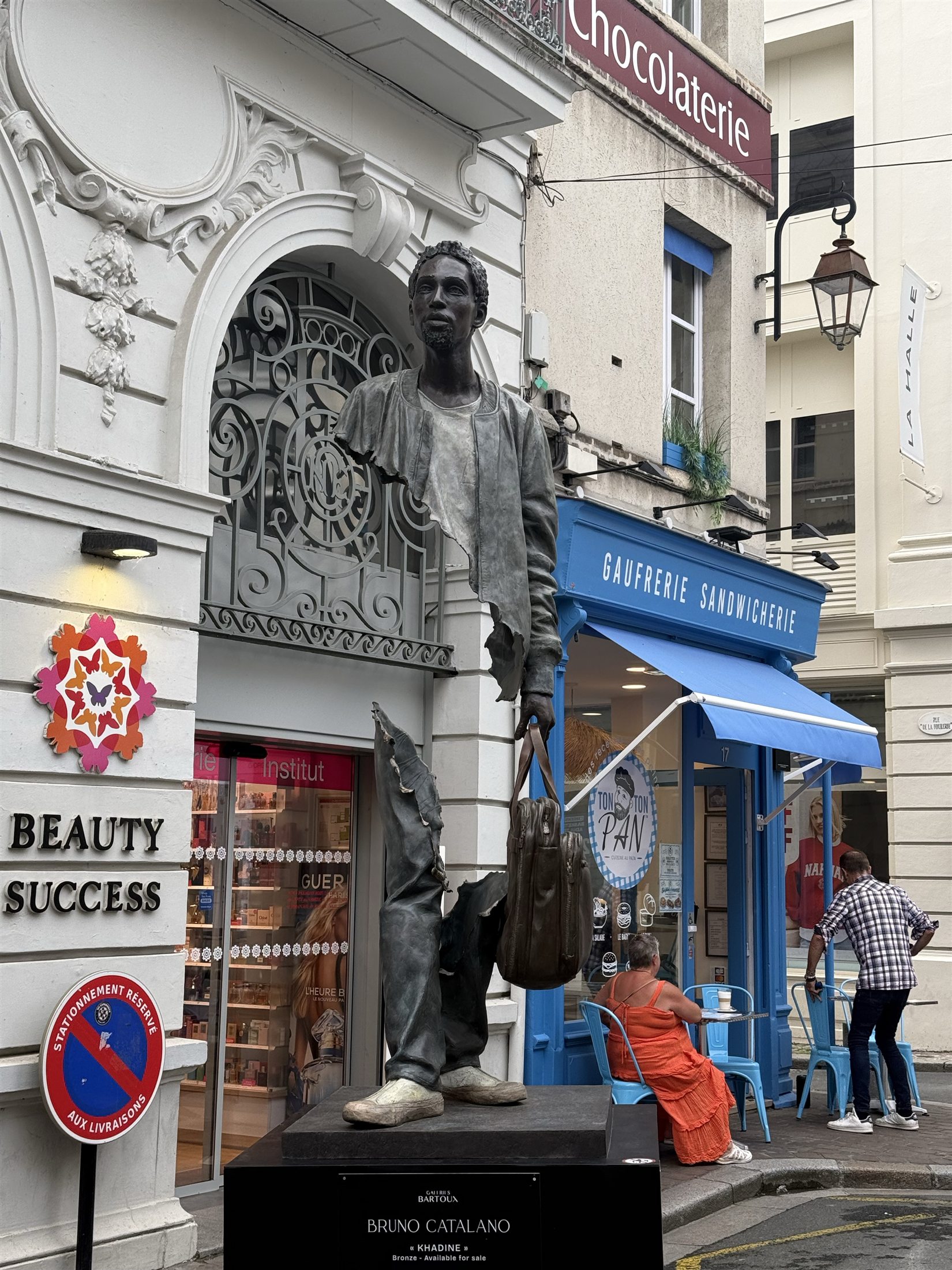
In 2026, Bruno Catalano’s “Voyageurs” occupied several Honfleur streets. Installed on Rue du Dauphin, Khadine is part of a route announced through 2 November 2026. The absent body and intact suitcase create a powerful image of migration, identity and what a traveller carries. Because the display is temporary, verify its presence after that date.
When the horizon opens: from the lanes to the outer harbour
Vieux Bassin in the morning: work close to water level; the reflection is part of the architecture.
The Lieutenance: frame it with boats and the harbour entrance so its purpose remains visible.
Sainte-Catherine: look for timber, slate and evidence of shipwright skill.
Saint-Léonard: let the washhouse, garden and church form a quieter visual chapter.
The outer harbour: finish where the horizon opens and Honfleur returns to being a town of water and work.
Honfleur is your gateway to Normandy: where should you go next?
Honfleur is only the first chapter. Normandy connects art cities, white cliffs, seaside resorts and places of remembrance. The best route begins not with “what is most famous?” but with “what kind of journey do I want?”
Rouen
Cathedral, Joan of Arc and timber-framed streets: a strong choice for history, art and a walkable old town.
Étretat
Chalk cliffs and sea arches: a dramatic stop for coastal walks and views across the English Channel.
Deauville and Trouville
Deauville’s polished seaside style faces Trouville’s harbour character; neighbouring towns with different moods.
Caen
William the Conqueror, the castle and modern memory; a practical base for central Normandy.
Bayeux
The famous Tapestry, a calm historic centre and a natural base for the D-Day beaches.
Mont-Saint-Michel
Abbey, bay and tides: a French icon that rewards careful timing rather than a rushed stop.
Le Havre
Auguste Perret’s modern architecture, the MuMa and a major port that sharply contrasts with Honfleur.
D-Day beaches
Omaha, Arromanches, cemeteries and museums: places that deserve time, quiet and respect.
How many days do you need in Normandy?
One day: Honfleur with Deauville or Étretat. Three days: Honfleur, Rouen, Étretat and the coast. Five days: add Caen, Bayeux, the D-Day beaches and Mont-Saint-Michel. The order of the stops matters as much as their number.
From the airport door to your accommodation
OuiStars serves all of Normandy — with additional care for senior travellers
Your Normandy trip can begin without luggage stress or complicated connections. With advance booking, OuiStars can arrange private transfers from Paris Charles de Gaulle, Orly, Beauvais or central Paris to Honfleur, Rouen, Deauville, Caen, Bayeux, the D-Day beaches, Mont-Saint-Michel and other towns across Normandy.
- Meet-up at the agreed arrival point
- A private vehicle suited to passengers and luggage
- Direct door-to-door transport
- Stops and pace planned in advance
Support for seniors and families
For an older traveller, a calmer transfer can be arranged: clear coordination before arrival, practical luggage help, enough time for boarding and leaving the vehicle, and direct delivery to a hotel or home. Needs are agreed before booking; this is travel and transport support, not medical care.
OuiStars operates across France and can build a Normandy journey as a direct transfer, a private day trip or a multi-city route.
Advance booking and availability apply. Include the airport, flight number, destination, passenger count, luggage and any mobility needs.
Planning your visit
- From Paris: SNCF Connect lists combined journeys from Paris Saint-Lazare from around three hours, depending on date and connections. Confirm the exact itinerary before travel.
- By car: allow for traffic leaving Paris and near the Pont de Normandie. Parking outside the historic core makes the centre easier to explore on foot.
- Best time: before 10am or after day-trippers begin to leave. Staying overnight changes the experience markedly.
- Accessibility: cobbles and historic surfaces can be uneven; check each attraction directly when planning an accessible route.
- Do not confuse the two: Honfleur is not Le Havre. The towns face each other across the estuary but have very different urban histories.
Frequently asked questions about Normandy travel
Which Normandy towns are best for a first visit?
Start with Honfleur, Rouen and Étretat, then add Deauville or Bayeux depending on whether you prefer the coast or history. On a longer route, continue to Caen, the D-Day beaches and Mont-Saint-Michel.
How do I reach Normandy from the Paris airports?
Train and coach connections vary by destination. A direct private transfer from CDG, Orly or Beauvais is simpler for families, older travellers, heavy luggage and late arrivals.
Can Honfleur be visited as a day trip from Paris?
Yes, although it is a long day. An early departure and direct transport preserve more time for the Vieux Bassin, Sainte-Catherine and Saint-Léonard. One overnight stay reveals a quieter side of town.
Does OuiStars provide Normandy transfers for seniors?
Yes. With advance booking, comfortable private transport to Normandy towns can be arranged, with mobility and luggage needs stated when requesting the service. This is not medical assistance.
Before you leave this page
Which image of Honfleur stayed with you?
Was it the reflection of the houses, the absent body of “Khadine,” or the hush of the Saint-Léonard washhouse? Tell us in the comments which scene made you want to go, then share this story with the person you would most like beside you on Honfleur’s quays.
Official sources and useful links: Honfleur Tourist Office · City of Honfleur: washhouses and wells · Normandy Tourism · Galeries Bartoux: Bruno Catalano in Honfleur · SNCF Connect. Timetables, prices and operating conditions can change; check official sources before travelling.