











Report & analysis · Saudi Arabia
In less than a decade, entertainment moved from an emerging policy field to a national industry. Beyond the celebrities and attendance records, official data points to a deeper economic, regulatory and cultural transformation.
The headline number is striking: more than 89 million visits to activities and events overseen by the General Entertainment Authority (GEA) in 2025. On its own, it reads like a promotional milestone. Set against the institution’s record since 2016, it shows how rapidly Saudi Arabia has assembled a new entertainment market.
The story is larger than Riyadh Season and international stars. It includes licensing, permanent venues, local suppliers, event work, audience habits and creative investment. This report draws on official releases from GEA, the Saudi Press Agency and the General Authority for Statistics. It also separates GEA-linked outcomes from Saudi Arabia’s broader tourism growth.
The starting point: building a sector, not just a calendar
GEA was established by royal decree on 7 May 2016. By 2017, official figures recorded more than 2,000 events, including 135 international events, across 46 cities and provinces. Attendance exceeded eight million visits, while more than 102,000 young men and women took part in operating events. That last figure is best understood as event-linked work opportunities rather than a count of permanent jobs.
Turki Alalshikh was appointed chairman in late 2018. In January 2019, he launched a revised strategy designed to widen supply, bring more operators into the market, simplify approvals and turn one-off programming into an organised industry. The years that followed were defined by scale.
2016 — Institution. GEA is created as part of Vision 2030.
2017 — First national footprint. More than 2,000 events and eight million visits.
2019 — New strategy. The market opens further and Riyadh Season becomes an international showcase.
2023 — A thicker ecosystem. 72 million visits, 5,406 approved events and more than 6,000 licenses.
2025 — Scale and regulation. 89 million visits, 75,661 event days and 472 licensed destinations.
Turki Alalshikh: from event programme to international brand
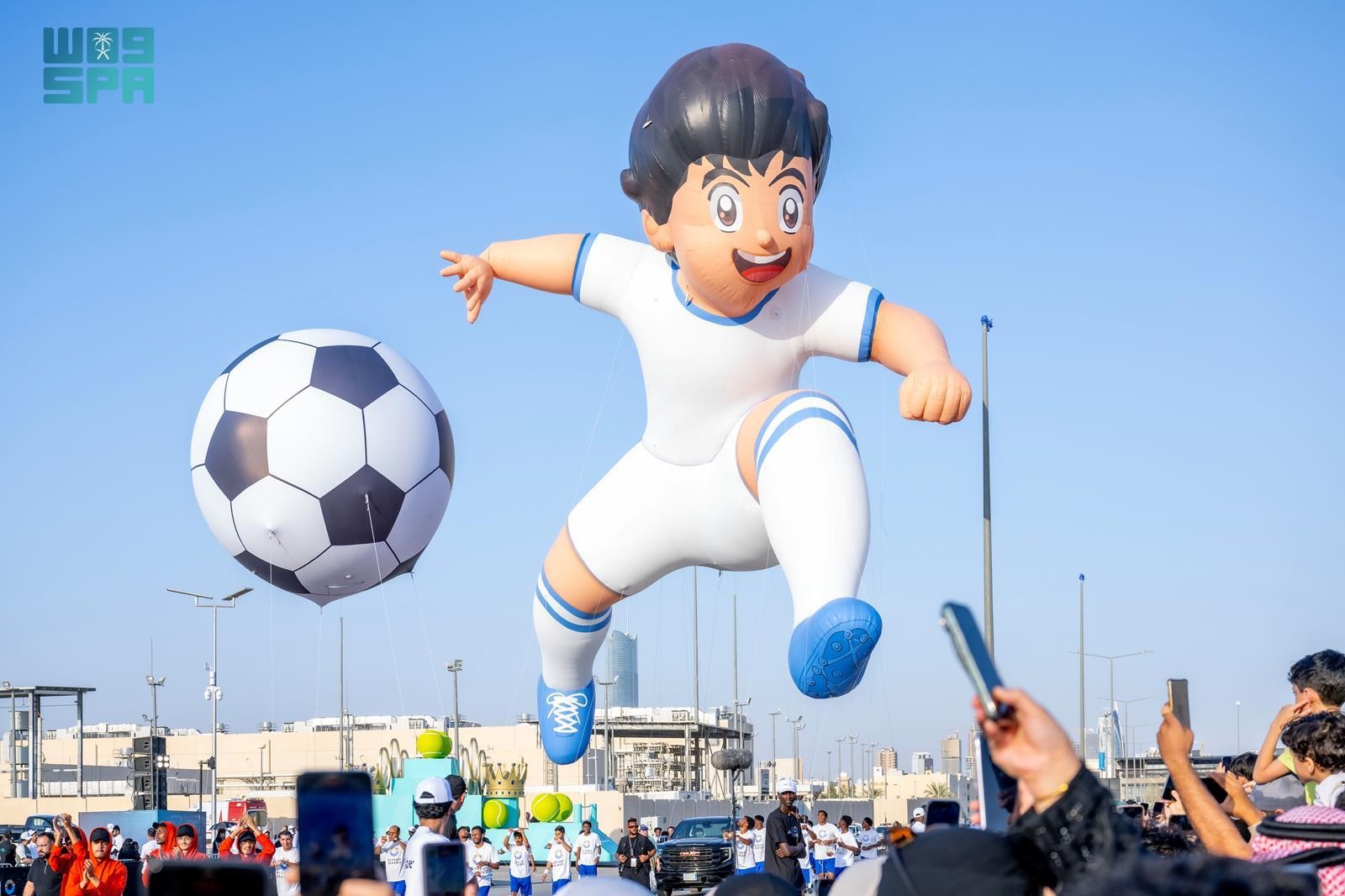
Under Turki Alalshikh, GEA adopted the logic of global spectacle: boxing, football, wrestling, concerts, theatre, dining, exhibitions and family formats. The strategy no longer focuses only on importing productions. It positions Saudi Arabia as a stage, a deal-making venue and a distribution market.
The highly visible leadership model has one clear advantage: decisions move quickly and the seasons have a recognisable public champion. It also creates a useful test for serious analysis. The institution should be measured beyond its chairman’s profile. The most convincing indicators are therefore not celebrity appearances alone, but the expansion of operators, licenses, venues and operating days.
Riyadh Season: engine, laboratory and showcase
The fifth Riyadh Season passed 20 million visits. The sixth, which ended in February 2026, recorded 17 million. At the 2025 launch, organisers said the previous edition had drawn visitors from more than 135 countries, received 3,300 international media visits and generated 110 billion media impressions.
An announced estimated brand value of SAR12 billion should not be confused with revenue. It is a valuation of exposure and media equity. A more tangible business indicator is that the 2025 season involved more than 2,100 companies—95% of them local—through more than 4,200 contracts.
Eleven zones, 15 international championships and 34 exhibitions and festivals make Riyadh Season function like a temporary cultural city. Its next challenge is to convert seasonal intensity into durable skills, Saudi-owned intellectual property and stronger demand across multiple regions.
Joy Forum: entertainment becomes a negotiating table
Joy Forum 2025 moved the conversation from festival programming to industry deals. GEA announced entertainment agreements exceeding SAR4 billion, spanning sports entertainment, music, content and film finance. Partnerships and announcements involving TKO, UFC, WrestleMania 2027, Warner Music Group and Atlantic Records illustrated the breadth of the ambition.
For Saudi Arabia’s creative economy, the opportunity is twofold: attracting capital and learning to build formats that can travel. The danger would be to judge success only by headline contract values. The more revealing long-term metrics will be the number of Saudi producers and technicians trained, the ownership of content, and the ability of Saudi firms to win work outside the Kingdom.
A wider and more regulated market
GEA’s 2023 report counted 8,873 operating companies, up from 3,544 in 2022. The 2025 regulatory report recorded 6,778 participating companies, 6,490 licenses and 472 licensed destinations, up from 422 destinations in 2024. These categories are not identical across reports, so they should not be added into a single continuous series.
A 25.8% decline in violations during 2025 is less glamorous than an attendance record, but arguably as important. A high-footfall industry cannot mature without safety standards, operator oversight and consumer protection. The figures suggest a market entering a phase in which execution quality matters alongside quantity.
Under a Quality of Life financial-guarantee programme, 110 establishments received support tied to SAR399 million in financing and SAR296 million in guarantees. This is the less visible infrastructure behind growth: the ability of smaller firms to finance a venue, production or expansion.
Culture, society and access: the hardest outcome to count
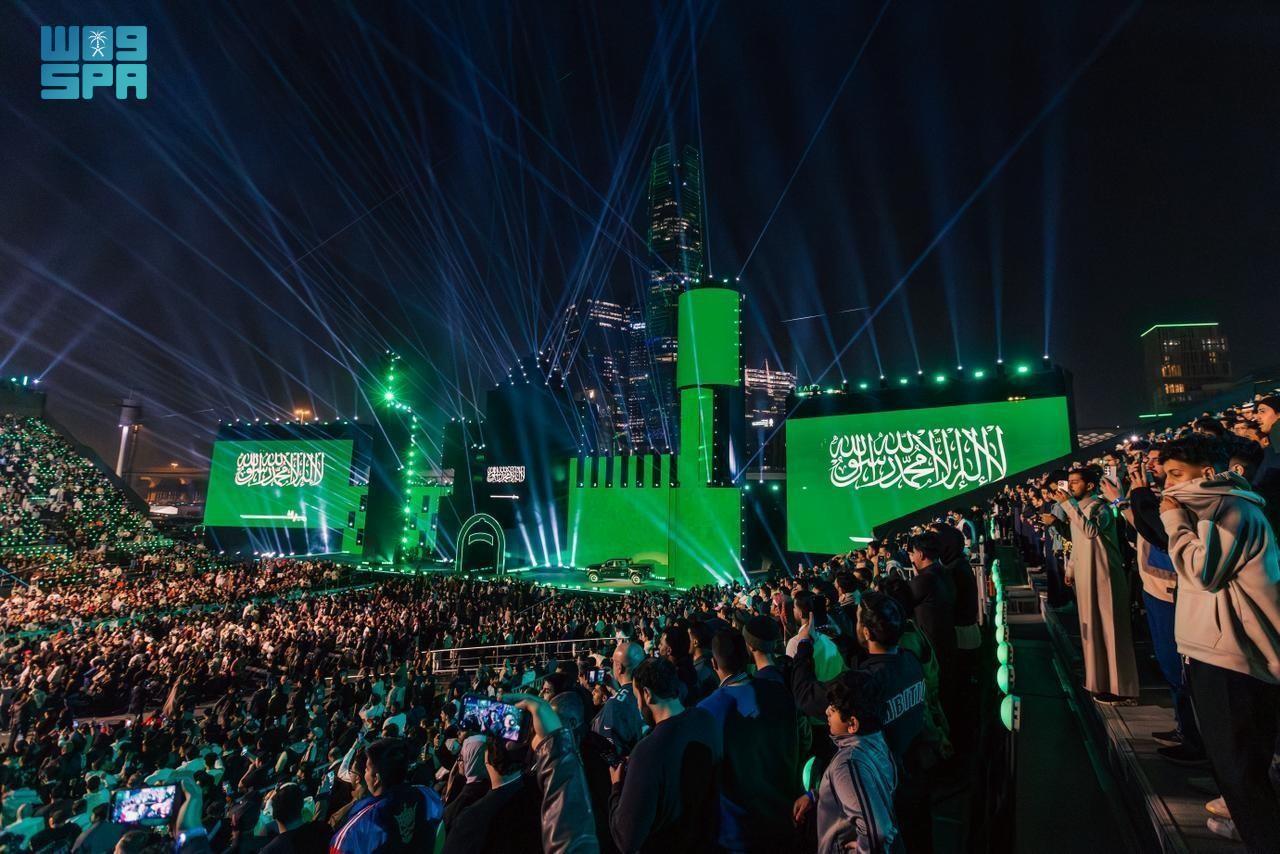
According to the General Authority for Statistics, 85.3% of residents aged 15 and over attended at least one entertainment activity in 2024, while 81.6% attended at least one cultural activity. Entertainment is no longer peripheral to everyday social life.
That normalisation has visible consequences: more family use of public spaces, new weekend habits, greater visibility for technical professions, and a wider circulation of artists and audiences. It also raises questions about affordability, regional access and the space given to local narratives. A mature industry is not judged only by volume, but by whom it includes.
Jobs and local content: the decisive test
Major events require security, ticketing, hospitality, transport, catering, staging, audiovisual production, marketing and maintenance. They create a wide network of work opportunities, but available releases sometimes mix jobs, participants, workdays and companies. Constructing one grand employment total would be misleading.
The strongest published local-content signal for Riyadh Season 2025 is the 95% share of local companies among more than 2,100 participating firms. It suggests that production expenditure is reaching a domestic supplier base. The next useful public scorecard should track contract duration, wage progression, professional certification and Saudi ownership of intellectual property.
How much of the tourism boom belongs to entertainment?
Saudi Arabia recorded 123 million tourists in 2025, including 29.3 million inbound visitors. Total tourism spending reached SAR304 billion, of which SAR176.6 billion came from inbound tourism. Entertainment makes cities more compelling and can lengthen stays, but these numbers belong to a much larger system: visas, aviation, hotels, heritage, investment and international promotion.
It would therefore be wrong to attribute the whole increase to GEA. The authority’s most plausible role is that of an accelerator—creating more reasons to travel, more dates to sell and a perception of Saudi Arabia as a place with a continuous programme.
The ledger: what is proven, and what remains to be shown
What is proven: a market was built quickly; attendance expanded; operators and destinations multiplied; Riyadh Season acquired international reach; and Joy Forum became a platform for major commercial agreements.
What remains to be shown: detailed returns on public and private investment, the regional distribution of value, the conversion of temporary assignments into careers, and the export performance of Saudi-owned cultural franchises.
A positive account does not need to hide these questions. Publishing clearer answers in the sector’s second decade would strengthen confidence among investors, professionals and audiences.
Watch: the official Riyadh Season 2025 press conference
Official sources and methodology
- Saudi Press Agency — 2017 record
- Saudi Press Agency — 2019 GEA strategy
- GEA — 2023 figures
- Saudi Press Agency — 2025 regulatory report
- GEA — Joy Forum 2025
- Saudi Press Agency — Riyadh Season 2025
- Saudi Press Agency — Riyadh Season conclusion
- GASTAT — Culture and Entertainment Statistics 2024
- Saudi Press Agency — tourism figures for 2025
“Visits” are reported entries or attendances and do not necessarily represent unique individuals. Definitions change between reports; incompatible categories have not been combined.
Editorial transparency: this is an independent OUISTARS Travel Magazine analysis based on publicly available official sources. It was neither commissioned nor sponsored by GEA at the time of publication.