




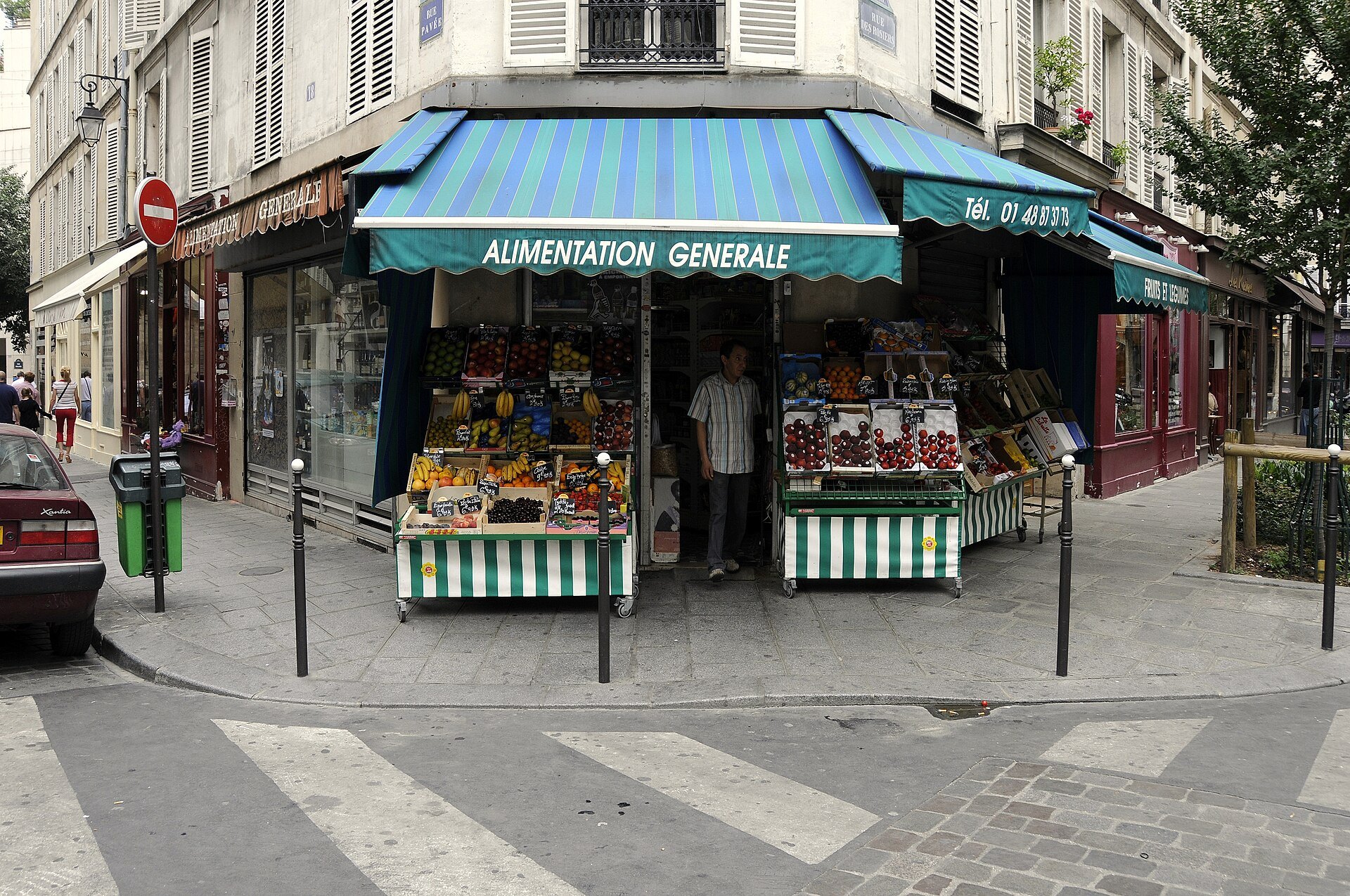
The world, one street at a time
The story does not begin with falafel, and it does not end at a fashion window. Rue des Rosiers began beside gardens and a medieval wall, then carried migrations, Yiddish voices, prayer, bread, loss and renewal. This is the Pletzl: a “little place” with an immense memory.
Leave Saint-Paul métro and walk toward Rue des Rosiers. In a few minutes you may hear French, English, Hebrew and perhaps Yiddish; pass old bakeries, falafel queues, international fashion and a garden door almost hidden in a wall. That mixture is not incidental. It is the neighbourhood’s history in compressed form.
“The Jewish quarter” is useful shorthand, but the Pletzl is not an official gated district or an open-air museum. Rue des Rosiers and its surrounding streets form the historic Jewish heart of the Marais—a living residential, commercial and religious fabric that has repeatedly changed.
Why is it called Rue des Rosiers?
Rue des Rosiers means “street of the rosebushes.” The Musée d’art et d’histoire du Judaïsme links the name to horticultural plots along medieval Paris’s eastern edge. The lane also followed an inner patrol route close to Philippe Auguste’s city wall.
The name contains the street’s central paradox: a place burdened with human memory still carries the name of a fragile plant. In the hidden garden at number 10, a surviving section of the wall marks the boundary of old Paris; on the street outside, generations who crossed far greater borders made the city their home.
Pletzl: how a “little place” became a world
Pletzl means “little place” in Yiddish. Eastern European Jews used it for the cluster around Rue des Rosiers and Saint-Paul—small beside Place des Vosges, but dense with prayer rooms, associations, printers, tailors, kosher butchers, pickle sellers, bakeries and schools.
Jewish life in the Marais reaches back to the thirteenth century, interrupted by expulsions and persecution. Emancipation in 1791 enabled renewed settlement; Alsatian Jews arrived in the early nineteenth century. From the 1880s through the 1930s, larger waves came from Eastern Europe, fleeing poverty, pogroms and discrimination. Yiddish became a street language, and food became a portable homeland.
Before it was visited, it worked
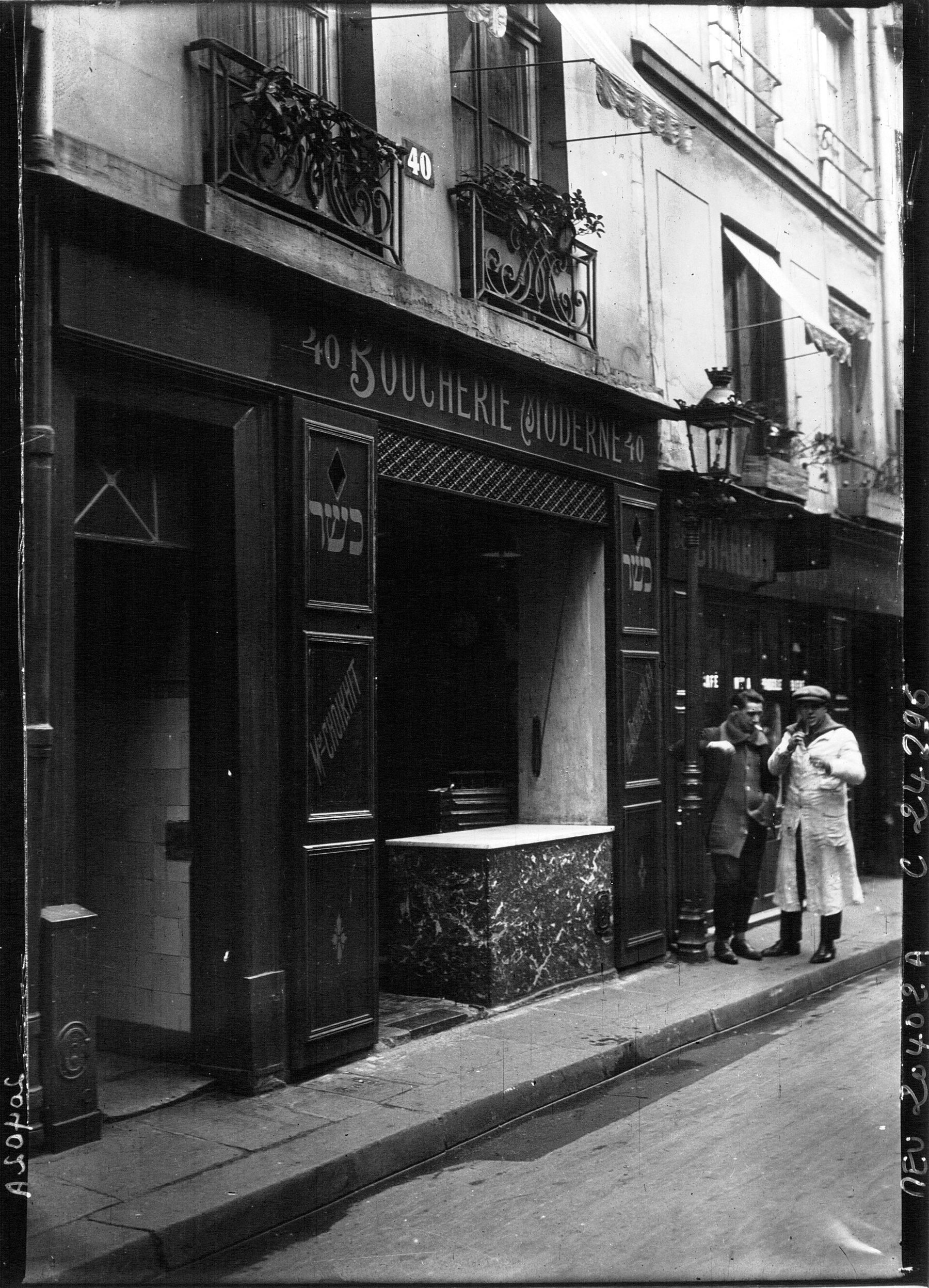
The 1925 photograph records a working street rather than a heritage attraction. Its Hebrew lettering and butcher’s coat point to an economy built from family firms, craft, religious practice and mutual trust.
After the Second World War, survivors and returning families rebuilt with startling speed. In 1946 Joseph Korcarz opened at number 29, remembered for offering the neighbourhood’s first kosher bread after the war. The family behind Sacha Finkelsztajn’s yellow shop at number 27 began there the same year. A loaf could be ordinary food and a declaration of return at once.
Occupation and Shoah: the absences inside the crowd
During the German occupation, Jewish residents of the Marais were arrested and deported. According to the mahJ guide, more than half the quarter’s Jewish inhabitants were murdered. Plaques on schools and façades are therefore not a separate memorial layer placed over everyday life; they are part of the neighbourhood’s structure.
Nearby, teacher and headmaster Joseph Migneret helped save several dozen Jewish pupils and families. Yad Vashem recognised him as Righteous Among the Nations in 1990, and the secret garden on Rue des Rosiers now bears his name. His is an inspiring story precisely because it concerns an ordinary public servant who refused the safety of indifference.
Guimard’s synagogue: Art Nouveau in the service of faith
At 10 Rue Pavée stands Agoudas Hakehilos Synagogue, commissioned by an association of nine mainly Russian Jewish societies and built in 1913–14. Hector Guimard—famous for Paris Métro entrances—designed the building and its details. It is his only religious building and was listed as a historic monument in 1989.
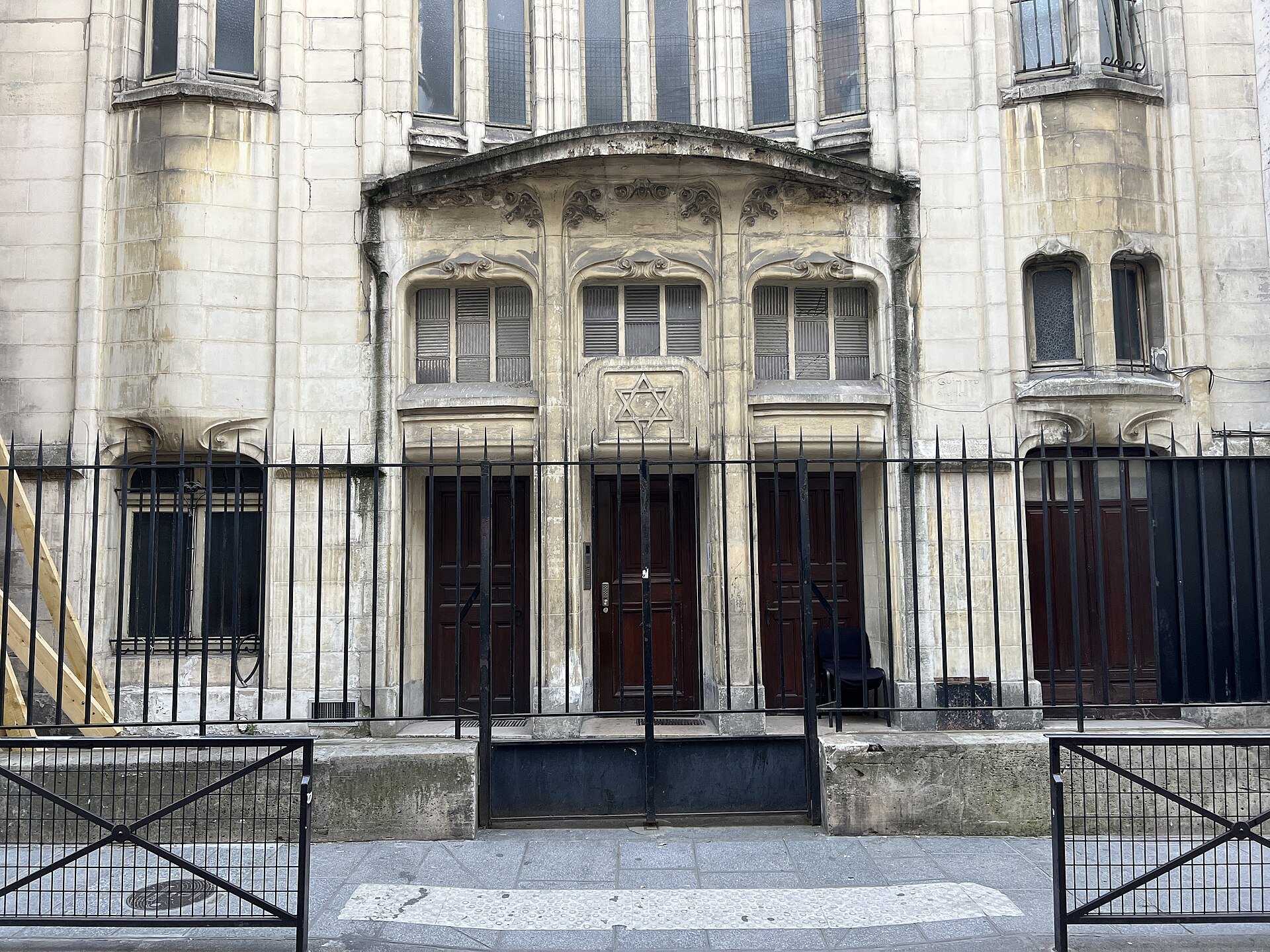
The narrow stone façade seems to move vertically rather than announce itself through scale. It remains an active place of worship. Unless an organised visit is advertised, admire it respectfully from outside and do not photograph worshippers or attempt entry during services.
From Ashkenazi Pletzl to a wider Jewish table
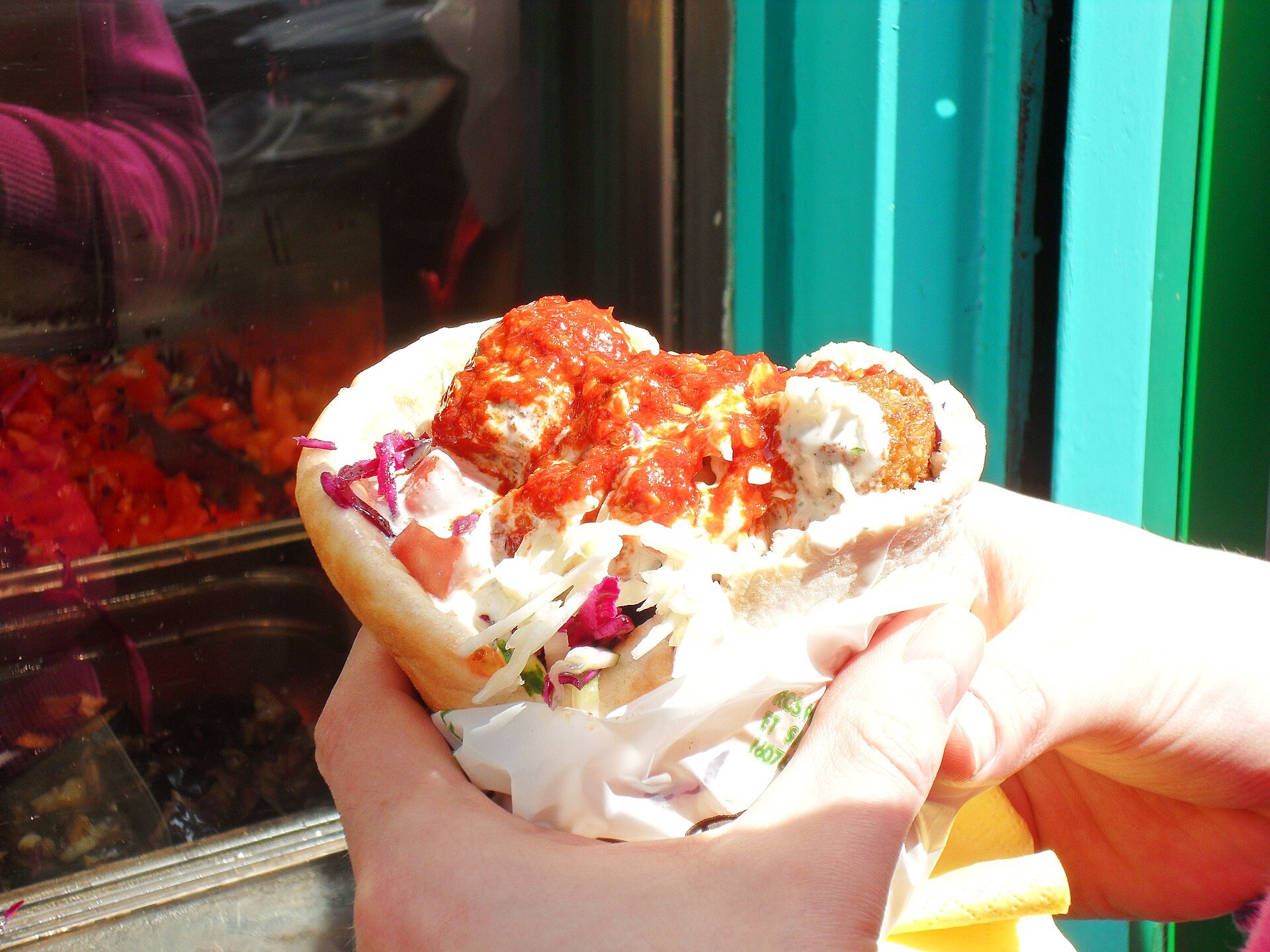
The Pletzl did not remain solely Eastern European and Ashkenazi. In the 1960s and 1970s, Jews arriving from Algeria, Morocco and Tunisia brought Sephardi and North African traditions. Israeli and Middle Eastern restaurants then became increasingly visible; falafel turned into the street’s best-known takeaway food from the late 1970s.
There is no single “Jewish flavour” here. Challah, strudel, cheesecake and rugelach sit beside falafel, shawarma, salads, pickles and baklava. Eating on Rue des Rosiers is pleasurable, but it is also a way to read migration through recipes.
Bakeries, falafel and changing shopfronts
| Address | Place | Why it matters |
|---|---|---|
| 16 Rue des Rosiers | Boulangerie Murciano | Kosher breads and Ashkenazi/Yiddish pastries; a bakery tradition is documented at the premises from 1909, with the Murciano family arriving in the 1970s. |
| 23 Rue des Rosiers | Mi-Va-Mi | Falafel, shawarma and Middle Eastern plates in the street’s busy food cluster. |
| 27 Rue des Rosiers | Sacha Finkelsztajn — the yellow shop | Yiddish and Eastern European baked goods behind one of the street’s signature façades. |
| 29 Rue des Rosiers | Korcarz | Kosher bakery and patisserie tied to the post-1946 revival. |
| 34 Rue des Rosiers | L’As du Fallafel | The street’s best-known falafel address, founded in 1979 and famous for its green front and queues. |
| 24 Rue des Écouffes, on the corner | Florence Kahn | Yiddish deli and bakery with a distinctive blue mosaic façade. |
Food is only half the present-day picture. International fashion, galleries and concept stores now share the street. Some see renewal; others see the erosion of a working Jewish economy. That unresolved tension is not a footnote—it is the contemporary story.
9 August 1982: memory without spectacle
Number 7 once housed Jo Goldenberg, a celebrated restaurant and delicatessen. On 9 August 1982, an antisemitic grenade and shooting attack killed six people and wounded 22. A plaque names the victims. It deserves a quiet stop, not a performance for the camera.
The Institut national de l’audiovisuel preserves news footage and testimony from that day. The images are distressing; use them for understanding rather than shock.
What diversity means here now
Rue des Rosiers lies inside one of Paris’s most layered districts. Jewish communities of different origins, a major LGBTQ+ presence in the Marais, long-term and recent residents, shop workers, students, tourists and global fashion all occupy the same few streets. Coexistence is not a polished slogan here; it is daily negotiation over space, prices and belonging.
So is the street “still Jewish”? A yes-or-no answer fails. Synagogues, bakeries, signs, ritual calendars and memory remain visible, but the self-contained Jewish economy that existed before the war has gone. Its identity now works in layers rather than as a seal.
A respectful 90-minute walk
- Begin at Saint-Paul métro. Pass the École des Hospitalières-Saint-Gervais and read the plaques to deported pupils.
- Turn into Rue Pavée for Guimard’s synagogue, viewed respectfully from outside.
- Enter Rue Ferdinand-Duval, historically called Rue des Juifs, and pause at the 1982 memorial on the corner.
- Walk Rue des Rosiers slowly: Murciano, the yellow shop, Korcarz and the falafel cluster. Taste one thing rather than racing through a checklist.
- Enter Jardin des Rosiers–Joseph-Migneret at number 10 when open and look for Philippe Auguste’s wall.
- Finish on Rue des Écouffes. For a longer visit, add the mahJ or the Mémorial de la Shoah.
Open the suggested route in Google Maps. The distance is short; reading, tasting and remembering take time.
Practical and respectful advice
- Go on a weekday morning or early Sunday, before the lunch queues.
- Friday afternoons, Saturdays and Jewish holidays can bring widespread closures; verify opening times.
- The garden has seasonal hours and may close temporarily. Check the City of Paris page.
- Do not photograph worshippers, pupils or residents at close range without consent.
- Cobbles and narrow pavements can slow visitors with mobility needs.
- Buy from a shop, read a plaque and enter a museum: leave value in the place rather than merely taking its image.
Editorial note: access, security arrangements and shop hours can change. Verify official information before travelling.
Watch the question that never went away
This 2008 France 24 report asks whether Rue des Rosiers was still Jewish as traditional businesses closed and fashion expanded. Its age is part of its value: it captures an earlier stage of a debate that remains visible in today’s shopfronts.
Frequently asked questions
Is Rue des Rosiers the whole Jewish quarter?
No. It is the best-known symbolic and commercial spine of the Pletzl, but Jewish history extends into Rue Pavée, Rue des Écouffes, Rue Ferdinand-Duval and institutions across the Marais.
What does Pletzl mean?
“Little place” in Yiddish. It became the affectionate, unofficial name for the historic Jewish district around Saint-Paul and Rue des Rosiers.
Are all its shops Jewish?
No. Historic kosher bakeries, restaurants and religious institutions coexist with fashion, international brands and other retail.
Should I visit on Saturday?
You can walk through, but many kosher and religious establishments close from Friday evening through Saturday. Choose another day if food and shops are central to your visit.
How much time do I need?
Allow 90 minutes for the core walk, or two to three hours with the mahJ or Mémorial de la Shoah and a food stop.
Which layer of the story stayed with you?
The rosebush name, Yiddish voices, Joseph Migneret’s courage, the bakery window, or the changing identity of the shops? Share your thought or memory in the comments.
Share this article with friends, relatives and anyone who wants to see the Paris behind the quick photograph. The conversation may begin with falafel; it should end with a richer understanding of memory and diversity.
Travel service
Plan your Paris experience with OUISTARS
For a private Marais visit or a cultural route adapted to your time and budget, explore OUISTARS services. This service space is separate from our editorial choices and sources.
Sources and method
This article draws on official and primary sources and was reviewed on 1 October 2026. All four images are genuine licensed photographs or historic photographs. They were checked against 1,985 media-library images: none is AI-generated or repeated.
- mahJ: Jewish Marais guide
- mahJ: map of bakeries, memory and landmarks
- City of Paris: Jardin des Rosiers–Joseph-Migneret
- French Ministry of Culture: Agoudas Hakehilos Synagogue
- Paris je t’aime: explore the Marais
- Paris je t’aime: L’As du Fallafel
- INA: archive of the 1982 Rue des Rosiers attack
OUISTARS Travel
Editorial team