







PARIS 2030 · VISITOR EXPERIENCE
In the time it takes to read this introduction, hundreds of passengers have passed through Paris airports and thousands of journeys have been made on the city’s transport networks. The crucial question is not how many people Paris receives, but how much of each visitor’s time the city protects.
A scale hidden inside sixty seconds
The figures are annual averages, calculated by dividing official 2025 totals by 525,600 minutes. They are not a live counter. They do, however, reveal the operating scale behind the postcard: airports, trains, museums, streets, hotels and restaurants must work together every minute.
That distinction matters. Paris does not need a futuristic slogan for 2030 as much as it needs continuity. A delayed bag affects a hotel check-in; unclear wayfinding affects a museum reservation; a broken lift can remove an entire neighbourhood from an accessible itinerary. The visitor experiences one journey, even when many organisations deliver it.
Arrival: the first minutes set the tone
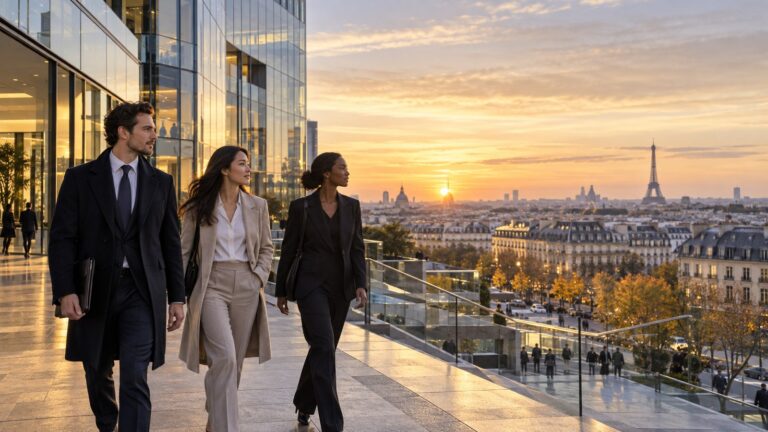
Charles de Gaulle and Orly handled almost 107 million passengers in 2025. By 2030, capacity alone will not define success. The stronger measure will be the time and uncertainty removed between landing, baggage, border formalities, rail, taxi, chauffeur and hotel.
Real-time multilingual information should explain what changed and what to do next. A transfer should know that a flight is late. A hotel should be ready for the actual arrival time. The first gain is not glamour; it is the absence of avoidable friction.
Movement: large capacity must become legible
RATP networks recorded more than 3.14 billion passenger journeys in 2025. That scale is a strength, but a visitor also needs understandable tickets, clear interchanges and dependable information about lifts, works and disruption.
Private chauffeur services do not replace mass transit. They remain useful for luggage-heavy arrivals, families, professional appointments, late-night travel and multi-stop schedules. Paris works best when the traveller can choose the right mode for each part of the day rather than being forced into one solution.
Culture: success is not a longer queue
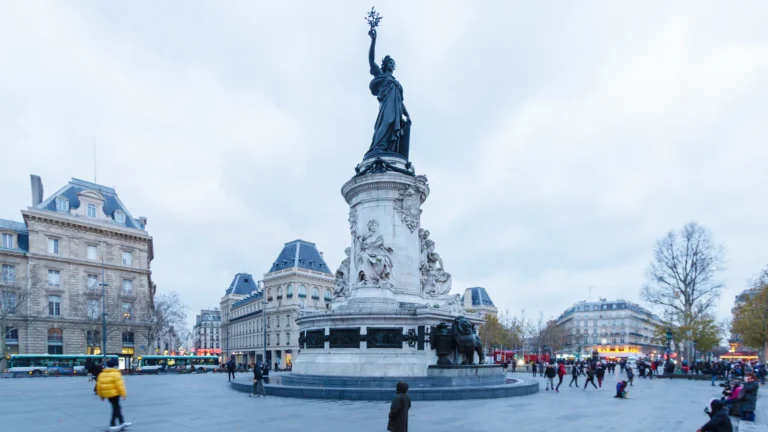
The Louvre received 9 million visitors and the Eiffel Tower welcomed about 6.74 million in 2025. The next objective should not simply be larger totals. Better timed entry, clearer reservations and a wider distribution of visitors can protect both the landmark and the traveller’s day.
Smaller museums, historic neighbourhoods, food streets, crafts and fashion routes can become primary experiences rather than fallback options. This creates value beyond the most crowded sites and spreads visitor spending more fairly across the city.
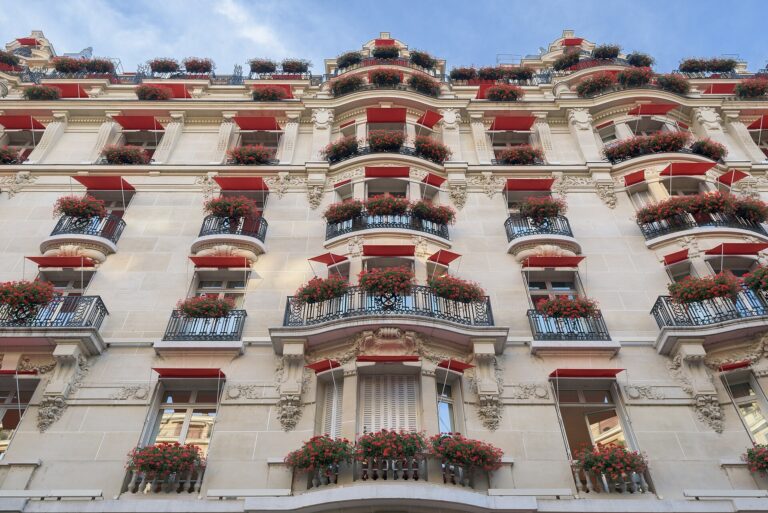
The hotel starts before its front door
The hotel of 2030 will be judged before the guest reaches reception. Accurate arrival coordination, luggage handling, fast check-in and useful local information form one experience. Artificial intelligence may translate and organise, but human judgement remains essential when plans fail or privacy matters.
Paris already accomplishes an extraordinary amount in a minute. Its 2030 challenge is to make the city feel as if it moves with the visitor, not against them. The competitive advantage will be measured in time saved, clarity gained and memories deepened.
Frequently asked questions
Are the one-minute figures live?
No. They are rounded annual averages based on official 2025 totals divided by 525,600 minutes.
What should Paris improve by 2030?
Airport-to-city continuity, multilingual information, accessible transport, visitor-flow management and coordination between mobility, hotels and attractions.
Does private transport replace the metro or RER?
No. It is most useful for luggage, families, late hours, business schedules and complex multi-stop journeys.
Why use a one-minute format?
It translates very large annual figures into a scale that helps readers understand the pressure on each stage of the visitor journey.
Official sources

Cite this article
When citing the text or analysis, include the magazine, title, original URL and publication date. Preserve the stated attribution of statistics and photographs.