















The cost to study hospitality in France can be lower than one month at a luxury hotel—or require a five-figure payment each year. Nationality, city, housing, programme status and practical training can change the final bill by tens of thousands of euros.
For international students, tuition is only the beginning. Rent can exceed public-university fees, while practical costs may sit outside a private school’s advertised price. This guide builds realistic 2026 budgets using Campus France, French health insurance, Étudiant.gouv and official school data.
Table of Contents
- The quick answer
- Public versus private tuition
- Housing costs
- Food and transport
- Health insurance and compulsory charges
- Scholarships and student discounts
- Estimated annual budgets
- The questions to ask before paying
How Much Does It Cost to Study Hospitality in France? The Quick Answer
A student in a subsidised public programme outside Paris may spend roughly €8,000–€13,000 a year including basic living costs. A private hospitality Bachelor in Paris can produce a total annual budget of approximately €25,000–€35,000. Premium culinary or specialist programmes may push the total beyond €40,000.
Public vs Private Hospitality Schools: The Biggest Budget Decision
Public tuition in 2026–2027
At public higher-education institutions under the relevant ministry, EU, EEA and Swiss students pay €178 for a Bachelor’s degree and €255 for a Master’s degree in 2026–2027. For non-EU students subject to differentiated fees, the published rates are €2,902 for a Bachelor’s and €3,950 for a Master’s. Exemptions apply in defined situations, and institutions can grant some waivers.
Private hospitality-school tuition
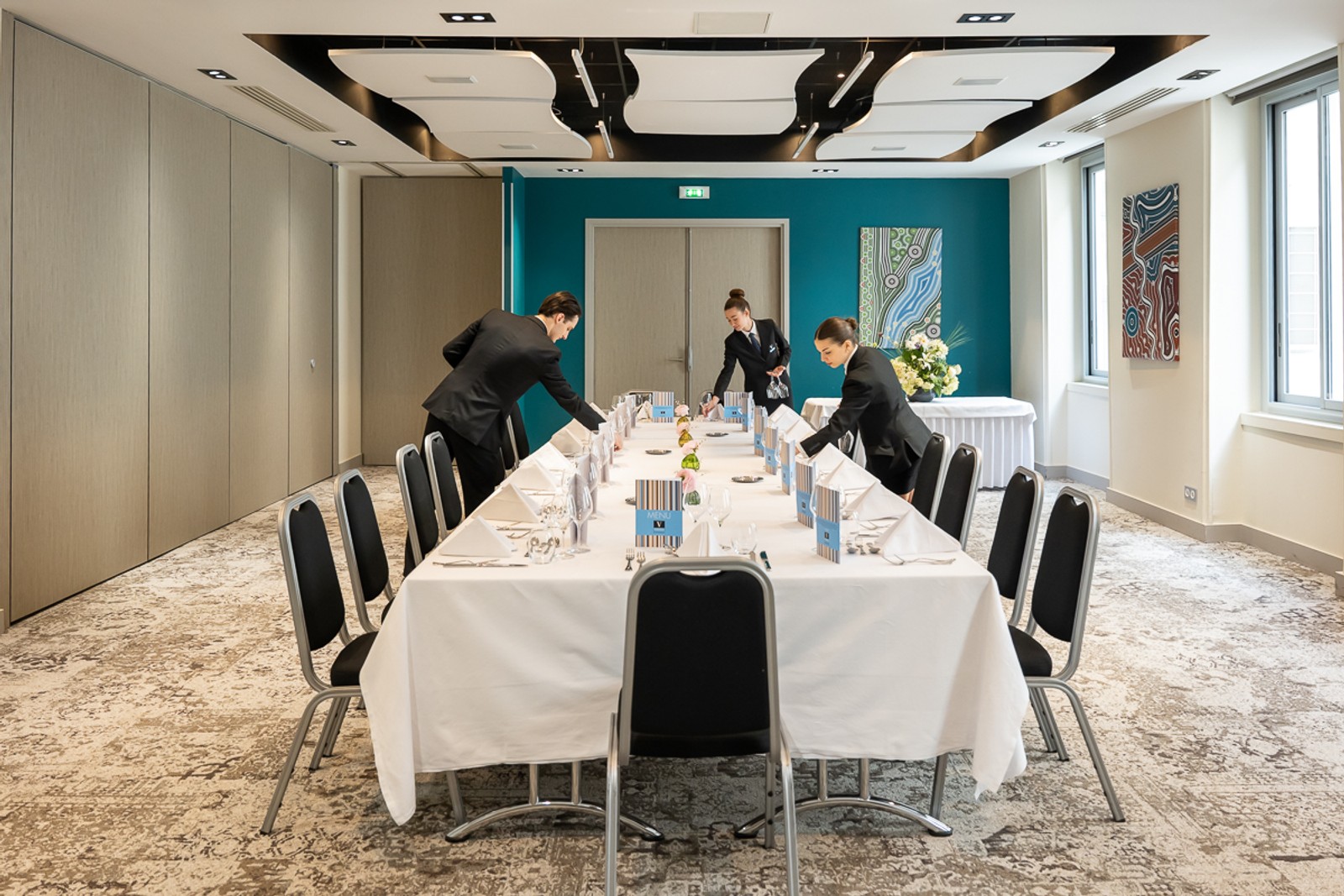
Campus France places private higher-education tuition broadly at €6,000–€18,000 or more per year. Current hospitality examples sit toward the upper end: Vatel Paris lists €12,900 for first-year Bachelor study plus a €450 annual registration fee, while FERRANDI Paris lists €14,100 per year for its Bachelor in Food & Beverage and Hospitality Management. Le Cordon Bleu Paris lists €23,600 for EU students and €26,100 for non-EU students entering its 2026 Bachelor of Science in Culinary Design Management.
| Programme type | Indicative 2026 tuition | Important caveat |
|---|---|---|
| Public Bachelor, EU/EEA/Swiss | €178 | Some programmes and institutions use different rates |
| Public Bachelor, non-EU differentiated rate | €2,902 | Exemptions and waivers may apply |
| Private hospitality Bachelor | Often €12,000–€15,000+ | Registration, uniforms, equipment or trips may be extra |
| Specialist culinary or premium programme | Can exceed €20,000 | Compare duration and what the fee includes |
| Apprenticeship | Tuition may be employer-funded | Eligibility and work-authorisation rules apply |
Before comparing prices, use our guide to the best tourism and hospitality schools in France to identify the correct qualification and campus.
Housing: The Expense Most Likely to Break the Budget
Campus France’s student-cost guide places monthly CROUS housing at roughly €200–€500 in Paris and €150–€450 in other regions. Private student residences are approximately €500–€900 in Paris and €280–€600 elsewhere. Independent studios can cost more, especially close to central Paris or the French Riviera.
Budget for the security deposit, home insurance, possible agency fees, electricity, internet and basic household purchases. International students may also need a guarantor; Visale can help eligible applicants. Some students qualify for housing assistance through the CAF, but eligibility and the amount depend on the individual file. Never build a budget that assumes aid before it is approved.
Start early: Campus France’s official housing guide explains CROUS and private-residence options.

Food and Transport: Small Daily Costs Become Annual Numbers
Food
Campus France estimates average food spending at about €300 per month, while its student-cost sheet suggests groceries of roughly €200–€250 in Paris and €150–€200 elsewhere. A standard university-restaurant meal is €3.30; eligible scholarship students can access the €1 meal.
Transport
For 2026–2027, Île-de-France Mobilités prices the imagine R student pass at €401.30 before possible local subsidies. Campus France estimates annual student transport outside Paris at approximately €250–€300. Students under 26 may also qualify for regional, rail and city-bike reductions.
Health Insurance, the CVEC and Other Compulsory Costs
The Contribution de vie étudiante et de campus (CVEC) is €105 for 2026–2027 for students in initial higher education who are liable to pay it. Certain groups—including some scholarship holders, exchange students and programmes based in secondary schools—are exempt or outside its scope.
Registration with French Social Security is free. Non-European international students generally register through the dedicated Assurance Maladie portal; EU, EEA and Swiss students may use a valid European Health Insurance Card. Complementary insurance, or a mutuelle, is optional but can reduce out-of-pocket costs.
Also budget for visa formalities, home insurance, a phone plan and setup costs. Our international-student application guide explains admission and immigration.

Scholarships, Apprenticeships and Student Discounts
Campus France’s Campus Bourses guidance points students toward funding from the French government, embassies, foreign governments, regions, foundations, Erasmus+ and individual institutions. Eligibility depends on nationality, level, subject and the funding body; most awards require an early application.
Apprenticeship can transform the economics of a private programme because tuition may be covered and the student receives a salary. It is not a universal solution: the course must offer the route, the employer must agree and international students must satisfy employment rules.
- Ask the school about merit awards, early-payment reductions and emergency funds.
- Check CROUS and Campus Bourses before assuming you are ineligible.
- Use student rates for transport, university dining, museums, cinema and sport.
- Compare tuition inclusions: uniforms, equipment, field trips and examination fees.
- Treat every unconfirmed scholarship as €0 in the first version of your budget.

Estimated Annual Budget for Tourism and Hospitality Students
The following scenarios are OUISTARS planning estimates built from official fee and living-cost ranges. They are designed as a stress test, not a quotation.
| Student profile | Tuition and mandatory fees | Living and setup budget | Estimated annual total |
|---|---|---|---|
| EU student, public programme outside Paris | About €283 plus programme extras | €8,000–€12,000 | €8,300–€12,500 |
| Non-EU student paying differentiated public Bachelor fees outside Paris | About €3,007 plus extras | €8,000–€12,000 | €11,000–€15,000 |
| Private hospitality Bachelor in Paris | Approximately €13,000–€15,000+ | €12,000–€18,000 | €25,000–€33,000+ |
| Premium specialist programme in Paris | €23,000–€35,000+ | €12,000–€18,000 | €35,000–€53,000+ |

The Seven Questions to Ask Before Paying a Deposit
- Is the quoted fee for one year or the entire programme?
- Does it include registration, examinations, uniforms and equipment?
- Can the institution change tuition in later years?
- Is internship income guaranteed, optional or unpaid?
- Which campus will you attend, and what does housing cost there?
- What is the refund policy if a visa is refused?
- Which scholarships or waivers are confirmed in writing?
Judge the full cost against the qualification, internships and career path—not tuition alone. See our guide to building a successful hospitality career.
International students arranging their first arrival can review oui stars’ France destination support. Any transfer or arrival service should be budgeted separately and has no connection with school admission, scholarships or visa decisions.
Frequently Asked Questions
How much is a hospitality degree in France?
Public tuition can be a few hundred euros for eligible EU students or several thousand euros under differentiated non-EU rates. Private hospitality Bachelors often cost around €12,000–€15,000 or more per year.
Is it cheaper to study hospitality outside Paris?
Usually. Tuition may be similar across campuses, but housing and daily expenses are generally lower outside Paris and the largest metropolitan areas.
Do international students get free healthcare in France?
Registration with French Social Security is free for eligible students, but it does not reimburse every expense. A complementary policy may reduce the remaining cost.
Can international students receive housing assistance?
Some can qualify for CAF housing assistance, depending on their residence, lease, resources and immigration status. Do not count it as income until the application is approved.
Can an apprenticeship make a private hospitality school cheaper?
Yes. In an eligible apprenticeship programme, tuition may be funded and the student earns a salary. Programme availability, employer selection and work-authorisation rules still apply.
Official Sources
- Campus France — Tuition fees in France, updated June 2026
- Campus France — Preparing a student budget
- Campus France — Student housing in France, updated June 2026
- Étudiant.gouv — 2026–2027 CVEC
- Assurance Maladie — International students in France
- Île-de-France Mobilités — 2026–2027 student pass
- Vatel Paris — Official tuition page
- FERRANDI Paris — Official Bachelor tuition
- Le Cordon Bleu Paris — Official 2026 Bachelor fees