













A short story
Oscar did not like aeroplanes, whatever Clara said. She posted photographs of him beside the window and wrote that he was ready for another adventure. He spent the flight pressed against her knees.
They left her Paris apartment on Monday morning. In the car to Le Bourget Airport, he slept on her coat, waking when they pulled up outside the private terminal. Marc had gone ahead with the luggage.
On board, Oscar abandoned his leather seat and climbed onto her lap before the door closed. She took off her sunglasses and rested her cheek against his warm head.
“One hour,” she told him. “I promise.”
He was an apricot toy poodle with black eyes and a stubborn tuft above his nose. At five, he had travelled with her more than any human had. He knew the sound of her suitcase zip, hated its wheels in the corridor and could find her in a crowded room before she called his name.
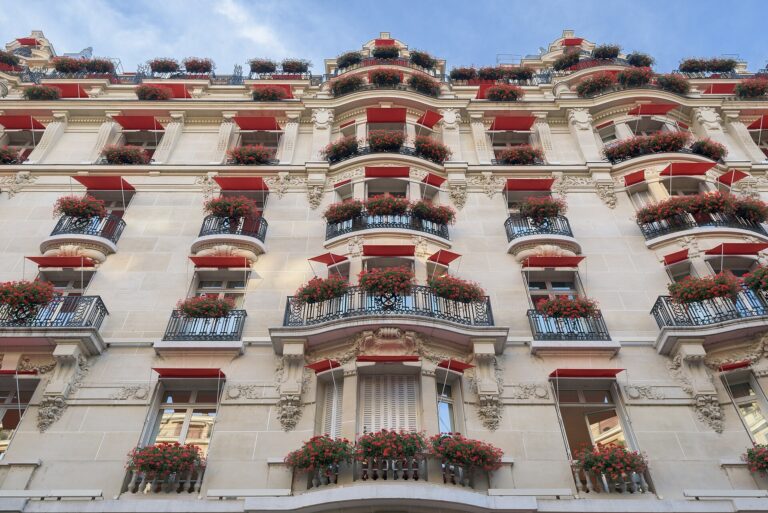
After landing at Nice Côte d’Azur Airport, she carried him to the car. Their suite at the Miralune faced the sea. She had chosen Nice as a base, somewhere to return between excursions.
The receptionist greeted Oscar by name.
“His bed arrived this morning, madame.”
Behind her, Marc put the cases on a trolley. He had been her driver for three years. He knew her coffee order, which entrance she preferred and where she kept Oscar’s pet passport.
“That one knows how to live,” he said, looking at the dog.
“He knows how to be loved.” She bent to unclip the lead.
A photograph at noon
On Tuesday they went to Monaco. Beside a restaurant window in Monte Carlo, Oscar watched a napkin’s shadow move across the table while Clara finished a call from Paris. By the time she put the phone away, a waiter had brought him water without being asked.
On Wednesday morning they boarded a yacht bound for Saint-Tropez. She left her phone in the cabin. For once there was nothing she needed to arrive in time for.
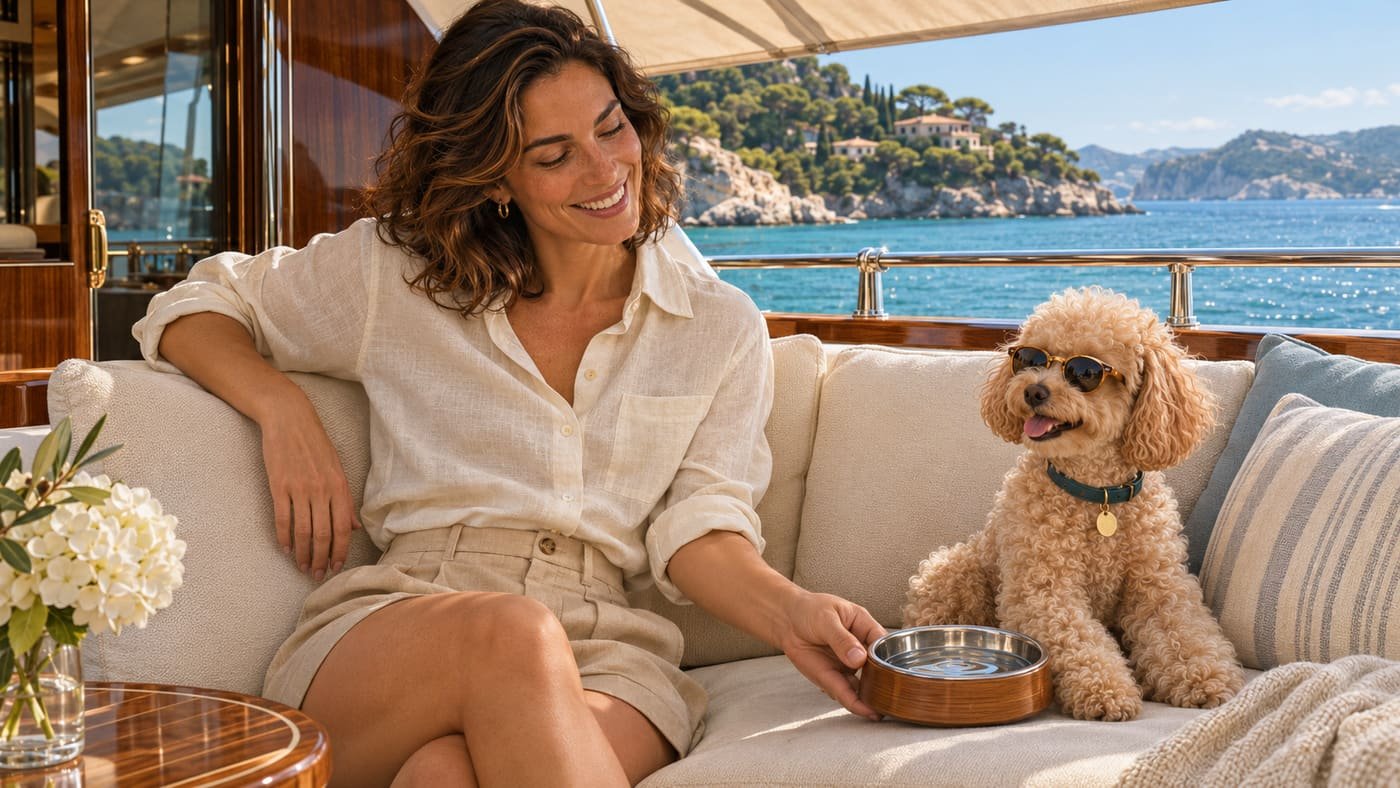
When they anchored in a quiet bay, she took off her linen shirt and settled in the shade in a black bikini. Oscar hurried over to claim the space beside her thigh.
She put a little pair of sunglasses on him, bought at a shop by the harbour. He held still for two seconds, then pushed them off with his nose.
She laughed and took them away.
“All right. We won’t be famous today.”
She set down his water bowl. Behind him the sea glittered; a crew member folded towels without a sound. She took one photograph. His ear was inside out, his mouth open, her hand caught at the edge of the frame. It was not their most flattering picture. She kept it.
In Saint-Tropez they walked beside the harbour. Oscar stopped outside a closed shop to study his reflection. Clara told him they had come all this way for him to meet himself.

When Marc arrived to drive them back to Nice, Oscar was asleep on the beach bag. He lifted him easily.
“Looks as though I’m part of the family now.”
“You know you are.”
Seven minutes
On Thursday evening, in the suite in Nice, Clara was searching for an earring beneath the dressing table when her phone rang. The car was at the side entrance. The other guests had already arrived.
Oscar sat by the door. Whenever she picked up her bag, he stood.
“Not tonight, darling.”
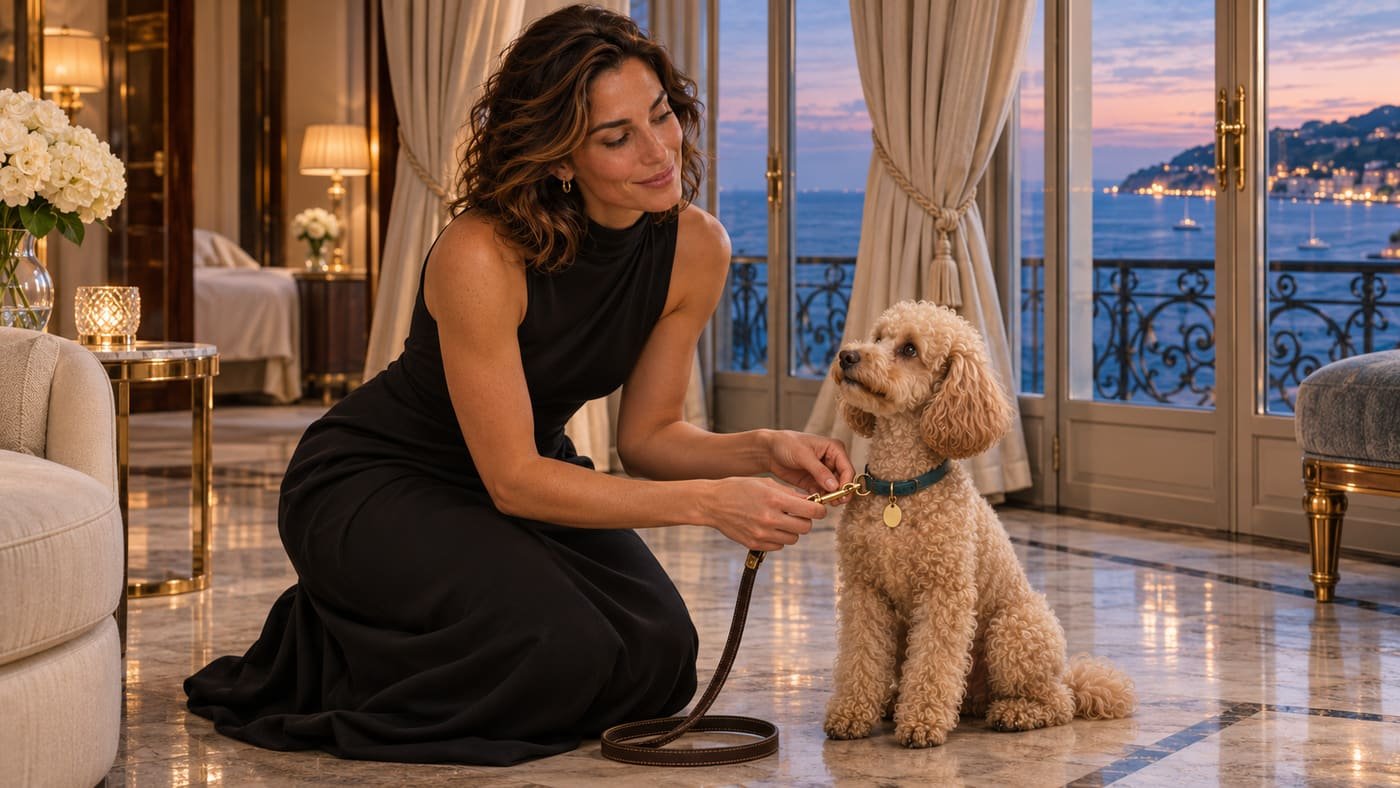
When Marc came up, she asked him to give Oscar a short walk and bring him back to the suite. She handed over the lead, fastening the clip herself, as she always did.
“Ten minutes. His dinner’s on the table.”
“Don’t worry.”
At 8.17, as another car took her to dinner, Marc’s name appeared on her screen.
First she heard his breathing.
“Clara. Oscar got away.”
The words made no sense. She asked him to say them again.
A bicycle had come past. Oscar had lunged. The clip had opened. Marc spoke quickly, naming streets she could not picture.
“Where are you?”
“Near the entrance. I’m looking.”
“Stay there.”
When she returned, the lead was wound around his hand. She took it and pressed the clip with her thumb. It opened and closed perfectly.
She said nothing.
The hotel stays awake
They searched the neighbouring streets, the garages, the spaces beneath parked cars. The receptionist who had greeted Oscar now repeated his name over the telephone. Clara walked from corner to corner in her evening dress, her shoes in one hand, calling.
Before dawn she sat on the suite’s floor. His dinner bowl was untouched. Beneath the curtain she found a small cloth toy and put it in her lap.
In the morning she reported him missing and posted his photograph with a contact number. At first she chose the yacht picture. Then she changed her mind and cropped another picture to show his face. She wanted people to remember the dog.
Marc suggested a large reward.
“Ten thousand? Everyone would look.”
She looked up at him.
“You look too.”
At noon a message arrived from an unknown number.
Your dog is fine. Twenty thousand. No police.
Below it was a photograph of Oscar on a grey floor. His collar was on. His right ear had folded backwards.
She enlarged the picture until the colours broke apart. Beside him lay a black strap with a red stripe.
She had seen it before.
The man beneath the awning
On Friday evening a newsagent called. He had seen a dog like the one in the photograph near the harbour, with a man sitting beneath a closed shop’s awning.
Clara went with a woman from reception. She asked Marc to stay behind. She did not want to explain why, even to herself.
The man sat on a folded blanket with a paper cup beside him. Oscar was asleep between his feet on an old woollen jacket.
For a moment Clara felt no joy. What she felt was a sudden, sharp anger.
“That’s my dog.”
The man opened his eyes. At her voice, Oscar stirred, scrambled to his feet and skidded across the paving towards her. She was on her knees before he reached her. She could not tell which of them was shaking harder.
The man waited until the dog stopped licking her face.
“Thought somebody would be looking for him.”
She looked at the cup, the blanket, his cracked hands.
“Where did you find him?”
“Behind the restaurants. Trailing a bit of rope. A white van came out of the passage, and then I saw him between the cars.”
He pointed towards the end of the harbour.
“Wouldn’t leave me alone. I was going to take him somewhere to have his chip checked in the morning. I’m Luc.”
He gave her a small bag containing Oscar’s collar.
“Too tight. I took it off.”
She remembered the photograph. The folded ear. The grey floor. The red stripe on the black strap.
The receptionist said quietly, “Let’s call the police.”
What the picture kept
At the police station Oscar slept on Clara’s coat. She kept one hand on his back while setting her phone in front of the investigator.
First she opened the ransom photograph. Then an older picture taken at Le Bourget while they waited to board: the car boot open, two cases held in place by a black strap with a red stripe.
“That’s his,” she said.
The investigator asked her to leave the phone on the table.
“Have you told him about the message?”
She shook her head.
“Or that I’ve found Oscar.”
She was afraid of hearing Marc’s name, as though suspicion might hurt less while nobody said it aloud.
On Saturday morning the investigator asked her to come to a small room at the hotel. A screen showed footage from the side passage. 8.13pm. Marc walking Oscar. Marc stopping beside a white van. A man opening the door. Marc bending, lifting the dog and handing him over. No bicycle. No slipping lead.
Clara asked to see it again. The second time she did not watch Marc. She watched Oscar turn his head towards the hotel before the door closed.
Just ten minutes
Marc was in the lobby when she came out. He stood at once.
“Have they found him?”
She did not answer. Behind her, two plain-clothes officers approached.
He looked at them, then lowered his voice.
“You shouldn’t have brought the police into it. Twenty thousand would have settled everything.”
For a moment the lobby fell still around her.
“I never told you the amount, Marc.”
He opened his mouth. Nothing came out.
She was looking at his hand. The hand that had lifted Oscar off the beach bag. The hand that had held the lead while she walked barefoot through Nice calling his name.
“I said ten minutes. His dinner was on the table.”
“I was going to bring him back.”
“I know. Once I’d paid.”
One of the officers asked him to come with them. Marc moved, then turned, as if she might still say something to help him. She stayed where she was until he had gone.
They found his accomplice soon afterwards. The recordings identified the van; the messages revealed their agreement. The man had taken and sent the photograph of Oscar, then left the van door ajar while moving some equipment. The dog slipped into the street. When the man could not find him, he went on demanding the money.
The details reached Clara one by one. There had been no frantic search, no faulty clip. Marc had used what he knew about her: she would pay, she trusted him, and Oscar would go with him without a struggle.
An address for Luc
She returned to the harbour on Sunday. Luc saw them coming and whistled. Oscar pulled so hard on the lead that Clara laughed for the first time since Thursday.
She put a bag on the bench. Inside were his jacket, washed and folded, and an envelope containing the reward.
He looked from the envelope to her.
“Didn’t know there was one when I picked him up.”
“I know. I was going to pay whoever brought him back.”
She did not push the bag closer or stand to leave. She let him take his time. Eventually he slipped the envelope into his jacket pocket.
He told her he had spent years on fishing boats, then repairing engines. He had been ill, lost a job he expected to return to, and spent longer without a home than he had imagined. Whenever he came back to the harbour, somebody recognised him and somebody else pretended not to.
“What do you want to do now?”
“Rent a room first. Got an old colleague’s number. Says they could use a hand at the workshop. But I need somewhere to wash and leave my clothes.”
She took out her phone, then stopped.
“Would you like me to call anyone?”
He shook his head and smiled.
“I’ll call tomorrow.”
When she stood, Oscar had stretched out on a corner of the blanket. Luc cut off a small piece with an old pair of scissors and shook it out before giving it to her.
“Take it. Seems he’s booked his place.”
Before leaving she apologised for the way she had spoken when they first met.
He looked at Oscar.
“You were frightened. He knew me before you did.”
Back to Paris
On the flight from Nice to Le Bourget, Clara put Oscar’s bag beneath the seat. He climbed onto her lap and turned his back on the window.
The yacht photograph appeared on her phone: the little sunglasses beside him, his ear inside out, her hand at the edge of the frame. She almost posted it. Instead she put the phone away and spread the piece of blanket across her knees.
Oscar turned once and lay down. As the aircraft began to move, his small paw settled on her hand.
At home in Paris she let him keep the cloth. He carried it to the rug beside her bed and went to sleep.
Six weeks later a photograph arrived from a number she had not saved. A small window. A coffee cup. Work boots by a door.
I’ve got an address now. Back at the workshop too. Luc.
She called instead of writing. Oscar kept lifting his head at the voice coming from the phone.
Months later, Clara sat in court while Oscar waited outside with a friend. This time she heard the whole account, from the agreement to take him to the demand sent after he had escaped. Marc and his accomplice were convicted and sentenced to prison.
As she left, Marc asked to speak to her. She paused, then said, “It’s over, Marc.” She had no more questions for him.
That winter they returned to Nice. Luc waited at the harbour in the same jacket. This time it smelled of soap and engine oil. Oscar recognised him before they reached him.
Clara handed over the lead. Luc took it, and they sat on the bench overlooking the boats. They talked about work, the sea and the rain she had left behind in Paris.
When it was time to go, Oscar was asleep between them. They waited until he woke. Luc stood, stroked his back and handed the lead to Clara.
“Coffee’s on me next time.”
“It’s a deal.”
They walked towards the car. After a few steps Oscar stopped and looked back. Luc was still beside the bench, waving. Clara let him run back for one last goodbye, then called his name. He came bounding towards her, his ears rising with every step.
That night he returned to the rug beside her bed in Paris. She placed the piece of blanket next to him and switched off the lamp. There was no message waiting for an answer, no call she was afraid to miss. She reached down from the bed. He touched her hand with his nose, then went to sleep.
Story illustrations.
OUISTARS Travel — When Oscar Disappeared — 22 November 2026 — When Oscar Disappeared
Cite this article
When citing the text or analysis, include the magazine, title, original URL and publication date. Preserve the stated attribution of statistics and photographs.
OUISTARS Travel — When Oscar Disappeared
Published: