












Yes, you can visit the Élysée Palace—but not as you would the Louvre. France’s presidential residence is a working seat of state, protected accordingly and normally closed to casual tourism. Public access is exceptional. In 2026, the principal route inside is the European Heritage Days weekend, with advance registration, a named invitation and identity checks. The practical distinction matters: the Palais de l’Élysée itself opens on limited occasions; the Maison Élysée, directly opposite, offers a free presidential museum throughout the year.
This guide separates those two experiences, explains the current 2026 booking process and gives travellers a durable plan for future visits. Details marked “2026 update” are time-sensitive; the main advice remains year-independent.
The short answer: when can the public enter?
For most independent visitors, the realistic opportunity to enter the palace is during France’s annual Journées européennes du patrimoine, usually held over a September weekend. The Presidency announces the dates and opens an official booking platform shortly beforehand. Places are limited and walk-ins are not accepted.
Other access exists for official guests, school or association groups and special events, but it is not a conventional tourist product. There is no everyday ticket desk, no standard daily opening schedule and no legitimate commercial “skip-the-line” ticket for the palace. Anyone selling guaranteed routine entry should be treated with caution.
How to book, step by step
- Go only through the current announcement on elysee.fr. It sends visitors to the official event platform.
- Select 19 or 20 September 2026 and an available time.
- Enter each visitor’s identity details carefully. Do not use nicknames that differ from the ID document.
- Register no more than six participants under the same email address.
- Watch the inbox and spam folder for the individual invitations. A registration acknowledgement alone should not be assumed to guarantee entry.
- On the day, carry the invitation and identification, and use only the meeting point printed on the ticket.
The visit is presented as free public heritage access. The official 2026 page mentions a paper guide sold for €7, but that optional purchase is not an admission fee.
What will visitors see in 2026?
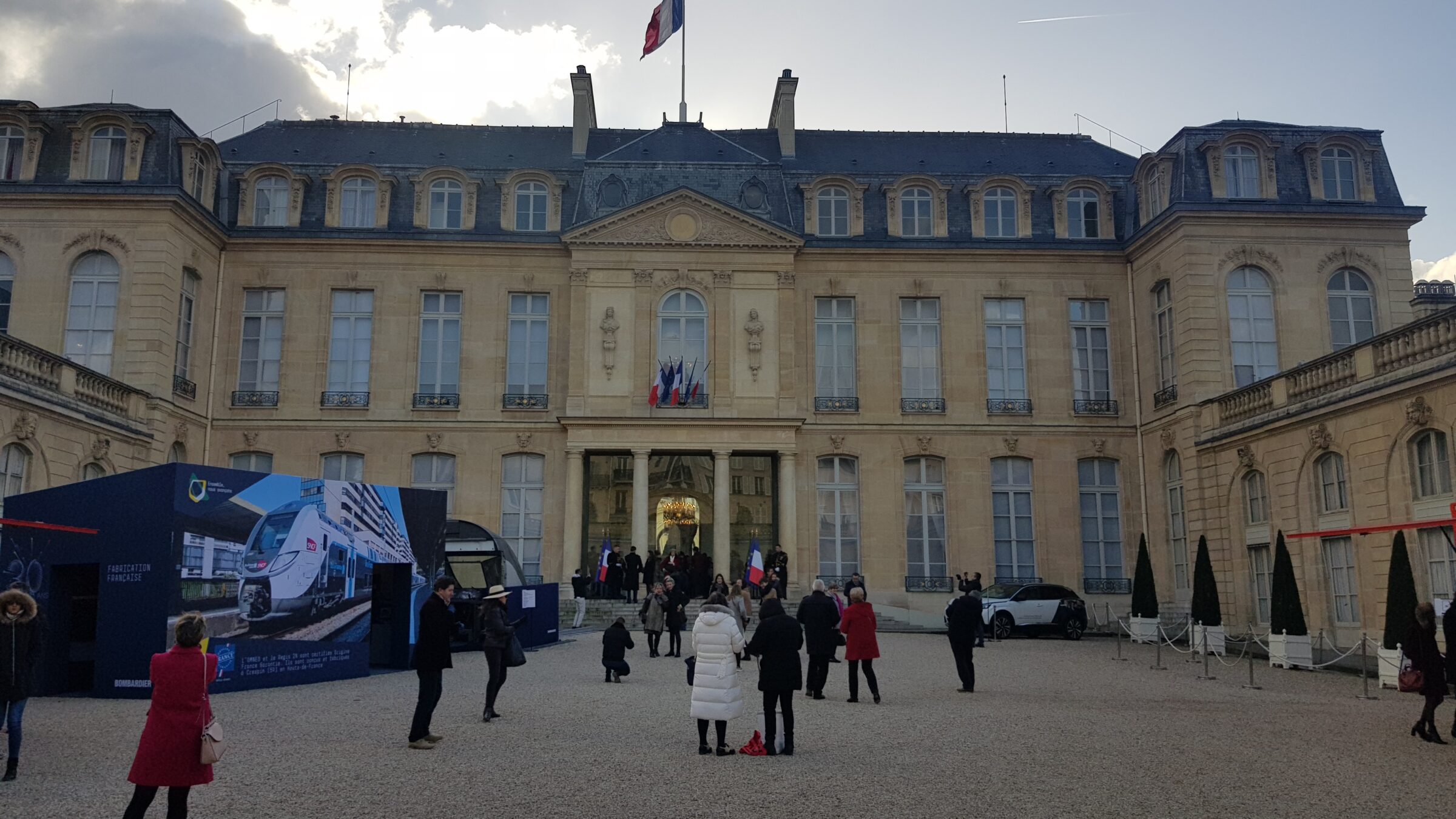
The announced route gives access to places normally encountered through televised state ceremonies: the President’s office, the Salle des Fêtes used for receptions and state dinners, the Cour d’Honneur where foreign leaders are welcomed, and the park. Access to individual rooms can still be adjusted for security or operational reasons.
The 2026 programme includes “Regards sur l’Élysée,” an exhibition by twelve press and agency photographers; immersive views of changes to the palace interiors; a retrospective covering a decade of restoration work; presidential vehicles in the Cour d’Honneur; and a presentation of state table arts. The Republican Guard orchestra is also due to accompany the route. These are announced programme elements, not a promise that every visitor will spend equal time in every space.
Why the palace is not a normal museum
The Élysée is simultaneously heritage, workplace, diplomatic stage and home of the French presidency. The building originated as the Hôtel d’Évreux: Louis-Henri de La Tour d’Auvergne bought land on the Faubourg Saint-Honoré in 1718, and the residence was completed in 1722. Over three centuries, owners and occupants—from Madame de Pompadour to Napoleon and the presidents of the Republic—altered its rooms, gardens and political meaning.
That living function explains the narrow opening window. A visitor is entering an operating institution, not merely an architectural monument. Schedules, entrances and the route may respond to state business. The sensible mindset is closer to attending a secured public institution than visiting a conventional attraction.
Security and documents: what to prepare
Use the exact identity shown on your passport or national identity card. Every adult should have their own valid identification; families should follow the document instructions supplied with their invitations. Avoid large luggage, sharp objects and anything that may delay screening. The latest ticket conditions—not an old blog post—are authoritative on permitted items, accessibility and arrival instructions.
Allow a generous margin around the slot. The Faubourg Saint-Honoré is a high-security area and street access may be filtered. Do not assume that a taxi can stop at the gate. Photography may be allowed in parts of the route, but staff instructions always take precedence.
Accessibility and travelling with children
Heritage openings in recent years have provided an accessible route, but visitors should verify the 2026 conditions attached to the booking and contact the Presidency if assistance is required. Do not infer that every historic threshold or crowd-flow arrangement will be identical from one year to the next.
Children can experience the visit, but every participant must be registered. Families should bring the documents specified by the organiser and check current rules on pushchairs. A compact plan, snacks before arrival and realistic expectations about queues will make the day easier.
If palace tickets are gone: visit Maison Élysée
The best alternative is not a consolation prize. Maison Élysée, at 88 rue du Faubourg Saint-Honoré opposite the palace, is the Presidency’s permanent public-facing museum, café and boutique. At the time of this update it is open Tuesday to Saturday, 10:00–19:00, with free entry and no reservation for the self-guided museum.
The exhibition explains protocol, diplomatic gifts, presidential crafts and the people who keep the institution running. A Timescope immersive film follows the architectural evolution of the Hôtel d’Évreux from 1722 to today. The official site says an average museum visit lasts 30–45 minutes. There is no cloakroom, and large bags, pushchairs and scooters are not admitted; check the current practical-information page before setting out.
Guided visits at Maison Élysée
Since April 2026, the Maison has offered one-hour guided visits in French and English, normally Tuesday to Friday at 10:15 and 11:30, for groups of no more than 15. A special 09:00 visit on the first Tuesday of the month is designed around the ceremonial changing of the Republican Guard in front of the palace. These visits require a separate booking through the official partner, Manatour, and visit the Maison—not the secured palace interiors.
How to fit the Élysée into a Paris itinerary
The area rewards a broader walk: Place de la Concorde, the Madeleine, the lower Champs-Élysées and the gardens of the Petit Palais are close. If your palace slot is fixed, design the day around it rather than risking a cross-city transfer. Our Paris in one day itinerary helps with pacing; for a longer stay, see the three-day Paris plan and our guide to choosing a Paris hotel and neighbourhood.
Common mistakes that cost visitors their chance
- Confusing Maison Élysée tickets with entry to the palace.
- Buying from a reseller instead of following the Presidency’s link.
- Registering a nickname or incomplete identity.
- Assuming pre-registration equals a confirmed invitation.
- Arriving at the famous front gate rather than the access point printed on the ticket.
- Planning a tight train, flight or restaurant reservation immediately after a security-controlled visit.
Is it worth the effort?
For travellers interested in architecture, diplomacy or French political culture, yes. The value is not celebrity-spotting—the Presidency does not promise the President’s presence—but seeing how state power is staged in a building that remains in active use. The Cour d’Honneur, Salon Doré and Salle des Fêtes are familiar images; walking their sequence reveals the scale, choreography and craft behind them.
For visitors who cannot obtain the rare invitation, Maison Élysée delivers more context with less friction. The strongest itinerary may be both: the permanent museum first, then the palace if a Heritage Days invitation arrives.
OUISTARS recommendation
Treat September admission as a limited civic opening, not a bookable attraction. Register as soon as the official announcement appears, keep plans flexible and never pay a third party for an invitation. Outside the annual opening, choose Maison Élysée and the official virtual tour rather than wasting time at a closed gate. This is editorial advice based on the access model; dates and operating rules must always be reconfirmed with the Presidency.
Frequently asked questions
Can tourists visit the Élysée Palace?
Yes, regardless of nationality, when the Presidency opens registration to the public. In 2026 the main opening is 19–20 September and a named invitation is required.
Can I walk in without a reservation?
No. The 2026 announcement explicitly states that only invitation holders can enter.
Is Maison Élysée the presidential palace?
No. It is the free museum, café and boutique opposite the palace. Its guided tours do not constitute entry to the palace itself.
Where is it?
The palace’s official address is 55 rue du Faubourg Saint-Honoré, Paris 8th; use the entry point on the invitation. Maison Élysée is at number 88.
Sources and verification
- Presidency of the French Republic: European Heritage Days 2026 at the Élysée Palace, 3 September 2026.
- Maison Élysée: official opening information, checked 4 September 2026.
- Maison Élysée: practical information.
- Maison Élysée: guided-visit announcement, 9 April 2026.
- Élysée: 300 years of the Hôtel d’Évreux.