







EDITOR-IN-CHIEF FEATURE
Paris is not one monument, one season or one idea of luxury. It is the rare city in which stone, water, memory, style and ordinary life perform together,and where the same street can feel entirely new between breakfast and midnight.
At six in the morning, Paris does not announce itself. It gathers.
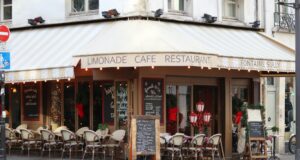
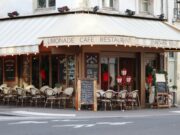
A delivery van pauses beside a pavement darkened by rain. The shutters of a corner café rise with a metallic rattle. Somewhere behind a pale façade, cups meet saucers; somewhere else, the first baguettes leave an oven. The Seine has the colour of brushed pewter. The Eiffel Tower is not yet a spectacle but a distant geometry in the mist. A woman in a long coat crosses an almost empty boulevard. A waiter arranges two rows of chairs so that every seat faces the street, because in Paris the street is always part of the room.
By nine, the same city has changed character. Sun may sharpen the limestone and draw black lines beneath the balconies. Buses, bicycles, taxis and immaculate chauffeur-driven cars negotiate the avenues. A florist carries colour into a grey doorway. Schoolchildren hurry past a hotel where a doorman in a perfectly cut coat opens the door for guests who have travelled through the night. Paris is working now, yet it is also staging itself,not artificially, not for a camera, but through an old discipline of proportion, ritual and attention.
What makes Paris impossible to replace? The honest answer is that no single element can do it. Remove the river, and the city loses its mirror. Remove the façades, and it loses its rhythm. Remove the cafés, and it loses its public living rooms. Remove fashion, art, restaurants, grand hotels, neighbourhood bakeries, the old stones and the audacity of the Eiffel Tower, and each absence would be profound. Yet even the complete inventory would not explain Paris. The magic is not held by the pieces. It occurs between them.
Paris has no single secret
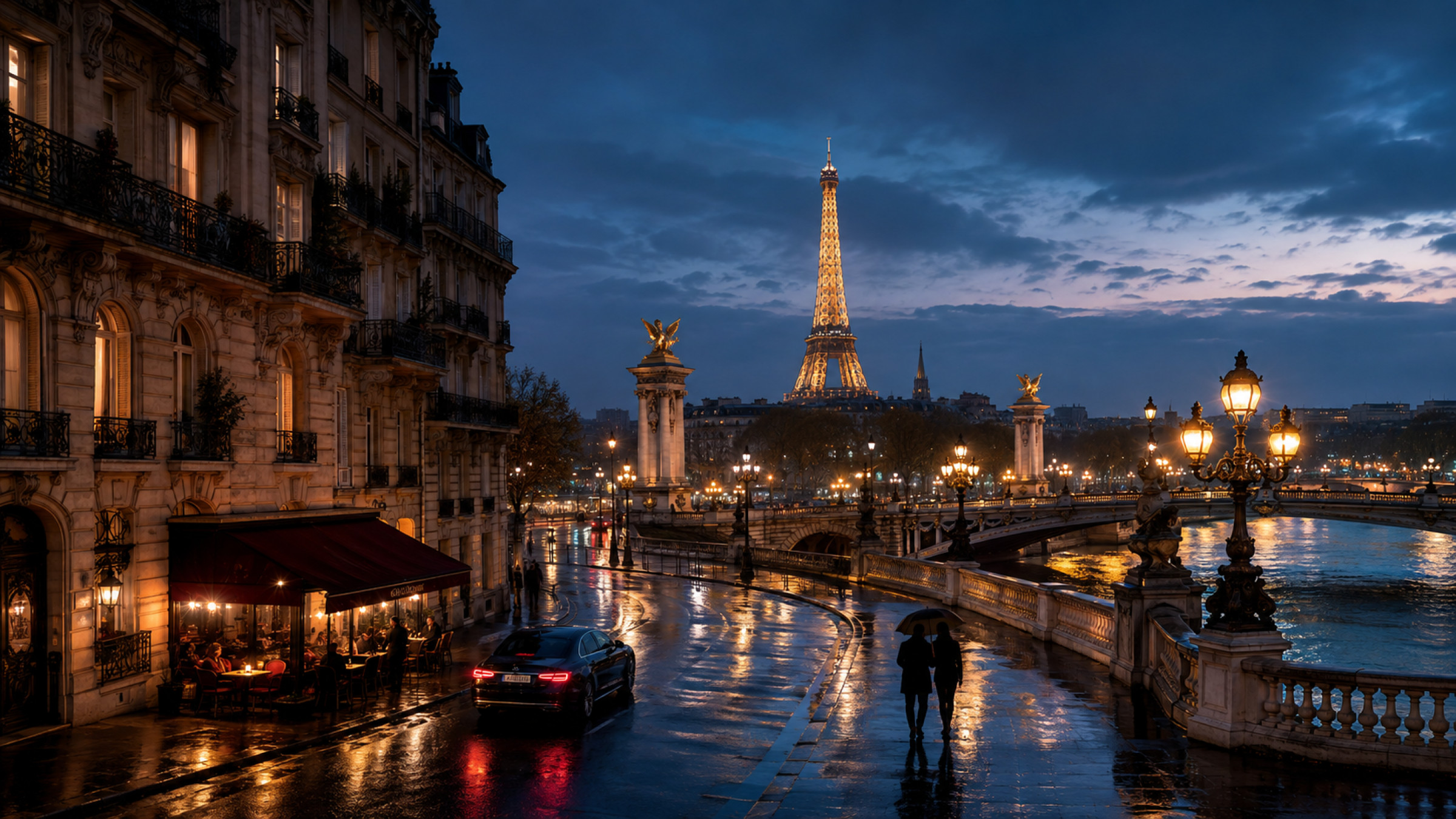
There are cities with taller skylines, warmer winters, wider rivers, more recent hotels and later nights. There are destinations designed around beaches, monuments or a single spectacular view. Paris resists that kind of summary. It can be majestic without asking you to spend anything: walk across Pont Alexandre III at dusk, sit on a public bench in the Jardin du Luxembourg, watch the light move across the Île de la Cité. It can also deliver an almost ceremonial form of luxury: a suite above an avenue, a couture appointment, a table lit as carefully as a stage, a car waiting beneath a gilded canopy.
The essential point is not that both worlds exist. Many capitals contain contrasts. Paris is distinctive because simplicity and grandeur remain visually, emotionally and physically close. A palace hotel may stand a few minutes from a modest market street. A museum masterpiece can be followed by a coffee at a zinc counter. Avenue Montaigne’s vitrines and a neighbourhood cheese shop belong to the same day, not to rival versions of the city. Paris does not force the visitor to choose between the elevated and the everyday. Its deepest luxury is the ability to move between them.
This is why a first visit can feel familiar and a tenth can still produce surprise. Images of Paris circulate everywhere, but recognition is not the same as experience. A photograph cannot reproduce the temperature beside the river, the smell of wet stone, the acoustic change when a narrow street opens into a square, or the sudden gold of a dome above traffic. Paris arrives through the senses and through sequence. One corner prepares the next.
The city Haussmann made legible,and the older city he did not erase
Any serious attempt to understand the visual power of modern Paris must reckon with Georges-Eugène Haussmann. According to the City of Paris, Napoleon III appointed him prefect of the Seine on 22 June 1853, with the mission of embellishing the capital. That word can sound cosmetic. The undertaking was anything but.
The Paris of the mid-nineteenth century was growing rapidly. The imperial programme sought to improve circulation, water, air and access across the city. New axes connected districts and railway stations; infrastructure developed above and below ground; public space became part of a system rather than a collection of accidents. The city’s own historical account describes a project designed to move people, goods, air and water, and notes that some 80,000 workers and artisans,from ironworkers to sculptors,were mobilised. Haussmann met Napoleon III weekly; state ambition, engineering, private contracting and enormous finance combined at a scale that changed not only streets but the idea of the modern capital.
The result is the Paris that the eye can read at a glance: long perspectives, disciplined cornice lines, pale stone, repeated balconies, avenues converging on monuments, trees softening the geometry. It is tempting to attribute every handsome façade to one man. That would be too easy. Architects, engineers, craftspeople, property owners and political decisions shaped the work, and Paris before Haussmann never disappeared. Nor was the transformation innocent. Demolition, displacement, debt and political control formed part of its history; contemporary criticism was real. Beauty in a living capital is often inseparable from power.
Yet the achievement remains immense. UNESCO’s account of Paris, Banks of the Seine observes that Haussmann’s broad squares and avenues influenced urban planning around the world. More important for the visitor, the boulevards created an extraordinary visual grammar. They let light travel. They make a distant monument appear as the conclusion to a sentence. They produce the cinematic Paris of arrivals: a car turns, a vista opens, a façade catches the sun, and for an instant the city seems composed for you alone.
But walk away from the grand axis and another Paris waits. The Marais folds into courtyards, hôtels particuliers and streets whose scale remembers earlier centuries. The Latin Quarter climbs and twists. On Île Saint-Louis, doorways and quiet façades face routes that seem protected from the speed of the metropolis. In passages, stairways and small neighbourhood squares, the older city interrupts the imperial plan. Our feature on Le Marais at twilight follows one of those transitions, when history, fashion and café life occupy the same few streets.
Paris is beautiful not because it is uniform, but because its periods remain in conversation. Medieval silhouettes, seventeenth-century ensembles, classical institutions, nineteenth-century boulevards and twentieth-century interventions share the river’s stage. The seams are visible. They give the city depth.
The Seine is not scenery; it is the city’s moving memory
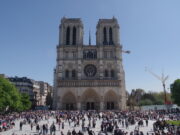
If the boulevards organise Paris, the Seine explains it. The city formed along its bend; bridges stitch together districts that think and feel differently. UNESCO’s protected ensemble runs from Pont de Sully to Pont d’Iéna and includes the Île de la Cité and Île Saint-Louis. Within that sweep, the evolution of Paris can be read from Notre-Dame and the Sainte-Chapelle to the Louvre, Les Invalides, Place de la Concorde, the Grand and Petit Palais, and the Eiffel Tower.
Those are monumental names. The river makes them intimate. Walk beside it on a cool morning and Paris feels private, almost withheld. At midday, the water throws light back onto stone. In summer, the quays become a long democratic salon: friends sit at the edge, runners pass, boats carry conversations beneath bridges. In winter, the trees are graphic and the sky lowers; the view becomes austere, elegant, almost monochrome. Rain dissolves distances and turns lamps into reflections.
The Seine also teaches the rhythm of Paris. It asks the visitor to slow down without becoming still. You walk, stop, cross, descend to the quay, climb again, lose one view and acquire another. No screen can recreate that continuity. The city is edited by movement.
The tower that Paris learned to love
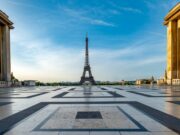
The Eiffel Tower proves that Parisian identity has never depended on freezing the city in time. It was built for the 1889 Exposition Universelle, completed in two years, two months and five days, and attacked before it was finished by prominent artists and writers. The Tower’s official history records both the technical feat and the controversy. What opponents saw as an iron affront became the sign by which much of the world recognises Paris.
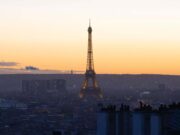
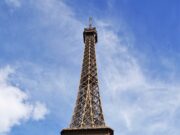
That transformation matters. Parisian beauty is not merely preservation; it is the capacity to absorb the audacious. The tower changes by the hour. In cloud it is a charcoal drawing. Against a hard blue sky it is engineering made lucid. Seen unexpectedly between buildings, it appears almost weightless. At night, its illumination does not replace the structure but gives it another life.
For a traveller, an Eiffel Tower view can be thrilling, but the phrase is more complicated than hotel marketing sometimes suggests. Angle, floor, distance, window and season all shape what is actually seen. Our practical guide to booking a Paris hotel room with the view you expect is about that precision. The symbol is universal; the experience is always particular.
A café chair is a front-row seat
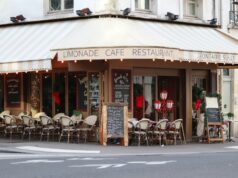
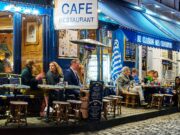
Parisian cafés are often described as institutions, which is true and insufficient. Their importance is not only historical. They give the city a social instrument: a place where one person can be alone without being isolated, where a short coffee can occupy ten minutes or a conversation can take an afternoon, where interiors and pavements negotiate with weather.
On a bright spring day, terraces extend into the city like open invitations. In rain, awnings gather the sound and windows fog at the edges. In winter, the interior becomes a refuge of mirrors, coats, steam and light. In high summer, a late table catches the cooler air after the stone has released the day’s heat. Nothing needs to be dramatic. A small round table, a cup, a newspaper, the theatre of people passing: Paris knows the power of a well-framed ordinary moment.
The same intelligence appears after sunset in restaurants. Candlelight,or its modern equivalent, carefully judged pools of warmth,reduces the city to a table and a face. Dining may be grand, with silver, choreography and a room carrying a century of memory. It may be a neighbourhood address with handwritten dishes and twelve tables. The atmosphere depends less on expense than on attention: how the light meets glass, how voices sit in the room, how time is allowed to lengthen.
Luxury here is a language, not a price tag
Parisian luxury begins with editing. The line of a coat, the grain of leather, the fall of a curtain, the spacing of flowers in a lobby: value is communicated through decisions that may be almost invisible. On Avenue Montaigne, couture and jewellery houses create a polished theatre of French style. Around Place Vendôme and rue du Faubourg Saint-Honoré, another constellation of craftsmanship, fashion and historic prestige takes form. Yet luxury loses its meaning if reduced to logos. Paris teaches that refinement is often an atmosphere of confidence and restraint.
The city’s historic grand hotels extend that language into hospitality. Their lobbies, staircases, bars and suites are not simply places to sleep; they are rooms in Paris’s cultural memory. They have welcomed artists, diplomats, designers, performers and generations of travellers. But no hotel name alone guarantees the right stay. Location, room category, light, outlook, service style and the purpose of the journey matter more than mythology. Our editorial guide to planning a romantic Paris stay that feels personal rather than packaged begins with that idea.
There is also another form of luxury: waking above a quiet side street, knowing the café below, walking to dinner, hearing the city rather than an itinerary. Paris can offer a palace suite and a perfectly simple room, a chauffeured arrival and an unplanned walk, an haute couture salon and a flea-market discovery. These are not contradictions to resolve. They are choices to compose.
Fashion makes the city look forward
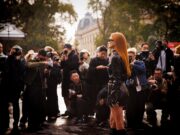
Paris carries history heavily, but it is not a museum of itself. Fashion prevents that. It brings deadlines, risk, provocation and renewal. During collection periods, the city changes tempo: cars wait outside courtyards; photographers gather; lobbies become meeting rooms; restaurants stretch late into the night. Designers use the inherited city as a backdrop, but the purpose is to propose what comes next.
French luxury is also an economic and cultural system, built from ateliers, skilled trades, image-making, retail, hospitality and global audiences. Our analysis of the business behind France’s major luxury houses looks at that machinery. On the street, however, fashion is more immediate. Paris gives people permission to notice silhouette, texture and bearing. A trench coat in the rain, evening clothes against pale stone, sneakers beneath an exacting coat: the city makes style visible because its architecture supplies such a disciplined frame.
After dark, Paris becomes less certain,and more itself
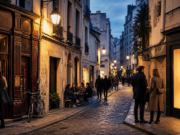
Twilight is Paris’s great transition. The stone loses detail and gains softness. Shop windows brighten. Headlights draw along wet avenues. The river turns from mirror to ink. From an upper-floor room, the roofs become a dark sea punctuated by domes, signs and windows. At street level, the city becomes a chain of invitations.
There is opera and cabaret, jazz below street level, theatre, dance floors, hotel bars, music behind an unmarked door and long dinners that erase the intended schedule. Nightlife in Paris is not one district or one dress code. It may be formal, bohemian, intimate, exuberant or deliberately discreet. The common element is possibility.
Even the elegant car belongs to this nocturnal image. A black saloon moving through Place de la Concorde, reflections sliding across its bodywork, is more than transport; it is a moving viewing room. With the right driver, the journey between hotel, restaurant and performance becomes part of the evening rather than an interval to endure. But the car should never imprison the visitor. Paris must also be walked. The best journeys understand when to protect time and comfort,and when to open the door and let the city take over.
There is no perfect Paris weather
Visitors often ask for the ideal month, imagining that Paris becomes fully itself only under blue skies and mild temperatures. I understand the wish. Sunshine gives the parks volume, the façades clarity and the terraces momentum. Yet the search for perfect weather can obscure a deeper truth: Paris has been built to transform with conditions.
Winter strips the branches and reveals architecture. Cold gives purpose to cafés, hotel fireplaces and long lunches. The early night makes the city luminous before dinner. Spring is movement,gardens returning, coats opening, a softness on the river,but it can change from shower to sun within an hour. Summer expands the day. Morning belongs to walkers, afternoon to shaded gardens and museums, evening to quays and terraces. Autumn brings the most cinematic palette: honeyed leaves, slate skies, polished pavements, the first return of heavier clothes and serious dining rooms.
Rain does not cancel Paris. It redraws it. Umbrellas establish a moving rhythm; stone darkens; gold details intensify; the street doubles itself in the pavement. Nor does heat destroy the city’s charm, though it changes the intelligent way to travel: earlier starts, slower afternoons, shaded routes and later evenings. There is no flawless season because flawlessness is not what Paris offers. It offers variation.
That is why our season-by-season Paris planning analysis treats weather, demand and atmosphere as trade-offs, not as a contest with one winner. The right Paris is the one that matches the traveller,and leaves enough space for the unexpected.
Romance is not a package
Paris is called romantic so often that the word risks becoming decoration. Romance is sold as petals, views and dinner reservations. Those can be beautiful, but they are not the source.
The romance of Paris comes from heightened attention. The city makes people look up, slow down, dress for an evening, choose a table, cross a bridge simply because the light is changing. It creates privacy in public: two people can feel alone on a crowded quay because the landscape gathers around them. It also welcomes the solitary traveller, the family, the group of friends, the artist, the delegate and the person arriving for a new beginning. Romance, in its broadest sense, is the feeling that life contains more possibility than it did yesterday.
This is why Paris can host an anniversary without becoming sentimental, a first journey without feeling naïve, and a return visit without repetition. The city lends ceremony to moments but does not complete them for us. We bring the meaning.
A world tourism capital because it contains worlds
Paris’s emotional power has economic scale. The latest full-year regional figures published by INSEE recorded 89.7 million nights in collective tourist accommodation across Île-de-France in 2025, with hotel occupancy in Paris at 80.1%. Statistics cannot measure enchantment, but they reveal the continuing breadth of demand: domestic and international visitors, first-timers and repeat guests, leisure travellers and business delegations all use the same city differently.
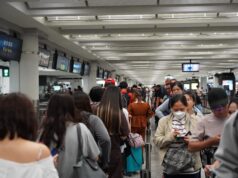
That diversity is part of the atmosphere. At breakfast in one hotel, a family studies a map while a fashion team discusses fittings and a couple prepares for the Louvre. On the pavement, a neighbourhood resident walks a dog past guests arriving from an airport. Languages overlap. Paris remains intensely French while serving as a meeting place for the world.
Popularity brings responsibility. The city is not a film set; people live here. To love Paris well is to respect its neighbourhoods, support craft and independent addresses as well as major institutions, use streets and public transport thoughtfully, and resist treating every beautiful doorway as content. The visitor receives more from Paris when Paris is allowed to remain real.
The art is not seeing everything; it is connecting the right things
No serious stay can contain all of Paris. The pressure to collect monuments often produces the least Parisian experience of all: constant transit, hurried meals, exhausted evenings and a camera roll more vivid than memory. A better journey has shape. It understands where you are staying, what deserves a reservation, when a car saves an hour, when a walk is the point, and how the city changes around a major event, a family’s needs or a group’s logistics.
As a France-based travel, DMC and concierge partner, oui stars helps individuals, couples, families, groups and delegations compose that shape: suitable hotel options by location, category and budget; reservations; airport reception and Meet & Greet; private chauffeur service; luggage and movement logistics; excursions; and concierge support from arrival to departure. The role is not to over-program Paris. It is to remove friction so that Paris has room to happen.
A well-placed hotel can return hours to a short stay. The correct room can change the emotional tone of a celebration. Coordinated airport reception can protect a tired family or keep a delegation moving. A driver who understands the day’s geography can turn transfers into continuity. These details are practical, but their effect is poetic: they preserve attention for the city.
Why Paris cannot be replaced
Paris is impossible to replace because replacing it would require more than copying its components. A boulevard can be imitated. A tower can be reproduced. Luxury shops can gather on another avenue; cafés can place chairs toward another street. What cannot be manufactured is the accumulated relationship among them: centuries of ambition and argument, the river’s geography, the scale of the stone, the memory inside hotels and theatres, the discipline of craft, the permission to linger, the constant tension between grandeur and ordinary life.
At midnight, return to the river. The day’s Paris has almost disappeared. The morning bakeries, sharp façades, museum queues, couture appointments and crowded terraces survive only as memory. Now bridges are pools of light. A boat moves sound beneath the stone. Somewhere a dining room is serving a final course; somewhere a pianist has begun another set; somewhere a guest opens a hotel window and hears the city before seeing it.
Tomorrow, rain may fall. Or sunlight may strike the roofs. Winter may make the avenues austere; summer may keep the sky pale until late. Paris will not promise the same performance, because repetition is not its magic. Every hour reveals another arrangement of beauty. Every season changes the emotional temperature. Every traveller enters a city already in motion and leaves with a version that belongs partly to Paris and partly to them.
I return, then, to the question with which we began. Is Paris’s power in Haussmann’s perspectives, the Seine, the Eiffel Tower, old streets, terraces, candlelit restaurants, fashion, palace hotels, nightlife, art, cars and light? Yes. And no. The answer is the atmosphere created when all of them coexist,when history does not silence the present, when luxury does not eliminate simplicity, and when the world’s most familiar city can still make one person stop at an unfamiliar corner.
Do not try to understand Paris only by reading about it. Come,and live it.
Osama Samaha
Editor-in-Chief, oui stars Travel
Editorial questions
What makes Paris different from other romantic cities?
Its singularity comes from the relationship among architecture, the Seine, public life, fashion, food, art and accumulated history. No single landmark explains the atmosphere.
Was Haussmann solely responsible for the Paris we see today?
No. Napoleon III set the political programme, while architects, engineers, artisans, financiers and many earlier and later generations shaped the city. Haussmann directed a decisive transformation from 1853 to 1870, but Paris is a layered work.
Is Paris best in sunshine?
Sunshine is beautiful, but rain, winter light, autumn colour and long summer evenings each reveal a different city. There is no universally perfect season.
Can Paris feel luxurious without a palace-hotel budget?
Yes. Some of its richest experiences,walking beside the Seine, sitting in a garden, observing a market street or crossing a bridge at dusk,are simple or free.
How should a first-time visitor experience Paris?
Choose a well-located base, reserve only what truly needs reserving, connect each day geographically and preserve time for walking and discovery.
Editorial sources: City of Paris, “Haussmann, l’homme qui a transformé Paris”; UNESCO World Heritage Centre, “Paris, Banks of the Seine”; official Eiffel Tower history; INSEE, 2025 Île-de-France tourism accommodation results. Facts checked 4 September 2026.