








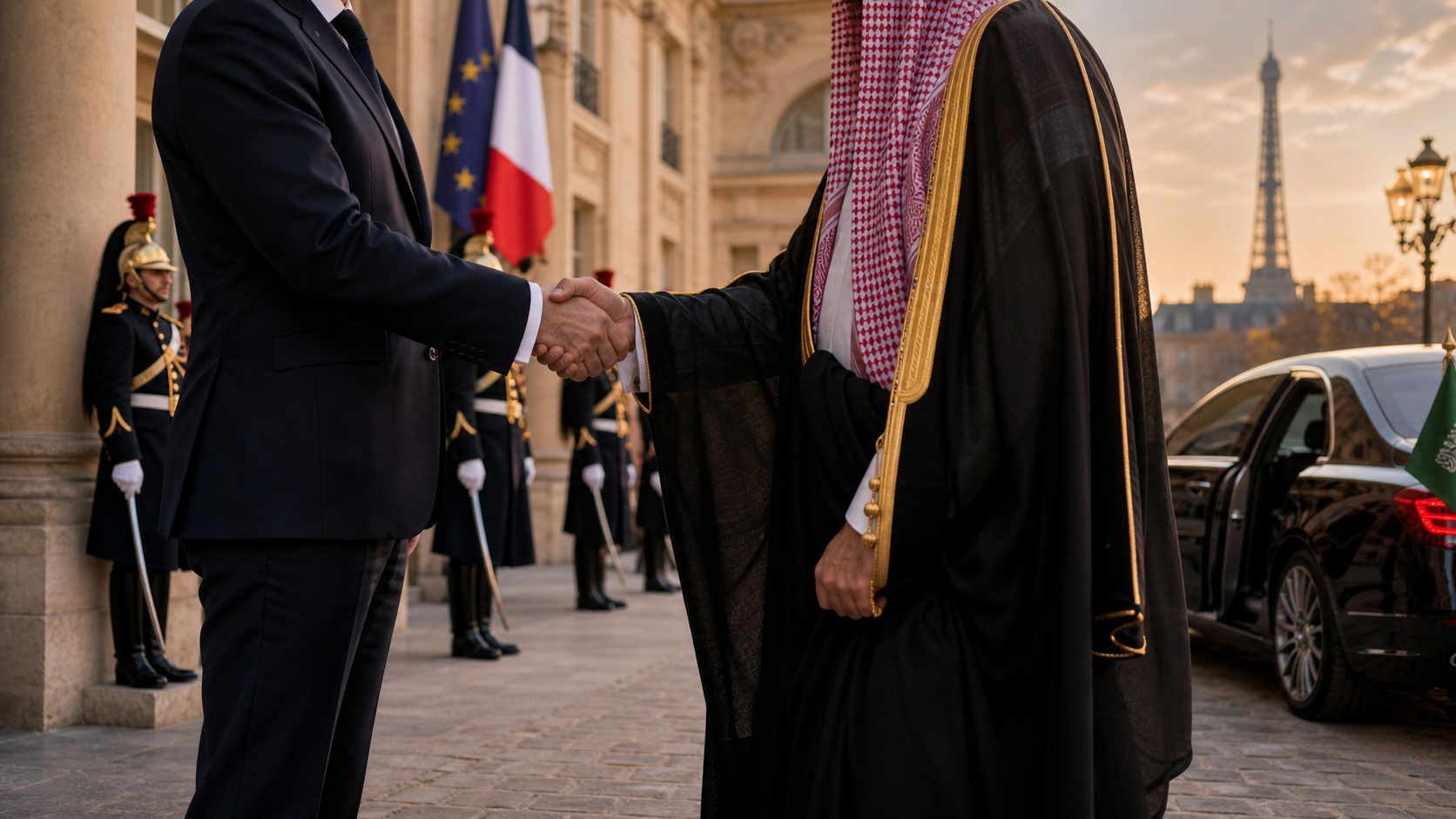
Paris does not often receive a visit that speaks simultaneously to diplomacy, luxury, culture and the future of travel. On 23 and 24 August 2026, Saudi Crown Prince and Prime Minister Mohammed bin Salman was scheduled to meet French President Emmanuel Macron in France. The immediate agenda is geopolitical and economic. Yet for Paris’s hotels, cultural institutions, luxury houses and destination professionals, the visit also raises a practical question: what might a deeper France–Saudi relationship mean for the visitor economy?
What is confirmed — and what is not
The Saudi Gazette reported the state visit for 23–24 August, while Reuters reporting carried by Zonebourse said the Élysée would receive the Crown Prince on those dates. An Élysée statement from 2024 referred to cooperation in culture, mobility and major events.
Important distinction: the visit is a fact. A direct effect on hotel occupancy, tourist arrivals, airline capacity or luxury sales is not established merely because leaders meet. Detailed outcomes should be read against official communiqués once issued.
Why a diplomatic visit can matter to a destination
Tourism sits alongside aviation links, cultural programming, events, business travel, education and investment. Paris is both a global destination and a working city: guests judge airport arrival, hotel welcome, restaurant reservation, museum access and evening mobility as one connected experience.
That is relevant for travellers planning multi-generational stays, private cultural programmes, high-value shopping or business delegations. But it should never become a stereotype. Saudi visitors, like all international visitors, are not one market segment and do not share one itinerary or spending pattern.
Paris’s luxury economy: opportunity, not an automatic dividend
France welcomed 102 million international visitors in 2025 and recorded €77.5 billion in international tourism receipts, according to Atout France. Paris’s luxury ecosystem—palaces, fashion, gastronomy, art, private retail and events—is unusually broad.
Closer France–Saudi ties could create more conversations around cultural exchange, delegations, events and travel partnerships. Yet potential becomes tourism only through execution: useful connectivity, reliable information, trained teams, secure and dignified public spaces, and a service culture that respects every guest.
OUISTARS Editorial Analysis: what deserves to be measured
OUISTARS believes the strongest test is not the photograph of a summit. It is what follows: verified new routes, cultural programmes, hotel investment, event calendars and visitor sentiment. A serious assessment should separate those indicators from optimistic headlines.
Luxury travel begins before a guest enters a suite. It begins with a clear airport arrival, predictable onward travel and well-coordinated hospitality. Where a programme has many moving parts, a local France destination-services partner can be useful without becoming the point of the journey.
A relationship with a visitor-economy dimension
The importance of the visit should not be reduced to shopping bags or hotel suites. It is a reminder that cultural confidence, mobility, events and quality of welcome are part of a relationship between societies. Paris has the assets; lasting value lies in a better, inclusive and dependable visitor experience.
Sources