















Travel Intelligence | France
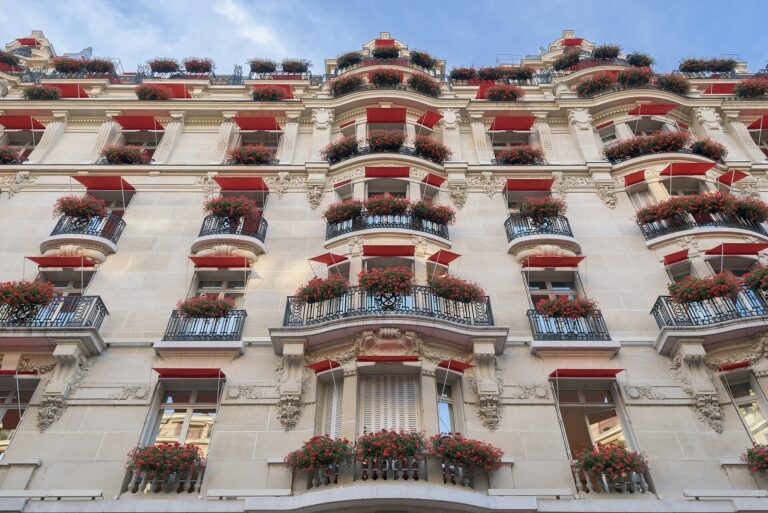
Five stars on a hotel façade look like a compact promise. In France, they are the outcome of a time-limited official classification. The word Palace passes through a narrower door altogether. Understanding the difference changes the way you read a luxury-hotel price.
Long before a guest opens the suite door, the hotel has been tested on things that seldom appear in a glamorous photograph: the information available before booking, the reception service, foreign languages, room equipment, luggage handling, accessibility and the management of water, energy and waste. A French star rating is not a crowd score. It is a regulated classification awarded after inspection.
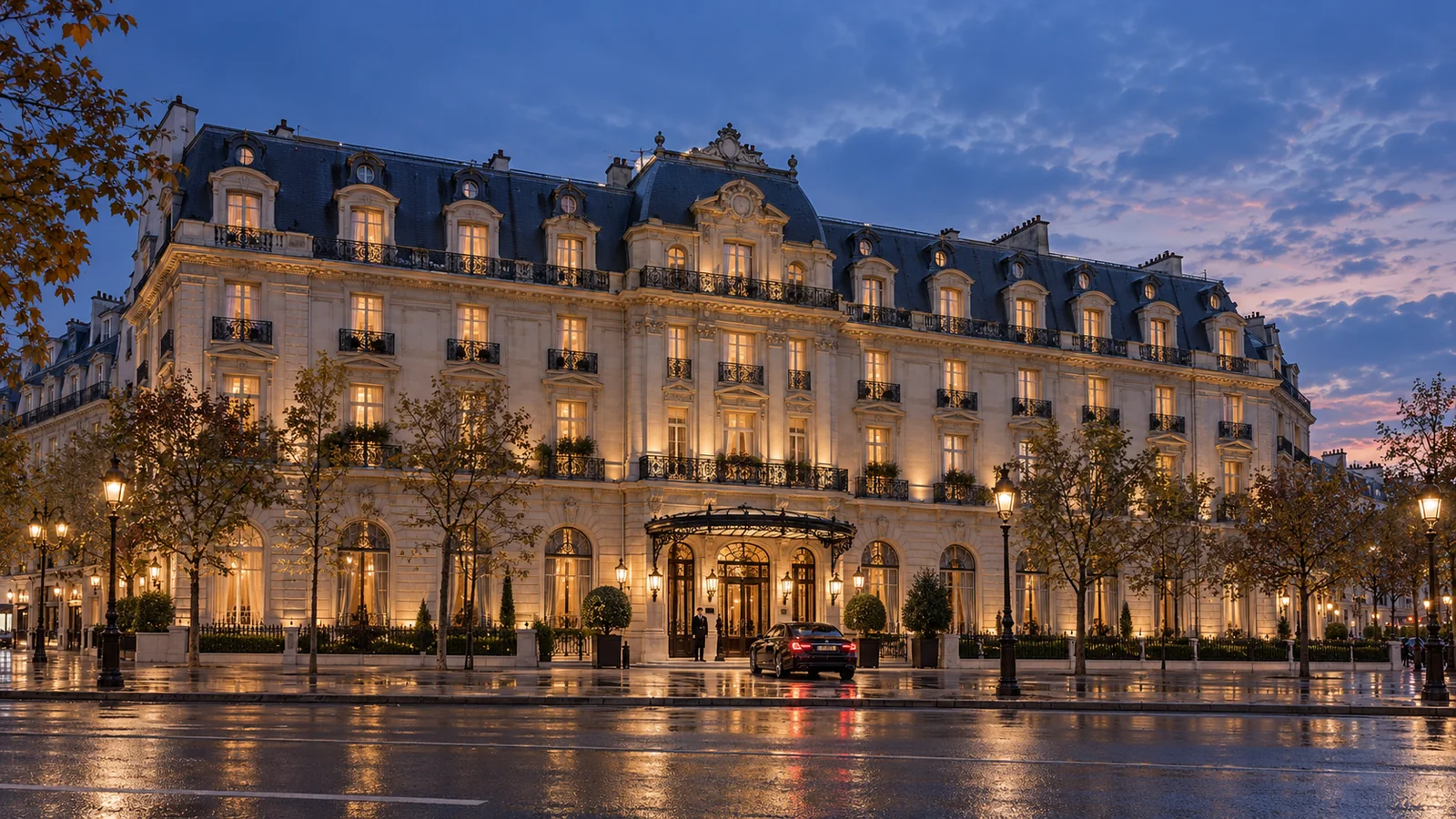
Yet a spectacular building is not automatically a Palace, and a five-star hotel is not a Palace in the official French sense. Those two words belong to related but different systems.
The stars belong to a rulebook, not a review site
France classifies tourist hotels from one to five stars. Applying is voluntary, but the result is an official designation valid for five years and subject to renewal. Atout France issues the classification after an on-site visit by an accredited assessment body.
The reference grid in force since April 2022 contains 243 criteria across three chapters: facilities, guest service, and accessibility and sustainable development. Some requirements are mandatory; others contribute points. That is why two hotels in the same category can feel very different while still meeting the same national threshold.
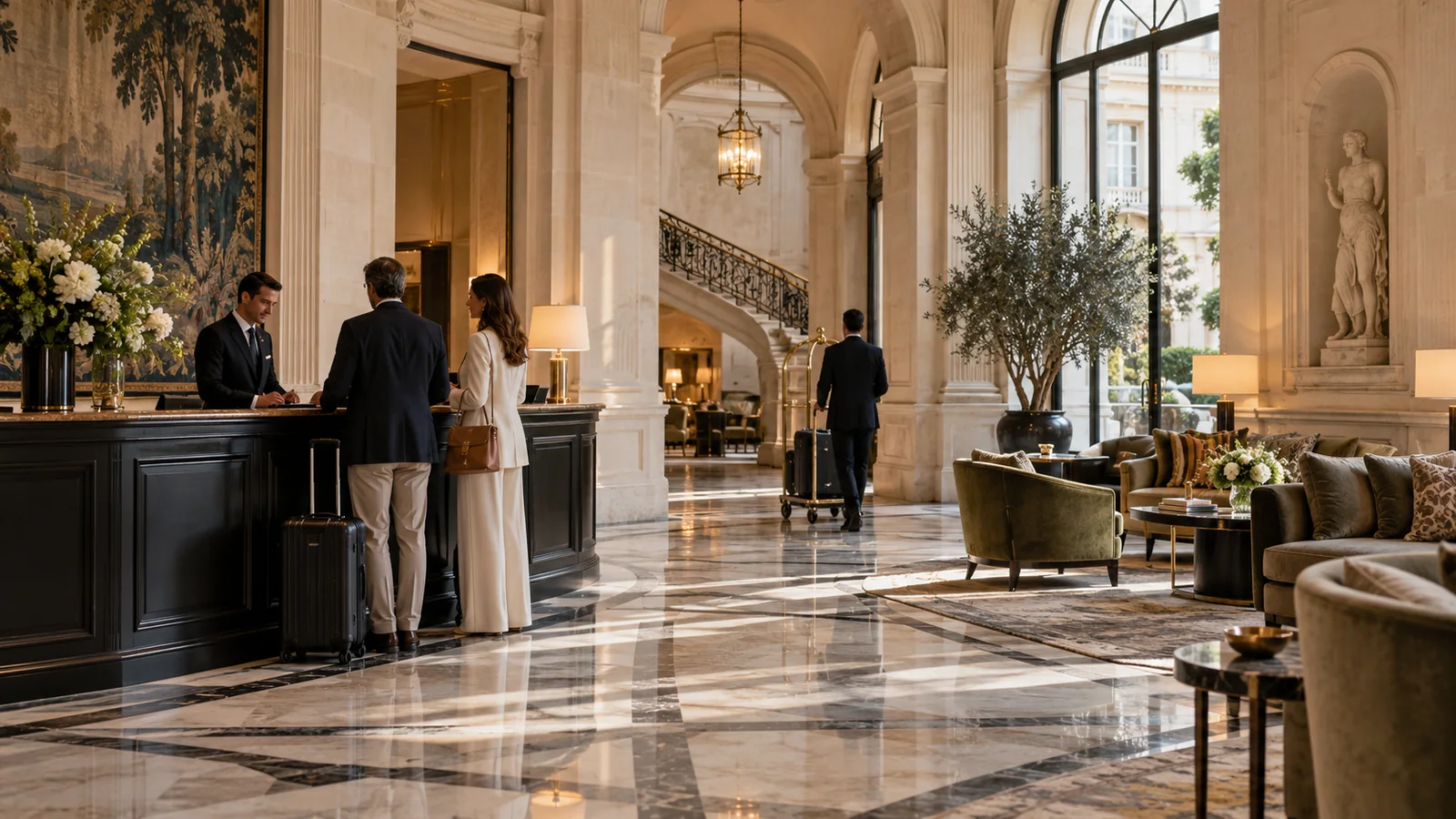
At five stars, expectations rise sharply: round-the-clock reception, service in foreign languages, more demanding standards for space and equipment, and a stronger emphasis on personalised attention. The plaque still has limits. It cannot promise that you will like the design, that the restaurant is the best in town or that every room has the view shown on the home page. It classifies the establishment; it does not review your future stay.
When five stars are allowed to seek Palace status
The French state created the Palace distinction in 2010 because the fifth star could not, on its own, describe the very top of the market. Only a classified five-star hotel may apply. It is neither a sixth star nor a marketing label bought with a campaign.
The process begins with a dossier examined by Atout France. Under the current rules, the property must have operated for a minimum period, offer rooms of at least 26 square metres including bathrooms, and satisfy reinforced five-star requirements. Two members of the awarding commission then visit. The candidate is heard by the commission, and the minister responsible for tourism grants the distinction on its binding opinion.
This is where measurement gives way to character. The commission considers location, architecture and aesthetics, the history of the place, tailored service, gastronomy, environmental policy and the hotel’s place in France’s cultural and international landscape. Following the 2024 reform, the distinction is awarded for three years. A Palace must therefore keep proving its case; inherited prestige is not enough.
What the guest is really paying for
Hotel standards often reveal their value when plans go wrong. A delayed arrival still finds a functioning welcome. A flight change meets a useful response before it becomes a crisis. A precise question about the room, access or dining receives a precise answer. This operational depth is less visible than a marble bathroom and more likely to shape the stay.
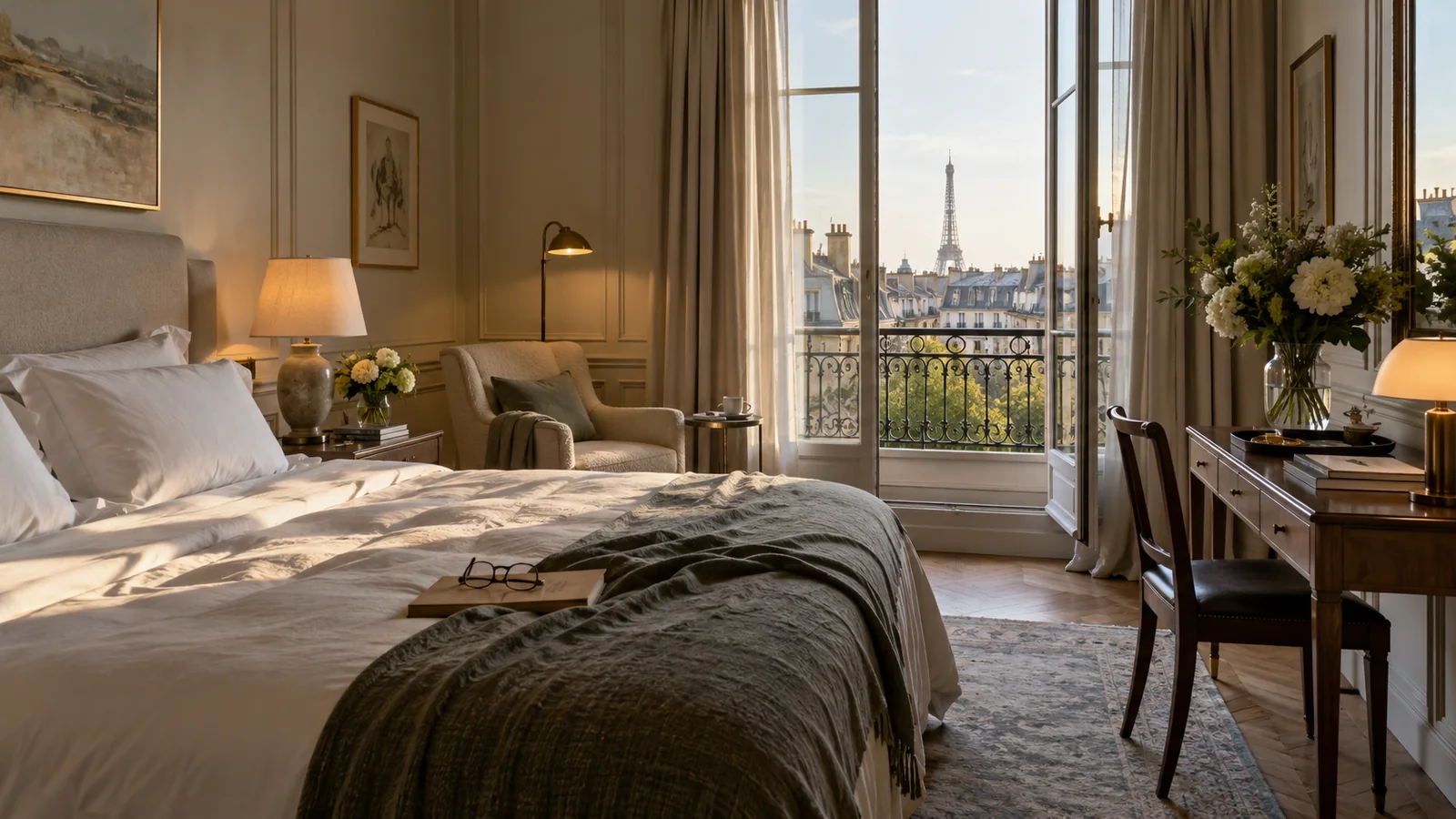
At a Palace, the price is expected to buy something beyond competence: a property with an identity that cannot be transferred to another city, staff who protect privacy without becoming remote, food that belongs to the journey, and cultural or architectural memory that gives the stay weight. OUISTARS’ hotel histories show how different that identity can be, from The Peninsula Paris and the lives of its building to La Réserve Ramatuelle’s unlikely route to Palace status.
Five questions that matter more than the star count
Start with the room category, not the hotel name. What is its actual floor area, and do the photographs show that exact category? Ask what the rate includes: breakfast, taxes, spa access, transfers and cancellation terms. Check the most recent renovation because a classification verifies standards but cannot, by itself, tell you the condition of every fabric and fitting. Measure the location against your itinerary, not the phrase “in the heart of the city.” Finally, consult Atout France’s current register if Palace status matters to your decision.
Read this way, the stars become a useful starting point rather than a substitute for judgment. The right hotel is not always the one with the grandest title. It is the one that suits the way you travel, explains what it sells and quietly delivers what it promised.
Video: how France defines a Palace
This film, part of a series produced with Atout France, looks beyond the star count to the place, service and craft behind the distinction.
Making the arrival work
When the hotel stay is one part of a trip involving airport reception, private transport, or a coordinated arrival for a family or group, OUISTARS Travel can help arrange the practical journey around it. This service is independent of the editorial selection and does not imply a partnership with any property mentioned here.