













Verified 9 November 2026. The figures below are official French contractual minima, not a promise of what every model takes home or what every international booking pays.
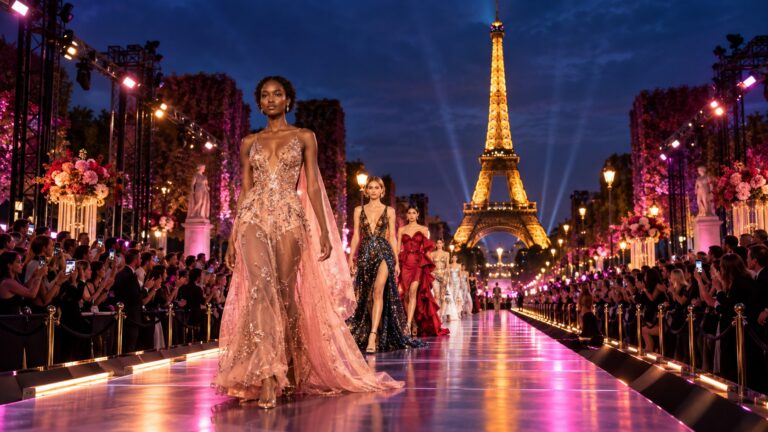
A Paris runway may last ten minutes. The work behind it does not. Casting, fitting, rehearsal, waiting, contracts and image rights sit behind the final walk—and the economics are far less simple than the glamour suggests. So how much do fashion models really earn in Paris?
France treats modelling as salaried work
The first misconception is structural. French social-security guidance states that every contract by which a person provides paid modelling work is presumed to be an employment contract. The employer must declare the worker and pay the relevant social contributions. That protection matters: an impressive client invoice is not the same thing as the model’s net pay.
The applicable collective agreement also combines two safeguards. The model’s gross salary cannot fall below the relevant conventional minimum, and it must respect a minimum percentage of the sums paid by the client to the agency: 33% for editorial press work and 36% for other assignments. Those figures should not be read as a simplistic “agency commission”. A client invoice can also carry employer costs and agency services; the contract and payslip remain the documents that show the actual salary.
The official adult minimum rates
The current official table divides adult models into four professional categories. The applicable category is a contractual classification, not a popularity contest and not a judgement of physical appearance.
| Adult category | Hourly minimum | Daily minimum, 5–8 hours |
|---|---|---|
| Category 1 | €111.75 | €558.75 |
| Category 2 | €130.20 | €651.00 |
| Category 3 | €171.50 | €857.50 |
| Category 4 | €218.40 | €1,092.00 |
These are gross minima and exclude the 10% paid-leave allowance stated in the agreement. They are not reliable estimates of a model’s net bank transfer. Social contributions, the exact classification, contractual expenses and any separately negotiated image-rights remuneration all affect the final amount.
What a Paris runway contract must include
For haute couture and ready-to-wear shows, the agreement sets a minimum paid block: two hours for the show and one hour for rehearsal or fitting. If the model must remain present longer, that additional time is paid. The exact total depends on the category and the contract; the three-hour rule should not be converted into a universal “Fashion Week fee”.
Technical fittings have their own scale: €81.05 an hour, €405.25 for a five-to-eight-hour day, €1,823.60 for a five-day week and €2,066.75 for a six-day week, before the 10% paid-leave addition. A technical fitting for the production of a garment is not automatically the same legal line as every fitting attached to a runway booking, so the written assignment matters.
Runway, editorial and advertising are different markets
Editorial fashion pages often carry prestige and visibility but use a lower official scale: the current press minima range from €39.80 to €101.10 an hour, or from €199 to €505.50 for a day, according to category. A commercial campaign can be worth more because the brand may buy a wider territory, a longer period of use, digital and print media, exclusivity, or association with the model’s name.
This is why public lists of “the highest-paid models” are usually poor guides to a working model’s income. Celebrity totals may mix runway work, advertising, licensing, ambassador contracts, businesses and social-media partnerships. Most individual fees are private, and an estimate is not a payslip.
Why a famous model can command a different fee
Experience reduces risk for a production: the model understands pace, lighting, cameras, fittings and last-minute direction. Scarcity also has a price. A brand may pay for exclusivity that prevents a competing appearance, or for global usage that keeps an image in airports, stores and campaigns for months. None of that means a new runway model receives the fee associated with a global ambassador.
The more useful questions are precise: What is the salary category? How many paid hours? Which expenses are reimbursed? Where and for how long can the images be used? Is exclusivity included? When is payment due? Glamour cannot replace those lines in a contract.
Fashion Week is also a visitor economy
Runway labour sits inside a much larger Paris ecosystem: agencies, show producers, hair and make-up teams, photographers, drivers, hotels, restaurants, venues and security. The Fédération de la Haute Couture et de la Mode has already published the principal 2027 windows: haute couture from 25–28 January and 5–8 July; women’s ready-to-wear from 1–9 March and 27 September–5 October; and men’s fashion from 19–24 January and 22–27 June.
The detailed house-by-house calendars are not yet the same thing as those season windows. Travellers should not book around an unconfirmed brand, venue or invitation. Our separate Paris Fashion Week 2027 dates and venues guide tracks the official framework without inventing a schedule.
Questions readers ask
Do models get paid for Paris Fashion Week?
A paid modelling assignment in France is an employment relationship and must respect the applicable contractual minimum. The exact fee varies by category, hours, client and rights.
Is the runway fee the same as image rights?
Not necessarily. Salary pays for the work and required presence; exploitation of the resulting image may involve separate contractual remuneration and usage terms.
Are the published rates what models take home?
No. They are gross minima. Net pay depends on payroll deductions and the individual contract. Reimbursed or non-reimbursed expenses can also change the economics of a job.
Who are the world’s best-paid models?
There is no complete public payroll. Rankings often rely on estimates and may combine modelling with endorsements and other businesses. OUISTARS Travel will treat any future ranking as an evidence-led estimate, not a fact about private income.
Official sources
- Légifrance: collective agreement and current model salary table
- Urssaf: employment status and social contributions for models
- FHCM: official 2027 fashion-week season dates
Share this article with a reader who wants to understand the business behind the runway—not just the front row.
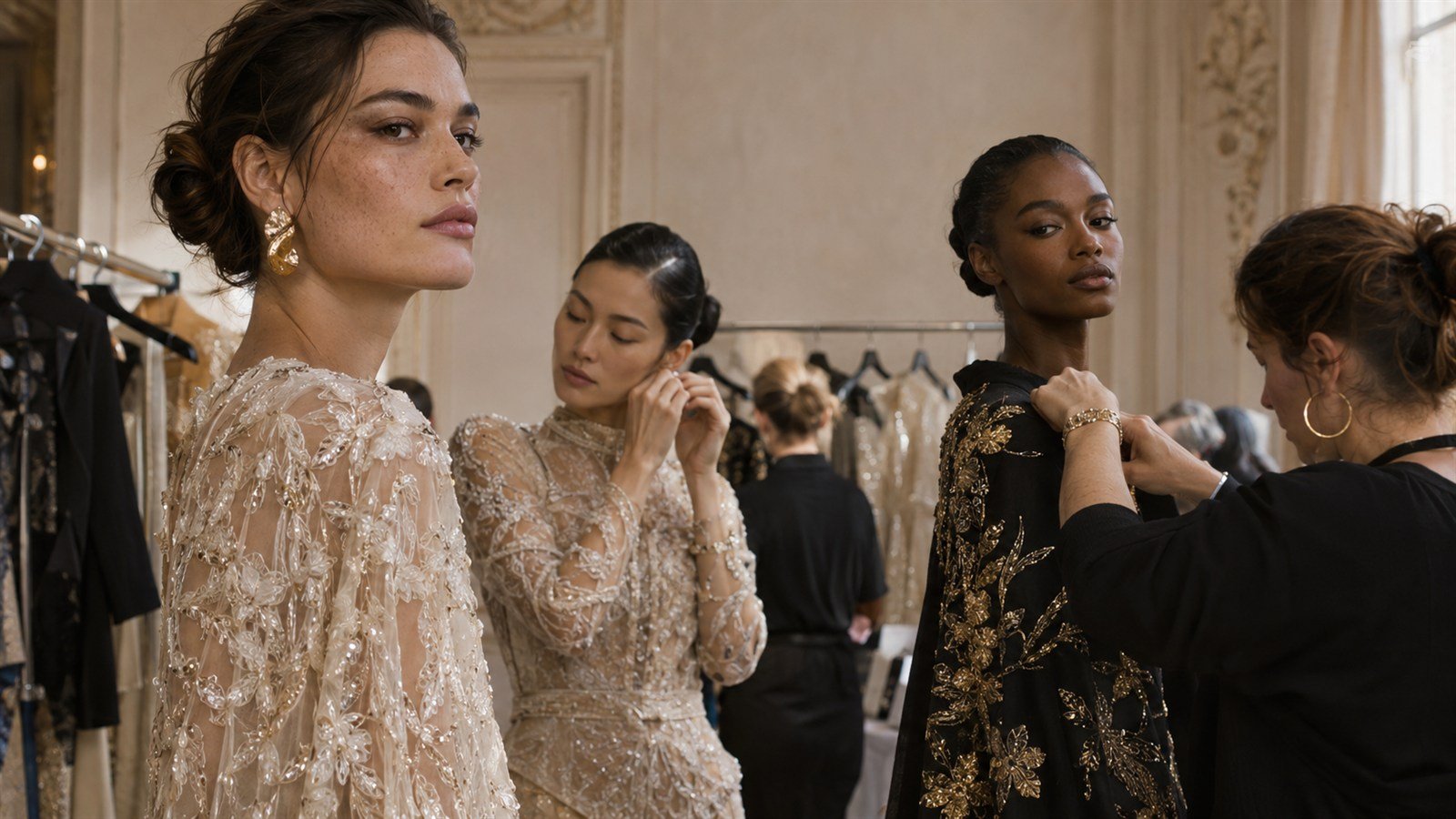
Cover note: conceptual editorial image illustrating backstage work before a Paris runway show. It does not document a named event or identify a real model.