


TOURISM INVESTMENT · EGYPT × MOROCCO
The applause began with a 2026 leadership list in Egypt. The more consequential story is unfolding in Morocco, where long-term finance, hotel acquisitions and sustainability targets are turning one entrepreneur’s recognition into a test of what African hospitality investment can deliver.
The recognition is the hook, not the whole story
Enigma Magazine’s 2026 Power List presents tourism leaders as figures helping shape Egypt’s transformation. Pickalbatros Morocco’s official company page identified Kamel Abou-Aly among the top ten influential leaders in Egypt’s tourism industry. That is an editorial recognition by a magazine, not a government award or an audited performance certificate—an important distinction for accurate reporting.
The recognition is still newsworthy because it points to a broader record. Forbes Middle East separately placed Abou-Aly at number 34 in its regional Top 100 Travel and Tourism Leaders 2026. Two lists do not prove business performance by themselves, but they show how his name has entered the regional conversation about ownership, scale and cross-border growth.
The $250 million figure changes the scale of the article
On 15 October 2026, the World Bank Group’s IFC announced a $250 million financing package for the Moroccan subsidiaries of Pickalbatros. IFC is providing $165 million, while $85 million in private capital is being mobilised from Attijariwafa bank. The money is intended to support hotel acquisitions, refurbishment and upgrades, rather than fund a publicity campaign.
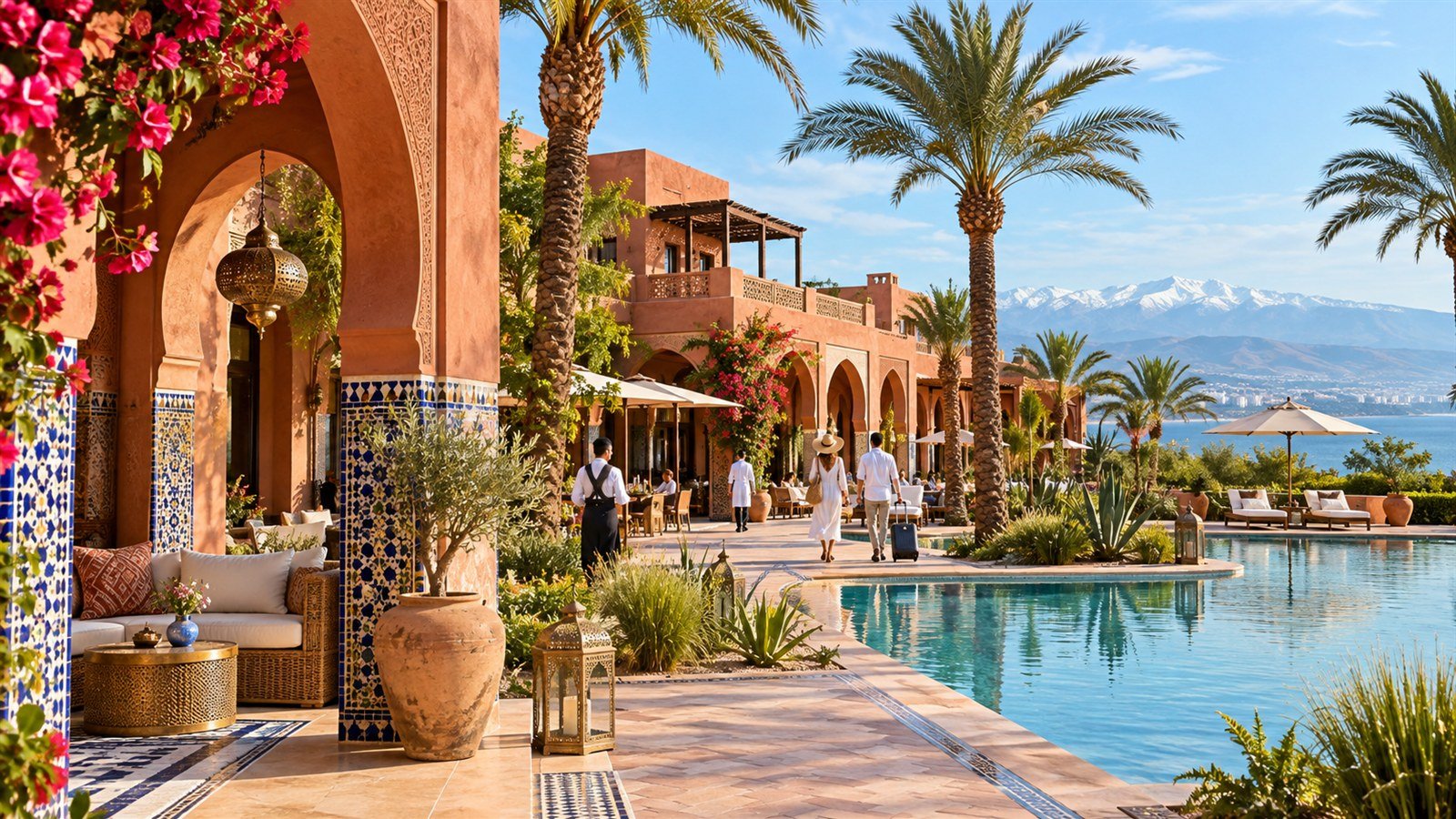
IFC says the programme includes acquiring three hotels in Casablanca and improving newly acquired and selected existing assets. Casablanca adds a business and aviation gateway to a portfolio associated more visibly with Marrakech and Agadir. This turns the story from resort expansion into a three-city hospitality strategy.
From Hurghada to Morocco: a South–South investment story
Pickalbatros says Abou-Aly founded the group in 1992 after returning to Egypt, with Beach Albatros in Hurghada as the first venture. IFC’s October statement says the group now operates 35 hotels across Egypt and Morocco, seven of them in Morocco, where it has operated since 2015.
The significance is not that an Egyptian brand simply opened abroad. IFC explicitly frames the project as deeper South–South investment: private capital and hospitality knowledge moving between African markets. Egypt supplies operating experience built around large leisure resorts; Morocco supplies fast-growing city, beach and event demand, proximity to Europe and the 2030 World Cup horizon.

What Morocco expects: jobs, rooms and economic spillovers
IFC projects that the programme could support more than 1,350 direct jobs and approximately 6,200 indirect jobs by 2032. It also estimates an additional $269 million contribution to Morocco’s economy by that year. These are development projections, not completed results, and should be tracked against actual hiring, procurement and hotel openings.
The potential impact extends beyond rooms. Renovation employs contractors and suppliers; operating hotels buy food, maintenance, transport, technology and professional services. The strongest result would be a local supply chain that keeps more visitor spending in Morocco and creates career paths, rather than only seasonal jobs.
Sustainability-linked finance must produce measurable change
The financing is described by IFC as its first sustainability-linked green and partially blue financing in Africa and its largest hospitality investment on the continent to date. Selected hotels are expected to pursue IFC EDGE certification, with a target of reducing energy and water consumption by at least 20 percent.
Those commitments matter in a water-stressed tourism economy. A sustainability label should be visible in operating data: water per occupied room, energy intensity, waste handling, staff conditions and local procurement. The reputational value of the financing will depend on transparent progress, not simply on the colour assigned to the loan.
Why Morocco is attracting this capital now
Morocco’s official portal says the country received nearly 20 million visitors in 2025, generated MAD 138 billion in foreign-currency tourism receipts and supported close to 900,000 sector professionals. Its tourism roadmap targets 26 million visitors by 2030 and calls for more air capacity, hotel supply, entertainment and investment.
That growth creates opportunity and pressure at once. More hotels can support major events and reduce capacity constraints, but expansion must be matched by training, transport, public infrastructure and protection of water and place. Read our wider analysis of Morocco’s tourism cities, competitors and 2030 challenge.
What the traveller may actually notice
For guests, investment becomes real only when it improves the journey: a better maintained room, reliable booking, trained staff, accessible facilities, transparent prices and a hotel that connects to the destination rather than isolating visitors from it. Casablanca could strengthen business travel and stopover stays, while Marrakech and Agadir remain central to leisure demand.
A larger brand footprint can also improve distribution and consistency, but scale is not automatically quality. The test is whether refurbishment respects Moroccan design and labour, whether local food and suppliers gain access, and whether sustainability targets survive peak occupancy.
The OUISTARS verdict
Kamel Abou-Aly’s place on a power list is a timely news hook. The more durable measure of leadership will be what happens after the applause: whether $250 million produces better hotels, stronger jobs, lower resource use and more value for Moroccan communities.
This is why the story belongs simultaneously to Egypt and Morocco. It begins with an Egyptian entrepreneur and a recognition in Cairo’s business conversation, but its next chapter will be judged in Casablanca, Marrakech and Agadir.
Frequently asked questions
Who is Kamel Abou-Aly?
He is the Egyptian founder and chairman of Pickalbatros Hotels & Resorts, established in 1992.
Why was he recognised in 2026?
Pickalbatros Morocco said Enigma Magazine named him among ten influential leaders in Egypt’s tourism industry. This is an editorial magazine recognition.
How much is the Morocco financing?
$250 million: $165 million from IFC and $85 million mobilised from Attijariwafa bank.
What will the financing support?
Three Casablanca hotel acquisitions, upgrades to acquired and selected existing properties, and sustainability improvements.
How many jobs are expected?
IFC projects more than 7,500 direct and indirect jobs by 2032; this is a forecast, not a completed result.
Official and primary sources

Cite this article
When citing the text or analysis, include the magazine, title, original URL and publication date. Preserve the stated attribution of statistics and photographs.