




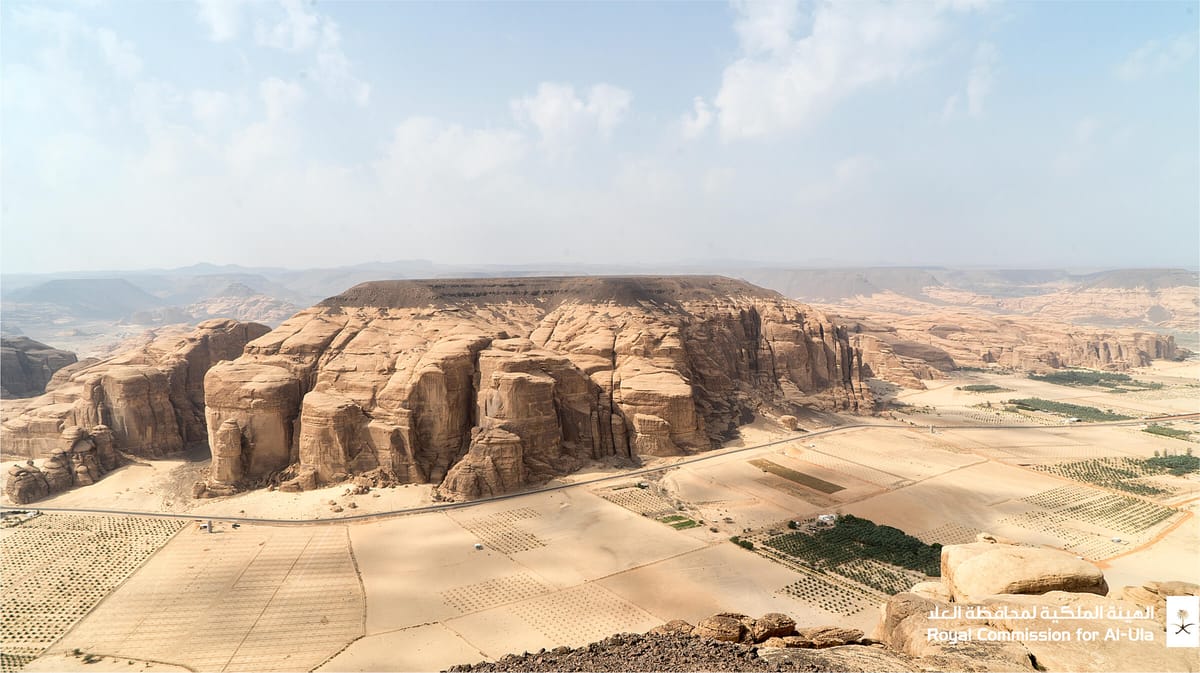
Could AlUla become the Middle East’s next tourism capital? The answer will depend on more than spectacular landscapes. It will depend on whether Saudi Arabia can turn heritage, nature and hospitality into a durable, globally competitive visitor economy.
From heritage site to integrated destination
AlUla is home to Hegra, Saudi Arabia’s first UNESCO World Heritage Site, and an archaeological landscape containing more than 30,000 identified sites. Its advantage is not a replica attraction; it is a living cultural landscape with a story that cannot be manufactured elsewhere.
The figures investors are watching
The Royal Commission for AlUla says the destination welcomed nearly 320,000 visitors in 2025, with roughly 22% compound annual growth from 2021 to 2025, 94% visitor satisfaction and an average stay of about 3.6 days. Official investment material also cites more than SAR10 billion in infrastructure already deployed, around 1,000 operating hotel keys and more than 5,000 additional keys targeted by 2030.
Where the opportunity lies
Potential extends across hotels, eco-retreats, restaurants, cultural experiences, transport, events, conferences, technology and local crafts. The strongest projects will be rooted in AlUla’s identity rather than importing a generic resort formula.
The central challenge: growth without losing the place
More than half of the area is designated as protected nature reserves. That makes water, energy, archaeology, landscape protection and local participation central investment questions, not environmental footnotes.
OUISTARS Editorial Analysis
AlUla has the ingredients to create a new Arab model of global tourism: heritage, nature and high-end hospitality in one destination. But a global reputation will require efficient mobility, air connectivity, trained local talent, multilingual information and governance that balances investors, residents and conservation.
Conclusion: AlUla is not simply a beautiful oasis. It is a test of whether tourism can grow at international scale without losing authenticity.
Sources: Royal Commission for AlUla; Journey Through Time; Saudi Press Agency.