
















INVESTMENT, TOURISM AND LONG-TERM VALUE
Gold can be held in a vault and sold across borders. A Paris apartment, a Cap d’Antibes villa or an Alpine chalet is slower, more expensive and demanding. Yet property can also be lived in, rented, inherited and anchored to a legal and tourism ecosystem. For a Gulf or Middle Eastern investor with sufficient capital, the serious question is not which asset is universally “better”, but which job each asset is being asked to do.
The answer in one minute
- Gold is primarily a liquid financial store of value. It is portable, globally priced and does not require tenants, a syndic, repairs or local permits. It produces no rent and offers no personal use.
- French property is an operating asset as well as a possession. It may deliver use, rent and long-term price appreciation, but only after taxes, transaction costs, maintenance, regulation, vacancy and illiquidity.
- France’s advantage is an ecosystem, not a guarantee. Property rights, the notarial process, condominium governance, heritage rules and deep international tourism can support value. They do not rescue the wrong building, the wrong price or a careless ownership structure.
- The two assets are not clean substitutes. Horizon, liquidity needs, currency exposure, tax residence, family use and tolerance for management should decide the allocation.
A gold bar and a key do different work
Imagine two objects on a table. One is a kilogram bar of gold. The other is a key to a restored apartment in a century-old building near the Seine. The gold has a transparent international price and can be converted into cash relatively quickly. The key opens a place where a family can stay, an asset that may earn rent, and a legal interest in a building that must be insured, governed and maintained. One is concentrated value with almost no operational life. The other is a small enterprise concealed inside stone walls.
That distinction matters because the comparison is often framed badly. Gold advocates point to liquidity and crisis performance. Property advocates point to rent, scarcity and “bricks and mortar”. Both are right within limits. Neither argument answers whether a particular buyer should exchange liquidity for a specific French address at a specific price, with a specific DPE rating, tax structure, service charge and renovation history.
This analysis therefore refuses a promise. French real estate is not guaranteed to rise. Gold is not guaranteed to protect purchasing power over every holding period. The useful comparison begins by defining the investor’s objective: emergency liquidity, diversification, family use, income, succession planning, currency exposure or an intergenerational base in Europe.
What the national numbers actually say
France’s residential market emerged from a sharp credit-driven slowdown in 2025. The Banque de France reports 1,002,000 sales of existing homes in 2025, up 10.6% from 2024. New housing credit excluding renegotiations reached €146.7 billion, up 33%, while the average rate on new housing loans excluding renegotiations fell during the year. This is evidence of revived activity, not evidence that every segment recovered equally.
The national Notaires-Insee index for existing homes in metropolitan France stood at 127.1 in the fourth quarter of 2025, with 2015 averaging 100. The same series was 119.6 in the fourth quarter of 2020 and 89.8 in the fourth quarter of 2005. That means nominal price growth of about 6.3% over five years, 27.0% over ten years and 41.5% over twenty years, before rent, acquisition costs, maintenance, tax, financing and inflation. The index also fell from 133.9 in late 2022 to 125.9 in late 2024 before edging higher. The INSEE series is a useful antidote to the idea that French property moves in a straight line.
There is no single, equally timely official figure in the cited releases for the total euro value of all French residential transactions in 2025. Rather than manufacture one by multiplying incompatible averages, this article uses the official volume, price indices and credit production separately.
| Indicator | Latest cited figure | Scope and caution |
|---|---|---|
| Existing-home sales | 1,002,000 in 2025 | France; volume, not total transaction value |
| Existing-home price index | 127.1 in Q4 2025 | Metropolitan France; 2015=100; price only |
| Paris apartment price | €9,600/m² in Q4 2025 | Average existing apartments across Paris; not prime-only |
| France international visitors | 102 million in 2025 | International arrivals, not unique property demand |
| International tourism receipts | €77.5 billion in 2025 | France; balance-of-payments receipts |
| Paris Region tourism spend | Nearly €24 billion in 2025 | Visitor consumption across Île-de-France |
Paris is not one market
The Greater Paris notaries counted nearly 125,000 existing-home transactions across Île-de-France in 2025. Their fourth-quarter assessment put the average Paris apartment at €9,600 per square metre, 1.4% higher than a year earlier. That average conceals an enormous quality and location spread. A compromised ground-floor unit, an unrenovated walk-up and a turn-key family apartment with lift, view, security and a prestigious address do not belong to the same economic market.
For prime property, commercial research is informative but must be labelled for what it is. Knight Frank’s 2025 European lifestyle study estimated a Paris prime band of €22,300 to €23,500 per square metre at the second quarter of 2025. Its Côte d’Azur composite, based on Cannes, Saint-Jean-Cap-Ferrat and Saint-Tropez, was €30,200 to €31,800. These are broker research estimates for prime stock, not official notarial averages and not promises of achievable resale prices. The same report estimated roughly 8% purchase costs on a €2 million resale main residence, broadly consistent with the official acquisition-cost range.
The lesson is not that “Paris costs €23,500 per square metre”. It is that national, citywide and prime data describe different universes. Due diligence must use completed comparable sales, the apartment’s exact floor, light, plan, lift, view, condition, building accounts and legal status.
Why France can preserve old buildings as prestigious assets
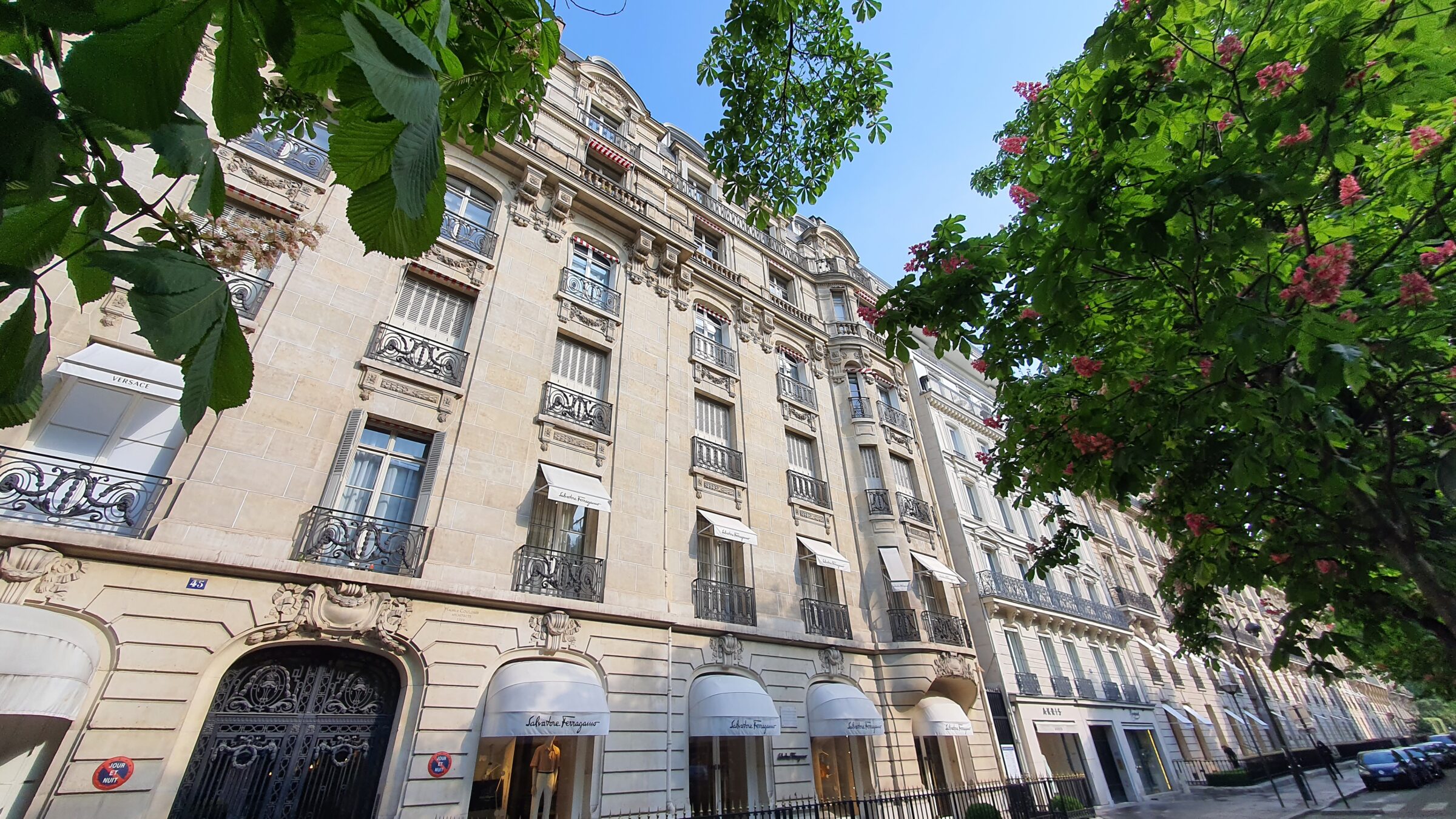
In some markets, age is treated mainly as physical depreciation. In France, age can be part of the premium because architecture, location and cultural legitimacy are difficult to reproduce. A Haussmann apartment may command value because of proportion, stone, balconies, ceiling height, mouldings and its relationship to a protected streetscape. A Belle Époque villa on the Riviera or a traditional chalet in a constrained Alpine resort can carry similar scarcity.
But beauty is not maintenance. French law does not magically keep every roof dry or every copropriété solvent. The system creates procedures and responsibilities. Co-owners vote budgets and works through the general assembly; a professional or voluntary syndic administers the building; owners pay general and special charges. For residential copropriétés more than 15 years old, phased rules now require a draft multi-year works plan, with the timetable extended to buildings of fewer than 51 lots from 2025. A works fund generally receives at least 5% of the annual budget, and when a plan is adopted the contribution must also meet the statutory floor linked to planned works. The ANIL guidance explains the mechanism and its exceptions.
This is governance, not a quality certificate. An investor should read at least three years of assembly minutes, the building’s technical file, unpaid-charge position, insurance claims, existing loans, works fund, adopted plan, façade and roof history, asbestos and lead reports where relevant, and any litigation. A prestigious address with a divided ownership body that postpones essential works can become an expensive trap.
Façades, roofs and the French preservation bargain
Paris provides a powerful but easily exaggerated example. The city states that façade renovation is required every ten years under the Construction and Housing Code. Enforcement, timing and the required scope still depend on condition and procedure, and the rule is not proof that each façade has been recently restored. Outside designated municipalities, the legal position is not identical. Buyers must verify the building, not rely on a national myth.
Heritage protection adds another layer. In protected sites and around historic monuments, the Architectes des Bâtiments de France review projects for compatibility with architectural and landscape character. Work on listed or registered monuments follows specific authorization and technical-control rules. The Ministry of Culture says these services cover protected areas representing 8% of the national territory and affecting 31.7% of homes.
For an owner, protection can preserve a streetscape and limit crude redevelopment. It can also make windows, façades, insulation, roof changes and extensions slower and more expensive. Heritage is part of the value proposition and part of the cost base. A sensible bid prices both.
The notarial system is a control layer, not an investment guarantee
A French notaire is a public officer who authenticates the deed, checks legal elements of the sale, collects taxes and arranges registration. For a non-resident, French law governs ownership of French property, while succession, matrimonial property and tax treaties can introduce cross-border complexity. Notaires de France also stresses that large transfers are subject to source-of-funds checks and that notaires have anti-money-laundering duties.
This legal infrastructure improves traceability. It does not tell the buyer whether the price is sensible, the rent achievable, the renovation realistic or the selected ownership vehicle efficient. The buyer still needs independent legal, tax, technical, valuation and financing advice. The selling agent is not a substitute for that team.
Tourism is a demand engine, but not a rental guarantee
France received 102 million international visitors in 2025, according to Atout France. International tourism receipts reached a record €77.5 billion, up 9% from 2024, and average spending per international visitor rose 7% to €760 per stay. Domestic tourism consumption reached €222 billion. Those are large and diversified flows spanning culture, business, family visits, events, coast, countryside and mountains.
Tourism supports restaurants, retail, transport, services and destination visibility. It also creates a global pool of people who may wish to return regularly or establish a European base. Yet 102 million arrivals do not translate mechanically into buyers or tenants. A property earns only if it is legally rentable, correctly positioned, professionally operated and demanded during the available weeks.
Paris Region illustrates the economic depth. Official regional data put 2025 visitor numbers near 50 million, including more than 23 million international visitors. Total visitor consumption was nearly €24 billion, of which almost €16 billion came from international guests. Paris therefore offers a broader calendar than a pure leisure resort: culture, fashion, trade fairs, corporate travel, education, diplomacy and medical stays can support demand across the year.
Large private residences serve a different stay from hotels
High-net-worth families sometimes need four or five bedrooms, private kitchens, long dining tables, laundry capacity, discreet entrances, storage and a rhythm that works for children. Travelling parties may include assistants, nannies, drivers, close protection or medical support. A large apartment, villa or serviced residence can give the group privacy and operational control for a multi-week stay.
This does not make a residence a direct replacement for a palace hotel. Hotels provide staffed service, restaurants, concierges, daily housekeeping, security systems, meeting space and legal short-stay operation. Private homes serve a different use case, especially repeat travel, family continuity and longer stays. The strongest destinations often sustain both: exceptional hotels for service-intensive visits and well-managed residences for autonomy.
Serviced residences sit between the two, but buyers must distinguish ownership of a standard dwelling from participation in a managed residence or commercial lease. The income promise, operator risk, recoverable VAT, exit market and personal-use rules can differ materially.
The real cost of ownership begins before the keys
In an existing French property, acquisition costs commonly equal about 7% to 8% of the purchase price. Notaires de France says the corresponding range for qualifying new property is about 2% to 3%. Since April 2025, most departments may apply a 5% departmental transfer-tax rate through March 2028, taking total registration duties to 6.3185% before notarial remuneration, formalities, disbursements and the 0.10% real-estate security contribution. The precise estimate should come from the acting notaire.
On a €3 million resale, an 8% assumption is €240,000 before renovation, furnishing and finance. That makes short holding periods dangerous. If the property is sold after a small nominal rise, round-trip costs and tax may erase the gain. Gold, by contrast, generally has a much tighter dealing spread, although physical gold can involve custody, insurance, fabrication premiums and tax consequences.
Annual charges: the quiet compounding in the opposite direction
Owners face taxe foncière, building charges, insurance, utilities, management and repairs. Charges vary drastically. A building with lift, caretaker, central heating, gardens or extensive common areas will cost more than a simple walk-up. A villa adds grounds, pool, security, irrigation and full responsibility for the envelope. A chalet adds snow management, heating, freeze protection and potentially complex access.
Major works arrive irregularly: roof, façade, lift, boiler, waterproofing, structure, electrical systems and energy renovation. The correct analysis converts them into a reserve rather than pretending they are exceptional surprises. Ask what would happen if the copropriété voted a six-figure roof and façade programme the year after purchase.
Owners in a copropriété must at least carry civil-liability insurance. Broader owner-occupier or non-occupying-owner cover is prudent and is often required by lenders or managers. High-value interiors, art and seasonal vacancy may require specialist underwriting.
DPE: energy performance has become an investment variable
France has progressively turned energy performance into a legal rental constraint. In metropolitan France, homes rated G cannot be let under a principal-residence lease from 2025, including on renewal or tacit renewal. The threshold extends to F in 2028 and E in 2034. The official Service-Public guidance sets out the timetable and exceptions.
For historic property, the challenge is practical. Stone façades, co-owned roofs, protected windows, ceiling details and shared heating can limit quick individual solutions. A handsome address with a weak DPE may require coordinated capital expenditure and approvals. A buyer should commission an independent technical view of what can legally and physically be improved, at what cost, and on what schedule. The DPE is a starting point, not a renovation quotation.
Tax is personal, cross-border and impossible to reduce to one percentage
Taxe foncière is local and varies by assessed value and municipal rates. Rental income may fall under property-income rules for unfurnished letting or business-income rules for furnished activity. Non-residents are generally subject to French tax on French-source income, with minimum income-tax rates of 20% and 30% for 2025 income unless the average-rate method is more favourable. Social charges differ by rental type, affiliation and residence. Tax treaties can change the interaction with the investor’s home country.
For taxable real-estate gains, France applies a 19% levy, plus social charges whose rate and exemptions depend on the seller’s status. For many residents of countries outside the EU, EEA, United Kingdom and Switzerland, the official non-resident guidance states a 17.2% social levy. Holding-period abatements lead to income-tax exemption after 22 years and social-levy exemption after 30 years, subject to the rules and available exemptions. A surtax can apply to high gains.
The Impôt sur la Fortune Immobilière, or IFI, starts when net taxable real-estate wealth exceeds €1.3 million. Non-residents are generally exposed on French real-estate assets held directly or indirectly, subject to deductible-debt rules, exclusions and treaties. The progressive scale reaches 1.5% above €10 million. This can be central for a family office considering multiple prime homes.
These are policy signposts, not a tax computation. Structure, debt, entity choice, beneficial ownership, family status, use, residence, treaty position and succession plan must be modelled before signing. A structure created for convenience can create worse income, capital-gains or inheritance results later.
Short-term rental is not a free option
Paris is one of the clearest warnings against underwriting a purchase on an assumed nightly rate. A principal residence may be rented as tourist accommodation for no more than 90 days a year. A secondary residence used for tourist letting generally requires change-of-use authorization with compensation, change-of-destination compliance and registration from the first day. The City of Paris states that unauthorized letting of a secondary residence can lead to a fine of up to €100,000 plus a daily penalty.
Other cities, including major Riviera municipalities, can impose registration, change-of-use, quotas or local restrictions. Copropriété rules may also restrict tourist letting. A revenue model built on unlawful short stays has no investment value. The investor should obtain a written planning and use analysis for the exact unit before purchase.
Gold’s case is powerful precisely because it is simple
Gold has a global benchmark, deep markets and no tenant. It can be held physically or through financial instruments, each with different counterparty, custody and tax characteristics. It is divisible and usually far more liquid than a house. It also carries no roof, DPE, vacancy or local political risk.
Gold can be volatile. The World Gold Council reports that gold returned 47.6% in euros during 2025, based on the LBMA PM price expressed in euros. That extraordinary year should not be projected indefinitely. The Council’s 2026 outlook explicitly describes scenarios ranging from further upside to a possible 5% to 20% fall under stronger growth, higher rates and a firmer dollar. Gold pays no rent and its value depends on the next buyer’s price.
Physical gold also has friction: dealer spreads, assay, secure storage, insurance and the risk of loss or fraud. An exchange-traded product adds issuer, structure and market considerations. Portability is an advantage, but cross-border transport and reporting rules still matter.
Property’s case is powerful precisely because it is not simple
A well-selected French residence may combine personal use, rental income, scarce location and long duration. It can serve as a family base and pass through generations. Renovation can improve utility and sometimes value. Demand can come from both domestic residents and international visitors. Those benefits require work.
Property is indivisible, slow to sell and expensive to transact. Rental income is operational revenue, not a coupon. It arrives after vacancy, management, repairs, tax, furnishing and compliance. A prime home may deliver a lower gross yield than a less glamorous rental market because the purchase price includes scarcity and personal-use value. Published listing-based yield surveys should be treated as screening tools, never underwriting. Exact achievable rent and legal rent controls must be verified.
An honest historical comparison cannot produce one winner
The twenty-year national housing index comparison above is price-only and ends in the fourth quarter of 2025. It excludes rent and every cost. Gold benchmark returns include price movement but no income because gold produces none, and investor results depend on currency, vehicle and fees. A Paris apartment is not the national housing index; a Cap d’Antibes villa is not Paris; a leveraged purchase is not an unleveraged one.
There is also sequence risk. Buying French property in late 2022 exposed the owner to the subsequent national correction. Buying gold immediately before a sharp reversal would create a different loss. Selecting dates to make one asset win is analysis by advertisement. A responsible family office should compare both on identical purchase and sale dates, in the investor’s base currency, net of all costs and taxes, with rental cash flows and personal-use value shown separately.
Gold versus French property: a decision table
| Question | Gold | French property |
|---|---|---|
| Liquidity | Generally high | Low; sale may take months |
| Income | None | Possible rent, uncertain and operational |
| Personal use | None | Residence, family base or holiday home |
| Ongoing work | Custody and verification | Management, maintenance, compliance and tenants |
| Pricing | Global benchmark | Local, heterogeneous and negotiated |
| Entry and exit friction | Usually comparatively low | High acquisition, agency, tax and legal costs |
| Concentration | Easy to divide | Often a large single-asset exposure |
| Intergenerational use | Transferable value | Transferable value plus possible family utility |
If you were investing in France today, where would you look?
No location deserves a blanket recommendation. The question is which demand base, property type and risk profile match the owner. The observations below combine official tourism evidence with market analysis. They are a screening framework, not a ranking.
Paris: depth, liquidity and regulation
Paris offers France’s broadest year-round demand and the deepest resale market among the locations considered. International tourism, domestic wealth, business travel, universities, culture and limited central supply support liquidity. Family apartments in the 6th, 7th, 8th and 16th arrondissements, or character properties in selected parts of the 1st, 4th and 17th, attract different buyer pools.
The risks are price, low net yield, rent control, short-term-rental restrictions, energy performance and large copropriété works. Paris suits an investor who values liquidity within French prime markets, frequent personal use and a long horizon more than a headline yield.
Cannes: global events and a sharp calendar
Cannes combines beaches, the Palais des Festivals, the film festival, MIPIM, Cannes Lions, yachting and luxury retail. The city reported hotel occupancy of 84% in June 2025 and up to 97% in August. Events can create very high-value weeks and an international resale narrative.
Seasonality, event dependence and micro-location are decisive. Croisette, Californie, Super Cannes and the old town offer different products and operating realities. A buyer must model ordinary months, not only festival weeks. Cannes can suit an owner who uses the home, accepts seasonal cash flow and buys a genuinely rare view, terrace or large family configuration.
Nice: the Riviera’s urban base
Nice has a larger resident economy, rail connections, hospitals, universities and the Riviera’s main airport. Côte d’Azur France says Nice airport handled 15.23 million commercial passengers in 2025. That gives Nice more year-round texture than a pure resort. Apartments near the Carré d’Or, Mont Boron, Cimiez or the seafront serve distinct resident and visitor segments.
Nice’s strengths are access, urban services and a broader tenant base. Risks include local short-let rules, building condition, traffic and view premiums that can disappear one street back. It may suit an investor wanting Riviera use with less dependence on a few events.
Antibes and Cap d’Antibes: privacy, yachting and thin supply
Antibes combines an active town, the superyacht ecosystem of Port Vauban, beaches and proximity to Sophia Antipolis. Cap d’Antibes adds scarce villas and privacy. This can fit families seeking gardens, staff space and security that a city apartment cannot provide.
Scarcity also means a thinner market. Villa condition, planning rights, coastal risk, insurance, drainage, grounds and security costs dominate. A rare property may hold attention internationally but still take time to sell. It suits a buyer who values private use and can carry substantial annual costs without depending on rent.
The wider French Riviera: one coast, many markets
The official Côte d’Azur observatory counted more than 12 million leisure and business tourists in 2025 across Alpes-Maritimes and Monaco, with foreigners above 50% and better distribution across the year. That supports a broad luxury ecosystem, but “Riviera” is not a single asset class. Saint-Jean-Cap-Ferrat, Villefranche-sur-Mer, Mougins, Saint-Paul-de-Vence and Saint-Tropez have different access, seasons and buyer depth.
Commercial prime indices can be volatile: Knight Frank’s 2024 PIRI measure showed Paris up 0.8%, while Cannes fell 6.0% and Saint-Jean-Cap-Ferrat 5.0% that year. That is a useful warning that scarcity does not eliminate annual downside. The right investor buys the micro-location, legal status and building quality, not the label “French Riviera”.
The French Alps: peak demand and climate risk
French mountain resorts recorded 54.8 million skier days in winter 2024/25, up 5.5%, according to Domaines Skiables de France. The mountain-station observatory reported 71% accommodation occupancy across the 2024/25 winter season and 83% during the winter school holidays. Prime resorts such as Courchevel, Méribel, Val d’Isère, Megève and Chamonix can attract international families, with chalets offering space for staff, equipment and multi-generational stays.
But the Alps carry concentrated winter calendars, high service costs and climate exposure. Altitude, snow reliability, lift access, summer activity, road access and resort investment matter. Chamonix has a stronger multi-season sports identity; high-altitude ski-in/ski-out resorts may protect winter demand but command severe premiums. Buyers should stress-test warmer winters, insurance and capital expenditure, not assume every chalet is scarce in the same way.
A Gulf and Middle Eastern buyer’s pre-signing checklist
- Confirm that property ownership does not itself provide French residence rights or a “golden visa”. Immigration planning is separate.
- Map source-of-funds evidence early, including bank trail, beneficial ownership and translations needed for notarial compliance.
- Model the purchase in euros and in the family’s base currency. A good local asset can still produce a disappointing home-currency result.
- Obtain independent advice on ownership form, matrimonial regime, succession, gifts, Sharia-sensitive family objectives where relevant, treaties and IFI.
- Commission a structural and building-services survey appropriate to the asset, beyond the mandatory seller diagnostics.
- Review title, easements, planning, floor area, boundaries, authorized use, copropriété records, pending works and litigation.
- Verify the exact rental regime, rent-control exposure, registration and change-of-use requirements before including rent in the valuation.
- Budget several years of carrying costs and a realistic sale period. A forced seller rarely captures scarcity value.
Osama Samaha’s editorial perspective
From my experience across the Middle East, the Gulf and Europe, I have learned that wealth is not protected simply by buying an expensive asset. It is protected by the ecosystem surrounding that asset: law, maintenance, regulation, demand and the ability of a country to preserve value across generations. This is where France deserves serious attention.
This is my analysis, not a market statistic: France’s most persuasive proposition is not that every property is safe. It is that the country has spent generations building institutions, cities and cultural demand around property. The notaire, the copropriété meeting, the façade rule, the heritage authority, the tourism strategy and the international airport are not glamorous individually. Together, when they work, they can turn an old building into a continually governed asset rather than an abandoned one.
That ecosystem can fail at the level of a specific address. Owners can defer works. Local rules can tighten. Taxes can rise. A protected building can become difficult to retrofit. Tourism can suffer shocks. The responsibility of the investor is to buy evidence, not romance.
If you had the financial capacity today, would you rather hold another portion of your wealth in gold, or own a carefully selected piece of France? My answer would depend on what the capital must do. For liquidity and a position that can be reduced quickly, gold has the cleaner case. For long-duration capital that can absorb friction and seeks use, income potential and a family connection to Europe, the right French property deserves investigation. Many sophisticated portfolios may reasonably hold both.
The investment conclusion: buy an ecosystem, then audit the address
French property can be a powerful long-term asset because the scarce object sits inside a larger system: enforceable ownership, authenticated transfers, collective building governance, planning, heritage protection, infrastructure and global demand. France’s tourism scale supplies economic depth, while Paris, the Riviera and the Alps offer different combinations of year-round use, seasonality and international clientele.
None of that converts a bad purchase into a good one. At 7% to 8% acquisition costs for existing property, with annual taxes, renovation, energy rules and slow exits, the margin for error is real. A trophy address bought above comparable value can underperform for years. A beautiful villa with weak planning status or a Paris apartment in a poorly governed building can destroy the thesis.
The disciplined question is not “France or gold?” in the abstract. It is: how much liquidity must remain liquid, how long can the capital be locked, what use will the family receive, what net income survives all costs, and what legal structure keeps the asset intelligible across borders and generations?
Sources and methodology
Market and legal claims were checked on 4 September 2026. Primary sources were used wherever available. Prime pricing is identified as commercial research. Historical housing comparisons use the same quarter endpoints and are price-only; they do not claim total investment return.
- INSEE: existing-home price index, metropolitan France
- Banque de France: 2025 housing-credit and transaction overview
- Notaires du Grand Paris: 2025 market review
- Notaires de France: acquisition costs, updated February 2026
- Notaires de France: buying as a non-resident
- ANIL: copropriété works and multi-year plans
- Service-Public: DPE rental timetable
- French tax authority: IFI for non-residents
- French tax authority: non-resident property gains
- City of Paris: furnished tourist-rental rules
- Atout France: 2025 tourism results
- Choose Paris Region: 2025 visitor economy
- Côte d’Azur France Tourism Observatory: 2025 results
- Domaines Skiables de France: winter 2024/25
- World Gold Council: 2025 gold performance
- LBMA: precious-metals benchmark information
- Knight Frank: Paris Residential Market Insight 2025
Follow oui stars Travel for continuing analysis of tourism, investment, luxury and the economies shaping the way the world travels.







[…] regulation and tourism demand interact with property value, see oui stars Travel’s analysis of French real estate as a long-term asset. In Cergy-Pontoise, patience is essential: planning risk, construction phasing and brand […]