











oui stars Travel Intelligence · Editor-in-Chief editorial
Paris can defend openness and religious freedom while resisting separatism, protecting women’s equality and preserving the cultural identity that makes the city one of the world’s most valuable destinations.
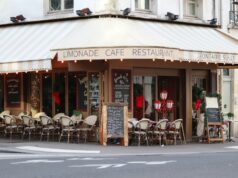
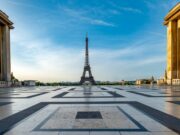
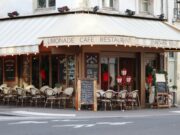
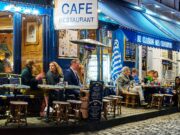
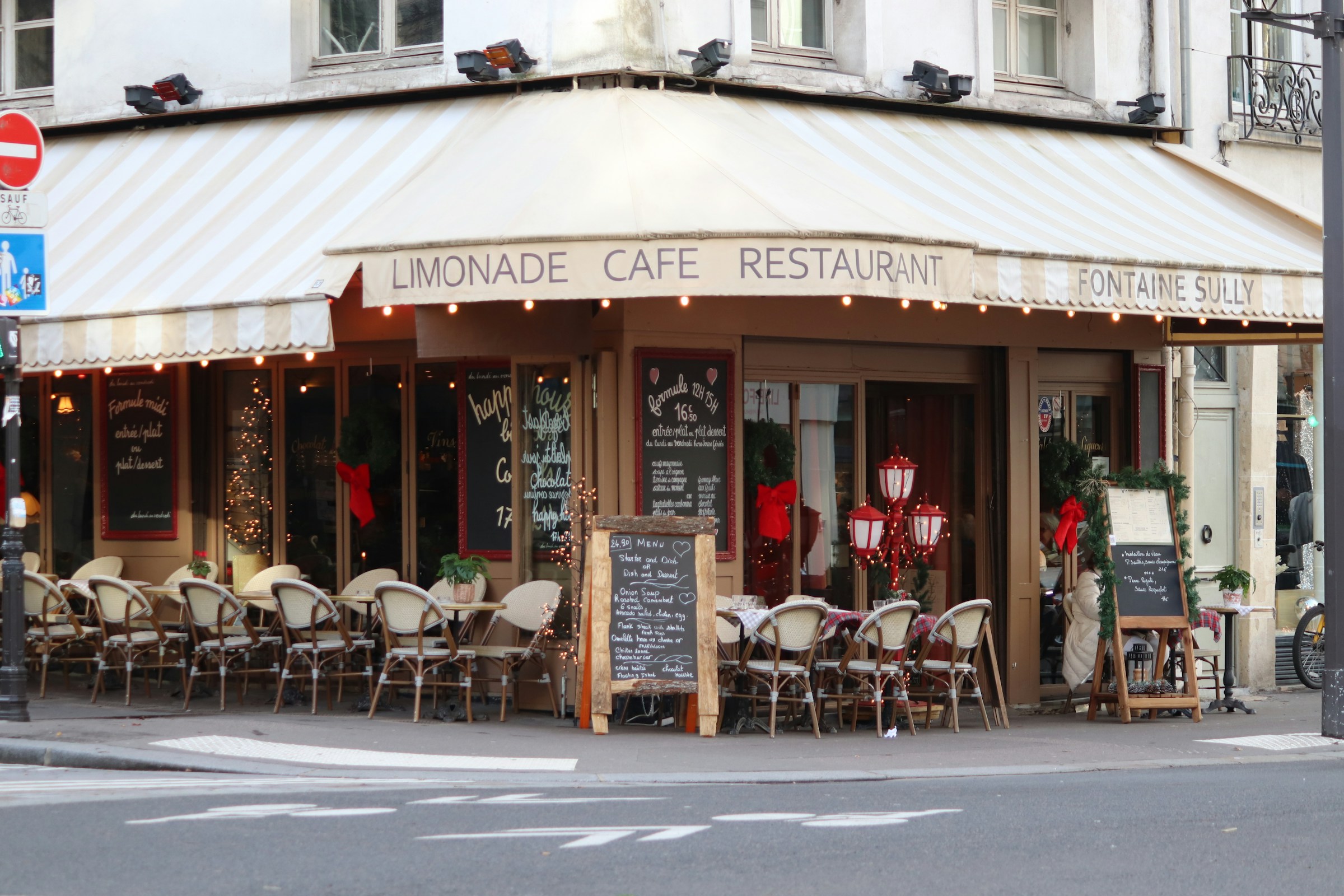
Paris is not merely a municipality or a collection of monuments. It is an idea with economic weight: Haussmann façades, cafés where conversation is part of the furniture, ateliers, bookstores, boulangeries, fashion houses, museums, terraces and streets that could belong nowhere else. That recognisable identity is not decorative nostalgia. It is productive capital.
It draws cultural travellers, luxury clients, students, investors, filmmakers and high-spending international visitors. It supports hospitality, restaurants, retail, craftsmanship, fashion and French soft power. When a destination loses distinction, the risk is not only cultural. Its economic proposition weakens too.
This editorial asks a difficult but legitimate question: can democratic tolerance built to protect freedom be exploited by organised extremist or separatist currents seeking to narrow other people’s freedom? The answer must never confuse a religion with an ideology, or millions of citizens with activists claiming to speak for them.
Laïcité is a rule of freedom, not cultural hostility
France has a precise legal framework. The Conseil d’État’s dossier on laïcité describes the balance: the state and public services are neutral; freedom of conscience and worship is protected; users of public services may express beliefs, subject to limits grounded in law, public order and the proper functioning of the service. Laïcité is neither erasure of belief nor permission for religious pressure.
The 2010 law prohibits clothing intended to conceal the face in public and specifies exceptions for health, professional, sporting, festive, artistic and traditional purposes. It is not a general ban on Muslim clothing. Legal precision matters.
The law of 24 August 2021 reinforcing the principles of the Republic extended neutrality duties to organisations carrying out public services, created a republican commitment for subsidised associations and strengthened transparency around religious associations. These are enacted tools, not evidence that every conservative practice is separatism.
What official evidence establishes
A Ministry of the Interior report published on 21 May 2025 examined the Muslim Brotherhood and political Islam in France. Its own nuance is essential: it said the national risk must be assessed in proper measure while identifying a real local ideological risk in certain territories. An administrative report informs debate; it is not a criminal judgment against unnamed associations, neighbourhoods or believers.
Foreign funding also requires proportion. Religious associations must declare certain foreign benefits above €15,300. A Senate inquiry reported that between 25 April 2022 and 1 July 2024 the Interior Ministry received 2,522 declarations covering 13,496 operations worth €108.6 million. Several faiths were represented: Protestant organisations accounted for 40.6% of the amount and Muslim organisations 19.6%. The figures do not support treating foreign religious finance as exclusively Muslim.
No authoritative evidence reviewed for this article supports a sweeping claim that Parisian identity is being traded for electoral clientelism, or that foreign-origin shops as a class cause extremism. Those claims are omitted. An Emirati café, a Chinese restaurant or a halal grocer is commerce; legality, coercion and institutional conduct are separate questions. Foreign investment should add to Paris, not make Paris less Parisian, but nationality is not a test of civic loyalty.
“The world comes to Paris to find Paris.”
Paris must remain Paris
Identity is protected less by policing private taste than by sustaining what makes French life visible. The APUR counted 60,846 shops, services, bars and restaurants in 2023. Commercial vacancy reached 10.9%, 0.7 percentage points above 2020. Bars, cafés and restaurants grew, while clothing, footwear and jewellery declined. Paris is not undergoing a single uniform collapse.
Pressure is real. INSEE recorded 16,200 business failures in Île-de-France in 2025, up 2.4% from 2024; accommodation and food services rose 9.9%. Failures do not prove “historic Paris” is disappearing, but they explain why independents facing rent, energy, wage, debt and demand pressures deserve attention.
The regional tourism authority’s 2025 results recorded nearly 50 million visitors, more than 23 million from abroad and close to €24 billion in tourism consumption. International visitors accounted for almost €16 billion. The numbers show the stakes; they do not prove which visual or social change alters demand. That causal claim requires visitor research.
Paris has instruments. Its bioclimatic local urban plan reports 329 kilometres of commercial protection, 29 kilometres artisanal and 9 kilometres cultural. The Fabriqué à Paris label had recognised 2,500 products from 1,357 companies since 2017 by May 2025. A public-interest group report recorded 225 new activities in 2024, including 58 artisans. Effectiveness should be judged by survival, affordability and continuity, not only openings and labels.
A professional observation, not a statistic
Through years of professional work with VIP Saudi and Gulf visitors, I have personally heard some travellers express surprise at encountering highly conservative social or religious environments in parts of Paris. This is a field observation, not a survey. It does not represent Gulf visitors as a whole or measure the city. Its narrower value is to identify a tourism expectation worth testing: visitors cross continents to experience Paris, not simply reproduce the environment they left.
The same principle applies to Chinese, American, African and European visitors. Paris does not become more international by becoming indistinguishable from the rest of the world. Part of its global power comes from welcoming the world without ceasing to be Paris.
The Saudi paradox, used carefully
Saudi Arabia is not a political model for France, and its institutions are not comparable with the French Republic. Its recent reforms nevertheless pose a useful paradox. Women were permitted to drive from 24 June 2018. Measures announced in 2019 enabled Saudi women to obtain passports and, from age 21, travel without prior permission, alongside civil-status and labour changes. A tourist e-visa opened in September 2019, initially to citizens of 49 countries. Entertainment, tourism and cultural institutions expanded under Vision 2030.
The official 2024 Vision 2030 report said women’s labour-force participation reached 33.5% in the third quarter of 2024, from a 22.8% baseline in 2016; the original 30% target was later raised to 40%. These are official reported results, not proof that every equality question is resolved.
The editorial question is limited: if some highly conservative restrictions are being reduced in a society historically associated with them, why should extremist interpretations gain room to reproduce coercive versions in European public life? The answer cannot be collective suspicion. It must be equal law, protection for people under pressure and confidence in democratic institutions.
Integration is a two-way public project
France’s republican integration pathway links lawful residence with language, civic knowledge and republican principles. Since 1 January 2026, a civic examination applies to specified applicants for multi-year residence, resident status and naturalisation. Exams alone do not create belonging. Integration also needs work, education, housing, participation and protection from discrimination.
Public authorities must act against intimidation, unlawful financing, discrimination against women, threats and organised attempts to replace republican law with ideological authority. The test must be conduct and evidence, never surname, origin or assumed belief.
2030 is a warning horizon, not a forecast
Several years can change a neighbourhood’s retail mix, rents, façades, visitor perception and positioning. Invoking 2030 does not predict that Paris will “lose its identity” on a date. It warns that cumulative choices can be hard to reverse.
The danger is not more international business. Cosmopolitan exchange is Parisian history. The danger is that weak heritage policy, commercial displacement, poor planning enforcement, institutional timidity toward coercive ideology and insufficient support for French creation could together make the city less distinctive and less free. Luxury and cultural tourism depend not only on hotels and monuments, but on the credibility of the place between them.
A direct message to French decision-makers
France should not have to choose between openness and identity. The Interior Ministry should enforce republican law against documented coercion, threats, separatist structures and unlawful financing with precision and judicial safeguards. Culture should treat living trades, fashion, cafés, bookstores, craftsmanship and streetscape as part of the cultural economy. Economy and tourism authorities should measure how turnover, rent, succession and closures affect destination value. Paris should publish transparent results for protected commercial streets and supported premises.
Elected officials should refuse denial and collective blame. Protect freedom of worship. Protect Muslims from discrimination. Protect women and dissenters from community pressure. Defend laïcité, equality, integration and the shared public sphere. Preserve architecture, historic shops, French fashion, craftsmanship and cultural life.
The objective is neither exclusion nor a museum city. It is a confident capital able to change without surrendering what the world crosses borders to encounter. Paris must remain Paris.
Conclusion
A free city does not demand sameness. It creates a common civic space in which difference can live without coercion. A great destination does not freeze its past; it carries recognisable memory into the future.
The question is not whether Paris should welcome the world. Its openness is a strength. The question is whether policy can welcome investment, migration, belief and creativity while protecting equal law and the cultural ecosystem that gives the city meaning.
The world comes to Paris to find Paris. France’s task is to make sure it still can.
Methodology: This signed editorial draws on official legal texts, institutional reports and tourism, commerce and economic data available in September 2026. Osama Samaha’s professional observation is labelled anecdotal and is not statistical evidence. No causal link between demographic or commercial change and tourism demand is asserted without data.
- Conseil d’État: laïcité
- Legifrance: Law 2010-1192
- Legifrance: Law 2021-1109
- Interior Ministry: 2025 report
- French Senate: foreign financing
- APUR: Paris commerce 2023
- INSEE: Île-de-France failures 2025
- Choose Paris Region: 2025 tourism
- City of Paris: urban plan
- Saudi Press Agency: women driving
- Saudi Press Agency: 2019 reforms
- Saudi Vision 2030 Annual Report 2024