The Olympic flame left Paris in 2024. The real contest began the next morning. Mega-events are easy to celebrate while the cameras are running; they are harder to justify two years later, when residents ask about housing, transport and public value, and tourism businesses ask whether the new map of Paris has produced new demand.
OUISTARS audited the Paris 2024 legacy using official sources current to 2 August 2026. We distinguish projects created for the Games from long-planned infrastructure accelerated by the deadline. We also separate delivered assets from benefits that remain forecasts.
OUISTARS Paris 2024 Legacy Score: 76/100
The score is an independent editorial assessment, not an official certification. It rewards assets already operating and discounts claims whose economic or social outcomes have not yet been measured.
1. Transport: the legacy visitors use every day
The most visible result is Metro Line 14. Extended north to Saint-Denis Pleyel and south to Orly Airport in June 2024, it now provides a direct airport-city route and a new north-south spine. Île-de-France Mobilités says Orly is about 25 minutes from Châtelet, while the full Saint-Denis–Orly journey takes roughly 40 minutes.
The Games also coincided with or accelerated a wider transport shift: RER E reached Nanterre-La Folie; Metro Line 11 extended to Rosny-Bois-Perrier; Line 12 reached Mairie d’Aubervilliers; and tram T3b continued to Porte Dauphine. The transport authority reports 1,200 new or renovated metro, train and RER units between 2016 and the Games.
Accuracy matters: these networks were not invented by the Olympics. Many had long planning histories and independent financing. The Games acted as a deadline and coordination accelerator. Calling the entire investment an Olympic creation would overstate the event’s role.
Tourism impact
A direct Metro link changes Orly’s competitive position, reduces transfer uncertainty and connects visitors to new areas. Saint-Denis Pleyel is becoming a strategic interchange for the Grand Paris Express. The opportunity is to turn that accessibility into overnight stays and cultural itineraries, not merely faster transit into central Paris.
2. The Seine: from global stage to public swimming
The Seine swimming plan began in 2015 and involved more than €1.4 billion from the City, State and partner authorities. The Olympic events created a non-negotiable deadline; the promised public legacy arrived in summer 2025. Seven permanent swimming sites opened across the Seine and Marne in 2025, and authorities announced eight for the 2026 season.
This is a rare Olympic asset that is both practical and globally marketable. Swimming in the Seine changes the city’s summer image. It can support neighbourhood cafés, river walks and longer stays, while giving residents direct value.
The caution is operational: water quality is affected by weather, rainfall and network conditions. “Permanent site” does not mean guaranteed opening every hour. Real-time health rules must outrank promotional calendars.
3. The Athletes’ Village became a real district
The Athletes’ Village was designed for conversion rather than abandonment. Official plans provide about 2,800 family, social and student homes, alongside offices, shops, services and public facilities. SOLIDEO describes a future population of roughly 6,000 residents and 6,000 workers. The first student residents moved in during 2025.
The most important legacy is not a tourist attraction. It is an attempt to use an event deadline to deliver a mixed, accessible district across Saint-Denis, Saint-Ouen-sur-Seine and L’Île-Saint-Denis. That is a stronger legacy principle than building a temporary spectacle with no post-event use.
Yet delivery does not end the audit. Housing affordability, occupancy, retail activation, heat resilience and daily services must be measured over years. A converted building is not automatically a successful neighbourhood.
4. Adidas Arena gave northern Paris a permanent event engine
The 8,000-seat Adidas Arena at Porte de la Chapelle was the only new competition venue built inside Paris for the Games. It now hosts Paris Basketball, concerts and events, while two gyms serve local users. The City also highlights a sensory room, recycled materials and a large green roof.
For tourism, an arena creates repeat demand instead of one summer peak. For the neighbourhood, its value depends on the quality of surrounding streets, food, security, transport and the share of event spending captured by local businesses. A municipal report from 2025 already documented nearby commercial activity linked to event nights, but a full economic evaluation is still needed.
5. Renovated facilities, cycle routes and accessibility
Paris reports seven sports facilities renovated or modernised for Olympic training and about 30 kilometres of cycle routes created for the event. The wider legacy programme also accelerated accessible bus stops, inclusive sports facilities and neighbourhood accessibility work.
These improvements matter to visitors with disabilities, families and older travellers as much as to athletes. But accessibility should be tested as an uninterrupted journey: airport or station, pavement, transport, venue, hotel room and information. One accessible building cannot compensate for a broken route.
6. Saint-Denis gained a new tourism proposition
Saint-Denis already had the Basilica, Stade de France and major cultural history. Paris 2024 added the Aquatics Centre, Pleyel interchange, converted village and a global wave of recognition. Combined with future Grand Paris Express lines, the area can become a destination rather than an event annex.
That potential is not automatic. Visitors need coherent multilingual wayfinding, safe and attractive walking routes, bookable local experiences, evening restaurants and hotel products linked to culture, sport and business. Otherwise the new infrastructure simply moves people through.
7. The temporary city was largely temporary
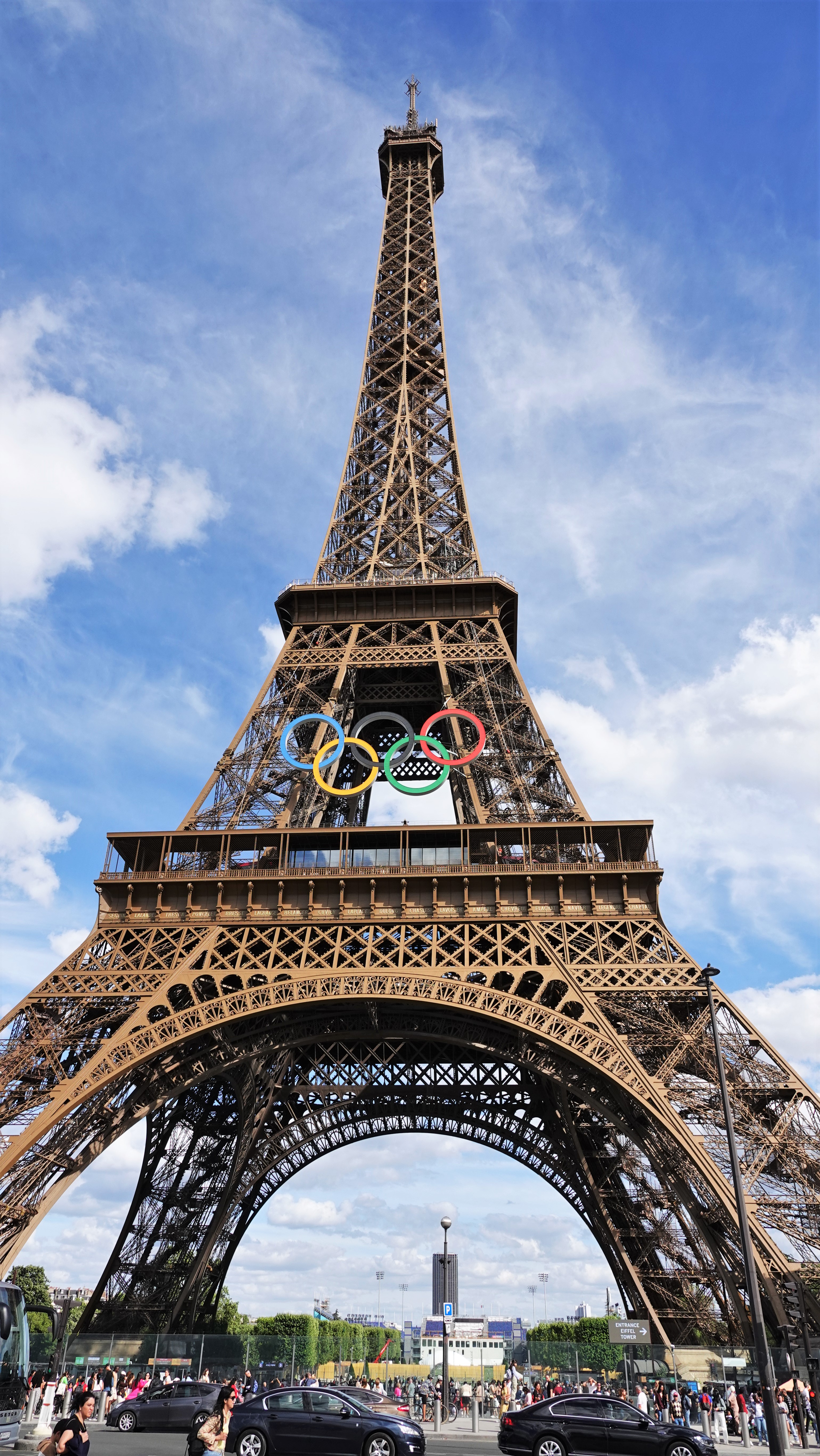
Place de la Concorde, the Eiffel Tower stadium and other spectacular competition settings were intentionally temporary. That avoided a landscape of unused stadiums, but it also means that memories, public-space lessons and event-operating expertise form a large part of the legacy.
The operational inheritance includes crowd management, integrated transport planning, accessible event design and inter-agency security coordination. These capabilities can strengthen future concerts, congresses and international events if they are documented, retained and trained rather than allowed to disperse.
What has not yet been proved
The investment pipeline after the Games
The next phase is not another Olympic venue. It is the Grand Paris Express, continued housing and commercial activation around Pleyel, river-quality maintenance, and the programming of permanent venues. Tourism authorities should map these investments as one visitor economy rather than treating sport, transport, culture and urban development as separate files.
OUISTARS Editorial Analysis
Paris 2024 avoided the most obvious mega-event failure: a collection of giant empty stadiums. Its strongest legacy is the network effect between Line 14, Saint-Denis Pleyel, the converted village, the Seine and a small number of permanent venues. The strategy was often acceleration and reuse rather than construction for its own sake.
The weakness lies in conversion. France is better at delivering infrastructure than turning it into a clearly packaged tourism economy for new districts. Saint-Denis should not be sold as “the place where the Olympics happened.” It should be presented through living heritage, sport, architecture, music, gastronomy and the people who live there.
The Olympic legacy will deserve a higher score only when published data show durable local jobs, active ground-floor businesses, affordable occupied homes, reliable river access and visitor spending that reaches beyond central Paris.
A practical post-Olympic itinerary
Related OUISTARS guides: getting around Paris in 2026, France events calendar, where to stay in Paris and Paris airports guide.
Frequently asked questions
Can tourists swim in the Seine in 2026?
Yes, at authorised seasonal sites when health and weather conditions permit. Authorities announced eight sites in the Seine and Marne region for summer 2026; opening status must be checked the same day.
Was Metro Line 14 built for the Olympics?
No. It was a long-planned metropolitan project. Paris 2024 acted as a powerful delivery deadline and accelerator for the extensions.
What happened to the Athletes’ Village?
It was converted into a mixed district planned for about 2,800 homes, offices, shops, services and public facilities; residents began moving in during 2025.
Which Olympic venue remains active in Paris?
Adidas Arena at Porte de la Chapelle is a permanent 8,000-seat venue for basketball, concerts and other events, with two local gyms.
Official sources
Evidence: Île-de-France Mobilités transport legacy; City of Paris 2026 swimming announcement; SOLIDEO Athletes’ Village; French Ministry for Ecological Transition; and City of Paris Adidas Arena.
OUISTARS travel planning: Travellers arranging a trip in France can review OUISTARS private chauffeur and luxury transportation services for airport meet-and-greet, hotel transfers and tailored journeys.