Paris does not become a great tourism city when visitors replace residents. It succeeds when visitors want to enter a city in which people still want—and can afford—to live. That is the uncomfortable test behind the capital’s next decade.
OUISTARS editorial analysis, updated 2 August 2026. Official statistics are identified as such; the score and conclusions below are editorial assessments, not government rankings.
The paradox behind Paris’s success
Greater Paris was expected to receive about 37.3 million tourists in 2025, according to the January 2026 barometer from Paris je t’aime. That volume sustains hotels, restaurants, culture, retail, transport and thousands of jobs. Yet the same success can intensify pressure when visitors concentrate in a handful of districts, on the same days, while short-term accommodation competes with homes.
This is not an argument against tourism. Nor does every queue prove “overtourism.” The issue begins when visitor activity persistently weakens housing access, neighbourhood services, mobility, public space or residents’ willingness to welcome guests.
OUISTARS Liveability Test: Paris scores 68/100
OUISTARS assessed five questions that determine whether a destination can remain desirable without hollowing itself out. The result is 68/100: Paris has strong institutions and transport, but housing pressure and the uneven distribution of tourism remain serious vulnerabilities.
- Housing protection — 13/20: stronger rules and visible enforcement, but a large short-stay market still demands constant supervision.
- Crowd distribution — 14/20: the metropolitan area has enormous capacity, yet demand remains concentrated around a few icons and peak periods.
- Mobility and public space — 16/20: an exceptional network and increasingly walkable streets, offset by peak congestion, luggage friction and accessibility gaps.
- Benefits for residents — 13/20: tourism supports jobs and tax receipts, but value is not felt equally across households or districts.
- Climate resilience — 12/20: progress on greening and lower-carbon movement, while hotter summers increase the need for shade, water and heat-safe visitor planning.
Method: each dimension is an OUISTARS editorial judgement based on published city rules, official tourism indicators and observable policy choices. It is designed to provoke accountable debate, not to imitate an official index.
Housing is the decisive battle
Since January 2025, a primary residence in Paris may generally be rented as tourist accommodation for no more than 90 days per calendar year. A non-primary residence normally requires change-of-use authorisation, often with compensation. The city states plainly that uncontrolled short-term rentals can remove homes from the long-term market, raise housing costs and alter neighbourhood life.
At 30 September 2024, Paris reported 95,344 registered furnished tourist rentals; 78,301 were declared primary residences. Registration does not itself prove that every listing is active or unlawful. It does show why enforcement matters. In April 2026, the city publicised a €585,000 court penalty concerning the illegal conversion of an entire building—evidence that the issue is no longer treated as a minor administrative offence.
The fairest policy distinguishes a resident occasionally sharing a genuine home from a professional operation permanently removing apartments from housing supply. Blanket hostility toward visitors is ineffective; precise enforcement against abuse is essential.
Crowds are a question of place and time
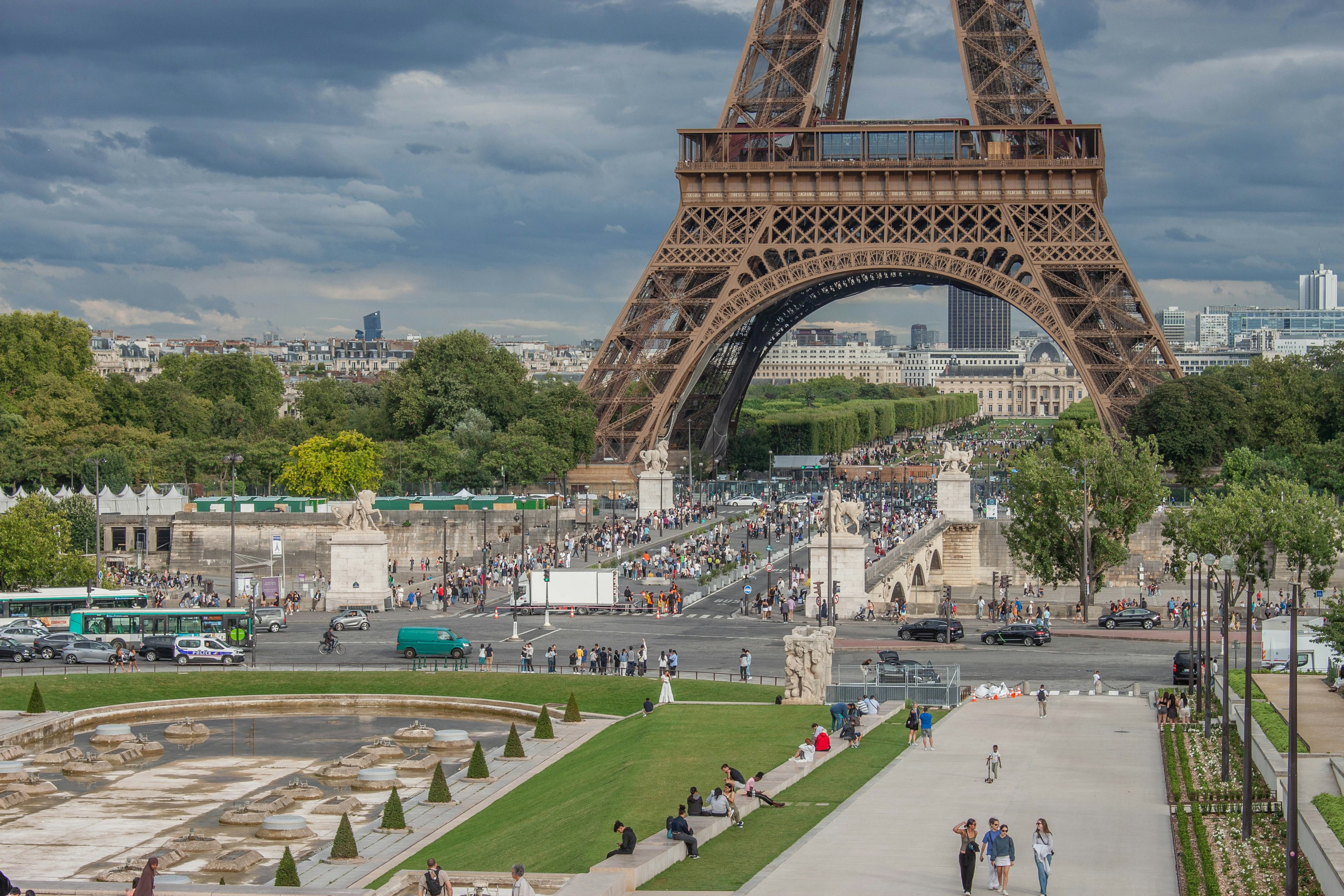
Paris is not uniformly overcrowded. Pressure peaks around the Eiffel Tower, the Louvre, Notre-Dame, Montmartre and the Seine, especially during holidays and major events. The city’s New Year’s Eve hotel occupancy reached 100%, while tourist-rental bookings over the 2025 holiday period were reported down 13.2%. Both facts can be true: demand changes by segment, date and geography.
Timed museum entry, earlier dining, evening cultural openings and itineraries that connect central Paris with the wider metropolis can distribute demand without degrading the experience. The objective should be better movement, longer stays and higher local value—not simply more arrivals.
A city must not become a stage set
Tourists come for monuments, but they remember living Paris: a baker who knows the neighbourhood, a crowded market, a school street, an independent bookshop, a terrace whose customers are not all temporary. If ordinary residents, craftspeople and essential workers are priced out, the product visitors came to experience eventually disappears.
Paris’s competitive advantage is not only what can be photographed. It is the urban life surrounding the photograph.
Mobility can protect liveability
Paris already offers one of the world’s strongest combinations of Metro, RER, buses, walking and cycling. The remaining friction is often operational: coaches circulating near landmarks, badly managed drop-off points, luggage on crowded platforms and trips that are technically possible but not comfortably accessible.
A smarter visitor economy coordinates timed attractions, hotel arrivals, station transfers and professional pre-booked transport. Private vehicles should be used selectively—when luggage, accessibility, families or tight schedules justify them—not as a substitute for a high-capacity public network.
Heat changes the tourism equation
Summer tourism policy can no longer be separated from climate adaptation. Shade, drinking water, cool public interiors, tree cover, heat alerts and flexible opening hours are visitor infrastructure. A beautiful itinerary that becomes unsafe in extreme heat is not a successful itinerary.
Hotels, event organisers and tour operators should communicate heat plans as clearly as cancellation terms. The most resilient destinations will sell comfort, safety and seasonality—not just sunshine.
Eight decisions Paris should prioritise
- Enforce housing rules consistently, targeting illegal permanent conversion rather than occasional lawful home-sharing.
- Manage for value, not raw volume, using spending, length of stay, resident sentiment and local benefit as core indicators.
- Spread demand across seasons, hours and neighbourhoods, with transport and cultural programming to match.
- Publish a resident-benefit dashboard linking tourism receipts, jobs, housing enforcement and neighbourhood investment.
- Improve arrival logistics at airports, stations, hotels and major events, including luggage and accessible journeys.
- Protect independent commerce so famous districts do not become rows of interchangeable visitor businesses.
- Design for heat and accessibility from the start, not as an afterthought.
- Build regional itineraries that connect Paris with Île-de-France and other French destinations, increasing stay value while easing hotspot pressure.
What responsible visitors can do
Book legal accommodation, reserve crowded attractions, travel outside the busiest hours, use public transport where practical and spend beyond the global chains. Staying longer and seeing fewer places well usually creates more local value—and a better trip—than racing through a checklist.
For planning, read OUISTARS guides to the best time to visit Paris, where to stay, getting around Paris and the France events calendar.
OUISTARS Editorial Analysis
Paris can remain the world’s tourism capital—but not by defending a title through arrival numbers alone. Its real advantage is the combination of culture, beauty, commerce, mobility and everyday urban life. Tourism policy therefore needs the permission of residents, measurable shared value and a city that functions before, during and after the visitor peak.
The danger is not that Paris has too many admirers. It is that success could be measured too narrowly until housing, public space and authenticity become weaker than the brand. The winning strategy is neither closure nor unlimited growth. It is disciplined hospitality: protect homes, distribute demand, reward quality, invest in neighbourhoods and make every visitor flow easier to manage.
Frequently asked questions
Is Paris suffering from overtourism?
Some locations and periods experience intense pressure, but Paris is not uniformly overcrowded. The strongest evidence concerns concentrated visitor flows and housing pressure linked to short-term accommodation.
How many tourists visited Greater Paris in 2025?
Paris je t’aime expected approximately 37.3 million tourists in Greater Paris in 2025, broadly similar to 2023. This metropolitan figure should not be confused with national arrivals for France.
What is Paris’s 90-day rental rule?
Since January 2025, a primary residence may generally be offered as tourist accommodation for up to 90 days per calendar year. Other properties normally require additional change-of-use authorisation.
Should visitors avoid central Paris?
No. Reserve major attractions, use quieter hours and combine icons with less-congested neighbourhoods. Good timing improves both the visitor experience and local liveability.
How can tourists reduce their impact?
Choose legal accommodation, stay longer, use public transport, respect residential buildings and support independent local businesses.
Official sources
- Paris je t’aime: January 2026 tourism barometer
- City of Paris: furnished vacation rental rules
- City of Paris: meublés touristiques rules and enforcement
- City of Paris: April 2026 housing-protection enforcement case
- Paris Council: registered tourist-rental figures
- City of Paris: keyboxes on public street furniture
OUISTARS travel planning: Travellers arranging a trip in France can review OUISTARS private chauffeur and luxury transportation services for airport meet-and-greet, hotel transfers and tailored journeys.