















The American return to Paris is no longer a recovery story. It is an economic dependency story. In the first half of 2026, 1.5 million visitors from the United States travelled to Paris Region, more than from any other foreign market. They arrived into an economy in which international visitors now generate roughly two-thirds of regional tourism spending, and in which long-haul guests routinely buy the most expensive accommodation.
That does not mean every American in Paris is wealthy, or that nationality predicts an individual’s budget. It means scale and purchasing power coincide in one market. The United States supplies backpackers, students, repeat cultural travellers, business delegates, multigenerational families and private-suite clients. Taken together, their decisions affect airlines, hotels, restaurants, museums, guides, retail, real estate and the public finances of the destination.
The return, measured
Fact: Choose Paris Region’s latest half-year assessment, released on 2 September 2026, counted 1.5 million U.S. visitors between January and June. Americans remained the region’s leading foreign clientele. The total market reached 1.4 million in the first half of 2025, when it was already up 5% year on year.
The full-year line is equally clear. Paris Region received 2.7 million U.S. tourists in 2024, 3% more than in 2023. The 2025 total rose to 2.8 million, another 1% increase. These are regional visitor estimates, not hotel arrivals for Paris city alone, and the distinction matters. The economic orbit includes Versailles, Disneyland Paris, La Vallée Village, the airport corridor and stays elsewhere in Île-de-France.
The wider market is growing by value as well as volume. In the first half of 2026, overall tourist spending in Paris Region reached €11.8 billion, up 4% in a year and 17% from 2019. International visitors accounted for €7.8 billion. The official release does not assign all of that spending to nationalities, so it would be wrong to infer a current American share from the arrival count alone.
The billion-euro high-contribution core
A more detailed 2024 study by Choose Paris Region, the Paris Île-de-France Chamber of Commerce and Industry and Crocis isolated “high-contribution” international visitors. Of 2.7 million American travellers, 688,000 met the study’s criteria. They generated an estimated €1.1 billion, stayed 3 million nights and spent €1,561 per person per trip on average.
Americans were the largest national high-contribution group in the study: 27% of the relevant visitors, 38% of their nights and 32% of their expenditure. For context, the region’s entire high-contribution international segment generated €6.9 billion in 2024.
Analysis: This is why the U.S. market matters twice. It is already Paris Region’s biggest foreign market by headcount, and it also contains an unusually large premium segment. As our investigation into the foreign spending behind French luxury explains, the useful question is not “Are Americans rich?” It is which traveller segments buy which French products, for how long, and with what leakage from the local economy.
What Americans actually buy
The American tourism euro is distributed more widely than a luxury shopping bag suggests. Accommodation usually takes the largest share. During the Paris 2024 Olympic and Paralympic period, Insee found that visitors from the American continent using commercial accommodation spent €267 per night on average, 25% more than the comparable 2023 period. Of that, €170 went to accommodation, €34 to food, €32 to leisure, €22 to goods and €9 to transport.
The Olympic sample is not a normal-year proxy: prices, event tickets and visitor composition were exceptional. Insee explicitly excludes Games-related spending from the nightly figure. Yet the accommodation preference is revealing. Two-thirds of hotel nights by visitors from the Americas were in four- or five-star hotels in August 2024, as in August 2023.
Beyond hotels, Americans sustain English-speaking guides, culinary tours, fashion appointments, private museum access, river cruises, theatre and cabaret, rail extensions and wine-region itineraries. They also buy the intangible assets France exports most successfully: history, design, gastronomy and the idea of Paris itself.
Not one American traveller
New York does not behave like Dallas, and a first visit does not behave like a tenth. A strong commercial strategy separates at least five U.S. profiles: the first-time landmark buyer; the repeat neighbourhood explorer; the luxury and fashion client; the family or celebration group; and the business traveller extending a work trip.
Age and life stage matter as much as income. Younger visitors may spend heavily on food, beauty, contemporary fashion and experiences while economising on rooms. Retirees may value space, elevators, private transport and expert cultural interpretation. Families need connected rooms, predictable meal options and logistics that work with luggage and children. Our guide to five affluent traveller profiles in Paris shows why one “premium American” persona is operationally weak.
This segmentation also protects editorial accuracy. National averages describe a market, never a person. A destination that confuses nationality with wealth will deliver poor service and encourage social resentment.
Why Paris keeps winning
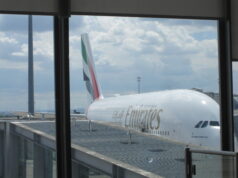
Paris offers U.S. travellers a rare combination of direct access and emotional demand. Transatlantic aviation connects major American gateways to Charles de Gaulle and, on selected routes, Orly. High-speed rail then converts Paris into a first chapter for Champagne, Bordeaux, Lyon, Provence, the Alps or London.
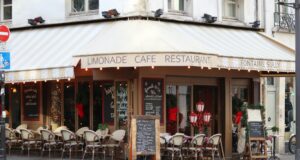
The cultural proposition is unusually dense. A visitor can combine the Louvre, an independent gallery, a palace hotel, a neighbourhood bistro, a couture appointment and a concert without leaving a compact urban core. Film, television, literature and fashion continually renew the city’s visibility, even when their Paris is fictionalised.
The dollar has also shaped demand at different moments, but exchange rates move in both directions and should not be treated as a destination strategy. A favourable currency can accelerate a trip; it cannot compensate indefinitely for weak service or a damaged public realm.
The friction behind the romance
American visitors routinely encounter a gap between the price of Paris and the consistency of its delivery. Small rooms are an accepted part of the urban fabric; unclear categories, slow responses and surprises at arrival are not. Premium travellers compare Paris not only with London and Rome, but with Tokyo, Dubai and high-service resorts.
Airport arrival remains decisive. Border queues, baggage recovery, taxi fraud anxiety and unreliable handoffs can damage trust before the hotel has a chance to build it. France’s planned airport investment therefore belongs to the tourism value chain, as OUISTARS examined in the €8.2 billion test facing Paris airports.
Other frictions are more prosaic: limited late dining, museum capacity, confusing tax-refund procedures, pickpocketing risk, strike disruption and weak accessibility information. None cancels Paris’s appeal on its own. Together, they can shorten a stay, reduce discretionary spending or send the next trip to a competitor.
The tax-free shopping question
U.S. visitors are important customers for French fashion, beauty, jewellery and department stores. Global Blue reported that tax-free spending by U.S. shoppers in continental Europe rose 16% year on year in March 2025. That is a processor’s transaction indicator, not a complete measure of American retail expenditure, but it confirms commercial momentum.
France’s advantage is authenticity and assortment: maisons, flagships, workshops and products associated with place. Its disadvantage is procedural friction. A tax refund that is explained badly, validated slowly or returned opaquely reduces the effective value proposition.
Retailers should resist treating every American as a logo-driven buyer. Repeat visitors may seek emerging designers, vintage, craft, homeware, beauty and private access. The opportunity is to move demand beyond a few congested avenues while keeping value within independent Paris commerce.
What could weaken the market?
Currency and household confidence: A weaker dollar, slower U.S. growth or pressure on discretionary income can change booking windows and room categories quickly.
Air capacity and fares: The American return relies on a dense transatlantic bridge. Aircraft availability, fuel costs, airport constraints and geopolitical shocks affect price and frequency.
Competition: More than half of Americans studied by Paris je t’aime also visited other European countries, particularly Italy and the United Kingdom. Paris is often competing for nights inside one itinerary, not only for the trip itself.
Overexposure: Screen-driven demand can concentrate visitors around the same monuments and fictional neighbourhoods. If the reality feels crowded or generic, the cultural premium erodes.
Policy uncertainty: Entry rules, aviation regulation, tourism taxes and transatlantic politics can influence sentiment even when travel remains legally straightforward.
A policy agenda built around yield and loyalty
France should not pursue American spending by making central Paris a private enclave. The most valuable interventions are shared infrastructure: safer streets, clean stations, accessible transport, legible information and predictable public services.
- Measure value by segment: connect origin, length of stay, accommodation, repeat visitation and spending categories without profiling individuals.
- Protect the air-to-hotel journey: improve border staffing, baggage information, official transport and disruption communication.
- Sell the second and third visit: package neighbourhood culture, craft, contemporary art and regional rail extensions rather than recycling landmarks.
- Train for American diversity: service should recognise different ages, budgets, ethnicities, family structures and accessibility needs.
- Keep culture bookable: multilingual inventory, timed entry and qualified guides convert aspiration into spend while managing crowds.
- Make refunds transparent: digital status and plain-language tax-free guidance reduce distrust at the end of the purchase.
Where investors should look
The opportunity extends beyond additional luxury rooms. Paris needs well-designed family accommodation, accessible premium rooms, dependable airport transfers, luggage logistics, cultural inventory systems, restaurant reservations, neighbourhood concierge services and tools that join Paris with the regions.
There is also room for products built around repeat demand: private learning, gastronomy residencies, atelier access, wellness, sport, design and longer stays combining work and leisure. The most defensible businesses will solve friction rather than merely add another sales layer.
OUISTARS view: American demand should be treated as strategic, but never guaranteed. The market rewards France’s strongest assets and exposes its operational weaknesses at the same time.
Back, but not captured
The evidence is robust: Americans are Paris Region’s largest foreign clientele, their numbers have moved above the 2024 recovery level, and a substantial high-contribution segment supports more than a billion euros of regional spending. The latest 2026 figures show continued scale rather than a post-Olympic retreat.
But an arrival is not a blank cheque. Paris still has to earn the extra night, the regional extension, the restaurant booking, the cultural purchase and the decision to return. American spending power matters because it is large, mobile and contested. France’s task is to convert fascination into loyalty without sacrificing the city that created the fascination.
Sources and data note
Primary sources: Choose Paris Region’s first-half 2026 assessment; its full-year 2025 release; the CCI Paris–Choose Paris Region high-contribution study; and Insee’s Paris 2024 visitor-spending analysis. “American” and “Americas” are not interchangeable: the high-contribution and arrivals data identify the United States; the Olympic nightly-spending data cover the American continent.