












Paris does not need millions of Gulf visitors for the market to matter. It needs to understand the economic radius of the travellers it already attracts. A family arriving from Riyadh, Dubai, Doha, Kuwait City, Manama or Muscat may support far more than an airline seat and a hotel room. The trip can extend through suites, connecting rooms, private transport, restaurants, department stores, luxury boutiques, cultural visits and family entertainment.
That value makes the Gulf one of the most strategically important small-volume markets in French tourism. It also makes complacency dangerous. London, Milan, Geneva and increasingly the Gulf’s own cities compete for the same time and spending. Paris retains extraordinary cultural and retail power, but heritage alone does not guarantee loyalty.
The number France should watch
Fact: 345,000 visitors from Gulf countries travelled to Paris Region in 2024. Of these, 135,000 were classified as high-contribution tourists in a joint study by Choose Paris Region, the CCI Paris Île-de-France and Crocis. That group generated an estimated €392 million, stayed 700,000 nights and spent an average of €1,592 per person per stay.
The average was higher than the comparable figures in the same study for high-contribution visitors from the United States (€1,561) and China (€1,495). Gulf travellers represented 6% of high-contribution tourists, 9% of their nights and 6% of their spending.
These figures cover total tourism consumption, not luxury-shopping receipts alone. They include spending on accommodation, food, transport, leisure and purchases. That methodological boundary matters. It prevents a common exaggeration in which every euro spent by a wealthy traveller is casually attributed to handbags and watches.
Analysis: The market’s strategic value comes from the combination of high spend, longer stays and demand across several premium services. As our investigation into who really buys French luxury shows, headcount is a poor proxy for economic impact.
A young, frequent and family-led travel market
Atout France describes Gulf travellers as unusually mobile. Its 2025 market profile says 57.1% travel as couples or families, the average age falls between 21 and 40, and 34% travel more than five times a year. Shopping, gastronomy and leisure are among the principal motivations for travel to France.
The same profile says Gulf clients account for 75% of outbound traveller spending from the wider Middle East region. Atout France estimated that regional travel spending would reach $8.9 billion worldwide in 2025, 12.2% above 2019. These are market estimates, not a measure of spending in France, but they show why destinations compete so intensely for this audience.
Family structure changes the product Paris must deliver. Two hotel rooms sold separately are not the same as guaranteed connecting rooms. A restaurant that closes its kitchen early may lose a party after an evening shopping appointment. A chauffeur, concierge or personal shopper becomes part of the destination infrastructure rather than an ornamental extra.
This is not an argument for stereotypes. Gulf visitors differ by country, age, income, language, travel purpose and level of familiarity with France. Kuwaiti repeat visitors, young Saudi couples, Emirati families and Qatari business travellers cannot be served with one script. The useful insight is operational: flexibility, privacy, space and cultural fluency can carry measurable value.
The summer signal
Paris tourism data for summer 2025 suggested renewed momentum. Paris je t’aime reported that, from 1 July to 17 August, visitor nights from Saudi Arabia were 24% above 2023, the United Arab Emirates 21% higher and Qatar 8% higher. The comparison uses 2023 rather than 2024 because the Olympic year distorted normal seasonal flows.
The numbers do not establish a permanent trend, but they disprove the idea that the Gulf market belongs only to a pre-pandemic past. Demand can return quickly when air access, school holidays, weather and confidence align.
Seasonality is central. Summer heat in the Gulf encourages travel to cooler destinations. Ramadan and Eid shift through the calendar. School holidays differ across countries. Monthly tax-free data can therefore swing sharply without signalling a structural collapse. In March 2025, Global Blue recorded a 12% annual fall in Gulf tax-free spending in continental Europe after a 21% rise in February, largely attributing the reversal to Ramadan beginning ten days earlier.
The air bridge is part of the luxury product
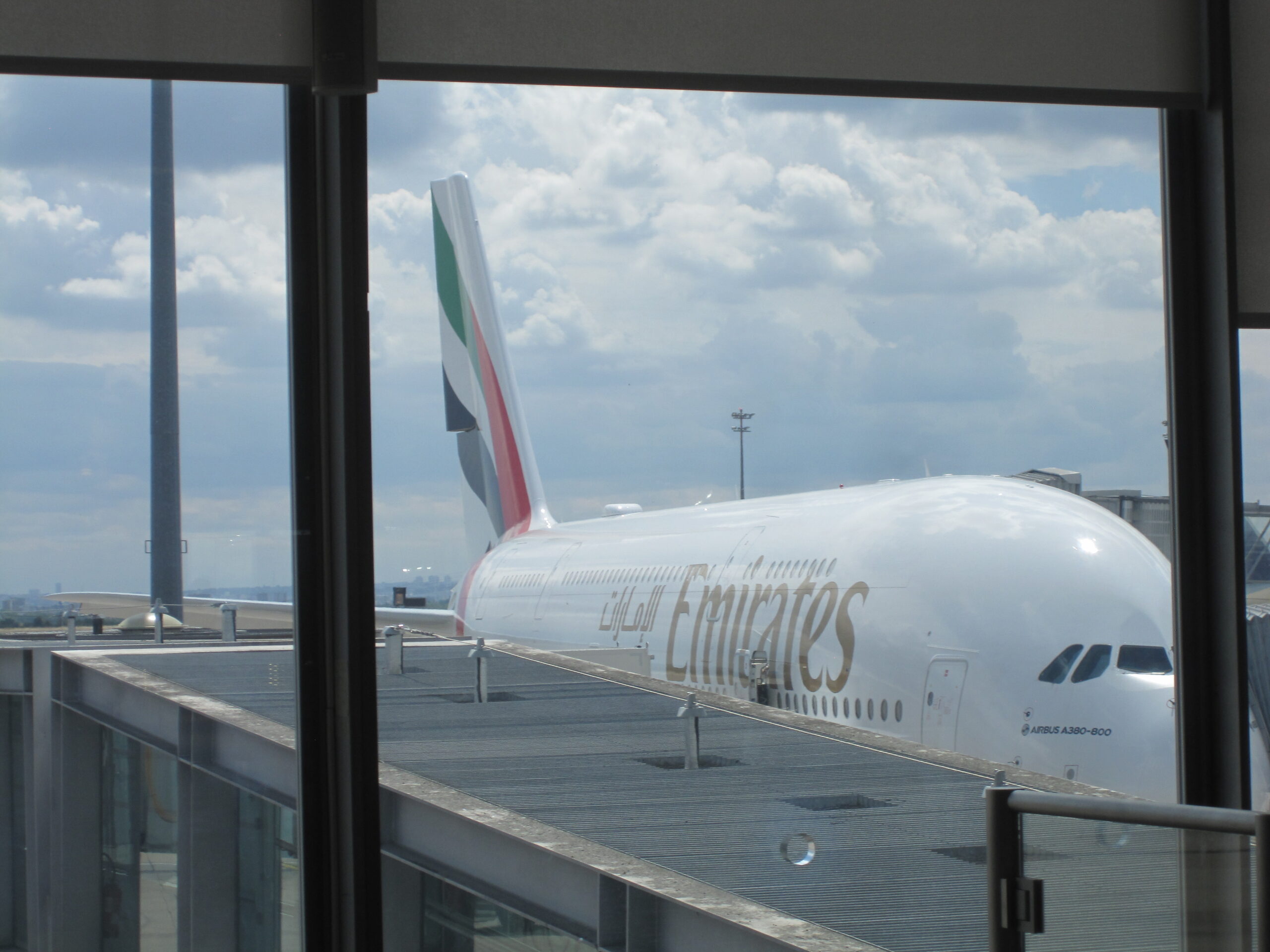
Gulf travel to Paris is sustained by dense premium aviation links. Emirates currently lists 21 weekly flights between Dubai and Paris, while Qatar Airways markets direct Doha-Paris services and Etihad sells Abu Dhabi-Paris itineraries. Air France and Saudia add further connectivity across the region.
Frequency does more than increase capacity. It gives families date flexibility, makes shorter premium trips viable and supports business-leisure combinations. First- and business-class cabins, lounges, chauffeur services and luggage handling also set expectations before the visitor reaches Paris.
The weak link can be the final kilometre. A slow arrival, confusing pickup zone, language gap or unreliable transfer can break the premium promise immediately. Investment at Charles de Gaulle and Orly should therefore be judged not only by terminal architecture but by the complete door-to-hotel journey. OUISTARS has examined this issue in the €8.2 billion test facing Paris airports.
Why Paris wins
Paris offers a concentration that few cities can match: more than 100 five-star hotels and 130 Michelin-starred restaurants, according to the regional high-contribution study, alongside flagship retail, museums, private cultural access and family attractions. The French capital can combine Avenue Montaigne with the Louvre, a palace hotel with Disneyland Paris, and a fashion appointment with a countryside or Riviera extension.
For repeat visitors, the city’s strength is not the Eiffel Tower alone. It is the ability to construct a different Paris each time: fashion, gastronomy, art, wellness, gardens, equestrian experiences, football, shopping or education. That is consistent with our guide to the different reasons affluent guests choose Paris.
How France could lose the market
Service friction. High room prices do not excuse uncertain connecting-room inventory, slow responses or limited late dining. Gulf families compare the service with Dubai, London and leading Asian cities.
Safety anxiety. Atout France’s market presentation says security is an essential holiday-choice factor for 93% of Gulf travellers surveyed. The perception of safety matters from airport transfer to shopping street. Police presence, reliable transport, theft prevention and clear visitor information are therefore economic infrastructure.
Weak Arabic capability. English often works, but Arabic-language pre-arrival communication, menus, concierge support and emergency information reduce friction and demonstrate respect. Machine-translated hospitality is not a substitute for trained staff.
Tax-refund frustration. Luxury shopping competes across borders. Complicated eligibility explanations, validation queues and opaque refund tracking can redirect spending to a destination with a smoother process.
Failure to renew the experience. A visitor who already knows the Golden Triangle needs access to craftsmanship, culture and neighbourhoods, not another generic shopping itinerary.
Geopolitical and economic shocks. Regional conflict, airspace disruption, exchange rates and oil-linked confidence can alter demand quickly. France cannot control these forces, but it can diversify source countries, maintain relationships and communicate clearly during disruption.
A policy agenda built around value, not privilege
Winning high-spending visitors does not require turning Paris into a private club. The most effective improvements are shared public goods: clean streets, dependable transport, safe stations, accessible information and professionally trained workers. Residents, employees and visitors all benefit.
- Measure value accurately: publish origin, stay length and spending categories with privacy safeguards, and avoid equating nationality with wealth.
- Design for families: incentivise connected inventory, apartment-style luxury accommodation and larger electric transfer vehicles.
- Professionalise multilingual service: fund Arabic and intercultural training across hotels, retail, hospitals, museums and mobility.
- Digitise the journey: connect pre-arrival concierge, tax-free documentation, bookings and disruption alerts.
- Build year-round reasons to travel: culture, winter shopping, fashion, sport and Alpine or Riviera combinations can reduce dependence on a short summer peak.
- Protect trust: transparent pricing, verified operators and responsive complaint handling matter as much as promotion.
Where investors should look
The opportunity is not limited to new five-star hotels. It includes serviced residences with family-scale layouts, premium mobility fleets, Arabic-speaking concierge platforms, late-night dining operations, luggage logistics, private cultural programming, medical-wellness coordination, tax-refund technology and fraud-resistant luxury resale.
There is also opportunity outside central Paris. Disneyland Paris, La Vallée Village, Versailles and airport corridors can capture more value when transfers, luggage and bookings operate as one journey. France can then convert a Paris stay into a wider national itinerary, including the Riviera and the Alps.
OUISTARS view: The Gulf market matters because it rewards quality across an ecosystem, not because every visitor is wealthy. France should compete for that value with better service and stronger public space, never with caricature or exclusion.
A market France cannot afford to misunderstand
Gulf visitors will continue to have choices. Dubai offers frictionless luxury close to home. London combines language familiarity and deep Gulf networks. Milan offers fashion with a compact retail geography. Geneva and the Alps sell privacy and climate. Paris wins when it combines culture, emotion, retail and hospitality at a level no competitor can assemble in quite the same way.
The risk is not that every Gulf traveller suddenly abandons France. It is that each trip becomes shorter, each purchase moves elsewhere and each family chooses another city for the next holiday. In a market where 135,000 high-contribution visitors generated €392 million in one year, small shifts have large consequences. France cannot afford to lose the market, and even less can it afford to misunderstand it.
Sources and data note
Principal sources: CCI Paris Île-de-France and Choose Paris Region high-contribution study (2024 data, published October 2025); Atout France Gulf market profile (updated June 2025); Paris je t’aime August 2025 barometer; and airline route pages checked on 3 September 2026. Spending figures are averages for defined groups and must not be applied to individuals.







[…] United States, Asia, Europe, the Gulf and emerging wealth centres. As the Gulf market analysis in our Paris feature shows, family structure, privacy and service design can matter as much as the […]