













oui stars Travel Editorial Analysis | Tourism Economy | Culture & Identity | 7 September 2026
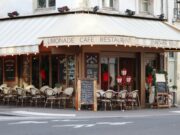
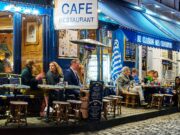
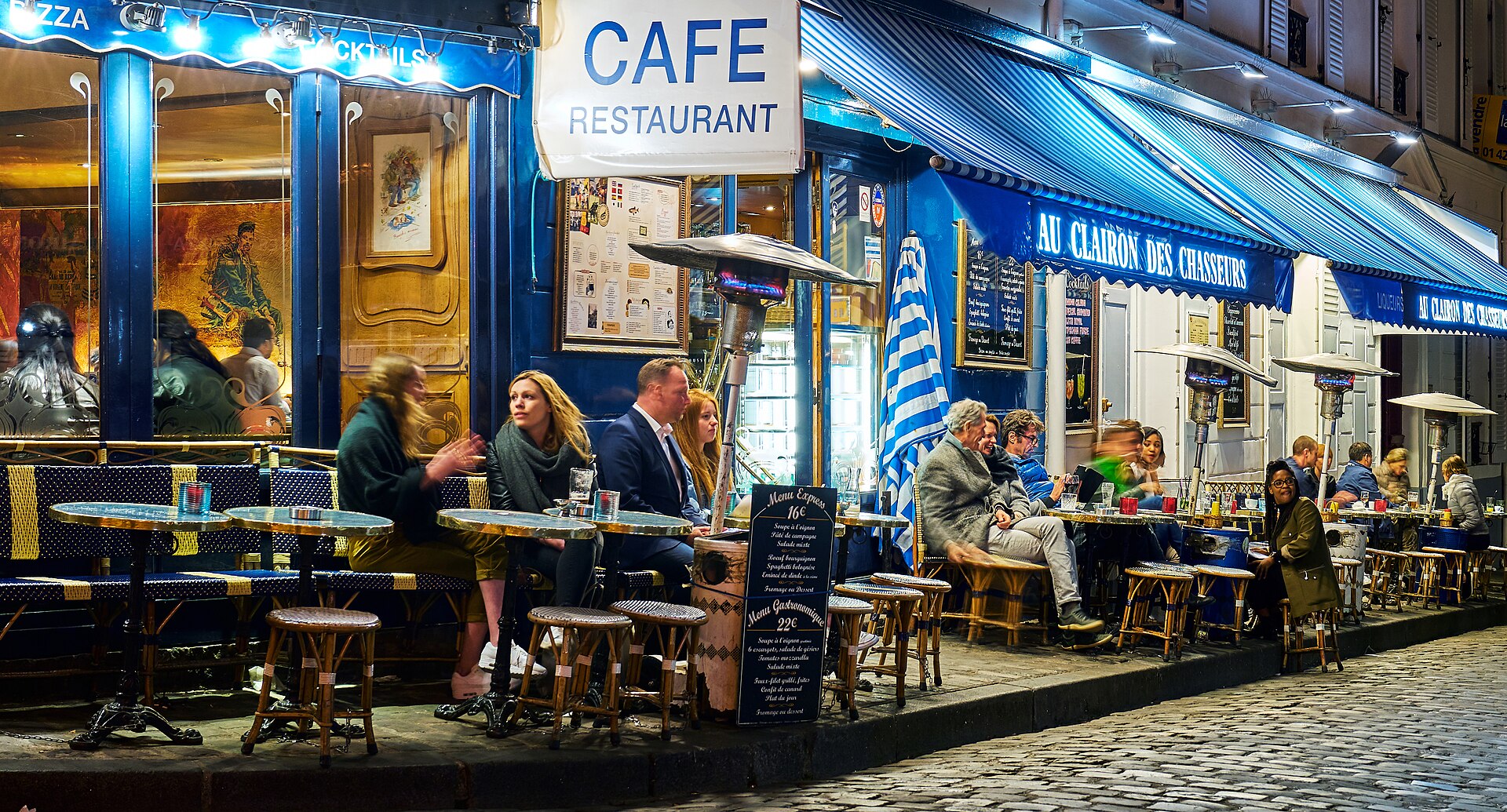
Paris is not merely a collection of monuments. It is an economic experience assembled every day by cafés, boulangeries, restaurants, artisans, independent shops, French brands, façades, streets and habits. If that living texture becomes interchangeable with every other global city, France may retain its landmarks while weakening the product around them.
The identity economy is real
France welcomed 102 million international tourists in 2025 and recorded €77.5 billion in international tourism receipts, up 9% from 2024, according to Atout France’s February 2026 assessment. Domestic tourism consumption reached €222 billion. Those figures do not prove that every euro is attributable to “French identity”. They do establish the scale of the market whose offer is built around place.
Culture and gastronomy are not decorative extras. An official French statistical review reported that roughly one foreign tourist in two makes a cultural visit during a stay in France, while nearly one in three experiences gastronomy or wine tourism. The INSEE-hosted study on tourism and culture explicitly connects heritage, museums, events and the French art of living to visitor flows. UNESCO’s 2022 inscription of the artisanal know-how and culture of baguette bread makes the point unusually clearly: a daily bakery visit, a craft process and a social practice can themselves be heritage.
France also competes on this terrain. Atout France’s 2024 international image study found that France is strongly identified with heritage, villages, cuisine and nature, but faces close competition from Spain and especially Italy; only 19% of surveyed travellers associated France with low prices relative to the quality of the stay. The implication is not that France should freeze itself in amber. It is that authenticity and value must be protected together.
Is Paris actually losing its businesses?
The evidence does not support a simple story of universal disappearance. APUR’s field survey counted 60,846 shops, commercial services, bars and restaurants in Paris in 2023, an exceptionally dense fabric by metropolitan and French-city standards. Between 2020 and 2023, food shops, bars, cafés and restaurants increased overall. Paris gained, among other categories, about 60 wine merchants, 50 greengrocers, 50 pâtisseries, 25 boulangeries and 20 coffee roasters.
But the composition changed. APUR recorded a decline in personal-goods retail — clothing, shoes and jewellery — under pressure from e-commerce and changing consumption. Bars, cafés and restaurants grew more slowly than before; fast food expanded while traditional restaurants and brasseries declined. Bookshops registered a net loss of eight between 2020 and 2023, an improvement on the loss of 64 between 2017 and 2020, while three of four cinemas in the relevant inventory closed. Ground-floor vacancy reached 10.9%, 0.7 percentage point higher than in 2020.
These are not equivalent outcomes. A new pâtisserie can deepen Parisian identity; a new international restaurant can do the same. A vacant unit, a cloned chain or a replacement of a working neighbourhood service by a concept with no local relationship can thin it. The useful unit of analysis is therefore not the passport of the proprietor. It is the contribution of the activity to diversity, craft, street life, employment and visitor experience.
The post-Covid balance sheet has not healed for everyone
APUR counted 4,500 business failures in Paris in 2024, the highest level in 15 years, even as business creation rebounded by 11%. National data have since deteriorated further. In the latest Banque de France release, published 4 September 2026, France recorded 70,605 failures over the twelve months to July 2026: 4.6% more than a year earlier and 19% above the 2010–2019 average.
Accommodation and food service were particularly exposed: 9,721 failures, up 7.4% year on year and 31.8% above the pre-Covid annual average. Commerce and motor repair recorded 14,073, up 2.8% year on year and 7.7% above the 2010–2019 average. These are national sector totals, not Paris-only numbers, and a failure count is not a census of heritage businesses. They nevertheless demonstrate that the commercial ecosystem supplying the visitor economy remains financially fragile.
Rent pressure needs equal precision. INSEE’s national commercial-rent index rose 6.69% year on year in the first quarter of 2023, after the inflation shock, then slowed and was 0.50% lower year on year by the fourth quarter of 2025. The later decline in the index does not reverse the earlier increase in the rent base, and it says nothing about the premium demanded for a specific Paris address. Labour, energy, food inputs, financing and compliance costs add separate pressures. It would be misleading to reduce every closure to rent, but equally misleading to claim that a slower index has restored old margins.
| Indicator | Verified result | What it means | What it does not prove |
|---|---|---|---|
| Paris commercial fabric | 60,846 activities in 2023; 10.9% ground-floor vacancy | A dense but changing ecosystem | Ownership nationality or the quality of every business |
| Food and hospitality | Overall café/restaurant growth, but fast food up and traditional restaurants/brasseries down, 2020–2023 | Composition matters more than the headline total | That international cuisine caused the decline |
| Business failures | 9,721 accommodation/food-service failures nationally in the 12 months to July 2026 | Financial stress remains elevated | That 9,721 Paris institutions closed |
| Commercial rents | ILC: +6.69% year on year in Q1 2023; −0.50% in Q4 2025 | The inflation rate eased after a sharp reset | That prime Paris rents became cheap |
The heaf test: addition, not accusation
Heaf is a useful case precisely because it complicates the argument. The company describes itself as a Dubai-headquartered Emirati hospitality concept founded in 2021. On 10 August 2026 it opened at 15 rue Tronchet in Paris’s 8th arrondissement — its first café outside the UAE — according to Le Parisien’s on-site report. The article reported eight employees and quoted management describing Paris as Europe’s gateway and the café as a bridge between Emirati and French culture. The brand’s own public profile roots its name and design in Emirati and Bedouin coffee hospitality.
That is foreign investment doing what good foreign investment can do: taking commercial risk, employing people and adding a distinct story. One opening is not evidence of a takeover, and it would be irresponsible to present it as one. The test is what happens at scale. Does an imported concept converse with Paris, source locally where practical, create work, occupy a genuine vacancy and widen the street’s offer? Or does a high-capital format repeatedly displace businesses that cannot match its rent tolerance while offering an experience available in many cities?
A Gulf traveller does not cross thousands of kilometres merely to reproduce the Gulf. Nor does a Chinese or American visitor need Paris to imitate Shanghai or New York. This is editorial commercial logic, not a claim about every traveller’s preference: international visitors can enjoy familiarity, halal service, specialty coffee and global cuisine while still expecting the destination around them to feel unmistakably French.
What the official data cannot tell us
There is no authoritative public series measuring the share of Paris shops by the nationality or cultural origin of their owners. APUR’s 83,154-premise database records location, activity and physical characteristics; it does not provide a reliable nationality ledger. Company registers can verify individual legal entities, but aggregating names, birthplaces or brands into “Arab”, “Gulf”, “Chinese” or “Asian” ownership would be methodologically weak and potentially discriminatory.
Nor is there an authoritative citywide series isolating closures of “longstanding French businesses” as a statistical class. APUR tracks premises and activities, while the Banque de France tracks legal failures; neither tags the heritage significance or longevity of each operator. Individual closures can be documented, but selecting a few famous names would not establish a citywide rate or a single cause.
\n
It is therefore possible to verify individual openings and to measure the growth of activity types, including fast food or particular cuisines. It is not possible, from the cited official datasets, to claim that one nationality is replacing French commerce across Paris. This analysis rejects that unsupported claim.
Who is protecting the living city?
The French Government
The state provides company law, commercial-lease rules, insolvency procedures, finance and craft recognition rather than a general guarantee that a familiar shop will survive. Its Entreprise du Patrimoine Vivant label, created in 2005, recognises rare artisanal and industrial expertise for renewable five-year periods. In May 2025, more than 1,300 labelled enterprises represented 59,000 jobs and €14.2 billion in combined turnover. Valuable as that is, a label supplies recognition and certain incentives; it does not pay every lease or solve succession.
The Ministry of Culture
The ministry protects monuments, heritage and cultural industries and administers or supports sector-specific programmes. Its latest direct economic measure put cultural value added at €49.5 billion in 2023, 2.0% of the French economy. Yet the commercial streetscape lies across administrative boundaries: Culture can protect a façade or cultural activity, while the Economy ministry, local planning, landlords and market conditions determine whether the baker, bookseller or artisan behind it can trade.
The City of Paris and Paris Commerces
Paris has more direct tools. It protects specified commercial and craft premises through its local urban plan; Vital’Quartier has used acquisition and managed leasing since 2004 in areas affected by vacancy or mono-activity. The twelve-year Paris’Commerces contract was backed by €37 million and aimed to acquire more than 200 premises for compatible neighbourhood uses. Since 7 August 2024, the City has also exercised a right of pre-emption over commercial leases, businesses and craft businesses in twelve priority areas.
There are measurable outputs. The GIE Paris Commerces reported 253 new activities installed in public-landlord premises in 2025; 62 were craft activities, 24% of the total. The targeted Vital’Quartier portfolio reported increases in food shops and personal services alongside reductions in mono-activity and vacancy. But these are interventions in selected premises and districts, not a shield over all 60,846 activities.
The Fabriqué à Paris label has recognised 2,500 products and 1,357 enterprises since 2017; the 2026 edition listed 575 products. A dedicated Maison du label opened in January 2026 to offer rotating retail visibility to about thirty artisans. This is intelligent destination merchandising. Its scale, however, remains modest beside the total commercial market.
CCI Paris Île-de-France and tourism authorities
The CCI offers a free Commerce 360 diagnostic for proximity businesses under 250 employees, covering finance, regulation, recruitment, digital tools and ecological transition, plus support for companies in difficulty and for business transfers. Such services matter because identity can disappear during succession as easily as during insolvency. Paris je t’aime and Atout France, meanwhile, market gastronomy, fashion, culture and neighbourhood experience. Their missing strategic link is stronger conversion: discovery campaigns should consistently direct visitor spending toward verified local producers and independent operators, not only famous monuments and global flagships.
Are the programmes effective enough?
The fairest answer is: effective where they intervene, but too fragmented to constitute an identity strategy. Pre-emption can rescue a location, a public landlord can moderate a lease, a label can create visibility and the CCI can improve a business plan. None alone resolves thin margins, retirement without a buyer, the valuation of a lease, platform competition or the replacement of a craft use by a higher-paying generic one.
Nor should government choose restaurants by nationality or preserve every weak company indefinitely. Paris has always been cosmopolitan; foreign chefs, merchants and creators are part of its French history. The policy objective should be a resilient mix — judged by use, contribution and diversity — rather than ethnic ownership.
A practical Paris identity compact
- Publish an annual commercial-identity dashboard. Use APUR activity data, vacancy, independent/chain status where legally obtainable, business age, transmission risk and the loss of craft or cultural uses. Do not infer ethnicity.
- Target affordable premises at the point of succession. Expand temporary acquisition, long leases and pre-emption where a documented shortage of everyday, craft or cultural commerce exists.
- Turn labels into sales. Integrate Fabriqué à Paris and EPV businesses into official visitor maps, hotel concierges, event programmes and bookable neighbourhood itineraries, with transparent eligibility.
- Reward local additionality in public tenders and supported premises. Evaluate employment, training, local production, supply relationships, accessibility and contribution to the street — criteria that French and foreign operators can meet equally.
- Measure displacement before celebrating openings. Investment announcements should identify whether a project fills a vacancy, replaces an activity, preserves jobs or changes the local mix.
- Finance adaptation, not museumification. Help traditional operators improve energy efficiency, digital distribution, accessibility and management while allowing menus, formats and ownership to evolve.
oui stars Travel verdict
Paris has not yet ceased to be Paris. The evidence shows resilience: dense commerce, new boulangeries and pâtisseries, growing food retail and active public intervention. It also shows a warning: record-level Paris failures in 2024, national hospitality failures 31.8% above the 2010–2019 average by July 2026, elevated vacancy and a shift from traditional restaurants and brasseries toward faster formats.
The correct response is neither nostalgia nor hostility to foreign capital. It is economic stewardship. France sells more than beds, tickets and square metres; it sells a lived distinction. Foreign investment should add to Paris — not make Paris less Parisian. If policy protects only stone façades and not the viable businesses, skills and rituals inside them, the country may discover too late that the product tourists crossed the world to buy was the city’s identity itself.
Sources and methodology
This signed analysis separates reported facts from editorial judgement. Latest data checked 7 September 2026. Principal sources: Banque de France, business failures to July 2026; APUR, Paris commerce census 2023; APUR, Paris economy 2024; INSEE commercial rent index; Atout France, 2025 tourism results; Atout France, international image study; City of Paris, commercial diversity and pre-emption; Paris Commerces, 2025 installations; CCI Paris Île-de-France, Commerce 360; Ministry of Culture, economic weight of culture; UNESCO, baguette heritage; and verified company/case-study material cited in the text.
Related oui stars Travel Intelligence: France Tops the Europe Tourism Investment Index 2027 and France: When a Visit Becomes Property, Business and a Life Plan.





[…] Related oui stars Travel analysisIf Paris loses its identity, what will France have left to sell to the world? […]