











oui stars Travel Intelligence | Flagship report | Verified 6 September 2026
Saudi Arabia 2030: What Comes After Oil?
Inside the Kingdom’s race for tourism, investment, culture and global capital
By Osama Samaha, Editor-in-Chief
Saudi Arabia is not approaching an economy “after oil” in the literal sense. Petroleum still supplied 67.5% of merchandise exports in the fourth quarter of 2025, and the state’s capacity to finance transformation remains sensitive to oil prices and production. The more serious question is whether oil wealth can build productive sectors that eventually generate growth, jobs, exports and private returns on their own.
THE VERDICT
The transformation is real: a larger non-oil economy, tourism operating at scale, new social and cultural industries, modern investment legislation and a live property route for non-residents. But success is not secured. The next phase must convert state-led construction and destination launches into repeat demand, profitable private businesses, export capacity and predictable institutions when oil or geopolitics turn adverse.
How to read this report
| LAW IN FORCE | A legal rule currently operative. |
|---|---|
| ACHIEVED RESULT | A measured outcome with a stated data year. |
| TARGET | An official ambition, not an accomplished result. |
| ANNOUNCED / PIPELINE | Planned, contracted or under development; not operating revenue. |
| OUI STARS ANALYSIS | Our interpretation, separated from official claims. |
The evidence dashboard
| Indicator | Latest evidence | Status |
|---|---|---|
| Real GDP | +4.5% in 2025; oil activities +5.7%, non-oil +4.9% — GASTAT | Achieved |
| Economic structure | Crude oil and gas: 17.1% of current-price GDP in 2025; trade/hotels/restaurants 12.3%, non-refining manufacturing 11.1%, construction 8.0% | Achieved |
| Goods exports | Petroleum: 67.5% in Q4 2025; national non-oil exports -1.5% year-on-year, re-exports +67.4% | Achieved |
| Tourism | 123m domestic and inbound tourists in 2025: 93.3m domestic, 29.3m inbound; SAR304bn spend | Achieved |
| Tourism ambition | 150m domestic and international tourists by 2030 | Target |
| FDI | SAR26.6bn net inflow in Q1 2026, 2.4% lower year-on-year — GASTAT | Achieved |
| 2026 outlook | IMF projection: 1.7% real GDP growth and 2.6% non-oil growth amid exceptional regional disruption | Forecast |
1. What Vision 2030 was designed to do
The 2016 founding document organized transformation around a vibrant society, a thriving economy and an ambitious nation. Its logic was broader than replacing one revenue line: use religious importance, investment capacity and a three-continent location to diversify production, increase employment, improve government and attract talent and capital.
What visibly changed? Tourism visas and non-religious travel became mainstream; entertainment and cultural markets were created; women’s economic participation expanded; company, investment, civil-transactions and property frameworks were modernized; and PIF became a builder of domestic sectors as well as a global investor. These are structural changes.
Headline completion rates still require care. The Vision 2030 Annual Report 2025 notes that a moving-base GDP methodology was adopted in 2024 and historical data updated.
2. Diversification: real progress, unfinished independence
ACHIEVED RESULT: GASTAT measured 4.9% real growth in non-oil activities in 2025, slightly faster than total GDP. Services, manufacturing outside refining, construction and tourism-linked activity now form a substantial domestic economy.
LIMIT: GDP diversification is not export or fiscal diversification. Oil can have a smaller direct GDP share while petroleum dominates exports and finances the public-investment cycle. Q4 2025 data are instructive: re-exports lifted the broad non-oil figure while national non-oil exports declined. The durable test is locally produced exports, productivity and tax revenue—not construction spending alone.
OUI STARS ANALYSIS: Saudi Arabia has moved from an oil-only narrative to an oil-funded portfolio economy. The decisive transition comes when new assets attract customers and private capital without permanent reliance on sovereign balance sheets.
3. Where the next investment cycle is pointing
PIF’s 2026–2030 strategy shifts “from growth to realization”: more selective allocation, risk-adjusted returns, resilient funding and a larger private-sector role.
| Ecosystem | Investable openings | Central risk |
|---|---|---|
| Tourism, entertainment, culture | Hotels, operators, experiences, aviation, events, food, destination services | Occupancy and repeat demand |
| Urban development and real estate | Housing, mixed-use, construction tech, facilities, finance | Phasing, absorption, concentration |
| Advanced manufacturing | Automation, R&D, mobility, electronics, local supply chains | Technology transfer and export competitiveness |
| Industrials, mining, logistics | Ports, warehousing, processing, minerals, agri-processing | Commodity cycles and interfaces |
| Clean energy and water | Solar, hydrogen, sustainable fuels, desalination | Offtake, pricing, capital intensity |
| AI and digital infrastructure | Data centres, cloud, models and HUMAIN applications | Power/water, talent, governance, chip access |
NEOM remains a separate PIF ecosystem. Assess each contract and sub-project rather than treating a destination brand as one risk.
4. What a foreign investor can invest in now
LAW IN FORCE: the updated Investment Law has operated since February 2025. It generally permits investment in available sectors, places Saudi and foreign investors under one framework, and protects fair treatment, intellectual property, lawful management and disposal, compensation for expropriation, and transfer of profits and sale or liquidation proceeds through legal channels. A foreign investor registers with MISA before activity, then obtains commercial and sector licences.
The freedom is not unlimited. The excluded-activities list can prohibit or condition entry; national-security review remains; regulated fields need their own approvals. Saudization, local content, competition, beneficial ownership, tax and anti-money-laundering duties survive registration.
Incentives are specific, not automatic. Special Economic Zones can offer, depending on zone and activity, reduced corporate income tax, withholding relief, customs treatment and foreign-talent flexibility. The Regional Headquarters program offers qualifying RHQ activities a 30-year 0% corporate income-tax and withholding-tax package. This does not make ordinary Saudi operating income tax-free.
Outside a special regime, ZATCA states a 20% income-tax rate for resident capital companies on the non-Saudi share, non-Saudi residents conducting business and non-residents through a permanent establishment. VAT is 15%; withholding depends on payment and treaty.
5. The new foreign-property framework — including non-residents
LAW IN FORCE: the Law of Real Estate Ownership by Non-Saudis took effect on 22 January 2026. It covers residents, non-residents and defined company/entity routes. Rights depend on Council-approved zones, permitted right, percentage limit, usufruct duration and Saudi Properties controls.
IMPLEMENTING RULES: approved in June and published by the Official Gazette on 5 September 2026. A non-resident individual must obtain a Saudi digital identity, open a Saudi bank account and obtain a Saudi mobile number linked to that identity before acquiring a right. Connected payments must pass through electronic channels governed by the Saudi Central Bank.
Within designated zones, a non-resident may acquire an allowed right; in Makkah and Madinah, individual eligibility is limited to Muslims. Outside designated zones, the additional right to one home is for a non-Saudi individual legally resident in the Kingdom, excluding Makkah and Madinah. Companies follow different rules. This is not permission to buy any parcel anywhere.
The regulation sets a 2% REGA fee on a non-Saudi’s disposition of real rights in Riyadh, Makkah, Madinah and Jeddah, and 0% outside them or for listed exemptions. Separately, real-estate transaction tax is generally 5%. Verify both charges and exemptions for the exact transaction.
Article 6 says ownership creates no rights beyond the property right. A title deed does not automatically confer residence, work rights or an investment licence.
6. Premium Residency: a separate legal bridge
The Real Estate Owner Residency currently requires qualifying residential property or usufruct worth at least SAR4m, unencumbered by mortgage. A second route covers one qualifying off-plan residential unit from an REGA-approved developer, also at least SAR4m, with at least SAR1m or 10% paid, whichever is higher. Duration remains tied to ownership or usufruct.
The Business Investor Residency requires at least SAR7m of qualifying investment, valid records, proof of capital injection and ten jobs; permanent status is conditional on maintaining investment and employment for the first two years. Entrepreneur products use separate funding, equity and job tests. None is automatic with an ordinary purchase.
7. Tourism: achievement and target are not the same
ACHIEVED RESULT: the Ministry of Tourism’s 2025 report recorded 123m domestic and inbound tourists, SAR304bn spending, 29.3m inbound and 93.3m domestic tourists. Tourism’s direct GDP contribution was 4.9% in 2024; tourism-industry employment reached about 1.03m in 2025. The original 100m target was passed early.
TARGET: 150m domestic and international tourists by 2030. It must never be described as 150m foreign visitors.
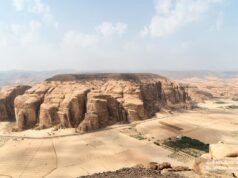
Operating evidence is tangible. The Red Sea began receiving guests in 2023; AMAALA first received guests in 2026. AlUla reported about 320,000 visitors, 1,000 operating hotel keys and roughly 2,200 commercial flights in 2025. Diriyah recorded more than 3.6m visits by end-2025. Components at Qiddiya, NEOM, Soudah and other projects remain at different stages.
The Ministry of Tourism writes strategy and regulation, licences hospitality and operators, publishes data, protects guest rights and serves investors. The Tourism Development Fund finances and enables; Saudi Tourism Authority markets; project companies and regional authorities develop assets. Distinguishing roles identifies who bears risk.
OUI STARS ANALYSIS: the question is no longer whether Saudi Arabia can generate arrivals. It is whether new capacity can sustain rate, occupancy, service quality, air access and repeat leisure demand outside pilgrimage, events and state-supported launches.
8. Culture is infrastructure for the visitor economy
The Ministry of Culture, established in 2018, and 11 commissions created in 2020 turned heritage, museums, film, music, fashion, culinary arts, architecture, literature and crafts into policy sectors. The Cultural Development Fund, founded in 2021, supports finance and investment across 16 cultural sectors. AlUla, Historic Jeddah, Diriyah, the Red Sea Museum, festivals and archaeology convert identity into destination content and creative work.
An important transparency gap remains. The Ministry’s State of Culture 2024 report, released in 2026, says data for all six core cultural-economy indicators were absent for the first time. Current culture GDP, employment or export claims should not be invented or recycled from older years.
OUI STARS ANALYSIS: culture can lengthen stays, differentiate destinations and create exportable intellectual property. Credibility depends on better statistics, independent creative businesses, audience demand and conservation—not event counts alone.
9. France: a distinctive partnership, not an exclusive alignment
France is strongest where Saudi demand meets French institutional depth: archaeology, conservation, museums, architecture, luxury hospitality, urban planning, training, transport, digital technology and major-event expertise.
The 2018 AlUla agreement created AFALULA to support the Royal Commission for AlUla in urbanism and architecture; water and environment; arts, culture, heritage and tourism; education and training; and security. In August 2026, both governments extended the AlUla partnership to 2035, deepened AI, quantum and emerging-technology cooperation, and proposed a financing framework for French-company projects. Villa Hegra adds arts, cinema and cultural exchange.
On the Saudi side: RCU, the Culture, Tourism and Investment ministries, PIF companies and regulators. On the French side: the Élysée and foreign ministry provide the interstate framework; AFALULA is the dedicated agency; Business France supports companies; cultural, university and commercial partners execute.
OUI STARS ANALYSIS: France’s advantage is high-value know-how and institutions, not evidence that Riyadh “prefers Europe to America.”
10. Europe, the United States and Asia: portfolio diplomacy
The United States remains central to defence, finance, aviation and frontier technology; its May 2025 package emphasized AI, data centres, energy, aerospace and defence. Europe supplies industrial systems, hospitality, transport, culture, luxury and sustainability expertise, with France visible in AlUla. Asia is an energy market and manufacturing partner: China was the largest goods-trade partner in Q4 2025, taking 13.1% of exports and supplying 27.2% of imports; Japan was the largest export destination in December.
This is hedging and capability acquisition: Saudi Arabia seeks technology, markets, delivery and political relationships from several poles. It is not evidence of a civilizational preference.
11. The investor case — and the obstacles
| Attraction | Counterweight |
|---|---|
| Large demand, young consumers, state-backed infrastructure | Demand may cluster around public spending and events |
| Statutory rights and capital transfer | Sector approvals and new implementation practice |
| Major procurement and operating opportunities | Localization, Saudization and qualification costs |
| Tourism growth and destination inventory | Execution, phasing, absorption and service talent |
| Dollar peg and strong bank buffers | IMF flags FX funding, sovereign-bank links and large-project exposures |
| Three-continent position | Shipping, conflict and regional-risk shocks |
| Property access for non-residents | Zone-specific rights, fresh rules, fees and short resale history |
Regulatory change is pro-investment in direction, but its speed creates a due-diligence burden: date-stamp the law, regulation, guide and portal rule relied on. Model payment cycles, imported talent, local partners, procurement standards and exit liquidity.
12. The serious 2030 test
- Self-sustaining non-oil productivity led by competitive firms, not only oil-funded public demand.
- Private capital crowding in, with PIF as catalyst and disciplined shareholder.
- Export complexity in Saudi-made goods, services, technology and intellectual property—not re-exports alone.
- Tourism economics: repeat demand, viable occupancy and pricing, air access, local supply chains and conservation.
- Institutional predictability: stable rules, transparent property controls, effective disputes and comparable data.
- Human-capital depth: Saudi employment paired with skills and productivity.
- Fiscal resilience: project sequencing consistent with future-generation savings and financial stability.
The IMF’s July 2026 assessment captures both sides: substantial reform progress and stronger non-oil activity, but a need for fiscal consolidation, better public-investment management, deeper capital markets, human capital, governance and vigilance over banks’ large-project exposure.
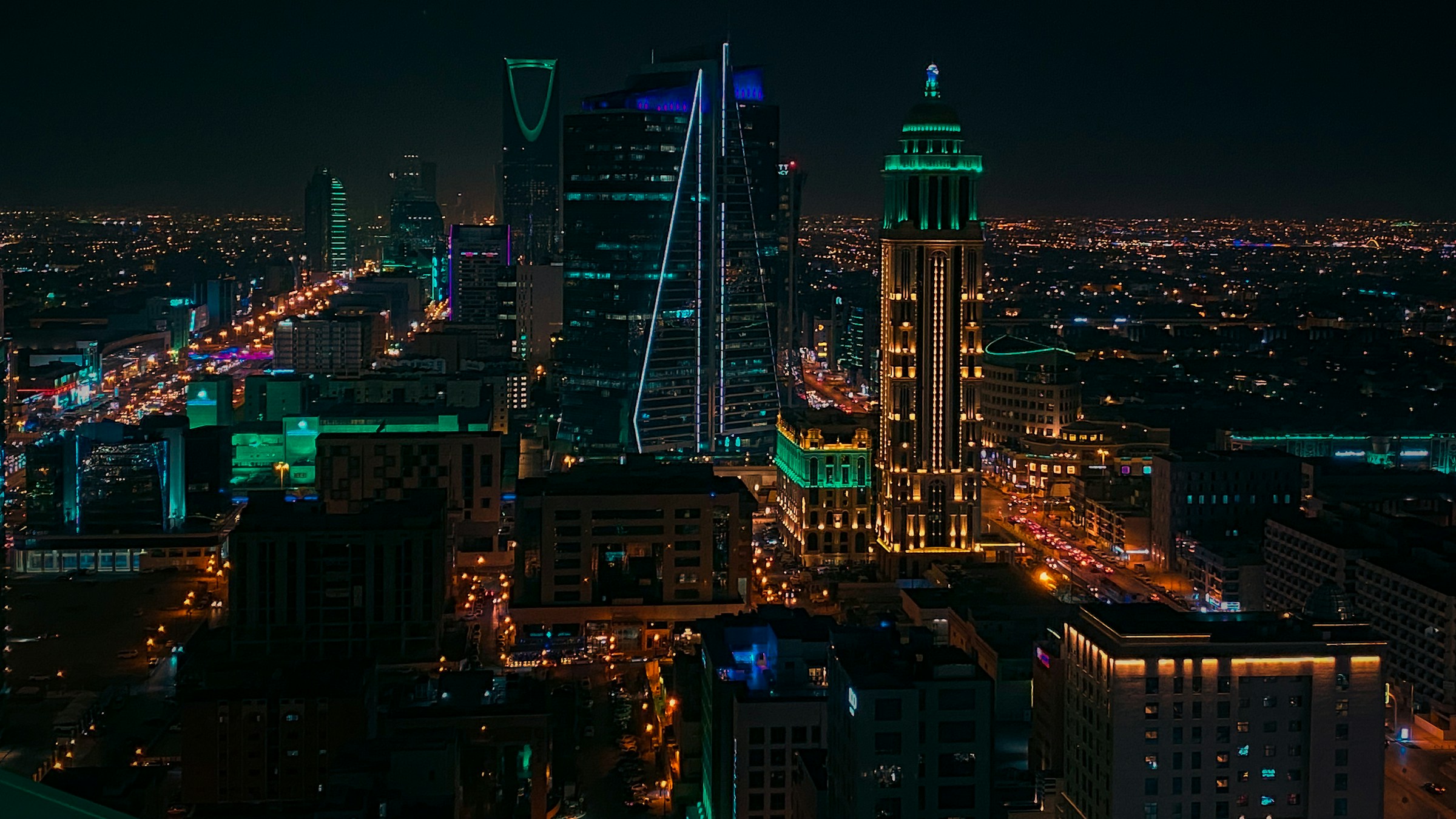
OUI STARS CONCLUSION: Saudi Arabia has changed what visitors, companies and creators can do inside the Kingdom. The harder achievement is still ahead: proving that the new economy can compound value after the state has built the platform and when the oil cycle is less generous. That—not a skyline—is the economic meaning of 2030.
Selected sources
- Vision 2030 Annual Report 2025
- GASTAT: GDP 2025 and Q4 2025 trade
- Ministry of Tourism 2025 statistics
- Investment Law and regulation
- Official Gazette: non-Saudi property regulation
- Premium Residency conditions
- PIF 2026–2030 strategy
- France–Saudi declaration, 25 August 2026
- IMF 2026 Article IV
Related oui stars investigations: Saudi property and Premium Residency; AlUla’s investment thesis; France × Saudi Arabia.
Independent editorial analysis. Not legal, tax, immigration or investment advice. Check current portal controls on the transaction date.