














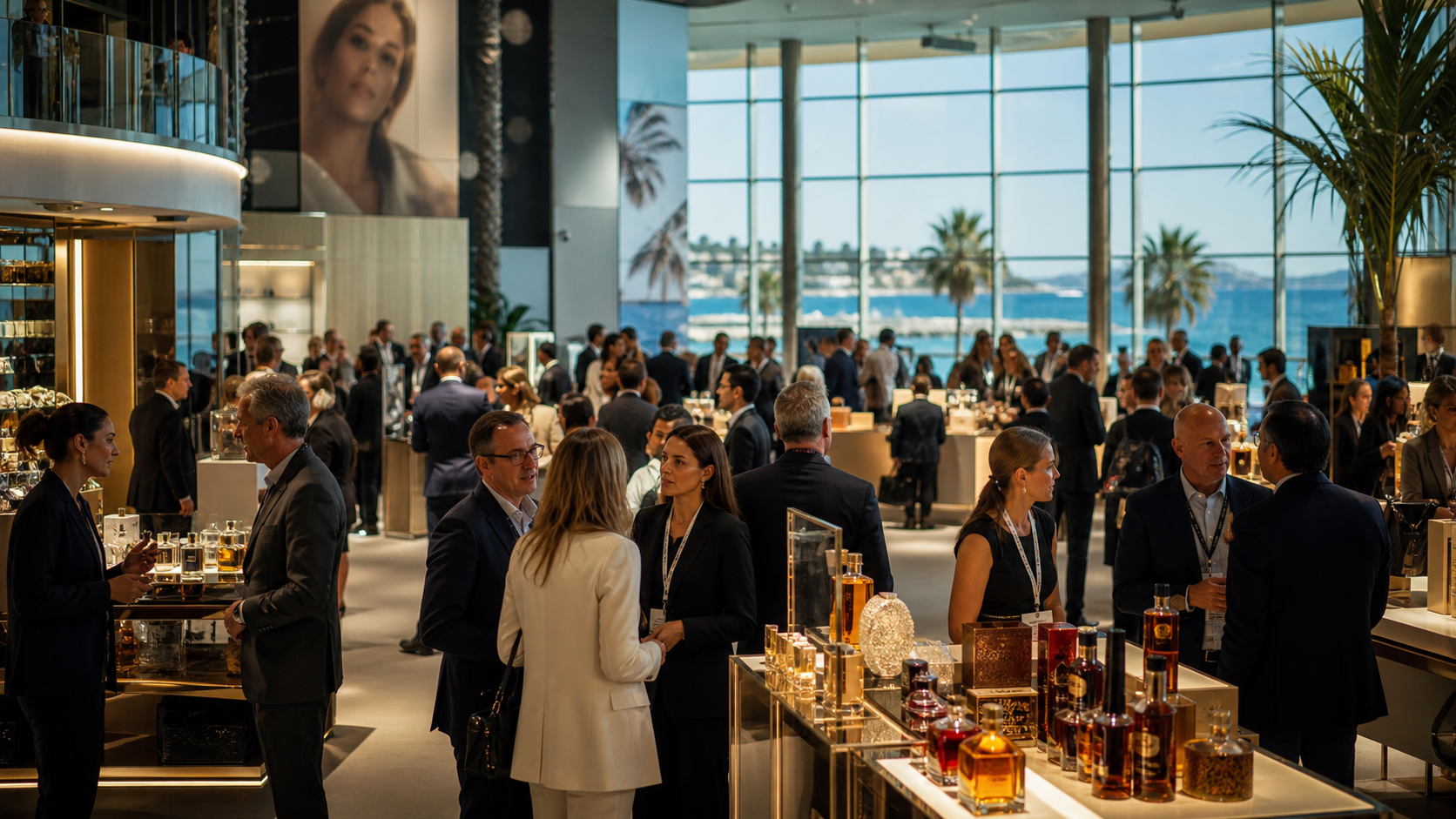
From 27 September to 1 October 2026, Cannes becomes the commercial capital of duty free and travel retail. TFWA World Exhibition & Conference is where airport retailers, luxury houses, beauty groups, drinks companies and confectionery specialists negotiate the products, concessions and campaigns that will greet millions of international passengers. It is less a conventional trade fair than a concentrated marketplace for traveller attention.
TFWA Cannes 2026: the verified essentials
The exhibition runs from Sunday 27 September to Thursday 1 October at the Palais des Festivals et des Congrès. The main conference is scheduled for Monday 28 September. The official exhibitor information confirms a premium roster including Hermès, Chanel, Estée Lauder, Moët Hennessy and Zegna, alongside returning or new participants such as Fauchon, Pierre Fabre, Crocs and Molinari. Other announced names include Campari, BVLGARI, Clarins, Ferrero, Longchamp, Loewe, Château Lafite Rothschild, Avène and Bioderma.
The buying side is equally consequential. Pre-registered retail executives include Avolta, Aer Rianta International, China Duty Free Group, Dubai Duty Free, Duty Free Americas and Lagardère Travel Retail. Qatar Duty Free is the main partner of the TFWA Lounge. Always confirm access and programme changes on the official TFWA event page.
Why travel retail is a market of its own
An airport shop serves a customer who is moving through a controlled environment, carrying a ticket, often crossing borders and frequently primed to celebrate or gift. That creates an unusual mix of scarcity, convenience, tax rules, prestige and impulse. Winning a listing can place a brand in front of high-spending passengers across several continents; losing a concession or shelf position can remove an important global showcase.
TFWA therefore brings together decisions normally dispersed across brand headquarters, airport landlords, concession operators, media agencies and logistics providers. Beauty and fragrance remain core traffic drivers, but spirits, fine food, fashion, jewellery, wellness and accessible luxury compete for the same finite dwell time and cabin-bag space.
Where the money changes hands
The economics extend well beyond wholesale orders. Airport concessions may include minimum guarantees and revenue-sharing arrangements. Retailers must balance rent, staffing, stock turns and local regulation against passenger volumes that vary by route and season. Brands invest in exclusive formats, sampling, digital media, shop-in-shop design and launches timed to global traffic peaks.
For senior teams, Cannes is valuable because commercial, marketing and category negotiations happen in the same week. A product can be tested with operators from Europe, the Gulf, Asia and the Americas without months of separate travel. The most useful conversations connect sell-through evidence with passenger data, airport capacity and a credible plan for replenishment.
The companies and categories to watch
The presence of Hermès, Chanel, Estée Lauder, Moët Hennessy and Zegna underlines the importance of brand control and premium storytelling. Avolta and Lagardère Travel Retail represent vast multi-airport networks; Dubai Duty Free, Qatar Duty Free and China Duty Free Group bring powerful hub and destination perspectives. Ferrero and Fauchon show how gifting and food sit beside fragrance, while Campari and Rothschild Lafite reflect the strength of premium drinks.
The adjacent strategic question is technology. Retailers are seeking better demand forecasting, multilingual clienteling, loyalty connections, pre-order services, frictionless payment and media measurement. Our analysis of NRF Retail’s Big Show Europe 2026 explains why AI, unified data and store technology are now board-level retail issues.
Cannes hotels become part of the trading floor
During TFWA week, the Palais is only the centre of a larger business district. Hotel suites, terraces, beaches, restaurants and yachts become meeting rooms. Properties along La Croisette can monetise rooms, hospitality, catering, private events and brand installations at premium rates, while apartments and hotels in Le Suquet, the station district, Antibes and Juan-les-Pins absorb spillover demand.
Nice Côte d’Azur Airport, chauffeured transfers, security, temporary staffing, florists, audiovisual teams and event agencies all participate in the visitor economy. The pattern resembles Cannes’ wider festival machine, analysed in our feature on who profits from the Cannes red-carpet economy.
Investment opportunities around the passenger
The strongest opportunities solve a measurable commercial problem: better conversion, lighter and more sustainable packaging, localised assortments, reliable cross-border logistics, authenticated luxury resale, or a digital journey that connects discovery before departure with collection at the airport. Refill systems and lower-impact materials are particularly relevant where premium presentation must coexist with weight, security and waste constraints.
There is also room for specialist content and data businesses. Operators need route-level insight, cultural merchandising intelligence and credible attribution between airport advertising and sales. Small brands can gain traction when they bring evidence of demand, travel-ready packaging, regulatory preparation and dependable production, rather than relying on novelty alone.
Why Paris matters to a Cannes marketplace
Many decisions made in Cannes lead back to Paris: luxury and beauty headquarters, Charles de Gaulle and Orly traffic, Lagardère’s ecosystem, creative agencies and the investment capital surrounding French consumer brands. Paris supplies the corporate infrastructure; Cannes supplies five days of concentrated access. For investors, our Paris luxury and tourism opportunity map provides the broader context.
A serious agenda for executives
Productive attendance starts with a narrow objective. Brands should know which routes, operators and categories fit their economics. Retailers should arrive with passenger segments, space constraints and performance gaps. Hospitality suppliers should package services around privacy, speed and late programme changes. The parties that leave Cannes with the most value will be those that convert introductions into pilots with owners, deadlines and measurable targets.
TFWA Cannes 2026 matters because travel retail is both a distribution channel and a global stage. The week reveals where luxury demand is moving, how airport commerce is changing and which businesses can turn passenger flow into durable value for brands, cities and destinations.