




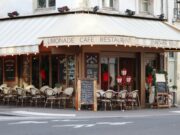













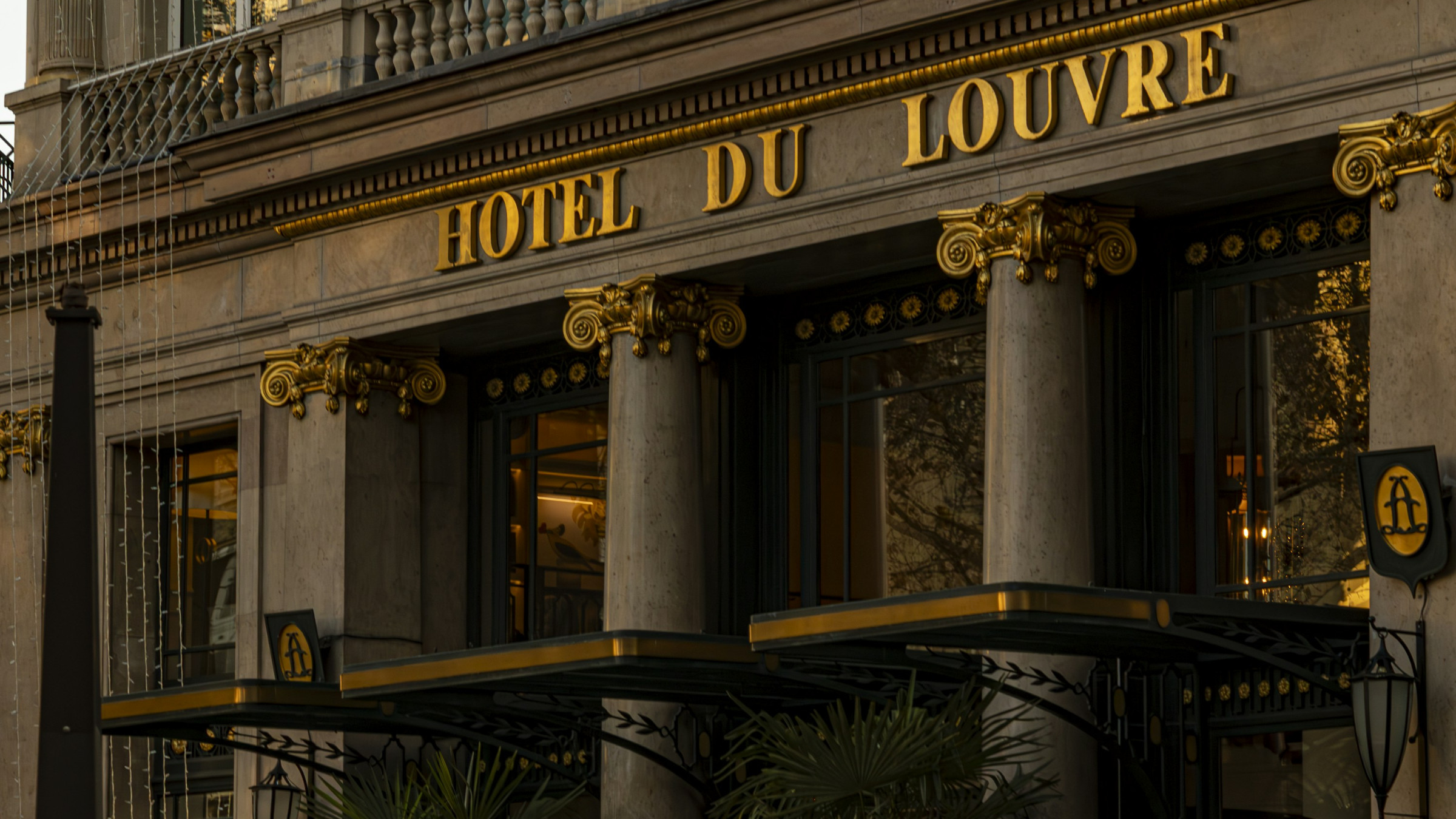
The most expensive hotel mistake in Paris is not necessarily paying too much. It is choosing a beautiful room that makes the rest of the trip difficult. A lobby can photograph perfectly while the address adds two connections to every day, the room cannot take the promised extra bed, or the final 500 metres become an obstacle course with luggage. In Paris, the hotel and the neighbourhood are one decision.
This guide is built around that reality. It does not declare one district “best”, because a first-time couple, a family of five, a buyer attending appointments and a delegation with several vehicles do not need the same Paris. The right answer begins with the journey you are actually taking, then works backwards to an address, a room and a service level.
Start with the trip, not the hotel search box
Before opening a booking platform, place the fixed points of your stay on a map: the airport or station, the two or three places you will visit most, any early appointment, the venue of a major event, and where you expect to spend your evenings. The useful hotel is usually the one that reduces the journeys you repeat, not the one that sits closest to a single landmark.
Paris is divided into 20 arrondissements that spiral clockwise from the centre, but visitors experience streets and transport corridors rather than administrative borders. Two hotels in the same arrondissement can feel completely different because one faces a nightlife street and the other opens onto a quiet courtyard. “Five minutes from the metro” can mean a flat pavement, a steep hill, several station stairs or a transfer that is awkward with a stroller.
The official Paris tourism office currently organises accommodation choices across every arrondissement and Greater Paris. Its central lesson is sound: match the area to the purpose of the visit. The label on the district should begin the research, not end it.
The Paris neighbourhood decision, at a glance
| Area | Strongest for | What it gives you | What to check |
|---|---|---|---|
| 1st and 2nd | Short first visits, museums, luxury shopping | Exceptional walkability around the Louvre, Palais-Royal and the Seine | Room size, street activity and the central-location premium |
| Le Marais, 3rd and 4th | Couples, design, food, repeat visitors | Historic streets with energy from morning into evening | Weekend crowds, noise and lifts in older buildings |
| Latin Quarter and 6th | Walking, culture, romance, Left Bank atmosphere | Gardens, cafés, the Seine and strong central connections | Compact rooms and a premium in Saint-Germain |
| 7th and 15th | Families, Eiffel Tower plans, longer stays | Calmer evenings and a more residential rhythm | Distance from eastern Paris and the exact transport line |
| 8th and 9th | Luxury retail, Opéra, business, department stores | Hotels across upper categories and useful transport | Traffic, event pressure and whether the street empties at night |
| 10th and 11th | Restaurants, nightlife, younger travellers | Local energy and easier access to the north and east | The late-night route and street-by-street noise |
| 12th, 14th and 17th | Families, business, practical longer stays | Residential services, transport hubs and often more usable rooms | How often you will cross Paris |
| Montmartre, 18th | Views, character, romantic weekends | A distinct village-like Paris | Hills, steps, crowds and luggage access |
| La Défense | Meetings and western Paris business | Modern rooms and direct corporate access | Evening atmosphere and travel back from central Paris |
The historic core: maximum Paris, minimum commuting
The 1st arrondissement is the high-efficiency choice for a short first visit. The Louvre, Tuileries, Palais-Royal, the Seine and much of the central right bank become walks rather than expeditions. Châtelet-Les Halles offers extraordinary connectivity, although the station itself is large and can be tiring with bags.
This is also one of the places where location can consume the budget before the room becomes generous. Check the square metres, outlook and bedding, not only the star count. Le Meurice, at 228 rue de Rivoli opposite the Tuileries, is an officially recognised Palace and illustrates the top of the market; it is a reference point, not a claim that every traveller needs palace service.
The 2nd arrondissement feels more commercial and discreet, with the covered passages, Bourse and easy walks toward Opéra or the Marais. It can be an intelligent compromise for travellers who want the centre without living directly beside a headline monument.
Le Marais: the district that works beyond sightseeing hours
Across the 3rd and 4th, the Marais combines private mansions, galleries, Jewish heritage, independent shops, cafés and Place des Vosges. It is one of the rare central choices that remains rewarding when the museum day is over. Read our deeper portrait of Le Marais and its layered identity before deciding which side of the district fits you.
The advantage is density: breakfast, shopping, dinner and a late walk can happen without transport. The cost is also density. Popular streets become busy, deliveries begin early and historic buildings may have small lifts or none. Pavillon de la Reine, at 28 place des Vosges, is a verified hotel address that shows how secluded a property can feel inside a very active district. It should not be assumed to suit every budget or date, and no availability is implied here.
The Left Bank: choose between youthful energy and polished calm
The 5th arrondissement, especially around the Latin Quarter, is strong for travellers who want the Panthéon, universities, bookshops, the Seine and a lively street life. The 6th is more polished around Saint-Germain-des-Prés and the Luxembourg Garden. Both reward walking, but their hotel stock often sits in older buildings where room shape, lift size and soundproofing matter.
Hôtel Dame des Arts offers a useful real-world example. Its official site places it at 4 rue Danton in the 6th, close to Saint-Michel-Notre-Dame; the Paris tourism office lists it as a four-star property and reports four rooms adapted for guests with reduced mobility. That does not make the entire surrounding transport route accessible, so the hotel entrance, station access and planned journeys must still be checked together.
Eiffel Tower Paris versus everyday Paris
A room near the Eiffel Tower can deliver the emotional image many visitors came for, but “Eiffel Tower area” covers several different experiences. The 7th around Invalides, École Militaire and rue Cler is composed and residential. Parts of the 15th offer daily shops, larger aparthotel-style options and a less ceremonial atmosphere. The 16th around Trocadéro and Passy can be quiet, elegant and practical for western Paris, but less convenient for late evenings in the east.
Ask whether a promised view is frontal, lateral, partial or visible only from a balcony. Confirm the exact room category in writing. A photograph on a hotel homepage may represent one suite, not the category you are booking.
Champs-Élysées and Opéra: two versions of central convenience
The 8th arrondissement is the natural base for Avenue Montaigne, Faubourg Saint-Honoré, the Champs-Élysées and many diplomatic or corporate addresses. Service levels can be extremely high, but the area changes block by block. A grand avenue does not guarantee a quiet bedroom, and a prestigious postcode may add little value if every appointment is on the Left Bank.
The 9th around Opéra offers a more balanced centre for many itineraries. Department stores, theatres, business addresses and multiple transport lines sit close together. South Pigalle and rue des Martyrs add neighbourhood life, while streets nearer the grands boulevards feel more commercial. This is often the least-wrong answer for mixed trips rather than the most romantic one.
East and outer arrondissements: where practicality can beat prestige
The 10th and 11th suit visitors who care about restaurants, nightlife and a contemporary local rhythm. They can also work well for arrivals through Gare du Nord or Gare de l’Est. The critical check is the exact street after dark, not a blanket judgement about the arrondissement.
The 12th around Bercy, Gare de Lyon and Nation can be excellent for families and eastbound journeys. Hotel Paradiso, at 135 boulevard Diderot near Nation, is a verified example of a distinctive property rather than a generic room: its official site describes 34 rooms and two cinema suites, with metro lines 1, 2, 6 and 9 plus RER A nearby. Its concept will delight some travellers and be irrelevant to others. That is precisely the point of matching the hotel to the person.
The 14th around Montparnasse and the 17th around Batignolles or Porte Maillot can save time for specific train, congress and business schedules. La Défense makes sense when most meetings are there. Do not reject these areas because they are less cinematic; reject them only if the journeys they create are wrong for your stay.
Stars tell you about standards, not fit
France’s official hotel classification is administered through Atout France. Stars remain a useful standardised reference for facilities and service criteria, but they do not promise a particular neighbourhood, view, room size, design language or emotional atmosphere. “Palace” is a separate distinction awarded to selected five-star hotels.
A well-run three-star beside the journeys that matter can outperform a five-star that turns each day into logistics. Conversely, travellers who need multilingual concierge support, several connecting rooms, a protected arrival, a meeting salon or continuous coordination may receive real value from a higher service category.
Compare the complete product:
- Room: exact floor area, bed configuration, extra-bed policy, connecting-door guarantee, bathroom layout and natural light.
- Building: lift dimensions, steps before reception, air conditioning, soundproofing and whether renovation work is scheduled.
- Service: staffed reception hours, luggage storage, room service, concierge capability and late-arrival procedure.
- Terms: cancellation window, pre-authorisation, deposit, breakfast, child policy and what is charged separately.
- Location: the real walking route, night-time environment, accessible transport and the journeys repeated every day.
Accessibility is a route, not a checkbox
Paris transport is dense, but density is not the same as step-free access. Île-de-France Mobilités states that line 14, with 21 stations, is the only Metro line fully accessible from end to end for wheelchair users. Much of the historic Metro remains constrained, while buses, trams and many RER routes provide stronger alternatives. Equipment status can also change on the day.
Anyone travelling with a wheelchair, reduced mobility, an older relative, a stroller or substantial luggage should audit the complete chain: aircraft or train, platform, lift, pavement, hotel threshold, reception and room. Call the property and ask precise questions. “Accessible room” is not enough if the only practical route to your daily destination is not accessible.
The price on screen is not the final hotel cost
Paris levies a tourist tax per adult, per night, collected by the accommodation. The official 2026 total rates vary by classification: €15.93 for Palaces, €11.70 for five-star accommodation, €8.45 for four-star, €5.53 for three-star and €3.25 for two-star accommodation. Unclassified lodging uses a percentage formula subject to a cap. Exemptions can apply under official rules.
Do not treat those figures as room prices or offers. They are public taxes and should be separated from the nightly rate, breakfast, parking, extra beds, deposits and cancellation conditions when comparing the total stay.
Three booking briefs that produce better answers
A first visit for four nights
Prioritise a walkable base in the 1st, Marais, Latin Quarter, 6th or Opéra depending on the evening style you want. Pay for location before paying for facilities you will not use. A compact, quiet room can be the correct trade if it returns hours to the trip.
A family staying for six nights
Begin with occupancy, not stars. Confirm how many people the room legally accepts, whether connecting rooms are guaranteed, where breakfast happens and how a stroller enters the building. The 7th, 12th and 15th often deserve attention because daily shops, calmer nights and practical room types may matter more than being beside the Louvre. Article 2 in this series will examine family hotel choices in depth.
A group or delegation
Count arrivals, bags, room types, name-list deadlines, billing needs, vehicle movements and any early or late programme. A cheaper hotel that splits the group across several addresses is rarely cheaper operationally. Article 3 will cover group contracting and rooming logistics in detail.
Plan the arrival before you pay for the room
RER B links Charles de Gaulle Airport with central Paris, while Metro line 14 serves Orly. Those can be efficient for lightly packed independent travellers. Families, guests with mobility constraints, large groups, late arrivals and travellers carrying valuable or numerous bags may need a different calculation. Review our verified Paris airport transfer guide and the practical comparison of when a private chauffeur in Paris is worth it.
A hotel cannot be judged in isolation from arrival day. Ask when the room is available, whether luggage can be stored, who holds responsibility for bags, and how the party moves if rooms are not ready. For a short stay, a badly designed arrival can consume the first afternoon.
Where oui stars fits, without replacing your judgement
oui stars is a France-based travel, destination-management and concierge partner. For individuals, families, small or large groups and delegations, its role can begin with a brief rather than a predetermined hotel: preferred location, category, budget, room configuration, mobility requirements and programme. The team can then assist with suitable hotel options and reservations, subject to the hotel’s confirmed terms and availability.
When useful, the same planning can connect airport reception, Meet & Greet, private chauffeur service, luggage and ground logistics, excursions and concierge requests from arrival to departure. This is coordination, not a promise of discounts, upgrades or affiliation with any named hotel. Readers can review the current scope of services directly on the verified oui stars website.
The decision that protects the whole trip
The right Paris hotel is not the highest-rated property you can afford. It is the address that protects sleep, time, mobility and the purpose of the visit. Choose the repeated journeys first. Inspect the street as closely as the district. Read the room description more carefully than the lobby photography. Then decide how much service the trip genuinely requires.
If the result is central and compact, that may be right. If it is residential and spacious, that may be right. If a delegation needs a palace-level operation close to its programme, that may also be right. Paris offers all three. The skill is knowing which problem the hotel must solve.
Once the base is chosen, use our three-day Paris itinerary to group visits intelligently, and consult the Paris visitor safety guide for practical precautions without alarmism.
Frequently asked questions
The 1st arrondissement, Le Marais, the Latin Quarter, Saint-Germain and Opéra are strong starting points. The best choice depends on which sights and evening areas you will visit repeatedly.
Choose the Louvre area for maximum central walkability and the Eiffel Tower area for iconic views and calmer residential evenings. Check the exact street and transport line before booking.
No. France’s star system assesses standardised facilities and services. Always confirm the room’s exact floor area, bedding and layout.
The 7th, 12th and 15th often combine calmer streets, daily services and practical transport. The correct room configuration matters as much as the arrondissement.
Line 14 is fully accessible end to end, but much of the historic Metro is not step-free. Plan the complete route and verify current lift status.
oui stars can assist with hotel selection and reservations as well as airport reception, Meet and Greet, chauffeur, luggage logistics, excursions and concierge coordination, subject to confirmed availability and terms.
Official sources and disclosure
- Paris je t’aime: accommodation by neighbourhood and arrondissement, updated July 2026.
- Atout France: official tourist accommodation classification.
- Île-de-France Mobilités: accessibility of the historic Metro, updated January 2026.
- RATP: current airport links and operating guidance.
- City of Paris: official 2026 tourist-tax information.
- Le Meurice official site; Hôtel Dame des Arts official site; Pavillon de la Reine official site; Hotel Paradiso official site.
No live room price, availability, discount, upgrade or hotel partnership is stated. Hotel products and transport conditions can change; verify the exact room and terms before payment.







[…] a fuller street-by-street decision, begin with our complete guide to choosing a Paris hotel and neighbourhood. The family version of the decision is simple: reduce transfers, choose a flat final approach where […]
[…] hours. A room farther away may give a more complete silhouette and a calmer local routine. Use our Paris hotel and neighbourhood guide to assess the whole address, not only its […]
[…] our Paris neighbourhood guide before comparing Palaces. Location remains part of […]
[…] our Paris neighbourhood guide and airport transfer guide together. An executive room is only efficient if the corridor around it […]
[…] complete Paris hotel and neighbourhood guide compares these areas in practical detail. Couples planning a first visit should also test the […]
[…] a wider city decision, compare this with our complete Paris hotel and neighbourhood guide. The smart choice is the one that makes the whole itinerary stronger, whether that means one last […]
[…] choice than a well-managed property beside the places you will visit. Compare the hotel with our Paris neighbourhood guide. Walking, Metro and short transfers can improve both the day and its […]
[…] to conference centre. A family celebration may need easy movement between several generations. Our Paris hotel and neighbourhood guide helps compare the city by actual […]