


















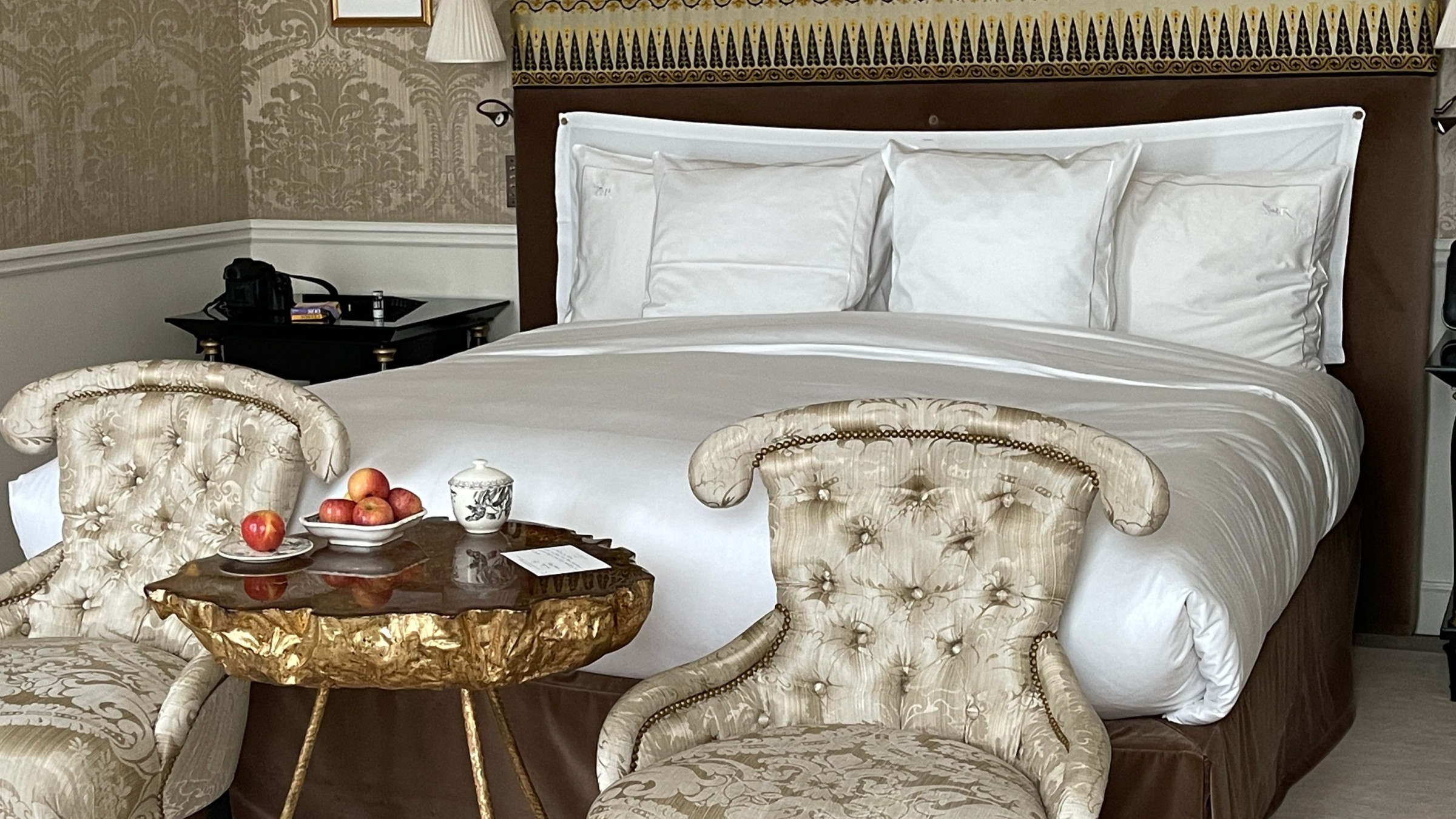
In Paris, hotel stars are useful, but they are not a price list and they are not a guarantee that a hotel will suit your trip. A two-star room in the right street can be a better purchase than a five-star room that adds services you will never use. The real question is what each step up buys in space, staffing, certainty and time.
First, understand what French stars actually mean
France’s official hotel classification runs from one to five stars. Participation is voluntary, Atout France awards the classification, and the current system is based on a points grid covering facilities, guest services, accessibility and sustainable practices. A hotel classification is valid for five years, so travellers should check the current official record rather than rely on an old plaque or a booking-site label.
The categories express a service and equipment promise. They do not fix room rates, guarantee a fashionable address or measure every quality that matters. Design, atmosphere, street noise, mattress preference and the warmth of a team remain personal. A newer three-star hotel may feel more comfortable than an ageing four-star property, while a small room in a superb location can be rational when Paris itself is the priority.
What a two-star hotel can buy
At the value end, the purchase is usually a private base with the essentials and less operational depth. Expect to examine room dimensions, lift access, air conditioning, reception hours, luggage storage and breakfast rather than assume them. The best two-star choice is often about sacrificing lounge space and a long service menu in exchange for a location that shortens the day.
This tier can work beautifully for independent travellers who spend most waking hours outside, carry light luggage and need no complex room configuration. It is less forgiving for a multi-generational family, a traveller with limited mobility or anyone arriving very early after a long flight. Read the room description, not only the hotel description.
Three stars: the practical Paris sweet spot
For many city breaks, three stars is where dependable comfort and budget discipline meet. The gain is often a more complete reception operation, a better equipped room, stronger breakfast provision and fewer compromises in public areas. Yet rooms may still be compact, especially in historic central buildings.
Spend the difference on what changes every day: effective climate control, a proper lift, quiet glazing, the exact bed configuration and a useful métro or RER connection. Families should compare a larger room outside the postcard centre with two smaller central rooms. Our Paris hotels for families guide explains why usable layout often matters more than the star count.
Four stars: paying for ease and operational confidence
The four-star step often becomes visible in staffing, service range, common spaces and finish. It can make a material difference when you need reliable late arrival handling, room service options, a concierge desk, meeting support, better sound insulation or several room categories under one roof.
For executives, families and groups, this category may reduce friction more than it increases spectacle. A larger lobby absorbs arrivals, porters can protect the luggage flow, and a more developed front office can coordinate transport and restaurant changes. None of those advantages should be assumed from the badge alone. Confirm the exact service hours and the room category in writing.
Five stars: personalisation, not simply more marble
A good five-star stay buys more than an expensive interior. Its value lies in response capacity: deeper staffing, stronger concierge capability, more food and beverage coverage, refined housekeeping, better arrival handling and the ability to recover gracefully when plans change. Suites, spas, restaurants and chauffeured entrances may matter, but the decisive luxury is often time saved.
Not every five-star hotel has the same personality. A grand historic address, a contemporary design hotel and an intimate mansion can all hold the category while delivering very different stays. Compare room size, suite logic, connecting options, breakfast setting, spa access and location. For the citywide decision, use our complete Paris hotel and neighbourhood guide.
Palace is an official distinction, not a synonym
In France, “Palace” has a precise official meaning. It is awarded to exceptional five-star hotels after an eligibility review, visits and commission assessment. Atout France announced 33 distinguished Palaces in its June 2026 collection, including 13 in Paris; the distinction is awarded for three years. Eligible properties must already be five-star and meet reinforced criteria, including demanding provisions around suites, concierge, multilingual staff, wellness and service.
The purchase is an entire ecosystem: heritage or architectural distinction, exceptional service, culinary depth, privacy, staffing and a highly choreographed sense of place. That can be meaningful for a landmark celebration, a high-profile delegation or a guest who values recognition and discretion. It is unnecessary if the trip will be spent mostly outside the hotel. Our guide to Paris’s official Palace distinction separates the legal designation from casual marketing language.
Budget should follow the trip’s pressure points
Do not spread money evenly across every night. Protect the night after a long-haul arrival, the stay around a critical meeting, or the room where a family genuinely needs connecting space. A short airport night may require efficiency rather than ceremony. A final celebration night may justify a suite and late breakfast.
Compare the total operating cost, not just the room. Add breakfast, local transport, airport movements, extra beds, possible interconnecting-room premiums, luggage handling, cancellation conditions and the time lost to an awkward address. Published rates and availability change constantly; request a dated quotation for your exact guests, dates and room types.
A five-question value test
- Which hotel services will you use every day?
- What room layout is non-negotiable?
- Which journey will repeat most often?
- What failure would cost the trip the most time or stress?
- Would a better room in a lower category outperform an entry room in a higher one?
Answers usually reveal whether the smart choice is a polished three-star base, a service-rich four-star address, a personal five-star hotel or a Palace experience.
How oui stars can help
As a France-based travel, DMC and concierge partner, oui stars can translate a real budget into suitable hotel options by location, category and room configuration. The same brief can connect reservations with airport reception, Meet & Greet, private chauffeur, luggage and group logistics, excursions and concierge support from arrival to departure.
Recommendations remain based on fit, not on a star badge alone. Final room features, classification status, service hours, policies, rates and availability must always be reconfirmed with the hotel or supplier for the actual stay.
Frequently asked questions
Are French hotel stars official?
Yes, when a hotel holds the French tourism classification awarded through Atout France. Classification is voluntary and time-limited, so check the current record.
Does a higher star rating always mean a larger room?
No. Room size varies by building and category. Compare the exact room’s stated surface, layout and bedding.
Is Palace the same as five-star?
No. A Palace is an additional official distinction available only to qualifying five-star hotels that pass a separate, demanding assessment.
Which category is best for a first Paris trip?
There is no universal answer. A well-located three- or four-star hotel often balances comfort and access, but the right choice depends on mobility, room needs and how much time you will spend inside.
Should I book the cheapest room in a five-star hotel?
Only after comparing size, outlook, bathroom, connecting options and included services with a better room in a lower category.
Can oui stars quote a fixed hotel price?
Hotel pricing and availability are date-specific. oui stars can request and compare current offers after the trip brief is confirmed.