





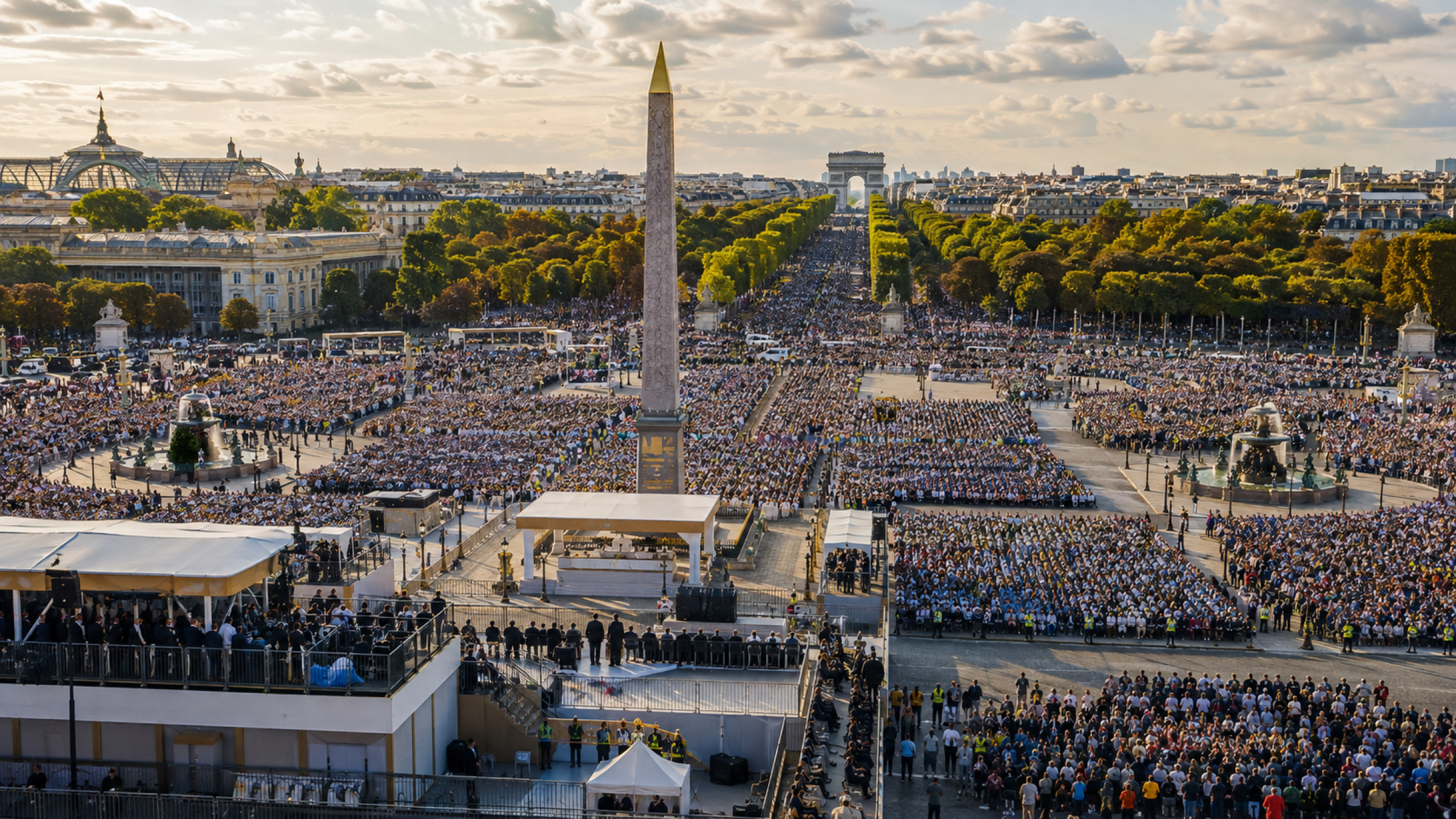
Paris is preparing for one of Europe’s largest public gatherings of 2026. Pope Leo XIV will visit the capital on 25 and 26 September, culminating in a free open-air Mass at Place de la Concorde and along the Champs-Élysées at 15:00 on Saturday. Organisers have planned for at least 500,000 participants, more than 400,000 people were registered by 3 September, and the tourism impact is already visible in hotel forecasts.
A necessary distinction: the half-million figure is an expected congregation, not a forecast of 500,000 additional tourists. It includes Parisians, residents of Île-de-France, day visitors, domestic pilgrims and international travellers. The scale still matters enormously for hospitality because even a minority staying overnight can create a sharp, geographically concentrated wave of demand.
A two-day visit built around Paris’s global symbols
The Vatican’s official programme begins at Paris-Orly at 10:00 on Friday 25 September. Pope Leo XIV is scheduled to meet the President of the Republic and representatives of public life at the Élysée Palace, address UNESCO at 15:00, celebrate Vespers at Notre-Dame at 17:15 and join young people for a prayer vigil at the Stade de France at 21:00.
Saturday moves through three different faces of the capital: the Maison Bakhita social support centre, the Institut Catholique de Paris and, finally, the vast public Mass at Place de la Concorde. At 17:45 the Pope is scheduled to leave Orly for Lourdes, before continuing to Metz on 28 September. The Paris chapter is brief, but its route joins diplomacy, culture, restored heritage, youth and public faith in less than thirty-two hours.
Why half a million is a credible planning figure
The number is not a casual headline. In an official diocesan interview, the visit’s Paris coordinator said the team expected an assembly of at least 500,000 at Concorde and the Champs-Élysées. The latest interview published by the Archdiocese of Paris on 3 September reported more than 400,000 registrations for the Mass, while the 80,000 places for the youth vigil at the Stade de France were fully allocated.
The official event page stresses that Mass is free and open to everyone. Registration is recommended because it helps organisers assign sectors, anticipate flows, prepare Communion and communicate access information, but it is not a paid ticket or a reserved seat. Most participants will stand, security screening will operate at entrances, and large bags or bulky objects will not be accepted.
The hotel signal is already measurable
Paris je t’aime, the capital’s official tourism office, estimates that the Pope’s visit and Mass could add 5.9 percentage points to forecast hotel occupancy around 25 September. That is the strongest current evidence of a direct tourism effect. It should not be misread as a citywide monthly boom: the same August barometer said September 2026 occupancy bookings were still 0.4% below the equivalent point in 2025 overall.
This is how major events often work. Demand tightens on exact nights, in useful districts and for particular room configurations, while other dates remain more balanced. Pilgrimage groups may require twins, triples, accessible rooms, coach access, breakfast at unusual hours and rooming-list control. Families may prioritise connecting rooms. Clergy, media teams, official delegations and production crews bring different needs again.
Travellers should confirm the real room type, cancellation conditions and route to their assigned access sector, not simply choose the closest postcode. Our guide to Paris hotels during major events explains why transport resilience can be more valuable than apparent proximity.
Restaurants will feel the event in waves
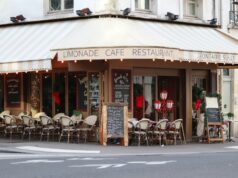
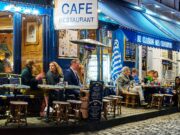
No official body has published a restaurant-revenue forecast for the visit, so any financial estimate would be speculative. The operational opportunity is clearer: hundreds of thousands of people will arrive over many hours, wait through the afternoon and disperse after the Mass. Breakfast rooms, cafés, bakeries, brasseries and dinner services can expect highly uneven peaks along approach routes, around transport hubs and in districts used by groups.
The most successful hospitality response will be practical rather than theatrical. Hotels can extend or stagger breakfast, prepare early departures and hold luggage only where capacity and security allow. Restaurants can confirm group menus, service times and coach arrangements in writing. Visitors should reserve important meals, keep one flexible option and avoid assuming that walking across the restricted centre will take a normal amount of time.
A new chapter in religious tourism
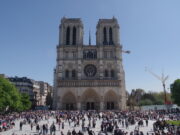
Paris already receives visitors who cross easily between faith, architecture and culture. Notre-Dame and Sacré-Cœur are among the city’s most visited sights, while the Chapel of Our Lady of the Miraculous Medal attracts pilgrims from across the world. Since Notre-Dame reopened in December 2024, the cathedral has again become a living point of encounter for worshippers, history enthusiasts and first-time visitors.
Pope Leo XIV’s route strengthens that connection. The Mass is aimed at families, young people, the general public and people who are ill; dedicated accessible areas are planned for people with reduced mobility and their companions. The journey then continues to Lourdes, one of the world’s defining pilgrimage destinations. Paris is therefore not only a stage but the urban gateway to a wider religious itinerary across France.
September shows the full diversity of Paris
The papal visit does not arrive in an empty calendar. September 2026 also includes the European Heritage Days, Paris Design Week and Maison & Objet, Fine Arts Paris, major concerts, professional exhibitions, sporting events and Global Black Pride’s first European edition. On the weekend of the Mass, Whisky Live Paris and international gymnastics are also scheduled elsewhere in the city.
This overlap matters. The people checking into Paris hotels that week will not form a single audience. They will include pilgrims and parish groups, families, young adults, cultural visitors, business delegates, designers, journalists, performers and residents hosting relatives. It is a vivid demonstration of the city’s ability to welcome devotion, commerce, art, entertainment and civic diversity at the same time.
International exposure beyond the Mass
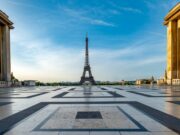
Place de la Concorde gives broadcasters an unmistakable Paris image: the Luxor Obelisk, the Tuileries, the Champs-Élysées and the axis toward the Arc de Triomphe. Yet the strongest international story may be the sequence as a whole. The Pope moves from the Élysée to UNESCO, from Notre-Dame to Saint-Denis, and from a social-integration centre to one of Europe’s largest open-air congregations.
UNESCO confirms that its 25 September programme will address artificial intelligence, information integrity, education and artistic creation in the digital age. Those themes broaden the coverage far beyond religious news. Live broadcasts from UNESCO and Notre-Dame, official Vatican communications and international news teams will place Paris landmarks and institutions before a global audience throughout the visit. The likely promotional value for the destination is an editorial inference, not an official monetary estimate.
Traffic matters, but it is not the whole story
The City of Paris began infrastructure preparations at Concorde on 2 September. Its official traffic page says the south-to-north crossing is unavailable during the first phase and motorists should use Quai des Tuileries. The restricted zone is due to widen from 22:00 on 16 September, with dismantling scheduled from midday on 28 September to 10 October. Further security and transport details will be updated as authorities finalise them.
Notre-Dame is scheduled to close to ordinary visitors from 24 to 26 September, and its towers from 24 to 28 September. Public transport is expected to be reinforced, but participants should wait for their assigned sector and recommended station before fixing the final route. Allow additional time for screening, travel light, carry water only as permitted, and follow Paris Police, City of Paris, RATP and organiser instructions on the day.
What hotel guests should do now
- Confirm exact travel dates and the Mass registration status, which is not a seat reservation.
- Choose a hotel for reliable access, not simply minimum distance from Concorde.
- Reconfirm room configuration, accessibility, breakfast hours and luggage storage.
- Avoid vehicle pickups inside evolving security zones; agree a legal meeting point outside them.
- Keep the morning light, arrive at the time communicated by organisers and expect screening.
- Check official updates again 72 hours before arrival and on the morning of each movement.
Visitors combining the Mass with a longer stay can use our Paris neighbourhood guide. For airport reception, luggage and vehicle handoffs, see the guide to a connected arrival and departure.
How oui stars can support the journey
As a France-based travel, DMC and concierge partner, oui stars can assist individuals, families, pilgrimage parties, small or large groups, media teams and delegations with suitable hotel options by location, category and budget, reservations, airport reception, Meet & Greet, private chauffeur, luggage and logistics, excursions and concierge coordination from arrival to departure.
The aim is not to promise privileged access to public events. It is to connect the confirmed hotel, passenger manifest, arrival times, accessible needs, luggage, vehicles and programme so that each handoff remains workable as official access instructions evolve.
Booking note: hotel inventory, rates, room configurations, restaurant service, transport access, accreditation, event entry and all supplier conditions remain subject to live confirmation for the exact dates. No partnership, discount, reserved access or availability is implied.
Frequently asked questions
When is Pope Leo XIV in Paris?
The official Vatican programme places him in Paris and Saint-Denis on Friday 25 and Saturday 26 September 2026, before he travels to Lourdes and then Metz.
When and where is the major Mass?
The Mass is scheduled for 15:00 on Saturday 26 September at Place de la Concorde and along the Champs-Élysées.
Are 500,000 tourists arriving in Paris?
No. At least 500,000 participants are expected at the Mass, but that figure includes local residents, day visitors and overnight travellers. More than 400,000 registrations had been reported by 3 September.
Is registration a ticket or reserved seat?
No. The event is free. Registration is recommended for planning and communication but does not reserve a seat; most attendees will stand.
Will hotels be busy?
Demand is expected to tighten around the visit. Paris je t’aime forecasts a 5.9-point occupancy effect around 25 September, though availability varies by district, category and room type.
Will central Paris be closed?
Security and traffic restrictions will affect Concorde and nearby routes, with phases beginning before the visit. Paris remains open, but travellers should use official live guidance and allow more time.
Reported and fact-checked on 3 September 2026 using the Vatican, Archdiocese of Paris, official France visit organisers, UNESCO, City of Paris, Paris je t’aime and INSEE. Figures and operating arrangements may change; official event and authority updates take precedence.