












EDITORIAL — 17 September 2026. On 15 September, police officers mobilised in Paris and other French cities to demand pay, staffing, resources and recognition commensurate with their mission. In Paris, Alliance marched from the Champs-Élysées towards the National Assembly; Un1té held a separate action at Paris–Charles de Gaulle Airport. Participation figures differed between organisers and media, so we do not present a disputed headcount as fact.
oui stars Travel’s position is clear: France needs a strong, respected, properly paid, equipped, trained and protected police service — firmly within the rule of law. Supporting police authority does not mean accepting every union demand automatically, nor does it mean weakening civil liberties. It means building an institution able to act and sufficiently accountable to retain public trust.
STRONG AUTHORITY + STRONG PROTECTION + STRONG ACCOUNTABILITY.
What the 15 September mobilisation was actually about
Documented demands included full implementation of the 2022 protocol, a rise in the special police risk allowance known as ISSP, corrections to some investigation and street-duty bonuses, a dedicated status for forensic staff, and better staffing and equipment. After the march, Interior Minister Laurent Nuñez met union representatives and asked for time to prepare a response, according to Le Monde.
Each request should be assessed on cost, operational effect and fairness. Serious editorial support is not a blank cheque. Yet recurring mobilisation is also evidence that piecemeal answers have not resolved structural strain.
Pay and purchasing power: examine the whole payslip
The National Police recruitment site lists, from 1 January 2026, a starting net monthly salary for a gardien de la paix of €2,344 in Île-de-France and €2,162 elsewhere, with lower amounts during training. Those figures must be read alongside night shifts, weekends, geographic pressure, personal criminal liability and daily exposure to risk.
The civil-service index point has remained €4.92 per month since July 2023. Meanwhile, INSEE recorded average inflation of 5.2% in 2022, 4.9% in 2023, 2.0% in 2024 and 0.9% in 2025. That does not translate mechanically into the personal loss of every officer — allowances, promotion and family circumstances vary — but it explains why purchasing power remains central.
ISSP is not an abstract slogan. Current regulations set it at 28.5% for the main corps that includes rank-and-file officers. Alliance wants 35%. Parliament and government should publish the full cost, a multi-year path and comparisons with other high-risk public occupations. France should pay predictably for constraint and danger, not substitute temporary announcements for a readable career.
Staffing, vehicles and technology must match the mission
The Senate’s report on the 2026 budget puts National Police authorisations at about €14.3 billion and provides for 1,000 additional full-time-equivalent posts: 700 for investigations and 300 for border police. It also notes that the 2025 staffing plan was frozen although the LOPMI programme had envisaged 356 new posts.
On vehicles, about 2,900 renewals are planned for 2026, after only 1,305 in 2024 and a forecast 1,263 in 2025, against an estimated minimum annual need of 2,500. That is a catch-up, not a durable fleet policy. Courage cannot compensate for an immobilised vehicle, slow software, deteriorated stations or procedures that consume investigative time without improving justice.
Recruitment must be matched by retention: housing support in expensive areas, predictable rosters, competent supervision, repeated training, fit-for-purpose protective equipment, modern digital access and protected time for investigation. A headline staff number without vacancy rates, absenteeism, regional allocation and actual street availability can create an illusion of capacity.
Physical danger is measurable; psychological danger must no longer be invisible
IGPN data for 2024 record 6,625 physical assaults reported by officers, including 1,289 involving weapons, and 14,889 verbal attacks logged by the national judicial police directorate. IGPN’s annual report also recorded 25 National Police suicides in 2024, down from 35 in 2023. None of these figures should be weaponised; all demand prevention.
That means enough colleagues to avoid dangerous isolation, reliable gear, recurrent de-escalation and high-risk training, confidential psychological care, post-incident follow-up and fast functional legal protection. Threats, online harassment and the publication of a home address can place an entire household under pressure. Protecting partners and children is not a corporate privilege; it prevents a public duty from becoming permanent private danger.
Does French law deter attacks, threats and doxxing strongly enough?
French law is not empty. Penal Code article 433-3 punishes threats aimed at public-authority officials and treats intimidation intended to influence an official act more severely. Article 223-1-1 criminalises malicious publication of identifying or location data intended to expose a person or family to direct risk, with aggravated penalties where the target performs a public-service mission. Criminal Procedure Code article 15-4 allows an investigator, under defined conditions, to be identified in proceedings by an administrative number rather than by name.
The decisive question is therefore both the level of the law and its effective enforcement: rapid handling of complaints, removal of dangerous content, preservation of digital evidence, protection of homes, prosecutorial response, timely information for families, and transparent conviction data. Before another automatic increase in maximum penalties, the National Assembly and Senate should publish evidence showing where the enforcement chain breaks.
Clear powers, never blanket immunity
A police officer who hesitates because legal powers are unclear is a risk to both officer and citizen. Parliament should clarify operational doctrines when technology, case law or new threats make them ambiguous. But clarity cannot become immunity.
Body-worn cameras are a safeguard in both directions. France’s Internal Security Code states that recording cannot be permanent, the camera must be visible, people should be informed unless circumstances prevent it, access must be logged, and footage is generally deleted after one month unless retained for proceedings. In 2026 the Defender of Rights again stressed that cameras must actually be activated when circumstances warrant.
We therefore defend human rights, civil liberties, necessity, proportionality, due process, judicial oversight, camera audit trails and real consequences for misconduct. IGPN, the courts, Parliament and the Defender of Rights do not weaken professional policing; they give it legitimacy. Accountability must be individual and evidence-based, never collective or presumed.
Airport fact-check: what is verified — and what is not
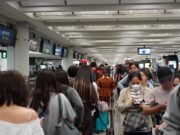
The mobilisation did reach border control at Charles de Gaulle. Un1té brought officers together in support of the Police aux frontières (PAF), and officers on duty were urged to apply passenger checks with heightened thoroughness. The union later claimed that flights had been delayed.
At publication, we found no consolidated independent confirmation from Paris Airports, airlines or the DGAC that would justify attributing general airport congestion or a specific waiting time to the action. We therefore do not claim that the mobilisation caused airport chaos. Nor did we find evidence that customs operations were affected: border police check people and travel documents; French Customs has distinct responsibilities for goods and flows. The sources reviewed did not document an impact at Orly.
No scapegoating of migrants or communities
France’s official 2025 recorded-crime statistics present a mixed picture: physical violence rose 5%, sexual violence 8% and attempted homicide 4%; homicides were stable at 975 victims; vehicle theft fell 9% and burglary 3%. These are recorded offences, not a complete measure of victimisation.
Nothing permits a professional mobilisation over pay and working conditions to become an accusation against migrants, a nationality or a community. Irregular immigration, recorded crime, asylum policy and officer safety are separate public-policy files. They should be connected only where precise official evidence establishes a relevant causal or statistical relationship.
Security is economic infrastructure
Public safety is not merely a budget line. It determines whether streets, stations, shops, hotels and cultural venues can be used with confidence. Without credible security there can be no sustainable tourism, investment, retail, events, hospitality, family life or trust in public space.
INSEE estimates that foreign tourists spent €77.5 billion in France in 2025. That does not mean every euro spent on policing automatically produces a euro of tourism. It means that reputation, mobility and confidence are economic assets. Our guides to Paris in autumn and to how a visitor can become an investor in France depend on the same reality: people return and invest where public space inspires confidence.
Five questions for the National Assembly and Senate
- What funded timetable will deliver remuneration, ISSP and agreements already signed, rather than another cycle of emergency measures?
- What ten-year targets will cover genuinely available staff, investigations, border police, vehicles, buildings and training?
- Are current sanctions for assault, threats, intimidation and doxxing enforced quickly enough, and what prosecution and conviction data prove it?
- Should protection of officers’ identities, homes and families be strengthened, with what defence rights and judicial remedies?
- Which police powers need clearer statutory definition, and what parallel guarantees will Parliament require for cameras, proportionality, oversight and misconduct?
A ten-year contract with police and society
France should not wait for officers to mobilise repeatedly before it addresses structural problems. It needs a ten-year national strategy, reviewed annually by Parliament, for staffing, pay, ISSP, equipment, training, housing, psychological health, family protection, digital tools, property, judicial delays and the legal framework.
The strategy should publish simple indicators: posts authorised and filled, operational availability, investigation delays, attacks and judicial outcomes, sick leave, suicide prevention, fleet renewal, camera availability, complaints against officers and oversight results. Police, judges, local government, researchers, human-rights groups and victims should all have a place in that evaluation.
If you want a safe Paris, support those who protect it. If you want a strong police service, also demand one that is fair, accountable and worthy of trust. Authority, protection and accountability must advance together.
Osama Samaha
Editor-in-Chief — oui stars Travel
Embedded field images from the 15 September 2026 mobilisation outside the National Assembly.
Verified video: the 15 September mobilisation
This BFMTV clip records Alliance’s response after its meeting with Interior Minister Laurent Nuñez on 15 September 2026.
Watch the verified video on Dailymotion
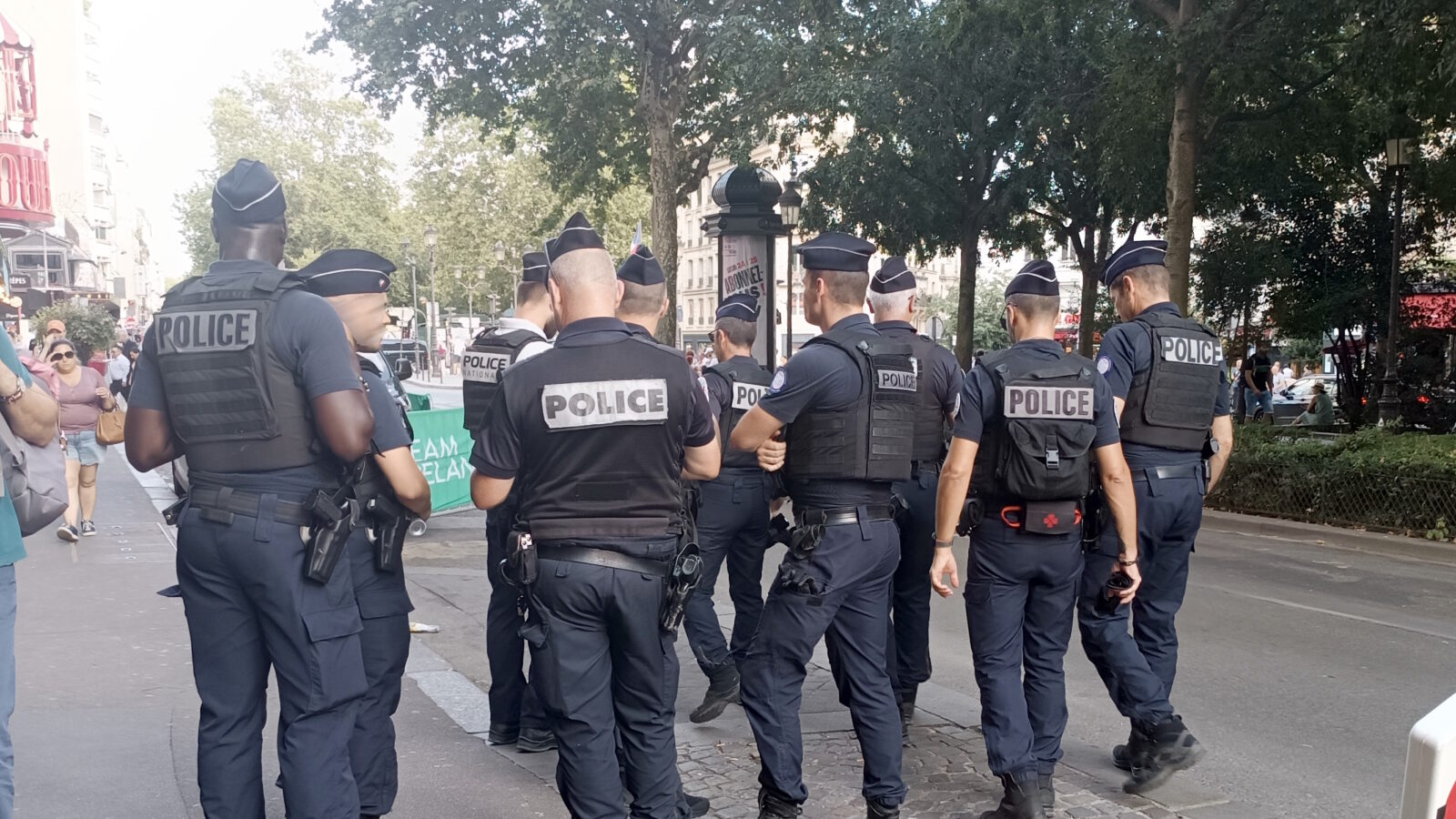
Featured image: French National Police patrol in Paris, 6 August 2024 — Kyah117 / Wikimedia Commons / CC BY 4.0, cropped.
Sources and method
Facts checked on 17 September 2026. Union demands are attributed as claims; official data are distinguished from organisers’ statements.
- AFP — mobilisation and demands
- Le Monde — aftermath and Charles de Gaulle action
- National Police — officer pay
- French civil service — index point
- INSEE — inflation
- Senate — 2026 National Police budget
- IGPN — 2024 assaults
- IGPN — 2024 annual report
- Legifrance — threats and intimidation
- Legifrance — malicious disclosure of personal data
- Legifrance — body-worn cameras
- Defender of Rights — policing ethics and cameras
- SSMSI — 2025 recorded crime
- Legifrance — ISSP rates
- Legifrance — identity protection, article 15-4
- INSEE — 2025 national accounts and foreign-tourist spending
- Actu Forces de l’Ordre — Un1té’s claim about Charles de Gaulle delays