THE STORY BEHIND THE HOTEL · PARIS, EPISODE 6
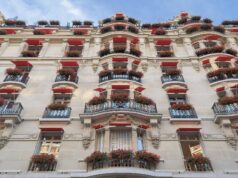
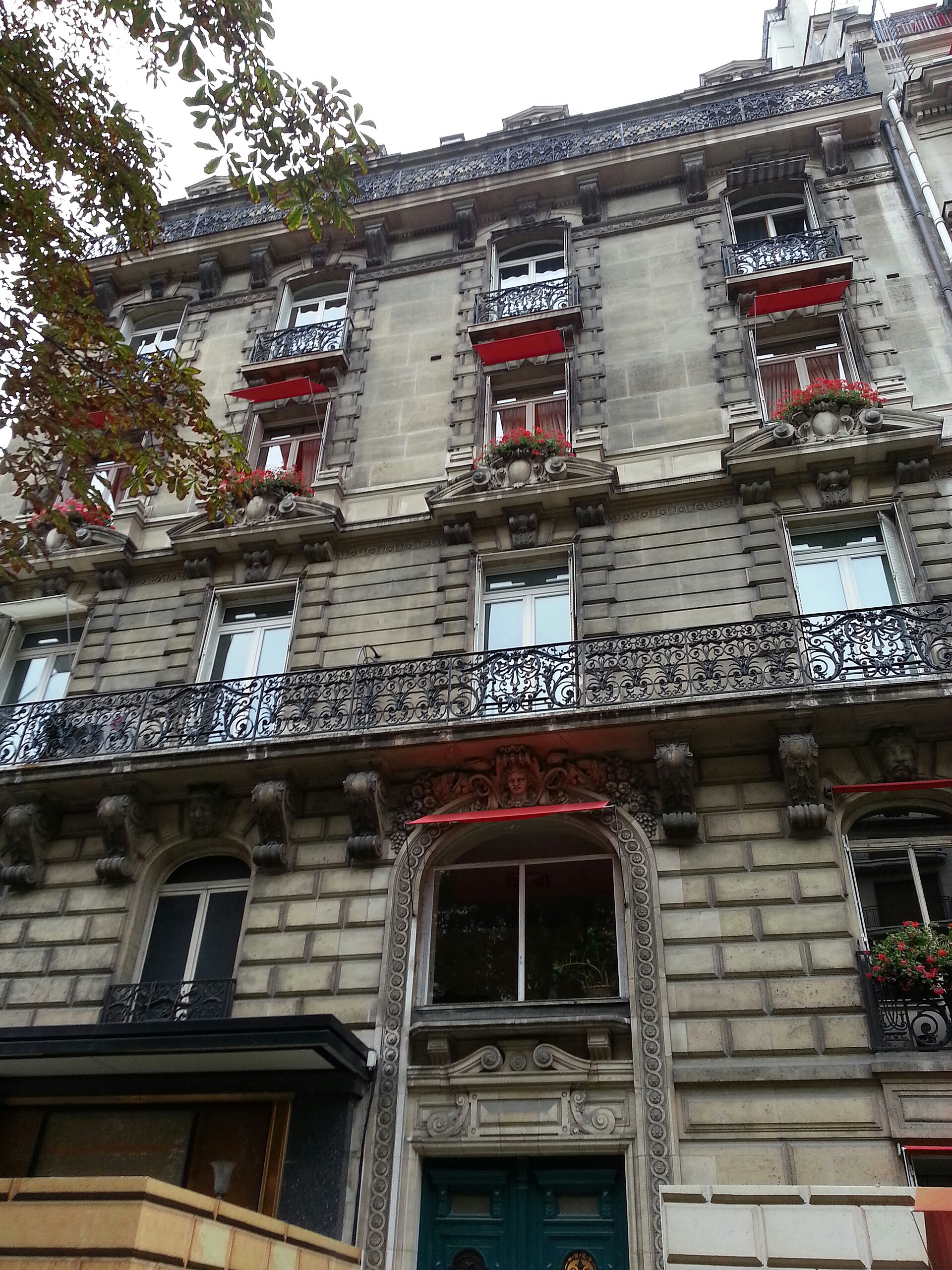
For more than a century, a row of red awnings and flowering balconies has turned one façade on avenue Montaigne into an image of Paris. The colour is not merely branding. Behind it lies a hotel born beside a revolutionary theatre, occupied by two armies, adopted by Christian Dior and wrapped in one of the city’s most enduring love stories.
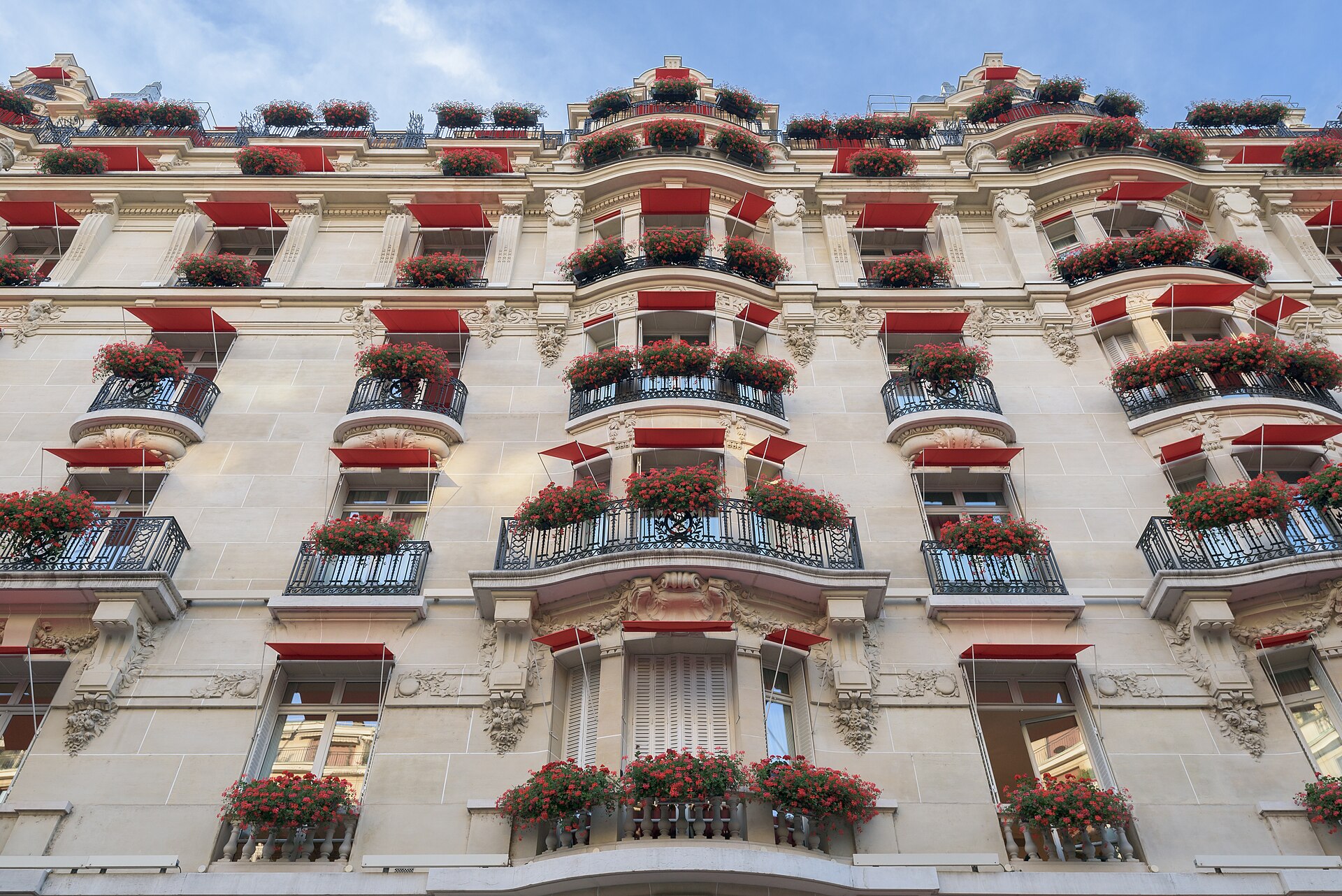
Hôtel Plaza Athénée is often photographed as a promise: geraniums, pale stone, black iron and a glimpse of the Eiffel Tower. Yet the building matters because it helped shape the neighbourhood around it. Before avenue Montaigne became shorthand for couture, the hotel drew the audience that fashion wanted. Then fashion crossed the street.
This is not a hotel review and it is not advertising. It is the documented story of how one Paris palace learned to make hospitality look like haute couture without losing the more complicated layers beneath the red balconies.
The name almost stopped the opening
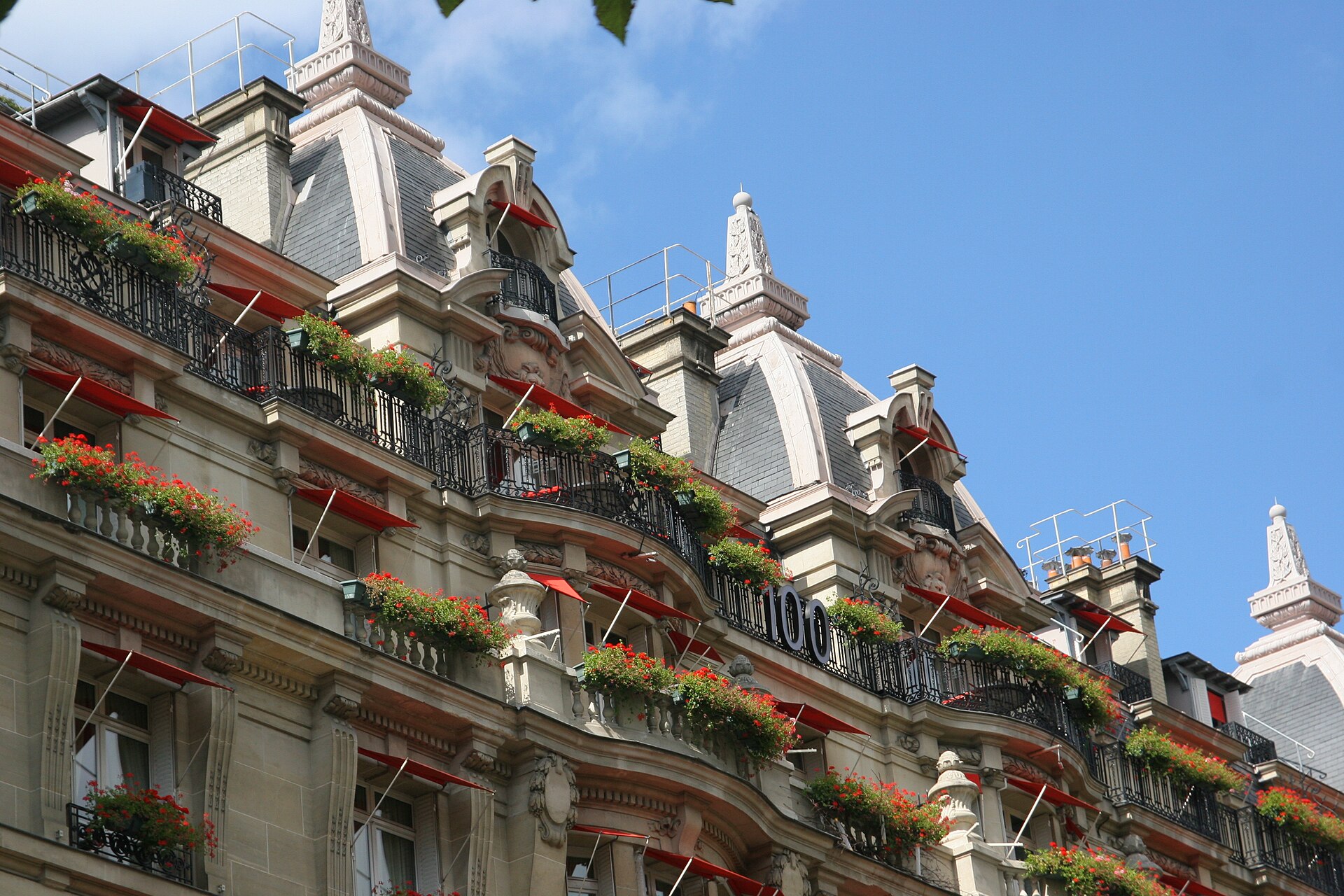
In 1911, hotelier Jules Cadillat decided to build a grand hotel on avenue Montaigne. Architect Charles Lefebvre designed an eclectic Parisian building with a cut-stone façade and wrought-iron balconies, giving the new address the manners of a Haussmann-era palace even as Paris entered the modern age.
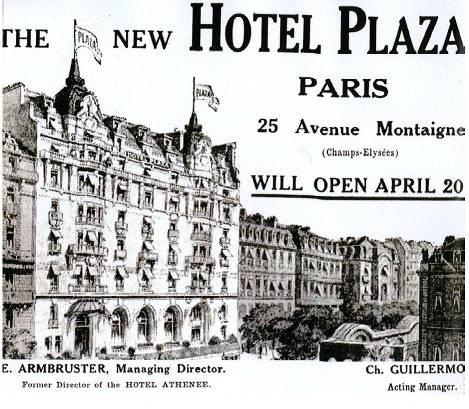
The opening was announced for the spring of 1913, but the name “Plaza” had not been secured. According to the documented history of avenue Montaigne, a competitor challenged it. General manager Hémile Armbruster added “Athénée,” and the Hôtel Plaza Athénée officially opened on 20 April 1913.
The timing was extraordinary. The Théâtre des Champs-Élysées opened nearby only weeks earlier. Its radical reinforced-concrete architecture and adventurous programme attracted composers, dancers, patrons and critics. After performances, the audience moved toward the hotel. From the beginning, Plaza Athénée was not isolated luxury. It was connected to the cultural electricity of its street.
A palace built in two rhythms
France’s Ministry of Culture records the present complex as built in two campaigns between 1912 and 1919, then enlarged during the 1920s. The façade follows the orderly vertical rhythm of avenue Montaigne, but its projecting balconies turn every room toward the public theatre of the street.
Inside, the hotel developed two visual languages. Classical Parisian rooms favour mouldings, silk, chandeliers and the proportions of an elegant apartment. Other spaces embrace Art Deco geometry. The tension became most visible in 1936, when Le Relais Plaza opened with interiors by Constant Lefranc, inspired by the first-class dining room of the ocean liner Normandie.
The architecture is not a single preserved moment. It is a sequence: pre-war ambition, interwar expansion, maritime Art Deco and later couture-minded restoration. In 1994, the avenue façade, roof, hall, main gallery, dining room and Salon Montaigne were partially listed as historic monuments.
The first difficult decades
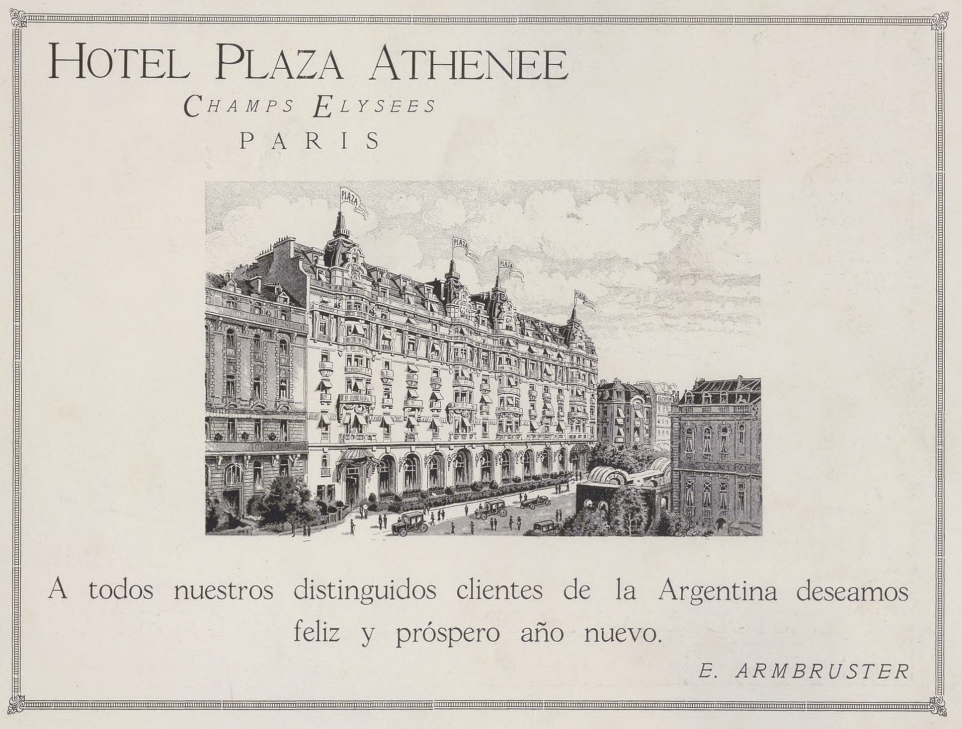
A 1923 advertisement already marketed the hotel internationally, evidence that Plaza Athénée understood Paris as a global desire. But the building’s early decades were repeatedly interrupted by European conflict and economic uncertainty.
During the Second World War, the hotel was occupied first by the German command and then by the American command. It returned to commercial hotel life in 1946. That succession matters. The rooms that had served a military occupation were required to become spaces of civilian hospitality again, just as Paris attempted to recover its cultural confidence.
Le Relais Plaza, opened only a few years before the war, survived as one of the city’s recognisable Art Deco dining rooms. Its return was part of a wider Parisian recovery in which restaurants, theatres and fashion houses became signs that public life had resumed.
When couture crossed avenue Montaigne
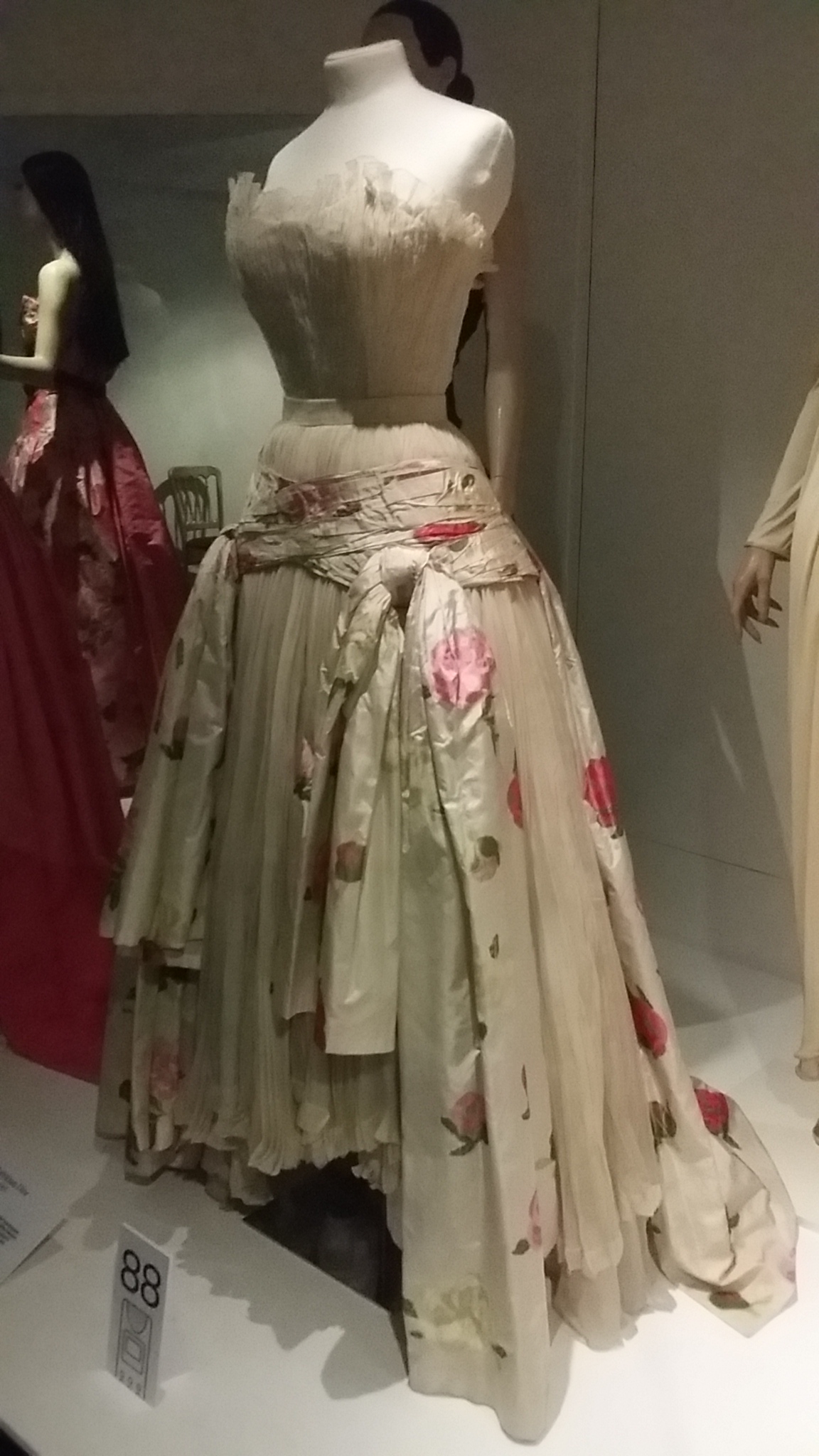
Christian Dior understood the hotel’s clientele before the street had become fashion’s most concentrated address. He established his couture house at 30 avenue Montaigne in late 1946 and presented the collection that became known as the New Look in 1947. The Plaza Athénée stood opposite, filled with the international clients, editors and social world his new house hoped to attract.
Dior became a regular visitor. The hotel documents fashion shows and photo sessions held within its rooms, and other designers followed him to the avenue. The relationship was not simply decorative. The hotel supplied an audience; the fashion house gave the street a new identity. Together they helped turn avenue Montaigne into an address recognised around the world.
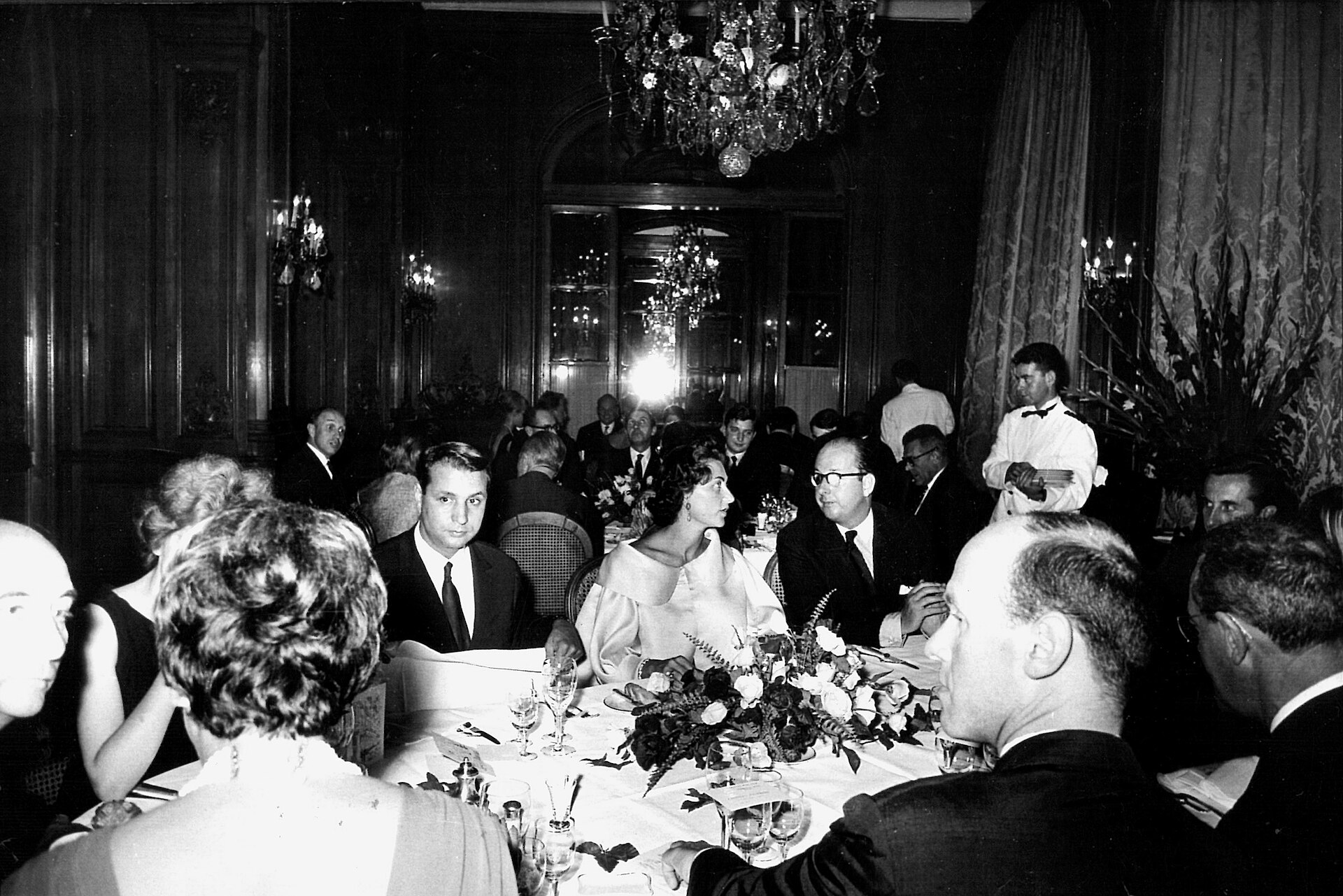
The connection continued after Dior’s death. A 1962 photograph records fashion journalist Marie-Jacques Perrier at a Plaza Athénée dinner honouring shoe designer Charles Jourdan. The image captures the hotel in its most influential role: not as a backdrop to fashion, but as one of the rooms where fashion’s networks met, watched and decided what mattered.
IF THESE WALLS COULD TALK: why the balconies turned red
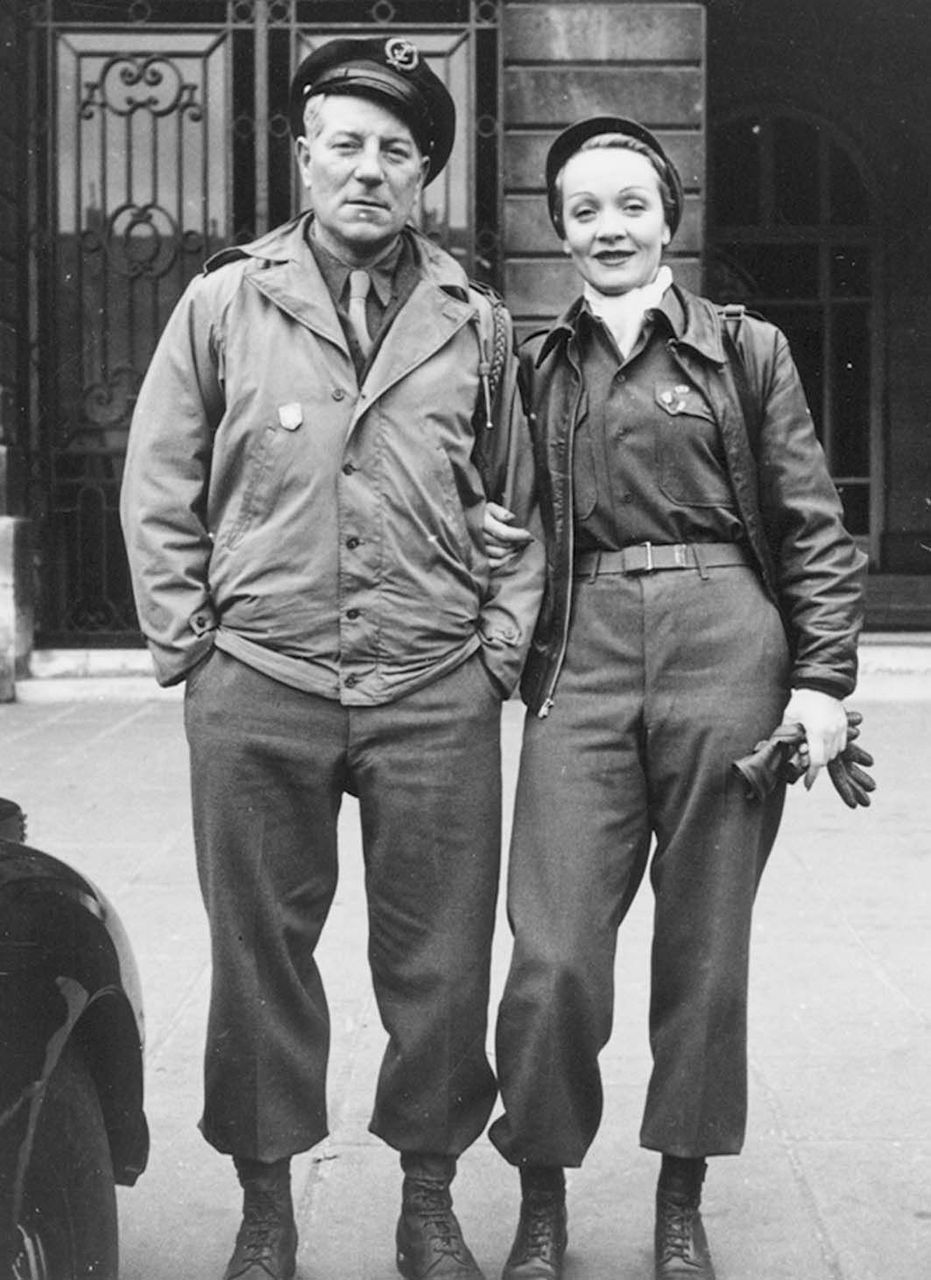
The hotel’s most recognisable detail is linked, in its own documented account, to the romance between actor Jean Gabin and Marlene Dietrich. They met at dinner at Le Relais Plaza in the 1940s and became a couple, returning to the hotel together.
When Dietrich bought an apartment across the avenue, Gabin asked the concierge to place one hundred red roses on the balcony of the room they had shared, where she could see them from her windows. Finding that many roses, and keeping them alive, was impractical. The hotel chose red geraniums instead.
The substitution outlasted the romance. Red flowers spread across the façade and became a permanent part of the hotel’s image. What looks like a perfectly controlled piece of hotel design began, according to the house story, as an improvised message across a Paris street.
The anecdote endures because it explains the building visually. Plaza Athénée is remembered not only through stone and architecture, but through a colour that can be renewed each spring.
Transformation, expansion and public debate
Plaza Athénée joined Dorchester Collection in 2001. Later redesigns brought in contemporary designers while preserving the classical and Art Deco divide. The hotel closed in 2013 for a major expansion and renovation, reopening in 2014 with adjoining buildings incorporated into the property.
In 2024, Moinard Bétaille completed another important chapter: 49 renovated rooms and suites across the fifth and sixth floors, including the Royal Suite. The work kept mouldings, cornices and Versailles parquet while adding new colour palettes, custom silks and details inspired by the Virginia creeper in La Cour Jardin.
Ownership has also placed the hotel within a wider public debate. Dorchester Collection properties are linked to the Brunei Investment Agency. International boycott calls in 2014 and again in 2019, prompted by Brunei’s penal code, included Plaza Athénée. Reporting that controversy is part of describing the hotel honestly; architectural importance and questions about ownership can exist at the same address.
Plaza Athénée today
The hotel currently presents 154 rooms and 54 suites. The Royal Suite extends across about 450 square metres with four bedrooms and four bathrooms. Eiffel Suites frame the tower from their balconies, while L’Appartement offers Art Deco lines and a private terrace. The appeal is highly visual, but the strongest rooms also give guests the sense of occupying a private Parisian residence.
September 2026 brought a new culinary chapter with La Grande Table du Plaza Athénée. The Michelin-starred restaurant is led collectively by executive chef Jocelyn Herland, chef Anthony Di Prospero and pastry chef Angelo Musa. Its French heritage cuisine revisits recipes that may be centuries old around a pink-marble royal table beneath 20,000 leaves of gold.
Le Relais Plaza remains the Art Deco brasserie, now led by Victoria Boller. La Galerie is the all-day salon; La Cour Jardin changes with the seasons; Le Bar supplies the hotel’s more contemporary night-time face. Dior Spa completes a relationship that began across the avenue and eventually moved inside the palace.
Why travellers still choose it
They choose Plaza Athénée because the hotel offers a complete and instantly legible version of Paris. Avenue Montaigne places couture outside the door. The Seine and Eiffel Tower are close enough for an evening walk. The Champs-Élysées and Grand Palais sit within the same compact Golden Triangle.
They choose it for the contrast between a highly recognisable façade and rooms that can feel private. They come for fashion, balconies, destination dining, the Dior Spa and service designed around individual routines rather than a rigid palace script.
But the deeper reason is identity. Many luxury hotels can promise marble, flowers and a view. Plaza Athénée can point to a street it helped transform, a design vocabulary built over a century and red balconies carrying a story travellers remember before they even arrive.
Practical location
Address: 25 avenue Montaigne, 75008 Paris, France.
District: the Golden Triangle in the 8th arrondissement, between the Champs-Élysées, avenue George V and avenue Montaigne.
Nearest Métro: Alma–Marceau, Line 9; Franklin D. Roosevelt, Lines 1 and 9.
Nearby: the Seine, Eiffel Tower, Grand Palais, Théâtre des Champs-Élysées and the couture houses of avenue Montaigne.
Official information: Hôtel Plaza Athénée.
Make this Paris your own
Avenue Montaigne is most rewarding when every detail fits together. OUISTARS can shape the practical journey around this address, from a personal airport welcome and private chauffeured arrival to a Paris itinerary built around couture, dining, culture and the Seine. You keep the story; we help make the movement effortless.
Plan your tailored Paris arrival with OUISTARS →
OUISTARS reader services are separate from the editorial selection and reporting of this story.
Watch: Plaza Athénée in motion
Film published by France.fr for the Palaces de France collection, embedded from the original YouTube publisher. It has not been downloaded or rehosted.
Editorial independence: This story was selected and produced independently by oui stars Travel. It does not imply sponsorship, partnership, a complimentary stay, endorsement or a commercial relationship with the hotel. The OUISTARS planning link is a separate reader service and did not influence the editorial reporting.
Research note: Key facts were checked against the hotel’s documented history, the French Ministry of Culture heritage record, the official avenue Montaigne history, the hotel’s account of the red geranium tradition and current Dorchester Collection media records. Image rights and sources appear in every caption.
Continue the Paris season: Hôtel de Crillon · Ritz Paris · Four Seasons Hotel George V · Hôtel Lutetia · Le Meurice
Osama Samaha
Editor-in-Chief, oui stars Travel