THE WORLD, STREET BY STREET
The story behind the name. The city beyond the address.
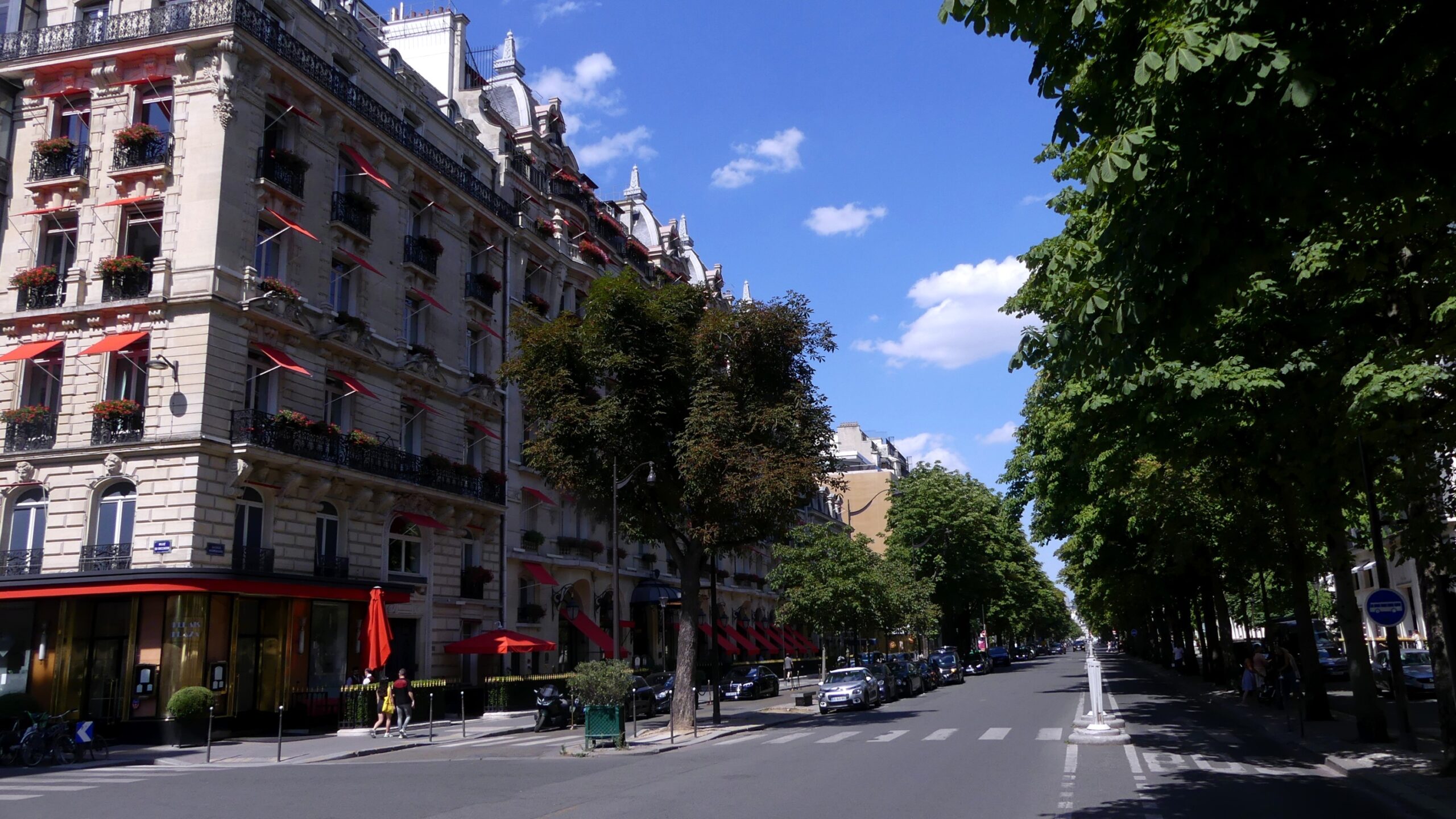
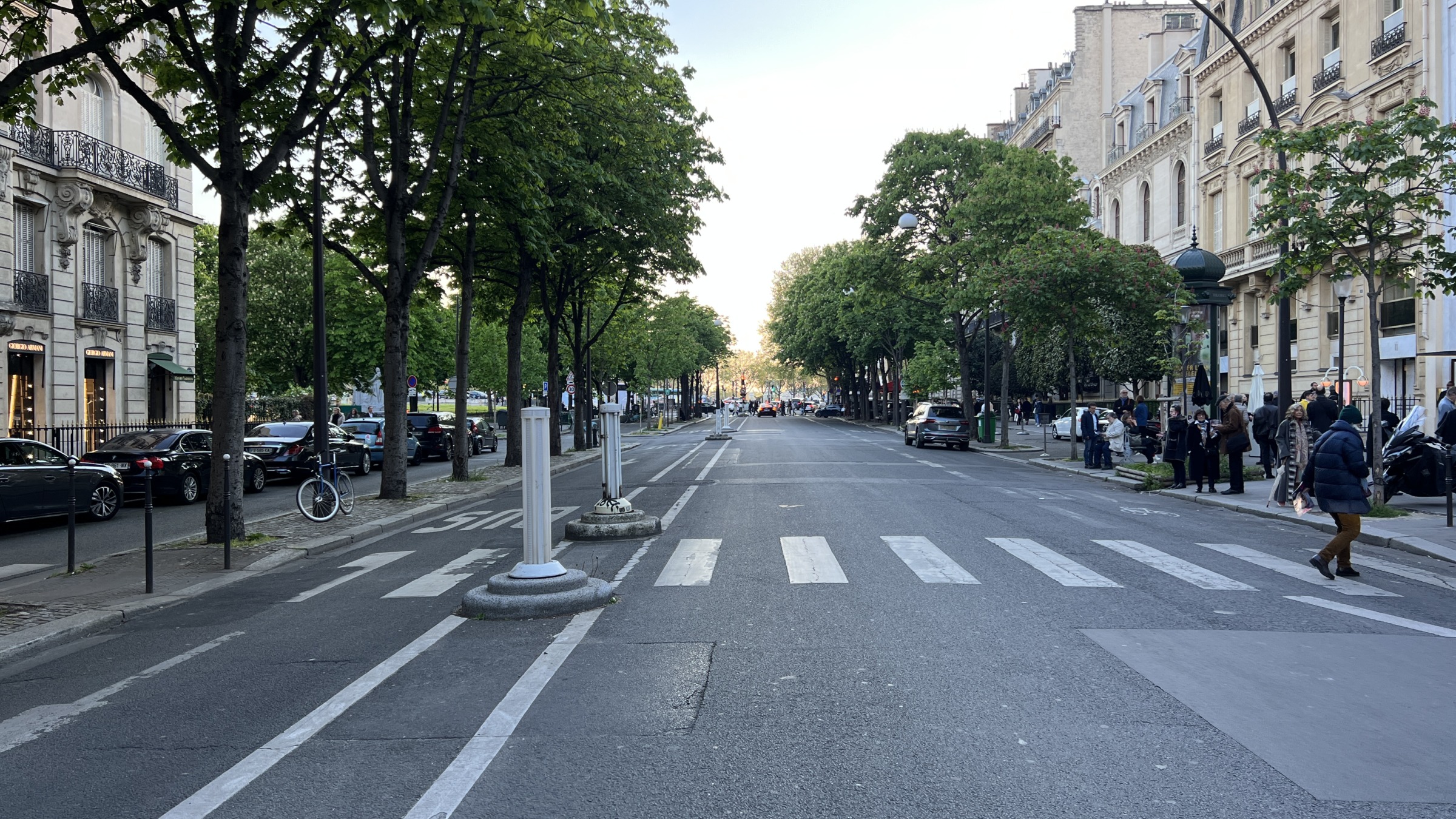
At the Alma end of Avenue Montaigne, Paris seems to arrive already dressed for the evening. The Seine is close, the Eiffel Tower flashes between stone façades, and doormen hold polished doors. Walk north and the avenue edits the city with astonishing discipline: pale limestone, clipped trees, discreet brass, red geraniums, black cars. Even the shop windows seem to lower their voices.
It would be easy to mistake this for a street created in one expensive gesture. It was not. Beneath the immaculate surface lie market gardens, flirtatious promenades, gaslit dancing, an artist’s private revolt, an ancient Roman fantasy, a riotous ballet and a post-war silhouette that divided opinion before it conquered fashion.
In roughly 615 metres, Avenue Montaigne compresses three centuries of Parisian appetite for pleasure, art, spectacle and status. To read it properly, begin not with a logo, but with a name.
The name before the legend
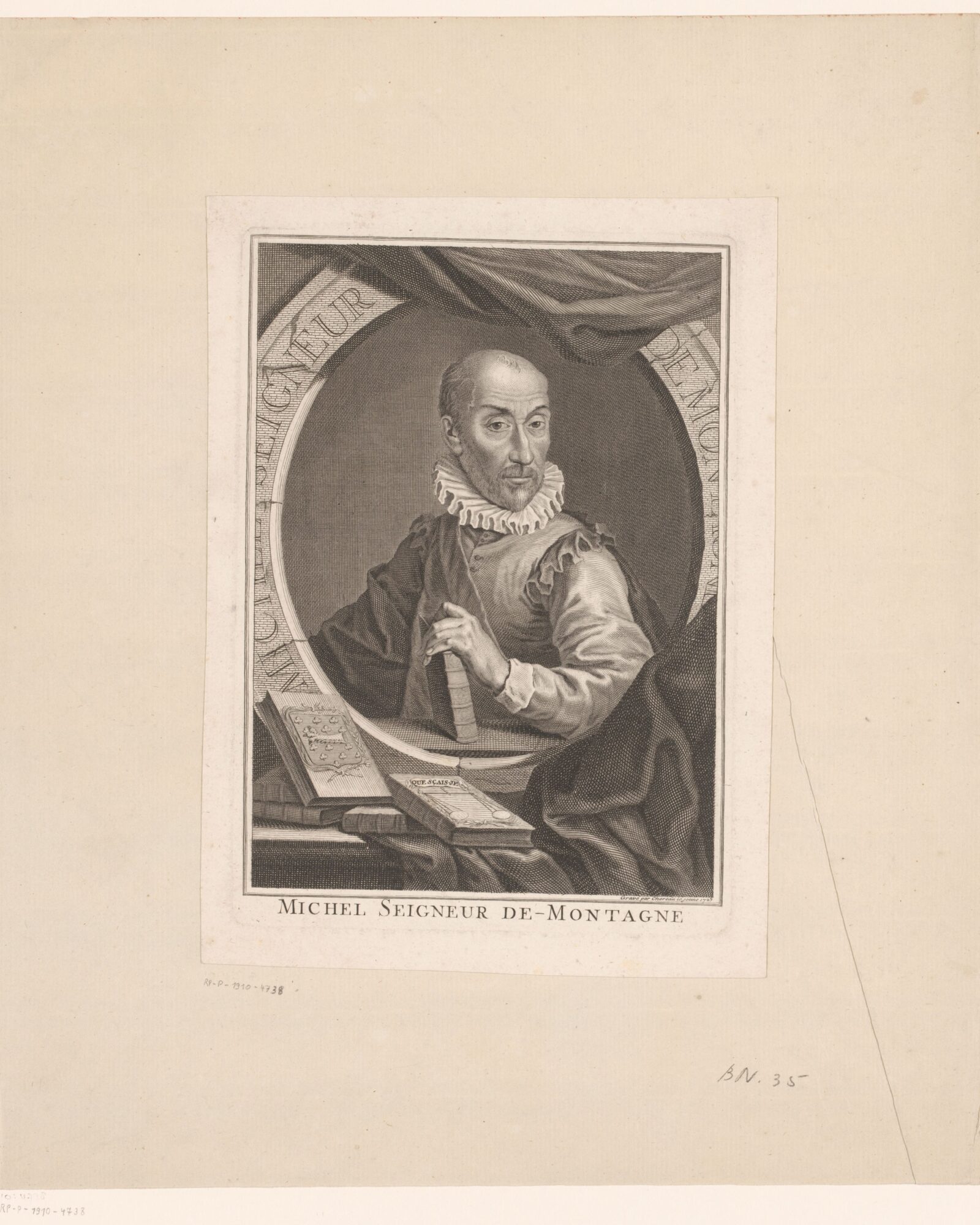
The official name honours Michel de Montaigne, the 16th-century author of the Essays. The avenue received his name in 1850. Montaigne never walked it; in his lifetime, this edge of Paris was countryside.
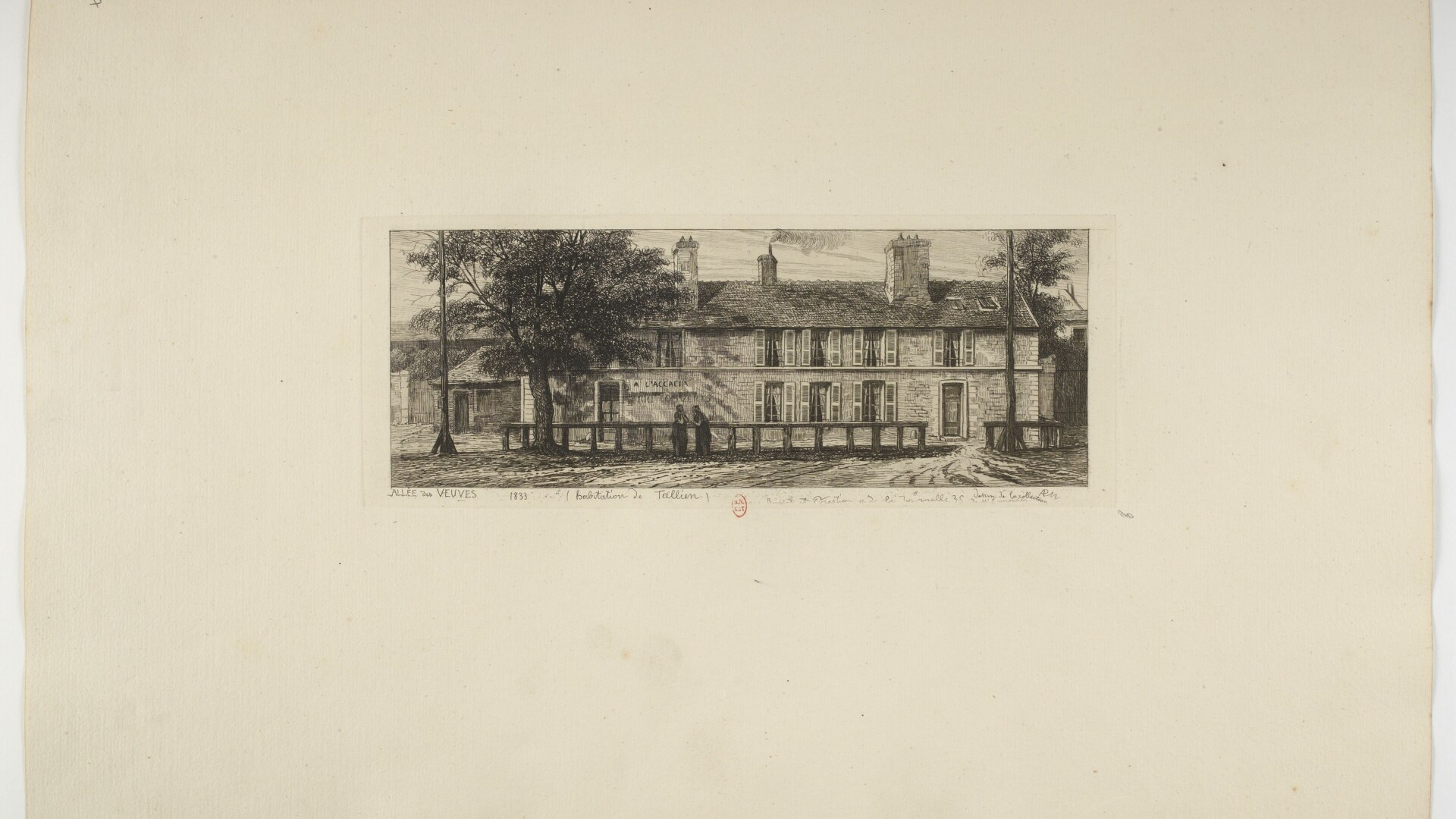
A route appears on a 1672 plan as the chemin or allée des Gourdes, on land belonging to the Sisters of the Visitation. “Gourdes” is commonly linked to gourds cultivated in the marshy gardens, although historical summaries do not always use identical wording. By the late 18th and early 19th centuries, maps and municipal records identify the allée des Veuves, Widows’ Alley, covering parts of today’s avenues Montaigne and Matignon.
Why “widows”? The former name is documented; the romantic explanation is not. Later chroniclers pictured solitary women strolling beneath the elms in search of company. It is memorable Parisian lore, not a proven social record. The uncertainty belongs in the story: this avenue was creating an image for itself long before luxury houses mastered the art.
Before couture, Paris came here to dance
Near today’s numbers 49 to 53 stood the Bal Mabille, one of 19th-century Paris’s best-known public dance gardens. Accounts variously date its beginnings to the Mabille family’s garden in 1813, its development in 1831 or its celebrated relaunch in 1840. What matters is the transformation. Grottoes, coloured lamps, zinc palms and gaslight turned the night into spectacle.
The polka, quadrille and cancan were social electricity. Céleste Mogador and the dancer known as Queen Pomaré became attractions in their own right. Fashion, flirtation and voyeurism met under the same lights. The Bal Mabille closed in 1875, and almost nothing in the avenue’s present composure announces the noise that once lived here.
A laboratory of rebellion
In 1855, the Exposition Universelle brought official culture and imperial confidence to this part of Paris. Gustave Courbet answered with a challenge. After key works were refused, he financed his own temporary Pavillon du Réalisme near Avenue Montaigne and displayed about forty works, including The Painter’s Studio. If the institution would not admit the artist on his terms, he would build a rival institution almost at its door.
At number 18, another vanished building made history through fantasy. Prince Napoléon commissioned Alfred-Nicolas Normand to build the Maison Pompéienne between 1855 and 1860. Frescoes, sculpture, fountains and a Turkish bath formed a palace inspired by antiquity. It was associated with the actress Rachel, whom the prince loved, but she died before the completed dream could become her home. Demolished in 1891, it now asks the walker to treat absence as a monument.
1913: culture detonates behind a calm façade
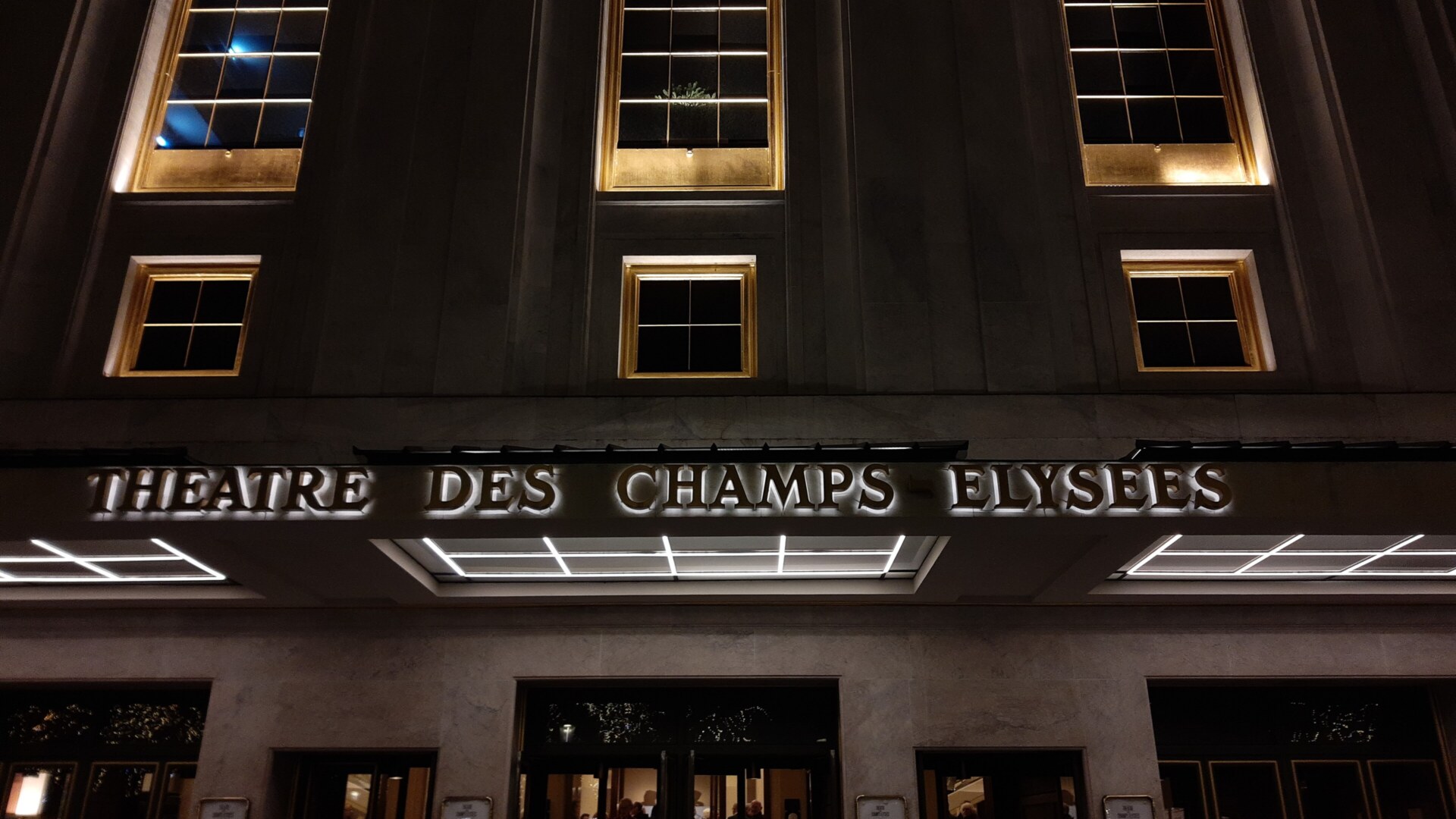
Hôtel Plaza Athénée opened at number 25 on 20 April 1913. Weeks earlier, the Théâtre des Champs-Élysées had opened at number 15, a pioneering reinforced-concrete building shaped by Auguste and Gustave Perret, Henry van de Velde and artists including Antoine Bourdelle and Maurice Denis.
On 29 May, the premiere of Stravinsky’s The Rite of Spring, choreographed by Vaslav Nijinsky for the Ballets Russes, produced one of modernism’s defining nights. Later retellings have embroidered the scale of the chaos, but the protest, mockery and excitement were real. Pause outside number 15 and study Bourdelle’s reliefs. This refined avenue once staged a rupture in the grammar of music and dance.
Red geraniums, Dior and the fashion address
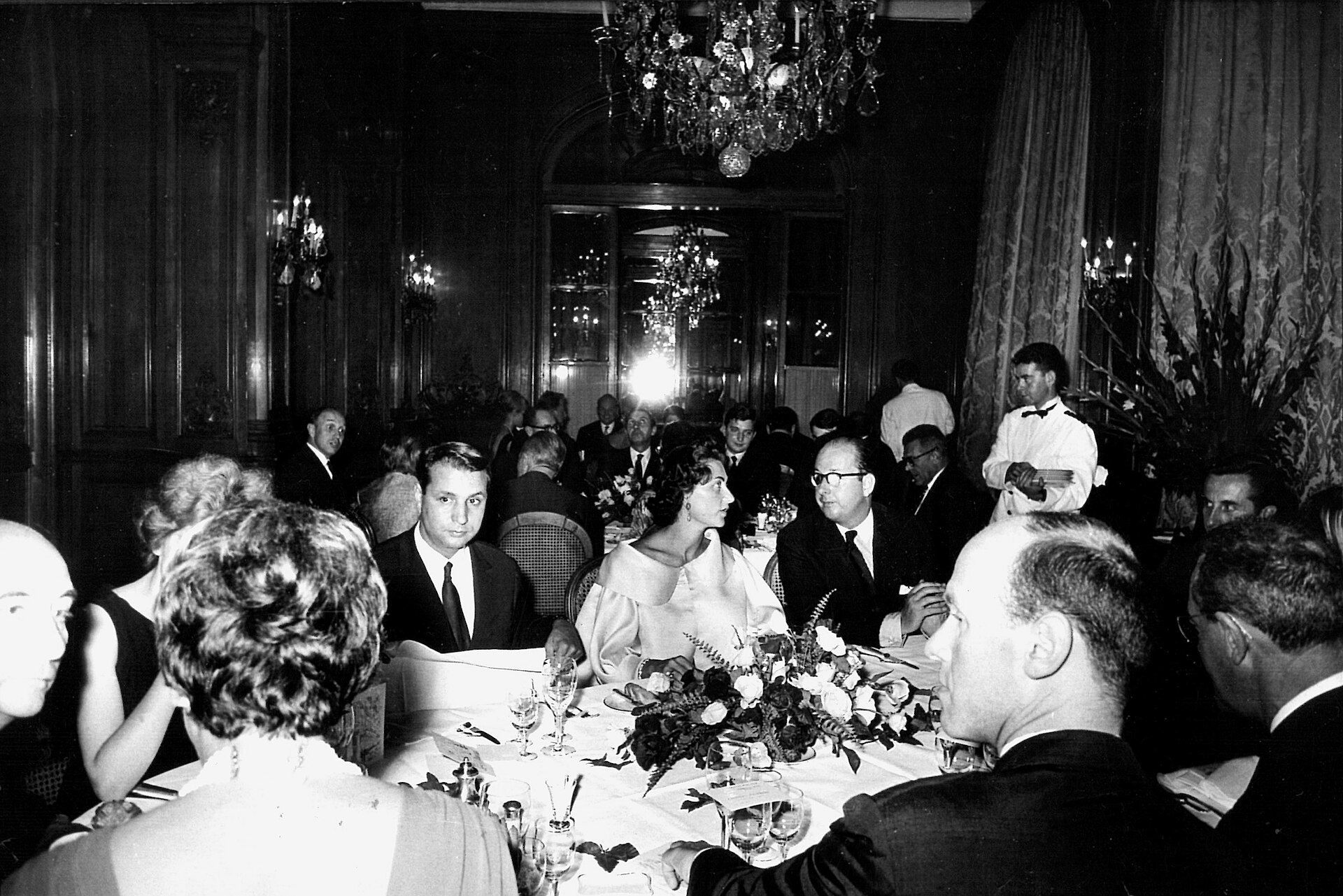
The Plaza Athénée gave Avenue Montaigne a social salon. Its red awnings and geranium-filled balconies became a recognisable image of Paris, and its relationship with fashion deepened after the Second World War.
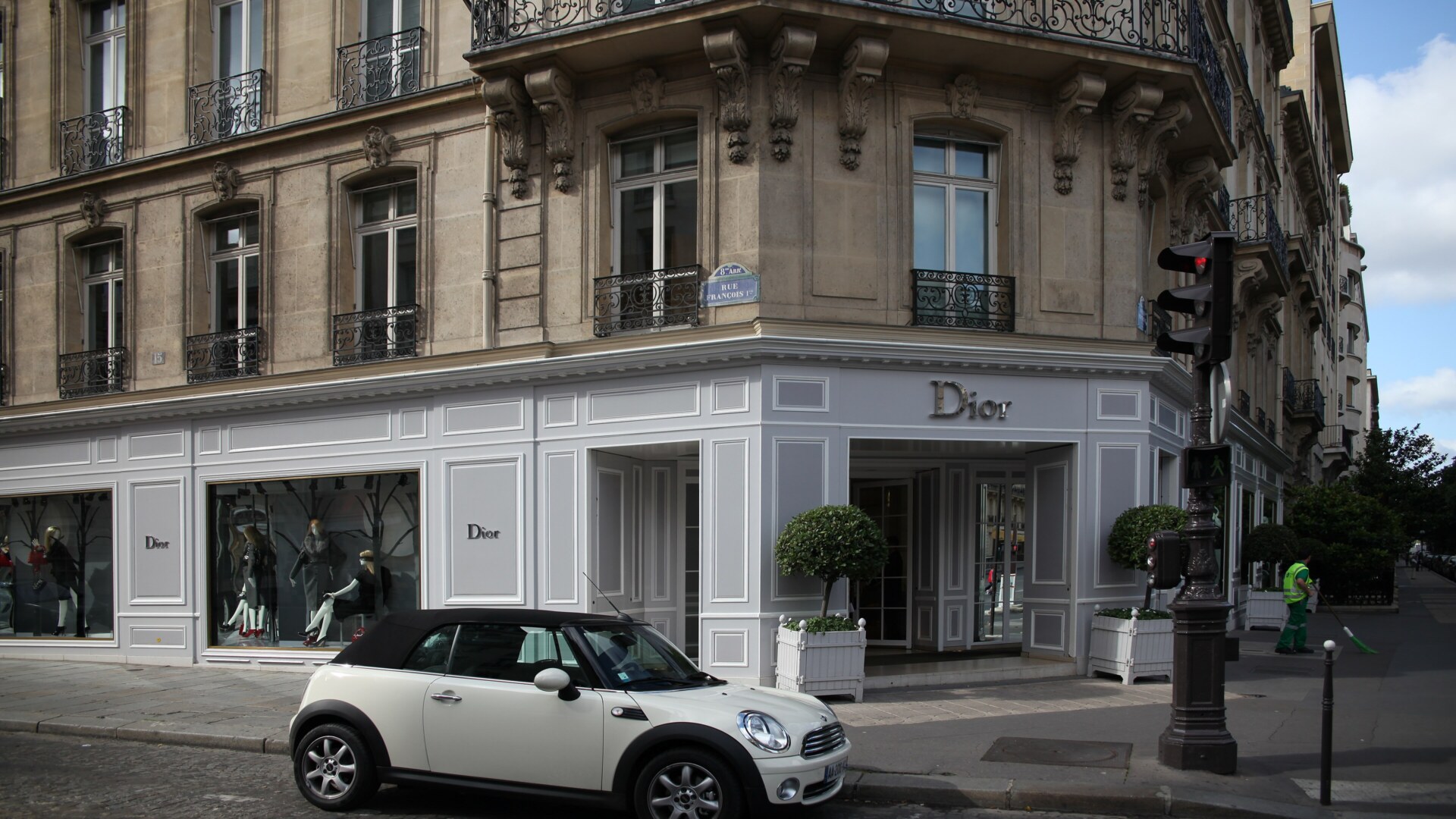
Across the avenue, Christian Dior made the decisive choice. In 1946, he established his house at number 30. On 12 February 1947, he presented his first collection there. The rounded shoulders, narrow waist and expansive skirts of the Corolle and En 8 lines were quickly christened the “New Look” by fashion editor Carmel Snow.
The revolution was not effortless. After uniforms, shortages and rationing, Dior’s abundance looked like liberation to some and provocation to others. The quantity of fabric caused outrage in Britain, where rationing continued; the fitted waist also imposed a highly controlled body. Yet the collection restored Parisian couture to the centre of post-war fashion and transformed number 30 into a global address.
Official video
Published by the verified Christian Dior channel. Official embed only; not downloaded or re-hosted.
Embed only: “30 Avenue Montaigne: Where Dior’s Legacy Began,” from Christian Dior’s verified YouTube channel: https://www.youtube.com/embed/l01S3dLHEus
A public street of private worlds
Today the avenue forms one side of Paris’s “Golden Triangle”, with the Champs-Élysées and Avenue George V. Since 1971, the Comité Montaigne has promoted the houses on Avenue Montaigne and Rue François Ier internationally. Its visual unity is real, but carefully produced.
That curation has a cost. Exceptional craft and architecture sit beside a commercial world designed for a narrow level of spending. Security doors, queues and appointments can make a public pavement feel like the threshold of private territory. Global houses also displace some of the independent, everyday variety that gives streets their urban life.
The avenue is not false; it is revealing. Paris has always sold versions of itself, from Bal Mabille’s gaslit fantasy to the Maison Pompéienne and the mythology of couture. Admire the workmanship without confusing price with cultural value, and notice the people maintaining the perfection: atelier hands, shop teams, florists, security staff, stage crews and hotel workers.
For the wider context, read oui stars Travel on property and power in the Golden Triangle and shopping in Paris in 2026.
Three ways to walk Avenue Montaigne
60 minutes: the essentials
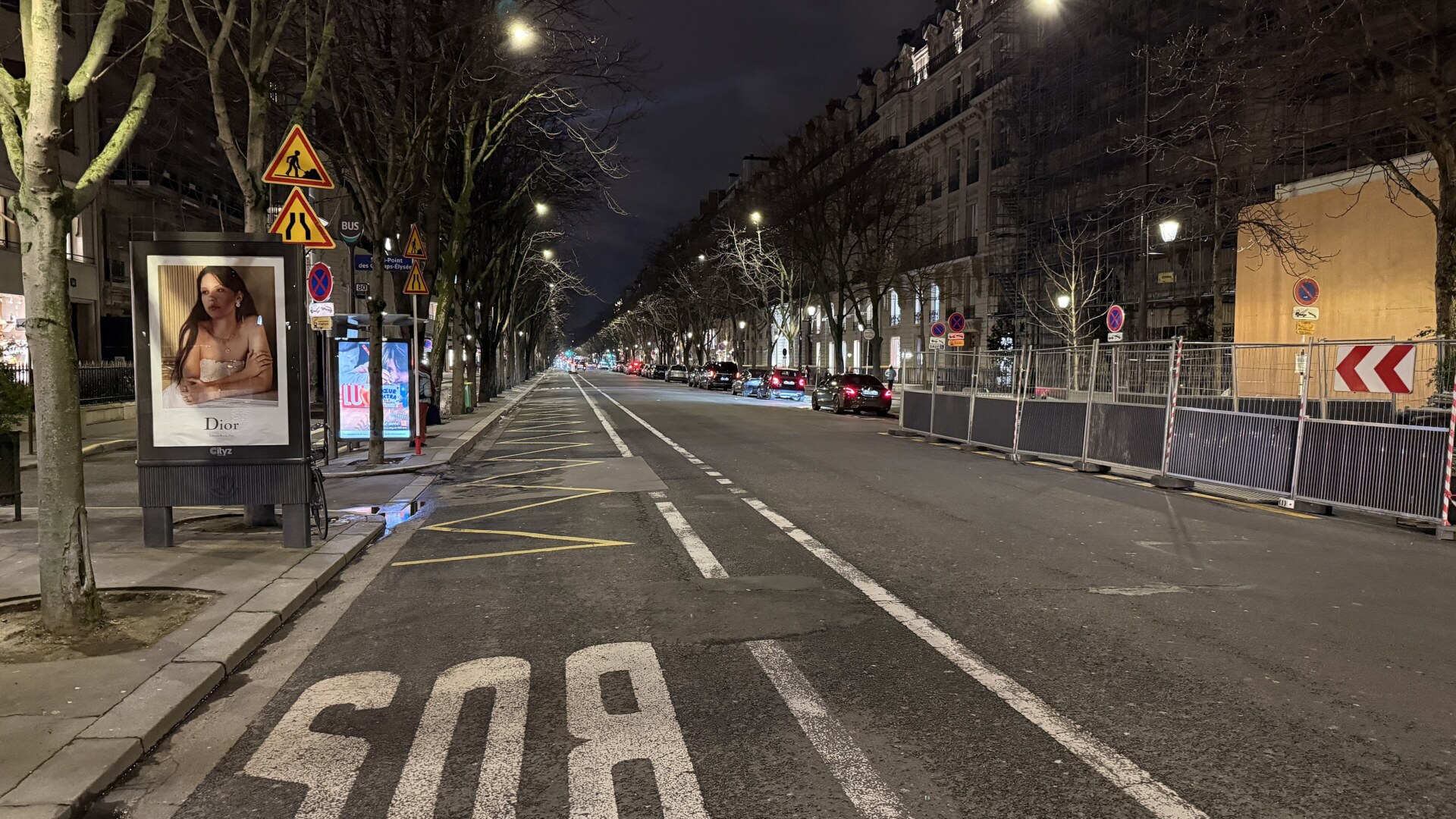
Start at Franklin D. Roosevelt Métro and walk south. Allow five minutes for the full perspective, ten around the fashion façades near numbers 42 and 36, and 15 outside 30 Montaigne. Locate La Galerie Dior’s separate entrance on Rue François Ier. Give ten minutes to the Plaza Athénée, ten to the Théâtre des Champs-Élysées, then finish at Place de l’Alma. Without stops, the 615-metre avenue takes about 12 to 15 minutes. The hour is for looking.
90 minutes: the attentive walk
Follow the same route more slowly. Add Rue François Ier, Bourdelle’s theatre reliefs and the former sites of the Maison Pompéienne and Bal Mabille. This is the best plan for history, photography and windows without a timed museum ticket.
180 minutes: the immersion
Reserve La Galerie Dior and place it at the centre. Allow 75 to 90 minutes inside, an hour for the street and a buffer for security or queues. Alternatively, when dates align, replace the gallery with a 75-minute guided theatre visit. Do not force both into three hours.
Addresses, access and what is open
- La Galerie Dior: public entrance at 11 Rue François Ier, beside the historic 30 Avenue Montaigne. Open 11am to 7pm, closed Tuesday; last admission 5.30pm. Prices checked on 27 September 2026 were €16 standard and €12 reduced. Online booking is recommended.
- Théâtre des Champs-Élysées: 15 Avenue Montaigne. Box office normally Monday to Saturday, 2pm to 7pm; Sunday from one hour before a performance. Selected French guided visits require booking.
- Hôtel Plaza Athénée: 25 Avenue Montaigne. Restaurants and bars have separate reservations. Read the oui stars Travel story of the Plaza Athénée, Dior and its red geraniums.
- Musée Yves Saint Laurent Paris: 5 Avenue Marceau, near Place de l’Alma, is closed for renovation from 5 May 2025 to 15 September 2027. Do not plan a 2026 admission.
- Transport: Franklin D. Roosevelt, lines 1 and 9, serves the north; Alma-Marceau, line 9, serves the south. Pont de l’Alma RER C and buses 42 and 80 are nearby. Line 9 is not independently step-free. The theatre requests advance contact for wheelchair places; Galerie Dior advises allowing extra time and requesting assistance.
- Photography and shopping: Photograph from the pavement without blocking entrances or intruding on people. Indoor rules vary. You can walk the avenue without buying. For appointments, use official store pages. Eligible non-EU visitors should verify French tax-refund rules and complete PABLO validation before departure.
Quick answers
Is Galerie Dior at 30 Avenue Montaigne? It belongs to the historic complex, but visitors enter at 11 Rue François Ier. Are shops open Sunday? Some are, but hours vary. Check each official store locator that day. Best light? Early morning for quiet architecture; blue hour for luminous windows. Fashion Week is atmospheric but crowded. See our Paris Fashion Week guide and Paris after dark.
Sources
Ville de Paris street nomenclature; Paris je t’aime; Théâtre des Champs-Élysées; La Galerie Dior; Dior history; Plaza Athénée; Musée Yves Saint Laurent closure; Paris Musées, Bal Mabille; Musée d’Orsay, Courbet; V&A, the New Look; French Customs, PABLO.
Practical details checked on 27 September 2026. Reconfirm before travelling.
Osama Samaha, Editor-in-Chief, oui stars Travel




_-_btv1b8457553g.jpg)

_-_2023-04-21_-_1.jpg)


_-_2026-02-19_-_1.jpg)