




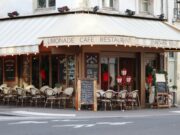
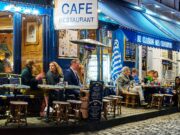
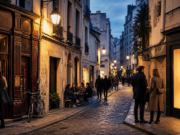








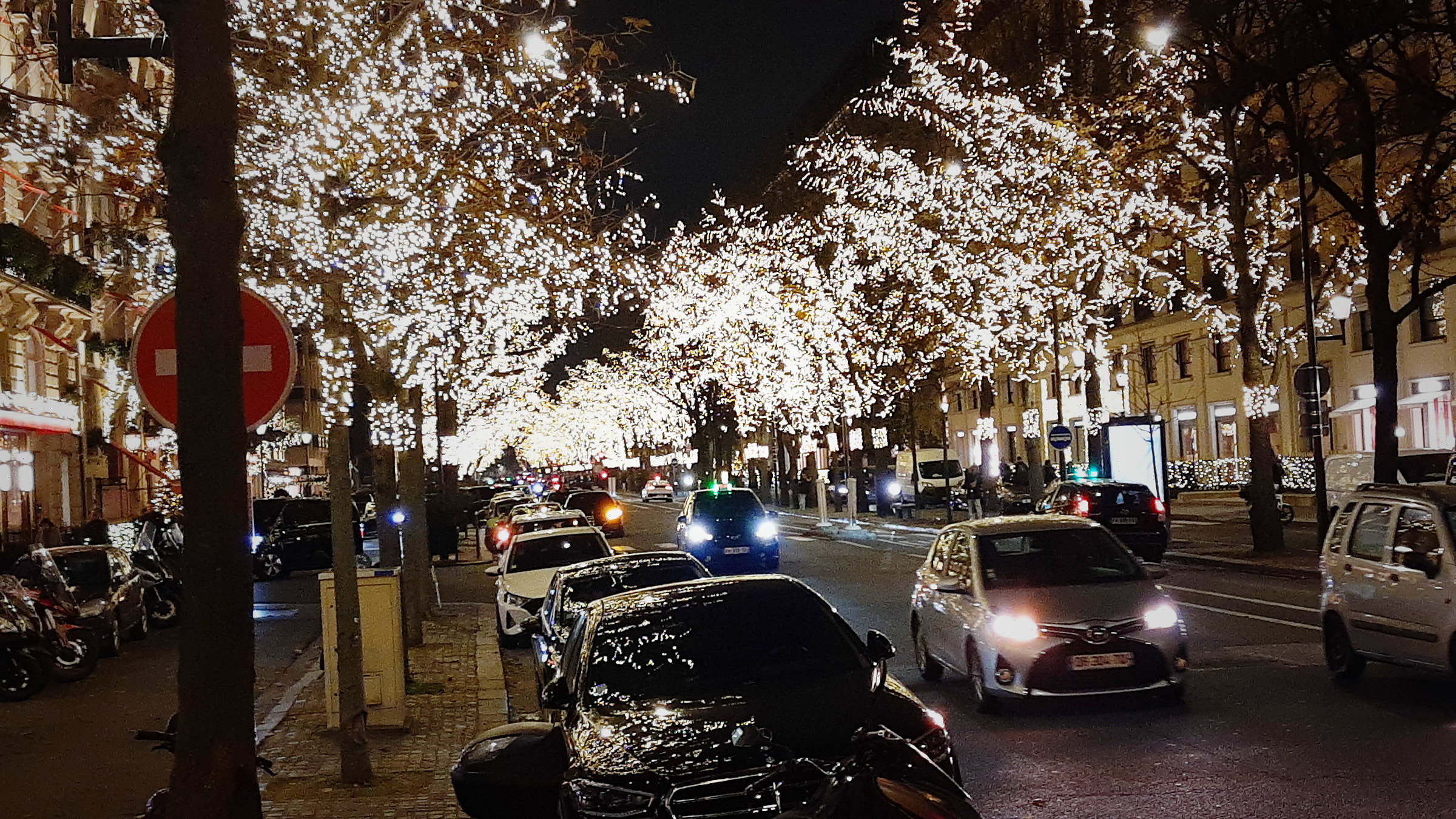
In Paris’s Golden Triangle, value is performed in public. The windows of Avenue Montaigne turn fashion into theatre. Palace hotels on Avenue George V sell discretion at global prices. The Champs-Élysées supplies visibility on a scale few urban addresses can match. Behind the façades, however, a private apartment obeys a less glamorous discipline: title, floor plan, co-ownership accounts, energy performance, security, noise and the price another buyer will one day accept.
Investing in France series: this feature is part of the French Real Estate Investment Guide. It asks whether Paris 8 and the Golden Triangle can preserve property value, not whether prestige guarantees a return. Facts, market analysis and editorial judgement are identified separately. This is not individualized investment, legal or tax advice.
The answer begins with an apparent contradiction. Paris 8 concentrates some of France’s most internationally recognized luxury assets, but the notarial benchmark for its old apartments fell in the year to December 2025. Scarcity is real; immunity from the market is not.
What is the Golden Triangle?
Paris je t’aime, the capital’s official tourism office, defines the luxury Golden Triangle between Avenue Montaigne, Avenue des Champs-Élysées and Avenue George V. This compact zone sits within the 8th arrondissement but does not represent all of it. Rue du Faubourg Saint-Honoré, Place de la Madeleine, Parc Monceau and the Europe quarter belong to different micro-markets, even when agents group them under a broad “Paris 8” label.
Avenue Montaigne concentrates houses including Chanel, Dior, Louis Vuitton, Saint Laurent, Prada and Gucci. Avenue George V combines luxury retail, corporate addresses and hotels. The Champs-Élysées mixes global flagships, entertainment, restaurants and mass visitor flows. The wider arrondissement contains the Élysée Palace, embassies, the Grand Palais, Place de la Concorde, major offices and some of Paris’s most expensive hospitality.
That density creates a global brand around the address. It also means the buyer must decide what kind of Paris they are acquiring: quiet residential discretion, proximity to couture, an iconic view, access to offices, or a trophy address used only for part of the year.
The price evidence is less theatrical than the shop windows
At the end of December 2025, the Notaires du Grand Paris placed the standardized price of old apartments in the 8th arrondissement at €11,500 per square metre. That was down 2.2% over one year and down 1.1% over five years. The figure covered vacant, freehold, arm’s-length sales of old residential apartments across the arrondissement.
The same table put Paris as a whole below that level and showed higher arrondissement benchmarks in Paris 1, 3, 4, 5, 6 and 7. Paris 8 is expensive, but a prestigious name does not automatically make it the city’s highest notarial average.
The benchmark also understates the dispersion inside the district. A renovated high-floor apartment with unobstructed views, balanced rooms, lift, air conditioning where legally possible, a concierge and secure parking may trade in a different universe from a dark ground-floor unit or a large property requiring structural and energy work. Public notarial data is an essential anchor; it is not a quote for an exceptional asset.
The useful lesson is not that Golden Triangle property is weak. It is that selection matters more than the postcode. An investor paying far above the arrondissement benchmark must be able to explain the premium in terms a future buyer will still recognize.
Why demand can travel across borders
The Golden Triangle belongs to an international luxury circuit. A buyer who knows New York’s Fifth Avenue, London’s Mayfair, Milan’s Via Montenapoleone or Dubai’s prime districts can understand Avenue Montaigne quickly. The fashion houses, hospitality brands and monumental cityscape reduce the amount of explanation required when a property returns to market.
Paris je t’aime currently identifies six palace-class hotels in the 8th arrondissement: Le Bristol Paris, Hôtel de Crillon, Four Seasons Hotel George V, Plaza Athénée, La Réserve Paris and Le Royal Monceau Raffles. It also lists the Prince de Galles and Hôtel Barrière Le Fouquet’s among the district’s five-star hotels. This is more than an accommodation inventory. It is an ecosystem of chefs, concierges, chauffeurs, security providers, luxury retail and services accustomed to international clients.
For a wealthy family, an apartment can complement rather than replace those hotels. A residence offers privacy, storage, familiar staff arrangements and a stable base for repeated stays. A hotel provides round-the-clock services and flexibility. Many international owners use both, depending on the trip.
Demand is therefore tied to travel, fashion, culture, business and family routines. It is broader than a single employer or tourism season. But the buyer pool at very high prices is narrow by definition. International demand can disappear temporarily when currencies, capital controls, geopolitical conditions, taxation or financing change.
A business district disguised as a luxury quarter
Paris 8 is not only a residential and tourism address. INSEE counted 176,084 jobs in the arrondissement in 2023, compared with 18,469 employed residents. Its employment-concentration indicator reached 953 jobs for every 100 employed residents, and 49.1% of jobs were in senior managerial and intellectual professions.
This extraordinary daytime economy supports restaurants, transport, services and furnished medium-term demand. It also changes the street rhythm. Some blocks empty after offices close; deliveries and events generate pressure; security perimeters can interrupt access. The quality of residential life depends on which side of the block an apartment faces and how the building separates homes from commercial premises.
For an investor, the employment base can support resale to executives and pied-à-terre buyers. It should not be converted into a simplistic rental-yield promise. Prime Paris prices and high operating costs often compress gross yields. The return may depend as much on personal use, capital preservation goals and scarcity as on rent.
What can genuinely preserve value?
A location that remains globally legible
The axis from the Arc de Triomphe to Place de la Concorde is difficult to replicate. Avenue Montaigne’s association with couture is reinforced by long-term investment from the houses themselves. The Grand Palais, reopened in stages after major renovation, adds cultural gravity. These institutions help the district remain visible through economic cycles.
An apartment that works for modern international life
Prestige buyers still require basics: sensible circulation, enough bathrooms, service areas, sound insulation, reliable lifts, cooling solutions, secure access and high-quality building management. Large reception rooms can impress, but awkward bedrooms or obsolete technical systems reduce usability. A historic façade does not excuse an impractical interior.
A co-ownership that can finance preservation
Haussmannian and early 20th-century buildings retain value because successive owners pay for roofs, façades, courtyards, lifts, heating and common areas. The copropriété’s minutes, accounts, unpaid charges, reserve fund and works plan reveal whether that process is functioning. Not every elegant building is well maintained.
Legal residential status
In a district dominated by offices, hotels and commercial addresses, the legal use of a unit matters. Buyers should verify that the lot is residential, that past combinations or divisions were authorized and that any planned works comply with planning, heritage and co-ownership rules. A beautifully presented space with an uncertain legal history carries a different risk.
What can destroy the premium?
Noise and visitor pressure: the Champs-Élysées offers unmatched recognition but also traffic, demonstrations, celebrations, late opening and crowds. An upper-floor courtyard apartment may behave differently from a lower floor facing the avenue.
Security without convenience: proximity to the Élysée Palace and embassies supports policing and prestige, but temporary barriers, official convoys and restricted access may complicate daily movement.
Large works: stone façades, roofs, balconies, lifts and collective systems can produce major calls for funds. Energy-efficiency obligations add another layer, particularly where heritage constraints limit external interventions.
Over-customization: a spectacular interior designed around one owner’s taste may require expensive reversal. At resale, internationally legible quality often travels better than a highly personal decorative statement.
A view treated as permanent: planning, roof works, scaffolding and neighbouring renovation can change light and outlook. Due diligence should examine what can legally happen around the building.
Paying an asking-price story: luxury listings can remain on the market, be withdrawn or close below the public ask. Completed notarial transactions and asset-specific comparables matter more than marketing language.
Short-term rentals are not the easy answer
Paris applies strict rules to furnished tourist rentals. Since January 2025, a principal residence can generally be rented as a tourist furnished property for no more than 90 days a year. Renting a home that is not the principal residence can require change-of-use authorization, and compensation rules may make authorization costly or impractical. The co-ownership rules can impose additional restrictions.
The 8th arrondissement has gone further in planning policy. Its town hall said in March 2025 that the new bioclimatic local plan created a sector prohibiting the conversion of offices into tourist furnished accommodation and that the arrondissement had systematically opposed such requests since 2024.
An investment case based on continuous short stays is therefore particularly fragile. A buyer should underwrite a legally permitted use, not assume that tourist visibility turns any apartment into a hotel room.
The foreign-buyer question
France generally permits non-residents to buy real estate, but ownership does not create an automatic right of residence. International buyers must examine the structure of ownership, succession law, financing, source-of-funds documentation, currency exposure, insurance, tax residence, annual property taxes, rental-income treatment, capital gains and possible exposure to the French real-estate wealth tax, IFI.
For Gulf and Middle Eastern families, practical questions are equally important. Will the home accommodate children, assistants or security? Is there separate service access? Can vehicles stop safely? Does the building allow the required privacy? Who manages leaks, deliveries and works when the family is abroad? The address may be global; the management remains local.
Paris 8 versus nearby alternatives
The 7th arrondissement offers institutional Paris, the Eiffel Tower and Left Bank prestige. The 16th often provides larger family apartments, quieter streets and more schools. Neuilly offers space and discretion beyond the city boundary. The 1st and 6th can feel more central for culture and walking. Paris 8 distinguishes itself through the concentration of luxury retail, palace hospitality, offices and ceremonial landmarks.
No district wins for every buyer. The Golden Triangle may suit an owner whose business, fashion and hospitality networks already converge there. A family prioritizing daily residential calm may find better value elsewhere, even if the alternative carries less immediate international recognition.
An investor’s inspection: beyond marble and mouldings
- Confirm the lot: title, surface, residential use, cellars, parking and any merged rooms.
- Read at least three years of copropriété minutes: identify disputes, arrears, staff costs and proposed works.
- Audit the building: roof, façade, balconies, lift, heating, pipes, fire safety and energy plan.
- Measure the lived route: vehicle arrival, lobby, lift, service access, waste, deliveries and nighttime security.
- Test the apartment: light at different hours, street and courtyard noise, privacy, ventilation and mobile coverage.
- Model a conservative exit: use completed transactions and a realistic selling period, not only rare asking prices.
- Check legal use before rental: City of Paris rules and the copropriété may both apply.
Analysis: a store of place, not a risk-free store of value
Paris 8 can preserve value because the ecosystem around its best property is unusually difficult to reproduce. Couture houses, palace hotels, cultural monuments, global firms and the historic axis continuously renew the district’s relevance. A carefully chosen apartment offers both use and an address understood across borders.
Yet the December 2025 data delivers the necessary discipline. The arrondissement’s standardized old-apartment price was below its level one year earlier. Over five years it was also slightly lower. A trophy market still has a cycle, and a prestigious average conceals excellent and weak assets.
The strongest property here is not simply the most expensive. It is the one where legal clarity, building stewardship, modern usability, quiet, security and a defensible price meet the international power of the location. That combination can be scarce. Scarcity can support value. Neither removes liquidity, tax, regulation or the possibility of loss.
Paris’s Golden Triangle sells an image to the world every day. The investor’s task is to determine whether the apartment behind that image is capable of carrying its share of the promise.
Sources and editorial note
- Notaires du Grand Paris: old-apartment prices by arrondissement, December 2025
- INSEE: Paris 8th arrondissement employment and housing profile
- Paris je t’aime: official profile of Paris 8 and the Golden Triangle
- City of Paris: furnished tourist-rental rules
- Paris 8 town hall: planning policy on tourist accommodation
Facts were checked on 5 September 2026. Prices are dated and geographically scoped; planning and tax rules can change. The feature is independent editorial analysis, not a property advertisement or individualized investment, legal or tax advice.
Read the previous report, La Défense: Is Europe’s Largest Business District Also a Property Investment Opportunity?, and follow oui stars Travel for continuing analysis of tourism, investment, luxury and the economies shaping the way the world travels.




[…] the previous feature, Paris 8 & the Golden Triangle: Can One of the World’s Most Prestigious Addresses Preserve Prop…, and follow oui stars Travel for continuing analysis of tourism, investment, luxury and the […]